|
|
|
|
|
|
|
|
|
Jens Kristian Balle/iStockPhoto / Getty Images
|
|
|
|
|
Good morning. Canada’s tax-free savings account, or TFSA, is often touted as one of the best savings vehicles in the world. There’s just one problem: Canadians might not be using it to its full potential. Let’s get into it. |
|
|
|
|
|
|
|
|
|
|
A LinkedIn post
from Wealthsimple chief executive Mike Katchen caught my eye last week. He pointed to a 2024 BMO study that found roughly half of Canadians with a TFSA were holding cash in the account rather than investing it. |
|
|
|
|
According to the Canada Revenue Agency, Canadians held roughly $745-billion in their TFSAs in 2024. If nearly half of that money were sitting in cash, that would amount to $350-billion in savings potentially missing out on higher investment returns. |
|
|
|
|
Now, there’s nothing wrong with keeping some cash in a TFSA. But the account, which allows you to hold investments with tax-free growth, can do so much more than that. |
|
|
|
|
Katchen’s proposed solution to get more people to invest in their TFSAs is to rebrand the account. |
|
|
|
|
He wants to rename it the tax-free investment account, or TFIA, to clarify that the account isn’t just for parking cash. And he’s taking the idea seriously. During a recent discussion with The Globe’s editorial board, Katchen told us he’d raised the proposed name change with the Prime Minister’s Office. |
|
|
|
|
“I’ve advocated for this idea for years, and everybody thinks it’s silly, but I feel extremely strong that this is something that is critical for our country.” |
|
|
|
|
One of the first stories I wrote for The Globe explored research suggesting that Canadians prefer TFSAs over registered retirement savings plans, or RRSPs, in large part because of the words “tax-free” (even if an RRSP investment made more sense). That just goes to show that names have a big impact on behaviour. |
|
|
|
|
So, I’m curious: Would altering one word really change how Canadians save and invest? Let me know what you think by e-mailing me at mraman@globeandmail.com. |
|
|
|
|
|
|
|
|
Subscribe to the Retire Rich newsletter
Are you reading this newsletter on the web or did someone forward the e-mail version to you? If so, you can sign up for Retire Rich here. |
|
|
|
|
|
|
|
|
|
|
|
|
|
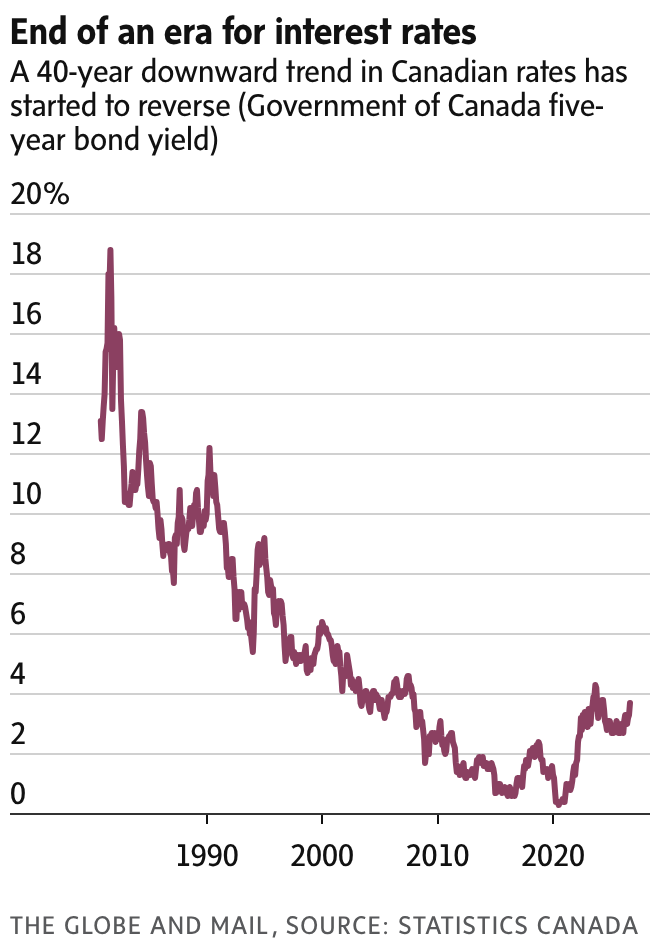
The age of easy money is fading. After decades of declining interest rates, a new era of higher borrowing costs and bond yields is changing the investment landscape. But many Canadians remain heavily invested in stocks and light on bonds, leaving their portfolios vulnerable to risks they may not be prepared for. |
|
|
|
|
|
|
|
|
|
|
|
|
|
|
|
The Globe and Mail
|
|
|
|
|
|
|
|
|
|
|
The inheritance: When a 58-year-old woman’s older brother died unexpectedly, he left her more than 500,000 Aeroplan points in his will. Rather than letting them sit unused, she took it as a sign to pack her bags and see the world. You can’t technically give Aeroplan points through a will, but they can be transferred after death with the right paperwork. |
|
|
|
|
The adventure: She used the points to help pay for a six-week trip through Vietnam, Thailand and Indonesia with her partner, including business-class flights. The trip became a way to honour her brother’s memory and reflect on what mattered most to her. |
|
|
|
|
|
|
|
|
|
|
|
|