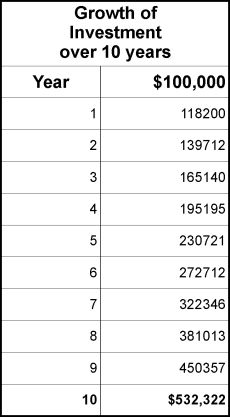
Hi Elliott Waver, Read this report from The Wall Street Journal, dated December 31, 2009: The decade’s best performing U.S. diversified stock mutual fund [is] CGM Focus Fund, which rose 18.2% annually. That’s an amazing performance, especially for a decade in which the S&P lost value. Question: How much money did investors in this fund make over the full ten years? The table below shows the growth of a $100,000 investment in the CGM Focus Fund based on annual average growth of 18.2%. It more than quintupled in value to $532,000: |
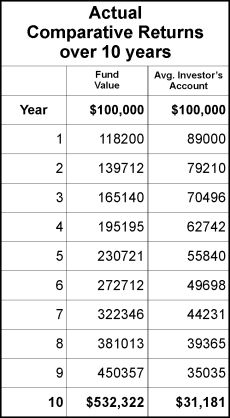
But this table does not answer the question I asked. It shows the growth of money in the fund, but I asked, “How much money did investors in this fund make?” Here’s the answer from the article: The typical CGM Focus shareholder lost 11% annually in the 10 years ending Nov. 30, according to investment research firm MorningStar Inc. Say what? Somehow, the actual experience of investors in this top-performing fund was an 11% annual loss, compounded. Over the ten-year period, then, the average investor in the CGM Focus Fund turned $100,000 into $31,200, for a total loss of 68.8% (see the table below): |
How can this be? The answer is: herding. As the article explained: These investor returns incorporate the effect of cash flowing in and out of the fund. Shareholders often buy a fund after it has had a strong run and sell as it hits bottom. Investors are buying high and selling low, over and over again. There’s a better way. We’re independent of Wall Street and the mainstream noise. Our focus: crowd psychology and recurrent patterns in price action. See what our services are saying about the next big moves in stocks, bonds and gold. Subscribe now. |