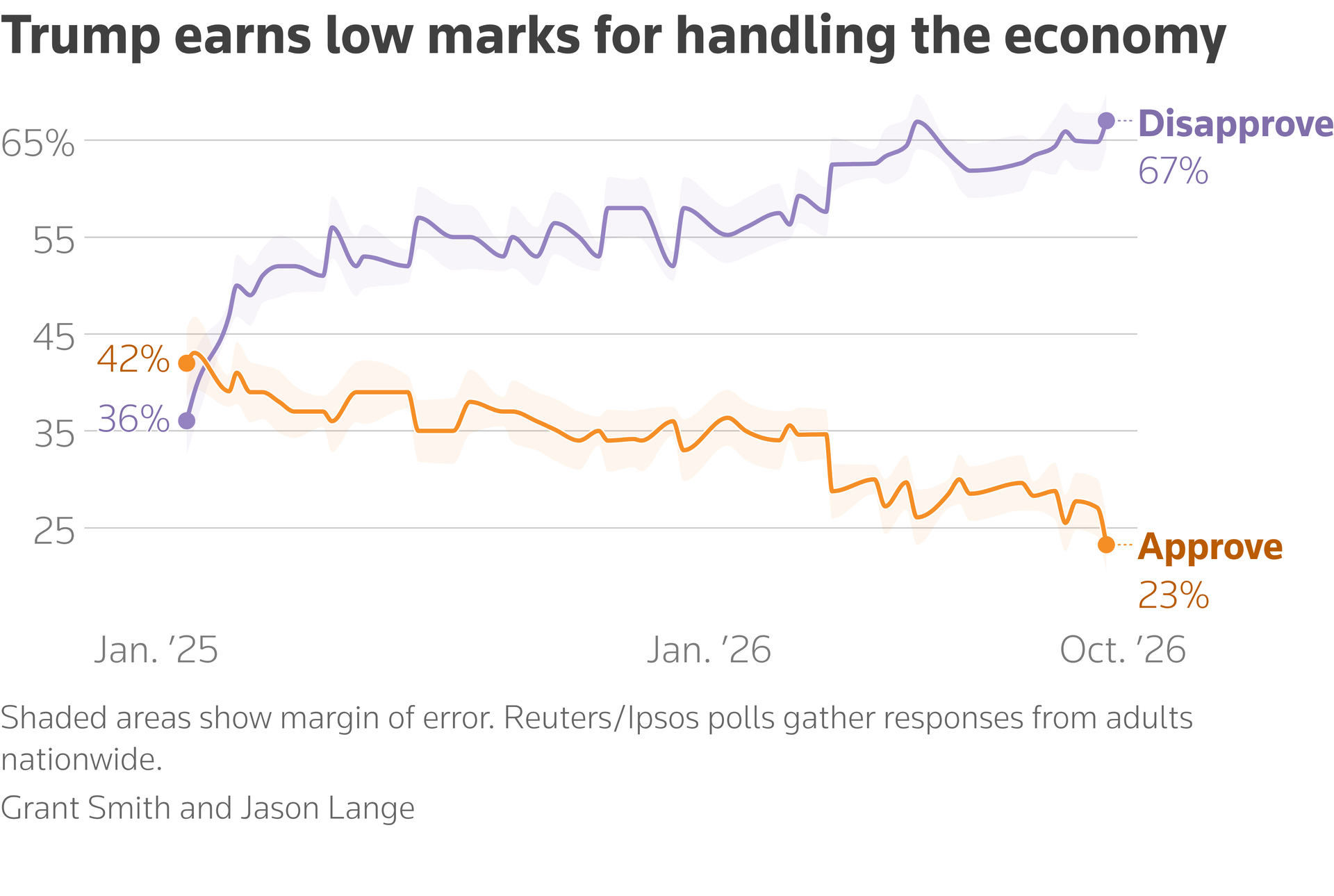
Trump has spent more than 16 hours speaking at 13 appearances across 11 states since October 1, by my rough count. But many of the headlines generated by those appearances have had little to do with the cost of living.
All 13 appearances aimed to boost Republican turnout ahead of the November 3 midterms. Trump talks about the economy, but rarely for long or in much detail. He touts manufacturing investments, recalls cheaper gas before the Iran war, asserts gas prices were higher under President Joe Biden and promises they will fall once the war ends. In Montana, he dismissed concerns that tariffs fuel inflation, insisting the country has "very little inflation," although the latest government data showed it rising to 3.7% in September from 3.4% in August. He has also pledged $5,000 payouts to all American adults if Republicans win. But the scattered remarks don't add up to a clear affordability message.
Democrats have attacked Trump over rising costs, but they, too, have struggled to offer voters a clear economic message.
At five recent rallies, Trump repeated a story about spotting gasoline at $1.85 or $1.95 a gallon during a January visit to Iowa. But fuel-price tracker GasBuddy found no regular gasoline that cheap among more than 2,000 stations it monitored that day. The statewide average was $2.57, according to auto association AAA. The anecdote illustrates how Trump's economic message can lean on memories rather than offer new solutions.
Even when he addresses the economy, the message often gets lost in his own digressions.
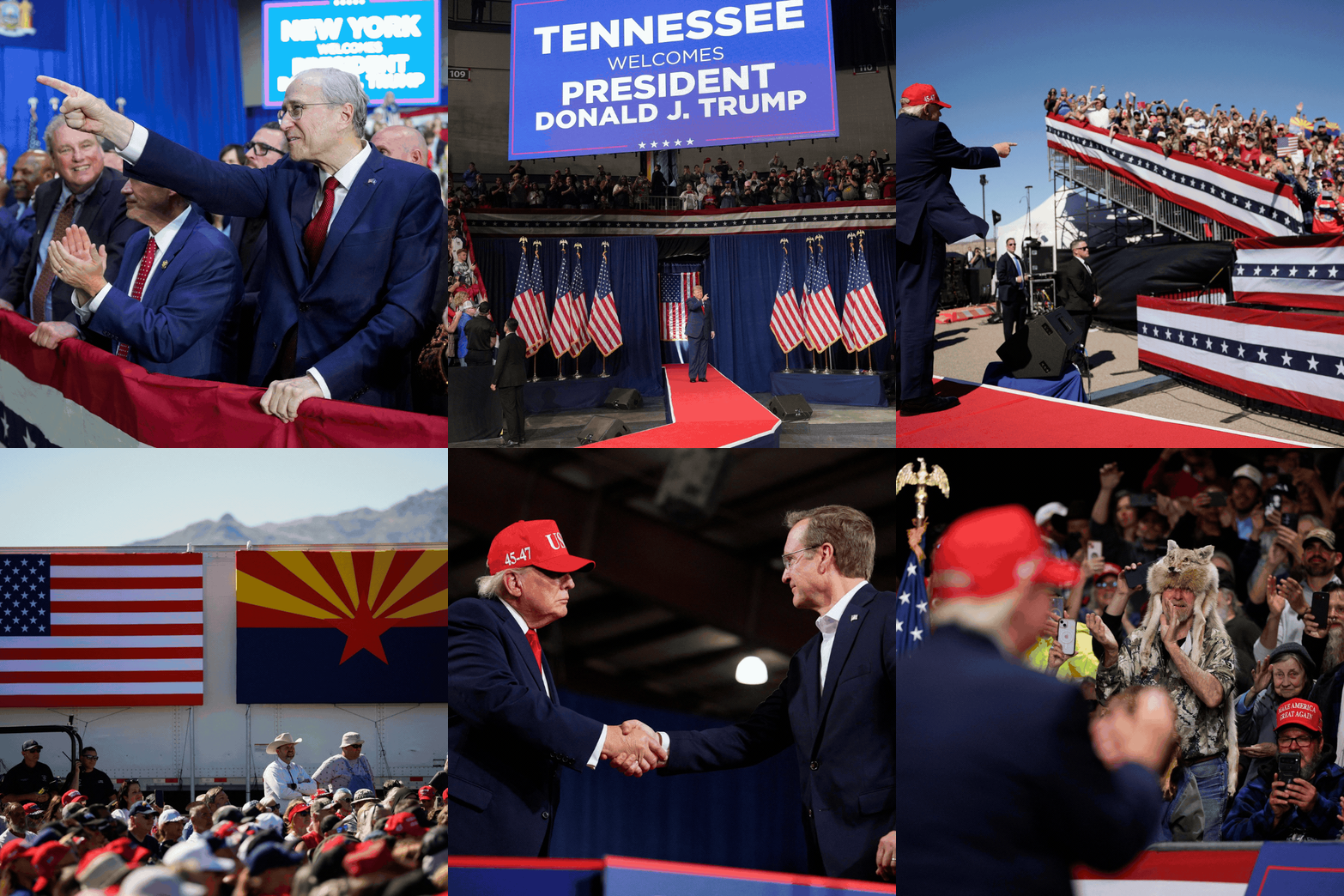
In Youngstown, Ohio, Trump went from announcing a submarine-component facility to admiring the jawline of US Senator Jon Husted, an Ohio Republican. In Syracuse, New York, he complained about not receiving the Nobel Peace Prize. In Tennessee, he suggested renaming an ocean after himself. His Texas rally with Senate candidate Ken Paxton made news for protesters, while in Alaska, he signed presidential pardons onstage.