| | In this edition, the AI boom will soon face a new bottleneck, and all those Trump-Mamdani meetings s͏ ͏ ͏ ͏ ͏ ͏ |
 - CoreWeave’s debt spiral
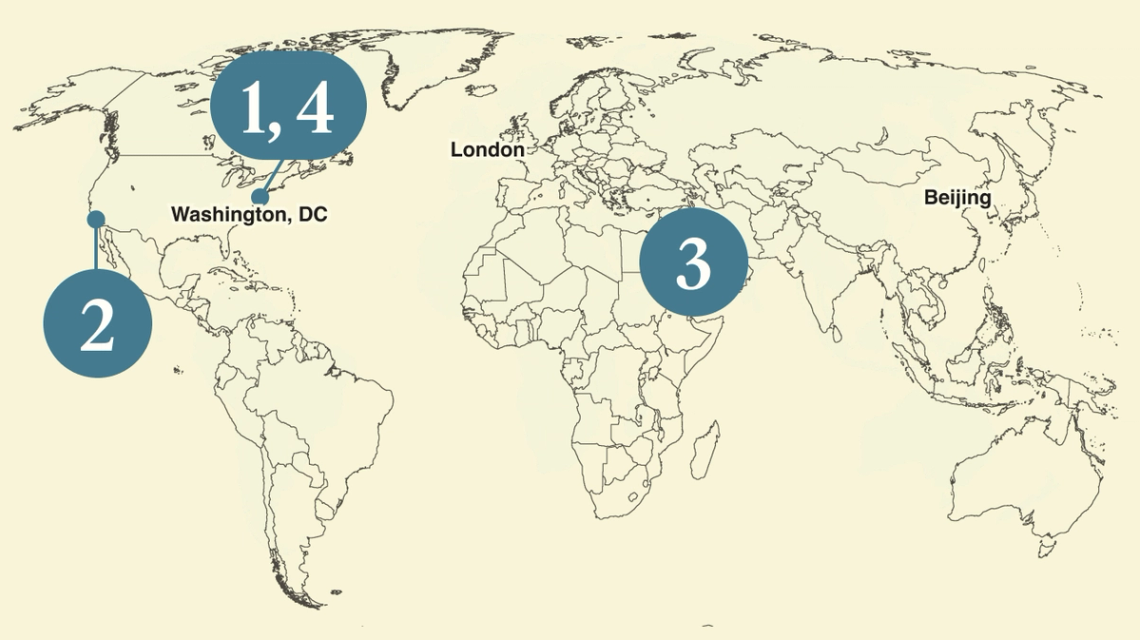
- Bumble’s honey money
- Saudis cut World Cup spend
- NYC’s quantum play
 US inflation comes in hot … Anthropic financials trickle out … McKinsey has a potential new leader |
|
 The bottleneck in the AI boom was chips, then power, then memory. It’s about to become money. That might sound strange as Anthropic prepares for a $1 trillion-plus IPO and data centers keep sprouting like big-box poppies. But the fear and exasperation among the lenders whose money fuels this game sharpened noticeably over the past week. It’s not just the days-long chip selloff that’s messing with global markets. “There’s shortages in chips. There’s shortages in power. And soon, there will be shortages of capital,” the CEO of Singapore’s biggest bank, DBS, warned Semafor’s Shelly Banjo in Bangkok this week. “We’re not an ATM for your dystopian future,” a major financier of data centers told me yesterday. Rest assured, he would happily play the part if the risk-return math made sense, but it doesn’t. Good luck enforcing Potemkin guarantees from hyperscalers or arguing that local protests excuse a construction delay that blew a hole in the financing. Investors get scared the same way moguls go bankrupt, gradually, then quickly. You see it in deals like Volta’s $5 billion Norwegian data center, which months ago would have been waved through by investors now demanding tougher terms. You see it in CoreWeave’s tanking bonds. You see it in the cost of a policy to protect against SpaceX defaulting on its debt, which goes for 80% more than it did three months ago. And in the early price talk for the rocket company’s $40 billion loan being marketed this week, which I’m told is around 1 percentage point higher than its existing bonds. To quote Elon Musk himself: Yikes. Yes, OpenAI will have no trouble raising the $30 billion it’s looking for and equity markets will probably recover from this week’s chip selloff. But it’s worth remembering that telecom bonds began cracking six months before the dot-com crash. In 2007, subprime mortgage bonds peaked eight months before the S&P 500 did. Equity investors get paid to be dreamers. Lenders get paid not to lose money. |
|
 CoreWeave CEO Michael Intrator. Jeenah Moon/Reuters. CoreWeave CEO Michael Intrator. Jeenah Moon/Reuters.CoreWeave bonds fell out of bed and then kept going, as investors soured on one of the most questionable players in a questionable AI trade. The company’s worst-hit bonds fell below 80 cents on the dollar, well into distressed territory, drawing a “yikes” from Elon Musk and a told-you-so from more sober-minded lenders. CEO Mike Intrator called the selloff “irrational.” But CoreWeave’s debt load has soared, as it added new borrowing to the debt already secured by its customers’ contracts for data-center compute. “It’s borrowing on top of borrowing on top of borrowing,” Gil Luria, a tech analyst at D.A. Davidson, told Semafor. — Ellen DiMauro |
|
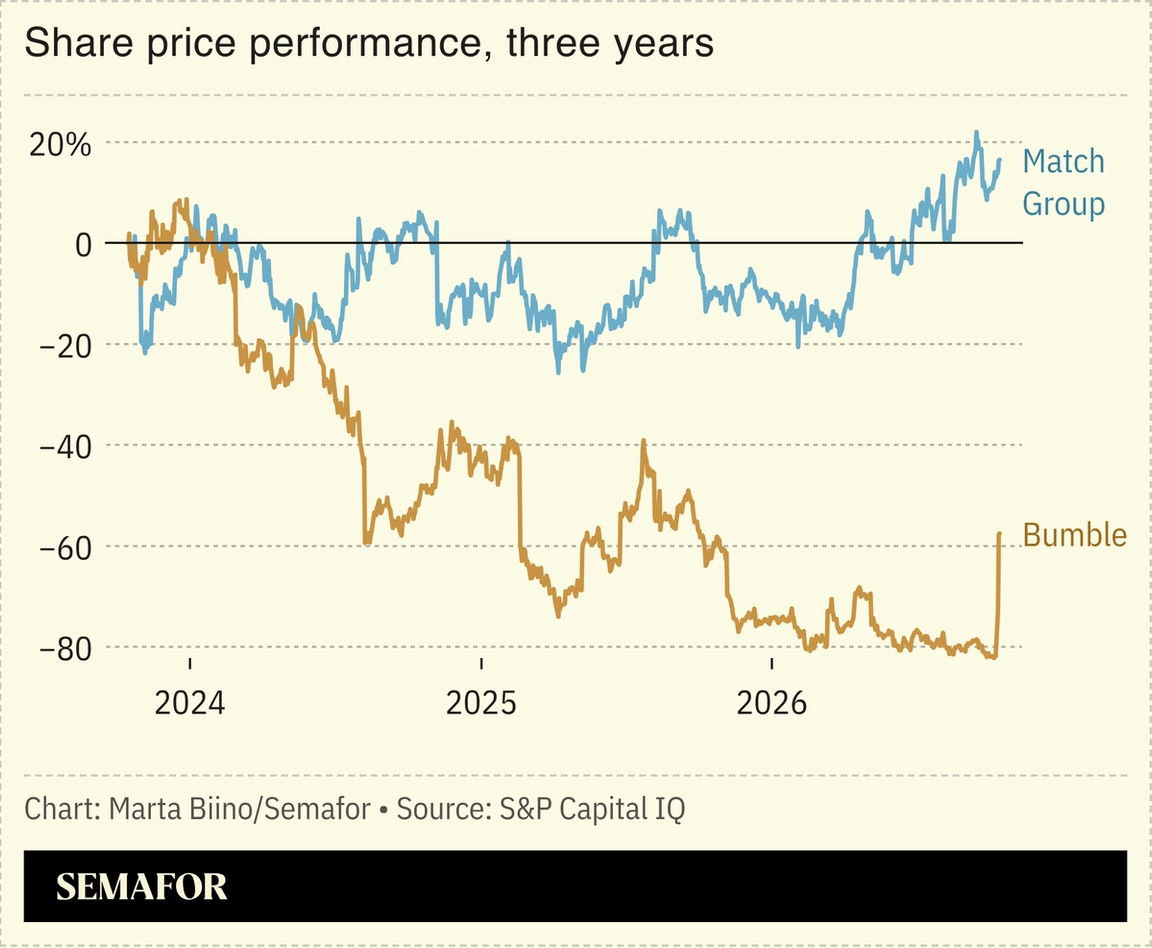 Ithaca Holdings, a first-time fund with zero buyouts under its belt, emerged this week to buy Bumble for $1.3 billion. There’s some interesting money behind it. Its backers, according to a person familiar with the matter, include Jeff Bezos, Shopify CEO Tobi Lütke, and venture firms Kleiner Perkins, Benchmark Capital, and Joshua Kushner’s Thrive Capital. It’s not the usual registry of private equity LPs — note the lack of a public pension — but Bumble isn’t a usual LBO. While private-equity giants sit on their hands, unable or unwilling to strike new deals as they sort through $4 trillion of unsold companies, a lane has opened up for newcomers willing to take a risk. Long Lake, founded in 2023, last month acquired Amex GBT in a $6.3 billion deal. Bending Spoons has been on an acquisition tear since going public in July, and just got a vote of confidence from Berkshire Hathaway. Ithaca’s investors didn’t return requests for comment. — Rohan Goswami |
|
Saudis slash World Cup stadium plans |
 Hamad I Mohammed/Reuters Hamad I Mohammed/ReutersThe latest sign of Saudi Arabia’s retreat from its ambitious investments: five giant stadiums envisioned as venues for the World Cup. The kingdom’s sovereign wealth fund, PIF, is dropping five arenas from its plans as host of the global soccer championship in 2034, Semafor’s Matthew Martin scoops. Newbies to international extravaganzas have pared back before — Qatar dropped four of the stadiums it had planned to build for the 2022 World Cup as it got closer to the tournament — but the reversal is a sign of Saudi Arabia’s cash crunch. Even with oil prices above its budget-balancing breakeven price in the low $90s-per-barrel, Saudi Arabia is being forced to prioritize. Work on NEOM, its futuristic desert city, has been drastically curtailed, Semafor previously reported. PIF has retrenched in other areas as well, including letting its PGA challenger, LIV Golf, slide into bankruptcy. Saudi Arabian officials are still working on the updated proposals and the plans could change, the people said. PIF and the Saudi Ministry of Sport didn’t respond to requests for comment. |
|
State capitalism goes local |
 Trump and Mamdani during a meeting in September. Andrew Hoffstetter/Reuters. Trump and Mamdani during a meeting in September. Andrew Hoffstetter/Reuters.All those meetings between President Donald Trump and Zohran Mamdani seem to be rubbing off on New York City’s mayor. The city said it would invest $29 million in an NYU quantum lab in exchange for a stake in its future profits, taking a page from the Trump White House’s state capitalism playbook. Trump’s heavy hand in the private sector, which includes amassing stakes in Intel and dozens of other companies, has gone from free-market blasphemy to a centrist way to strengthen industries crucial to national interests. Deputy Mayor for Economic Justice Julie Su pushed back on the suggestion the Democratic Socialist mayor is following in Trump’s footsteps: “It’s less a model of the current federal administration than it is a model of a lot of democratic socialist governments across the world,” she said. Imitation is the most sincere form of flattery. — Liz Hoffman |
|
 Behind closed doors, a new era of healthcare policy is taking shape. With US healthcare spending projected to hit $9 trillion annually by 2034, Medicaid cuts hanging in the balance ahead of the midterms, and increasing calls for regulation of clinical AI, the forces remaking healthcare policy are accelerating. Introducing Healthcare from Semafor Washington, DC, your weekly briefing on the politics, policy, and business driving the industry. Delivered on Thursday by David Lim, each edition will provide essential reporting and analysis on the forces reshaping healthcare, and what comes next. Sign up to receive the first edition today. |
|
➚ BUY: Big box. European crypto exchange Kraken is the latest fintech to catch the banking bug. ➘ SELL: Boutique. Talks between M&A specialists Perella Weinberg and Piper Sandler have broken down, per the FT. |
|
| |