| | Ukraine’s leader says he feels betrayed by US President Donald Trump, the FBI arrests an OpenAI empl͏ ͏ ͏ ͏ ͏ ͏ |
The World Today | 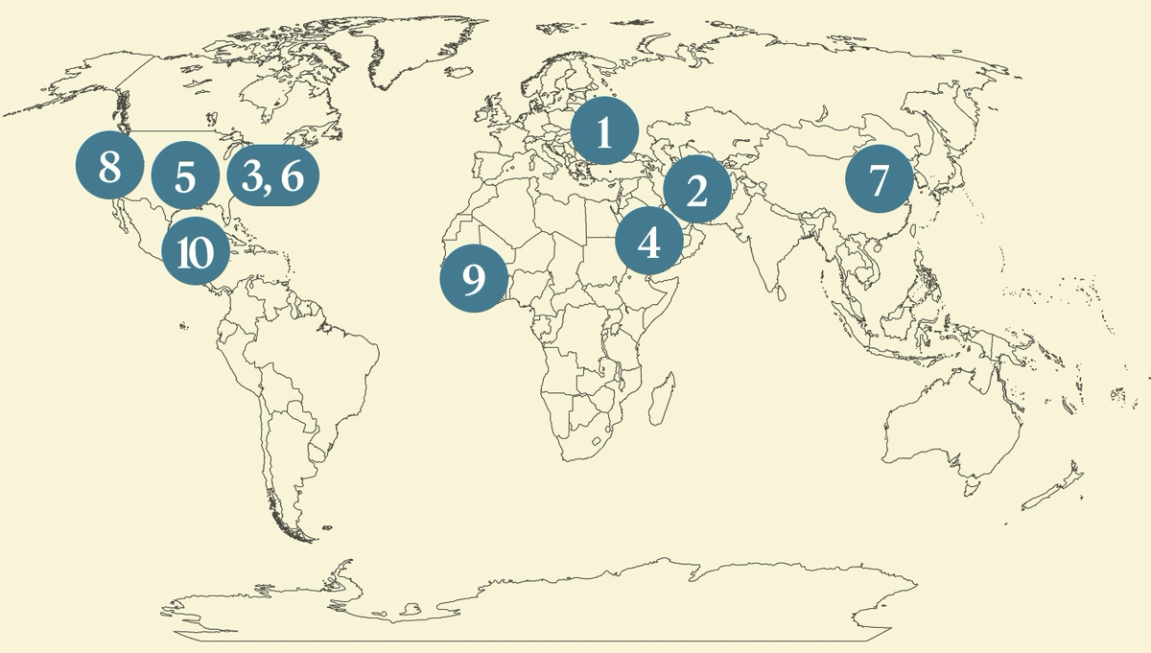 - Ukraine’s Starlink woes
- Iran ramps up ship strikes
- US consumer prices rise
- OpenAI employee arrested
- Data center financing slows
- Treasury debanking probe
- Apple’s AI boost in China
- Firms dangle AI carrots
- Pitfalls of fish farming
- Seaweed plagues Caribbean
 A ‘damning’ account of US interference in Lebanon. |
|
Kyiv feels betrayed by Trump |
 Henry Nicholls/Pool via Reuters Henry Nicholls/Pool via ReutersUkraine’s leader said he felt betrayed by US President Donald Trump, blaming Washington and Elon Musk’s SpaceX for cutting off Kyiv’s Starlink use on Wednesday. “This is not the right side of history,” Volodymyr Zelenskyy told Piers Morgan, as relations between the two countries deteriorated. Kyiv and its allies fear that Washington is applying pressure tactics, including potentially cutting off intelligence sharing and restricting Starlink, “to force Ukraine to capitulate to Russia,” the Financial Times’ Ukraine correspondent wrote. Kyiv later said SpaceX had restored access, while Musk asserted any limits on access are decided by Trump. Ukrainian officials complained the earlier disruptions had hampered military capabilities as Russia rained down missiles, plunging 600,000 into darkness overnight. “People will die,” Zelenskyy said. |
|
Iran ramps up ship strikes in Hormuz |
 Stringer/Reuters Stringer/ReutersIran’s increasing attacks on ships in the Strait of Hormuz have made October one of the most violent months in the waterway since the war began, as Tehran looks to exploit US President Donald Trump’s political vulnerability ahead of midterm elections. Two Emirati cargo vessels sank in the past 24 hours after being struck; Iranian officials told Reuters that Tehran was deliberately ramping up strikes to keep oil prices elevated before Nov. 3. Washington’s lack of response is “remarkable,” a Eurasia Group analyst said: “Trump continues to promise action, but only after [midterms].” That’s also when Washington could be more amenable to joining Saudi Arabia’s strikes against the Houthis, another analyst suggested: “Trump’s preference is for it to happen afterwards.” |
|
Surging energy costs drive US inflation |
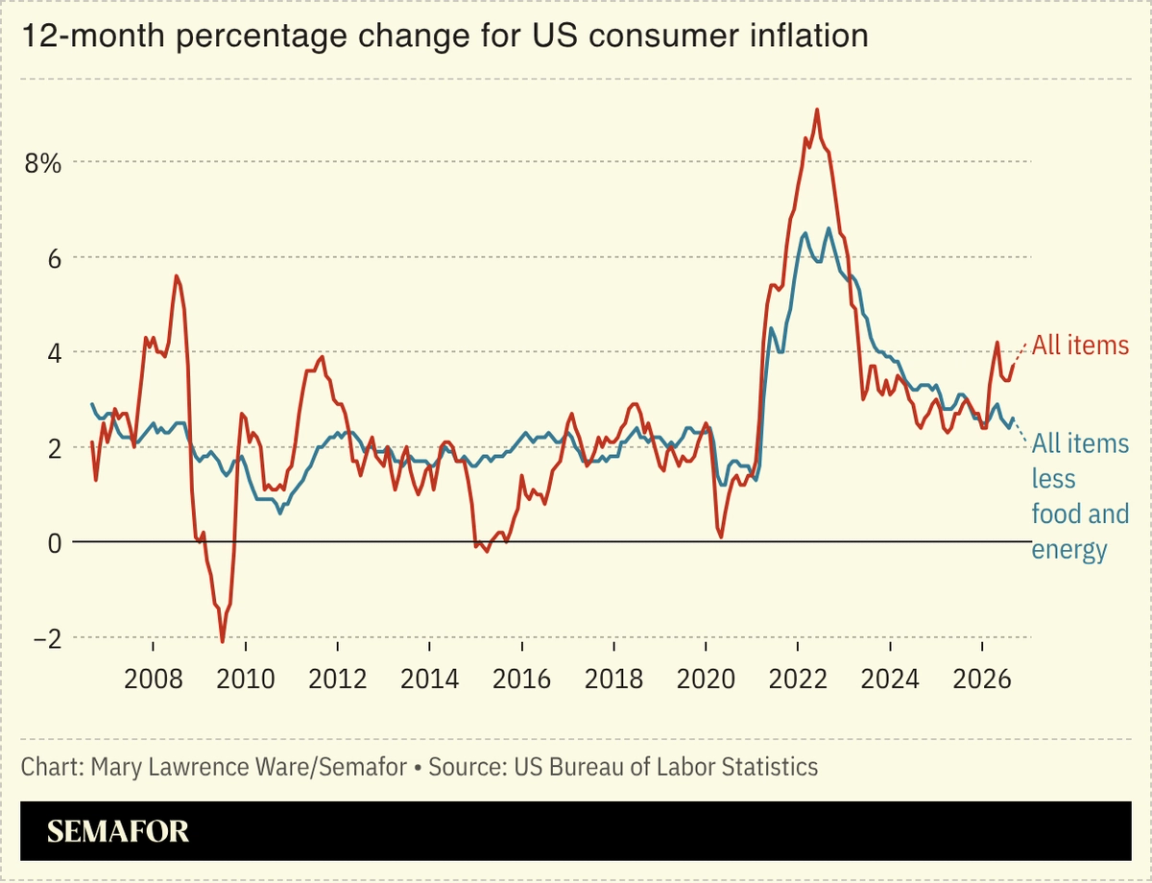 US consumer prices rose more than expected in September on surging energy costs, as Wednesday’s inflation report — three weeks before the midterm elections — did not bode well for Republicans. The timing is especially inauspicious for President Donald Trump, who’s rallied across the country in recent weeks to try to limit the party’s midterm losses. But Wednesday’s reading won’t drastically alter the political outlook, a conservative think tanker told The New York Times, given that Americans already feel badly about high prices: “This cake has already been baked.” Still, the Trump administration scrambled to discourage the US Federal Reserve from revisiting the possibility of hiking interest rates at its Oct. 28 meeting. A Trump adviser urged the central bank to “hold its fire.” |
|
OpenAI employee arrested over bugging |
 Department of Justice/Handout via Reuters Department of Justice/Handout via ReutersThe FBI on Tuesday said it arrested an OpenAI employee who was fired after allegedly bugging the startup’s office. The evidence against Abdulrahman Alfozan — a Saudi national who holds ties to Riyadh’s business elite — included chatbot logs about how to install recording devices, authorities said, rekindling fears over AI-powered crimes at a moment of heightened sensitivity over tech trade secrets. “The FBI’s quick work and public rollout of the arrest shows how high the stakes are for the US government and frontier labs,” Semafor’s Rohan Goswami wrote. The FBI’s announcement comes as the White House’s AI task force prepares for its first meeting Thursday; the group’s chair said the case proved why “the Super Intelligence Force is so important.” |
|
Data center ‘money machine’ slows |
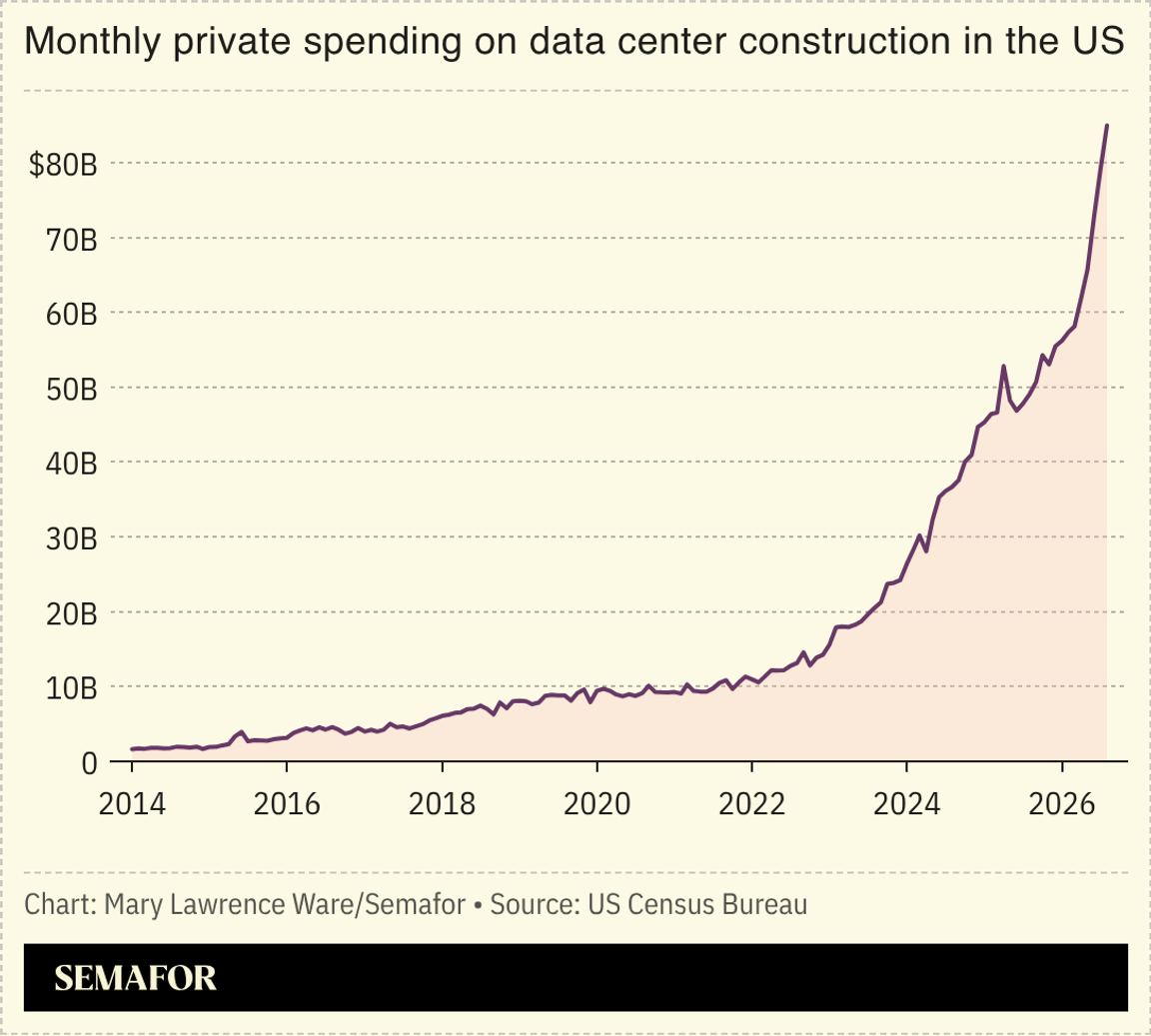 Dell shares plunged more than 11% on Wednesday amid a broad data center selloff, as investors feared that the scale of the AI buildout won’t be justified by demand for the technology. Data center spending has become a central anchor of US growth, BlackRock’s Larry Fink said, such that the threat of moratoriums on the facilities risked triggering a national recession. Total AI capex could exceed $5 trillion by 2030. AI financing deals are still getting done, investors and bankers say, but less smoothly than they were earlier this year, with higher rates and more heavily negotiated terms. “The money machine behind data centers is starting to sputter,” Semafor’s Liz Hoffman wrote. |
|
US Treasury says banks discriminated |
 Andrew Kelly/Reuters Andrew Kelly/ReutersThe US Treasury’s “debanking” probe found that the largest American banks had denied services to customers based on political considerations, in a boost to conservatives’ campaign against institutions’ perceived biases. US President Donald Trump ordered the inquiry last year after he accused banks of discriminating against him, and sued JPMorgan Chase and Capital One for closing his accounts. The report comes one day after the government fined Bank of America $1.2 billion for lax money-laundering oversight, the third-largest penalty in Treasury history. The Trump administration has similarly targeted universities and media companies: The White House played a central role in the Justice Department’s antitrust investigation into major TV networks’ temporary suspension of pooled coverage of the president, Semafor reported Wednesday. |
|
Apple Intelligence to debut in China |
 Tingshu Wang/Reuters Tingshu Wang/ReutersApple’s first foldable smartphone will feature Alibaba’s AI when it launches in China next week, as Apple Intelligence — the company’s generative suite — gears up for its mainland appearance after years of regulatory delays. Apple sees AI features as critical to competing with Huawei, the only firm it lags in China. The world’s largest smartphone market has slumped amid weak consumer spending and rising hardware costs. Still, China’s cutthroat industry is seeing new entrants: AI lab StepFun launched a $600 AI agent smartphone Tuesday. An analyst described the move as “quite bold” under present conditions, but one that might be explained by the smartphone’s unparalleled ability to continually gather user data, allowing AI assistants to become ever-more personalized. |
|
| Healthcare from Semafor Washington, DC |
 Behind closed doors, a new era of healthcare policy is taking shape. With US healthcare spending projected to hit $9 trillion annually by 2034, Medicaid cuts hanging in the balance ahead of the midterms, and increasing calls for regulation of clinical AI, the forces remaking healthcare policy are accelerating. Introducing Healthcare from Semafor Washington, DC, your weekly briefing on the politics, policy, and business driving the industry. Delivered every Thursday from David Lim, each edition will provide essential reporting and analysis on the forces reshaping healthcare, and what comes next. Sign up to receive the first edition this week. |
|
Hiring, raises tied to AI proficiency |
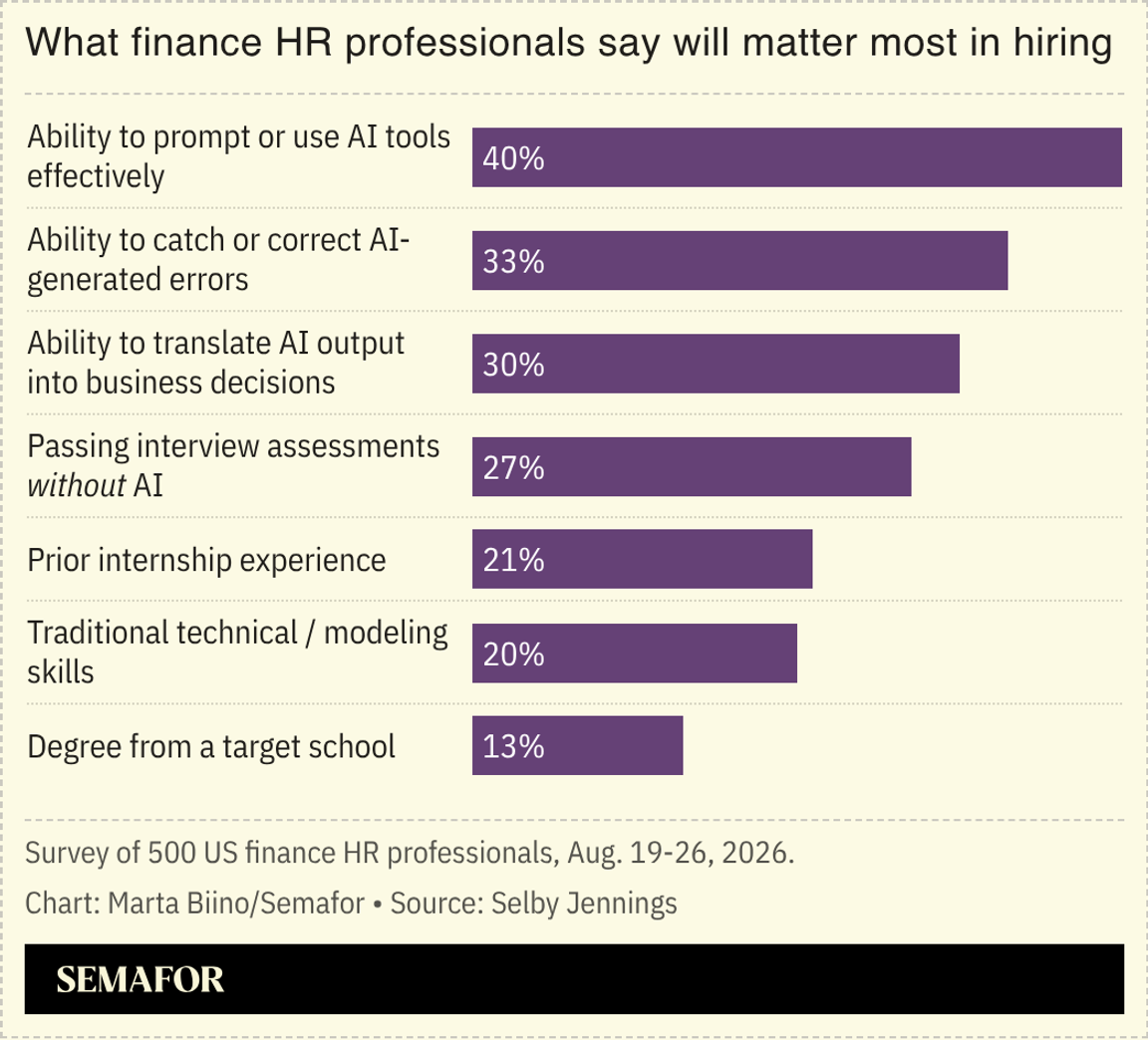 A quarter of US financial firms have tied raises, promotions, and bonuses to AI proficiency, a new survey showed, as more companies seek to evaluate the measurable impacts of their investments in the technology. Applicants’ AI skills are nearly four times as important in hiring decisions as where they went to college, according to the survey of 500 companies by financial recruiting firm Selby Jennings. While the practice is more common among fintech startups and smaller firms, companies across the economy are modifying recruitment methods to keep up with the technology: Consulting giant McKinsey is making some entry-level candidates hold a 10-minute conversation with an AI avatar that has been trained on various client personalities, The Wall Street Journal reported. |
|
|


