| | In this edition, attacks on Saudi Arabia darken the picture for the kingdom’s economic gatherings, a͏ ͏ ͏ ͏ ͏ ͏ |
| |  | | | Global Capital Edition |
| |
|
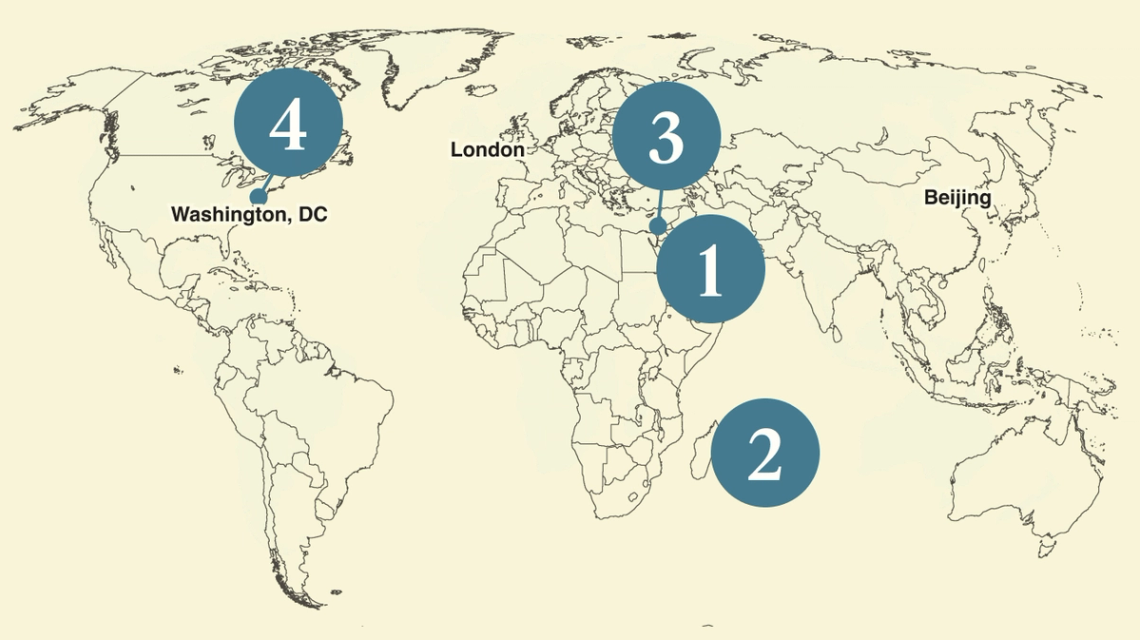 - Saudi’s challenged ambitions
- Africa’s credit risk, revisited
- Israel’s exchange play
- Data-center sentiment games
 Brent crude above $105 as investors doubt Russia-Ukraine ‘energy ceasefire’ … FTX recycles bitcoin-mining assets for the AI era |
|
 “You want ‘too big to fail,’ here it is!” the small-screen version of Hank Paulson screams in HBO’s 2011 film as he stares down AIG’s failure. The plane that had shuttled him to an emergency meeting in New York had been leased from AIG. The construction he passed on his way to the New York Fed, financed by AIG. Eighty million retirement policies, insured by AIG. In 2008, the fact that one company had become the entire economy’s single point of failure was only obvious when it was on the brink of collapse. At least this time we can see it on a blue-sky day: Nvidia is officially too big to fail. More than $108 billion of data-center leases, guaranteed by Nvidia. Eight cents of every dollar wagered on the S&P 500, invested in Nvidia. Fifty billion dollars worth of stock in private companies, many of them its customers, and another $63 billion in listed companies, owned by Nvidia. It is an AI-rollup machine, with fresh reports over the weekend that it’s in talks to acquire or invest in both a customer, Reflection AI, and a competitor, d-Matrix. Its balance sheet is strong enough for now, a message delivered with a buyback flex last month. But Nvidia has become AI’s bank and security blanket, a one-stop shop for financial and emotional reinforcement. Setting aside the numbers, a company is too big to fail when the answer to “would the government step in to save it?” is yes. Big banks undergo annual exams to see how they would fare under different economic conditions — a spike in unemployment, a decline in home prices. What would be revealed by a stress test of Nvidia that contemplated a rise in the cost of AI-linked debt, a decline in venture-backed startup values, and a slowdown in data-center construction? There’s a reason Paulson let Lehman Brothers fail but rescued AIG. |
|
Riyadh attacks darken econ gatherings |
 Flightradar24, Social media via Reuters, Khaled Abdullah/Reuters Flightradar24, Social media via Reuters, Khaled Abdullah/ReutersOil-company CEOs dropped out of an industry conference in Saudi Arabia after deadly attacks on Riyadh brought the war to a part of the Middle East so far insulated from it. Decisions by the CEOs of ExxonMobil, Shell, BP, and TotalEnergies to skip the World Petroleum Congress cast doubt on an upcoming conference, the Future Investment Initiative, that has been a magnet for Wall Street financiers and a showcase of Saudi Arabia’s economic transformation. The strikes call into question the kingdom’s pitch as a safe home for trillions in financial assets, data centers, and new industries. And in a war that is as much about economics as explosives, this may be the vulnerability that the Houthis, and Iran, are counting on. — Mohammed Sergie |
|
Africa takes on Moody’s, S&P |
 Tiksa Negeri/Reuters Tiksa Negeri/ReutersDeveloping economies have long complained that New York’s credit-rating agencies overstate their risks and drive up their borrowing costs. To that end, Africa is launching its own. The new venture will take on an oligopoly, dominated by Moody’s and S&P, that the continent’s leaders say is rife with bias. The UN has argued that the continent is a better credit risk than its ratings imply, costing governments $75 billion a year in higher interest rates. A former S&P official crunched the numbers differently, finding that African governments defaulted up to twice as often as you’d expect. Efforts to crack the global credit gatekeeping world have mostly failed. A Chinese competitor came out of the gate hot, lobbing downgrades at the US and other Western governments in the early 2010s, and was labeled a “novelty cracker” by Euromoney. A US newcomer, Egan-Jones, has been accused of fueling a race to the bottom in the world of private debt. The head of Africa’s venture said it is “not here to give favorable ratings, but the effort will succeed the way anything does in finance: By making investors money.” |
|
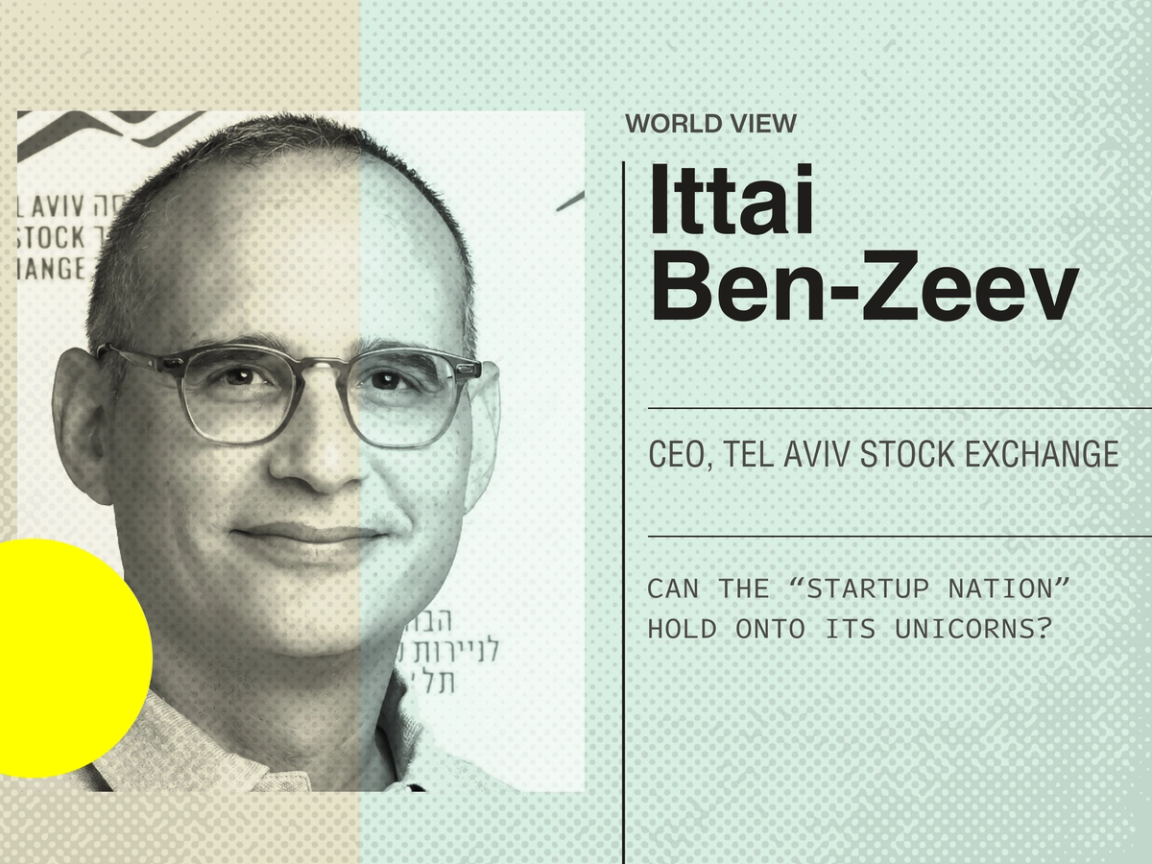 Trillion-dollar AI IPOs are crowding smaller tech companies out of New York, said the CEO of the Tel Aviv Stock Exchange, which is trying to lure Israel’s startups to list at home. The $100 million minimum revenue threshold to IPO in New York has become $500 million, Ittai Ben-Zeev told Semafor. “And because of the gigantic IPOs that are coming, for most Israeli tech companies, New York is no longer an option,” he said. Israel has produced more tech unicorns per citizen than any country in the world, twice as many as the US, but invariably loses many of them to the NYSE or Nasdaq. The Tel Aviv exchange has been trying to revamp itself to be more competitive, including by adding Friday trading. It wasn’t an easy sell in a country that takes the Sabbath seriously, but one that Ben-Zeev sold as a way to “signal the world that we are part of it.” Backing from Bill Ackman, who bought 4.9% of the exchange in 2024, has also helped change perception among Israeli entrepreneurs who “look to New York.” |
|
Data centers vs. the media |
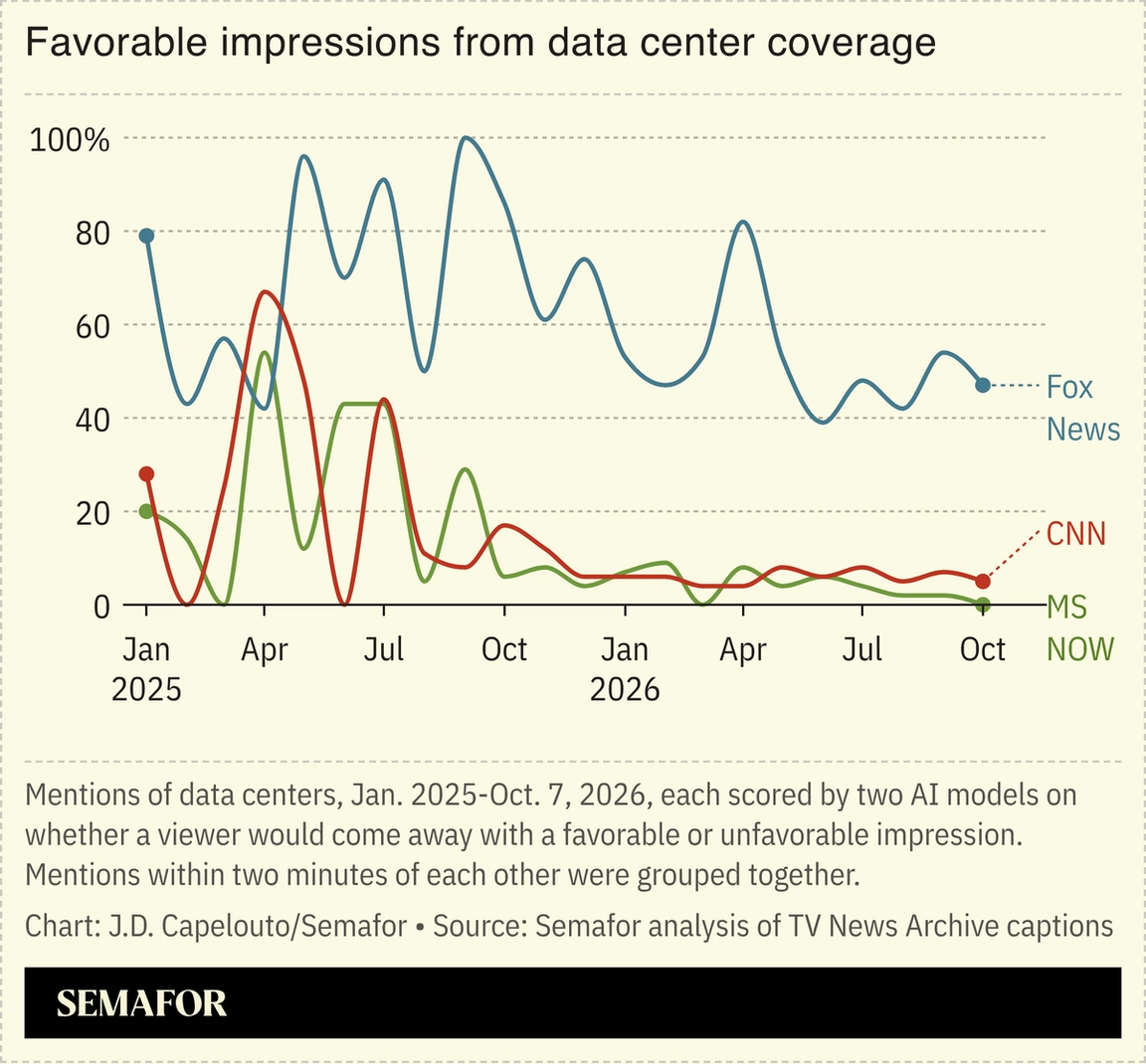 The data-center backlash has turned from a political curiosity to a financial risk, tripping up projects on which billions of dollars have been staked. But as always, it depends what media bubble you live in. More than half of data-center mentions that appeared on Fox News over the last two years would have left viewers with a favorable impression, compared to less than 10% on CNN and 5% on MS NOW, according to a new Semafor analysis. Investors may not be basing their decisions on network segments. But President Donald Trump is a regular Fox viewer, and a nothing-to-see-here message will likely only harden his administration’s support for unbridled AI. Semafor’s Max Tani channels the political split screen: “Some on the right who I have talked to in the last several months worry that Fox News, which Trump watches religiously, and other pro-data center voices are encouraging the president to take positions that are broadly unpopular with his rural and suburban base.” |
|
 - Oct. 13: US bank earnings season kicks off with JPMorgan, Goldman Sachs, Citi, and Wells Fargo. Listen for nerves around AI financing and global borrowing costs.
- Oct. 14: ASML, whose machines are a chokepoint for every advanced chip made, raised its 2026 sales guidance to €45 billion in July. Any waffling — or another increase — in the Dutch tech company’s quarterly earnings report could move markets.
- Oct. 12-18: We’ll join central bankers and economists in Bangkok for the annual IMF and World Bank meetings, where Semafor is hosting a global leaders dinner and is eager to hear the response to the IMF chief’s warning that “winter is coming.”
|
|
Nicole Goldin is a nonresident senior fellow with the Atlantic Council’s GeoEconomics Center. Previously she was global head, inclusive economic growth at Abt Associates, a global research, evaluation, and project consulting firm.  |
|
 Carlos Barria/File Photo/Reuters Carlos Barria/File Photo/ReutersOne thing that might trip up Anthropic’s foray onto Wall Street: You’re no longer allowed to throw a phone at it. A Claude terms-of-service update last week warns users they risk being banned for abusive behavior, a cultural calling card that has survived on pockets of Wall Street despite years of enlightened HR interventions. Query whether Claude will read the “pls fix” with the passive-aggression it’s meant to convey. |
|
|


