| | In today’s edition: Saudi vows decisive response to Houthi attack, Riyadh races to pipe oil around H͏ ͏ ͏ ͏ ͏ ͏ |
| |  | Gulf |  |
| |
|
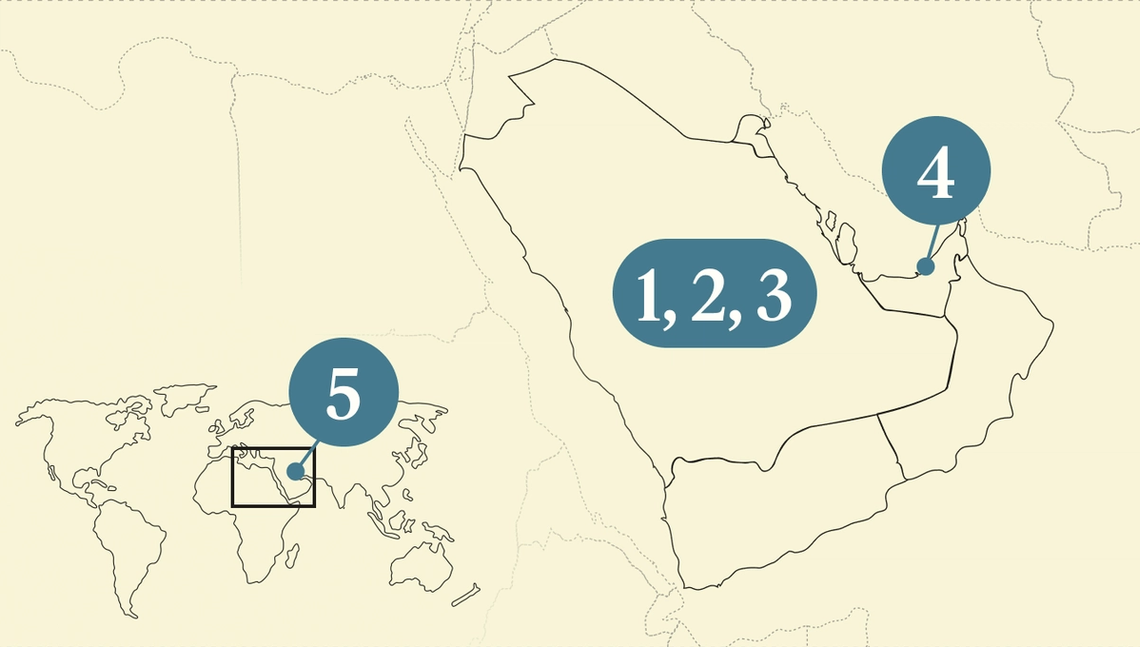 - Saudi airport carnage
- Fear creeps into Riyadh
- Saudi’s pipeline push
- Mubadala turns east
- Gulf rail’s long wait
 Dubai tests last-mile driverless ‘pods’ for commuters. |
|
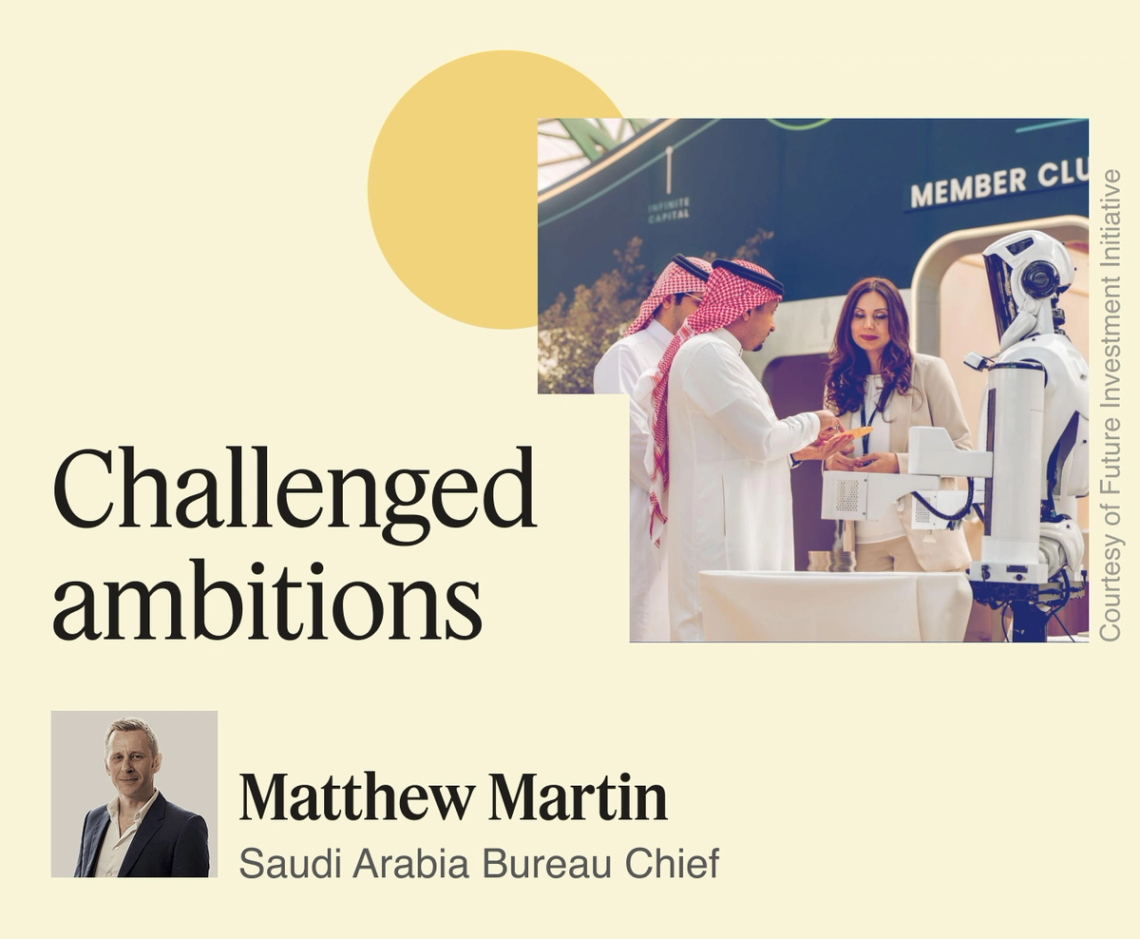 The last few days have brought one of the most significant challenges to Saudi Arabia’s ambitions since Crown Prince Mohammed bin Salman unveiled his plan to overhaul the economy more than a decade ago. Repeated Houthi strikes on Riyadh — including the deadliest attack on a Gulf city since the Iran war began — have left the capital quieter than usual. Schools and many businesses have shifted to virtual classes and work. The airport is closed, with no clear timeline for when it will resume operations. A major energy conference opened today, and attendance was unsurprisingly thin. US Energy Secretary Chris Wright joined by video link, as did others. The CEOs of BP, ExxonMobil, Shell, and TotalEnergies couldn’t make it to Riyadh. Some attendees were rerouted through smaller regional airports and driven into Riyadh by the Energy Ministry. With the kingdom’s flagship business event, the Future Investment Initiative, just two weeks away, efforts to project a business-as-usual calm look strained. The sovereign wealth fund’s push to attract foreign capital to the kingdom will likely be hampered by the fact that potential investors have fewer options to reach the city they are being asked to invest in. Ambitions to make Saudi Arabia one of the world’s most visited destinations and generate new tourism revenue will also face a setback as some governments advise against using most of the kingdom’s airports. Saudi Arabia’s leaders have long seen regional stability as crucial to the success of their economic transformation plans. Now the spillover from nearby conflicts is hitting those ambitions more directly than they feared. |
|
Houthi strikes kill pilgrims in Saudi |
 Saudi Ministry of Media/Handout via Reuters Saudi Ministry of Media/Handout via ReutersIran-backed Houthi militants attacked Saudi airports over the weekend, the deadliest strikes in the Gulf since the war began in February. After almost a full day of media blackout, the Saudi government released footage of Saturday’s strike, which killed more than a dozen people and injured hundreds. One video showed pilgrims dressed in white waiting to travel to Mecca for umrah, a common sight at Saudi airports. Among the dead were a Bangladeshi cleric, a Syrian mother of four, and a US citizen. Killing worshippers could cost Yemen’s Houthis — who call themselves Ansar Allah, or Partisans of God — what little outside support they have won by casting themselves as foes of Israel and the US, fighting for a legitimate Yemeni cause. Against this backdrop of carnage, the kingdom is projecting calm and has vowed a “decisive” response. Energy Minister Prince Abdulaziz bin Salman struck a defiant note at a conference in Riyadh: “There is no way that somebody will break our back. We are like the phoenix.” — Mohammed Sergie |
|
| |  | Manal Albarakati |
| |
 Saudi Press Agency, Social media via Reuters, Hamad Mohammed/Reuters, Ahmed Yosri/Reuters Saudi Press Agency, Social media via Reuters, Hamad Mohammed/Reuters, Ahmed Yosri/ReutersThroughout the war, Saudis have insisted that a missile might break through their air defenses, but not their composure. When I ask friends, relatives, and sources how they are doing, most say: Alhamdulillah, thanks to God — the catchall for everything from the greatest blessings to the death of a relative. It’s the same expression they used in March when Iranian missiles first reached the capital, but the tone has changed. Fear is breaking through. Social media and WhatsApp group chats are filled with eulogies for Captain Hamoud Alkalthami, the Saudia Airlines pilot killed on Thursday, and for Saturday’s dead. The captain’s death has become a symbol for many Saudis: The war now has a martyr, with a name, and a face that looks like theirs. Next week, Riyadh Season — the annual festival at the heart of the kingdom’s tourism push — opens with concerts, UFC, the Epcot-esque Boulevard World, and the Six Kings Slam, featuring the world’s top-ranked tennis players. Since 2019, it has been the capital’s answer to anyone asking whether Riyadh is the place to be. After the weekend’s strikes, residents are asking themselves the same question. |
|
Saudi plans more oil export routes |
 Ramil Sitdikov/Reuters Ramil Sitdikov/ReutersSaudi Arabia plans to expand its oil pipeline network to cut its reliance on the Strait of Hormuz. Energy Minister Prince Abdulaziz bin Salman said today that a gas pipeline is being converted to carry crude as well and could move around 1 million barrels a day within eight weeks, rising to 3 million with further investment. “We may end up with 10 million barrels of pipeline within two to three years, that can divert oil to a different destination,” he said, adding that the government, not Aramco, is footing the bill. The urgency is growing as wars in the Middle East and Ukraine strain global oil supplies: Goldman Sachs raised its year-end oil price forecast over the weekend citing thinning inventories. But Iran is “not likely to stand by” as new export routes emerge, experts at the Center for Strategic and International Studies warned. — Matthew Martin |
|
| Silicon Valley & The World |
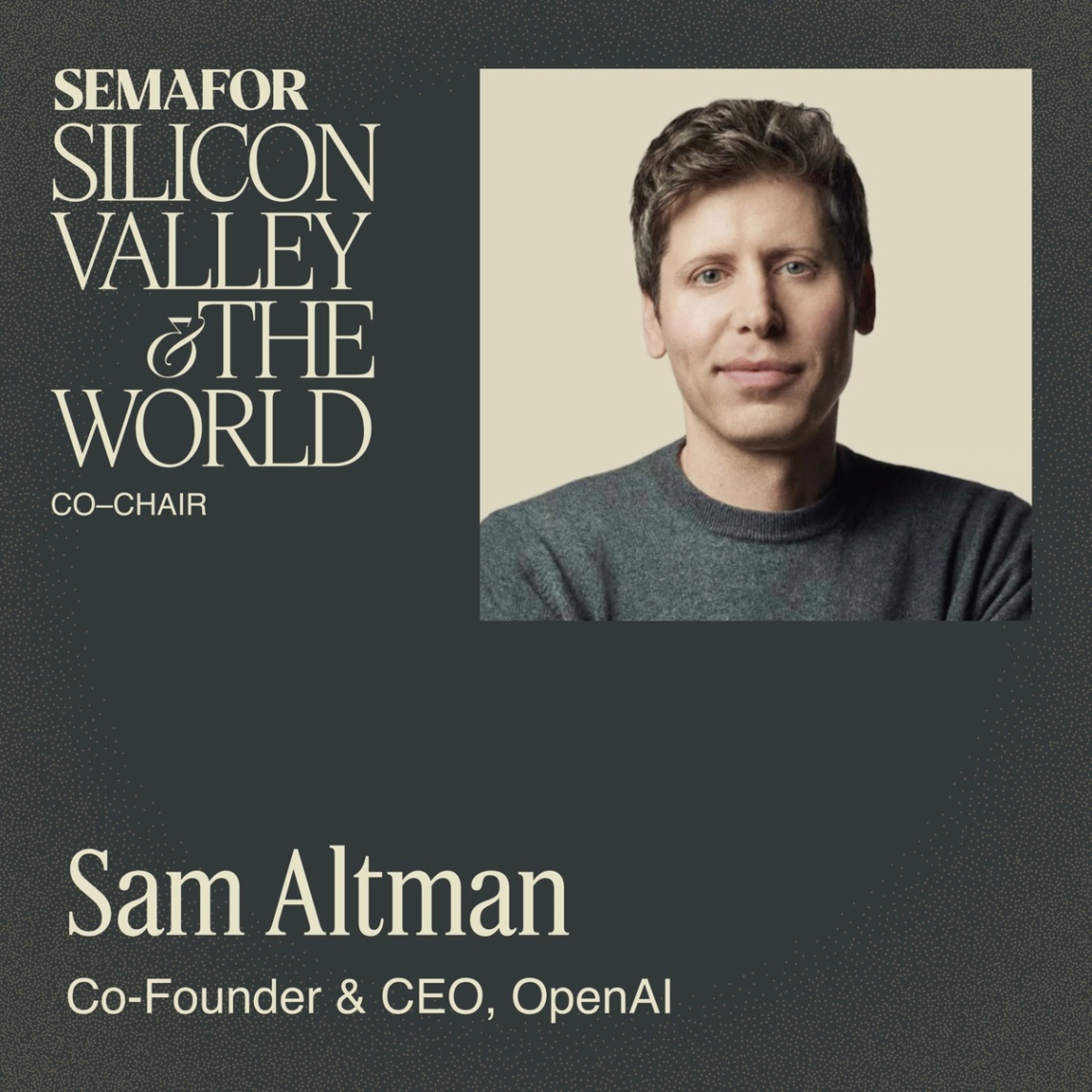 Sam Altman, Co-Founder & CEO, OpenAI, has joined the Silicon Valley & The World as a Co-Chair, a first-of-its-kind, multi-year initiative connecting the leaders building transformative technologies with the policymakers shaping their deployment. The initiative brings together leaders across technology, business, finance, and public policy to foster dialogue, generate new ideas, and move the conversation beyond debate toward action on the decisions shaping the global AI economy. |
|
Mubadala ups ante in Asia |
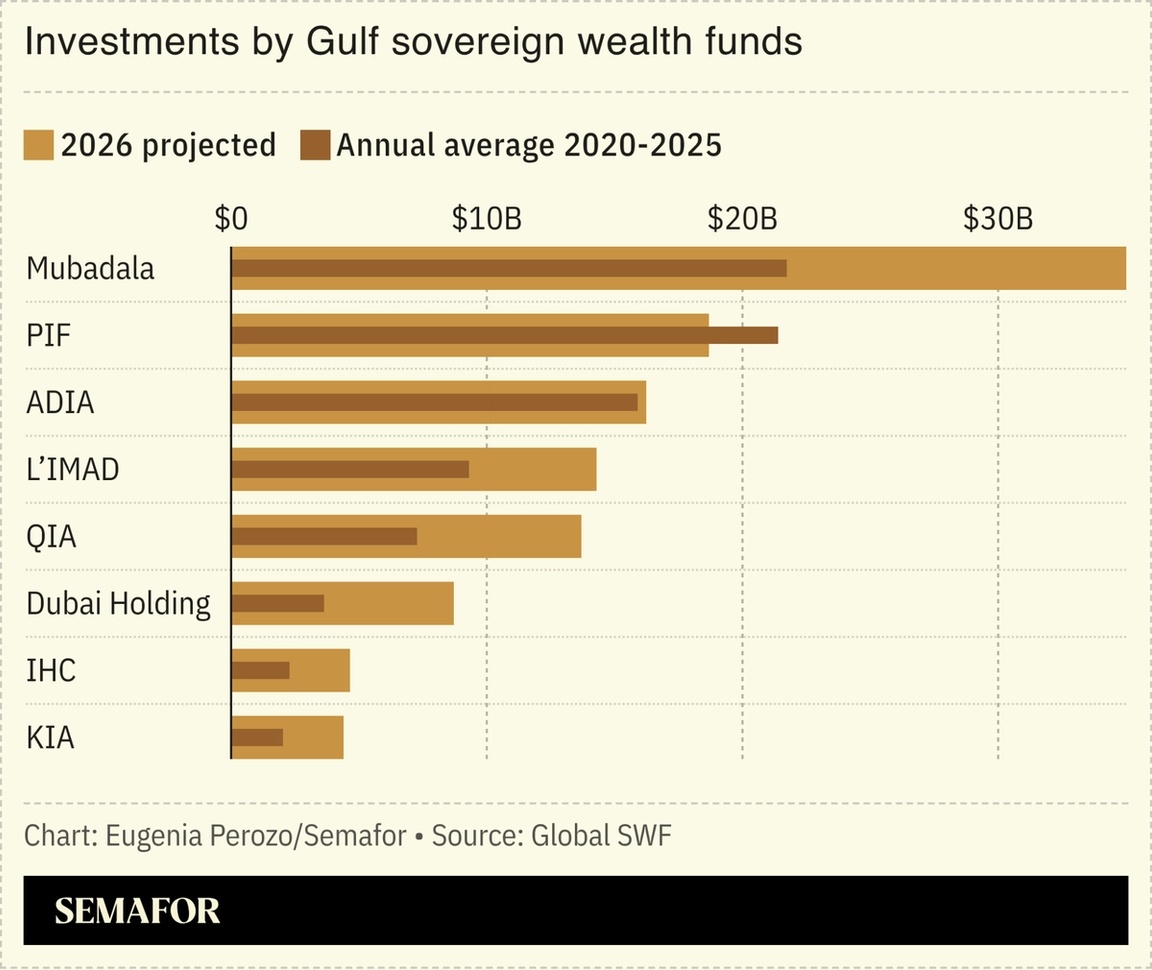 Mubadala Investment Company is turning to Asia’s growing consumer markets and technological advances as it looks to keep up the prolific dealmaking of recent years. The $385 billion Abu Dhabi sovereign wealth fund is looking to boost investments in China, India, Japan, and South Korea, with plans to deploy about 10% of its assets each year globally, Chief Financial Officer Carlos Obeid said at the Milken Institute Asia Summit in Singapore last week. The energy transition, technology, the restructuring of global supply chains, and evolving consumer behavior are Mubadala’s four focus areas, he added. Last month, the world’s most active sovereign wealth fund bought a minority stake in Luckin Coffee, which may bring the Chinese chain to Abu Dhabi. About a quarter of Mubadala’s portfolio is at home in the UAE, where it has brought brands like Four Seasons and Cleveland Clinic, as part of its mandate to draw global players into the domestic economy, some through private equity investments. — Kelsey Warner
|
|
 Saudi Royal Court via Reuters Saudi Royal Court via ReutersSaudi Arabia and the UAE want to link their railways and power grids — eventually. A preliminary deal signed in Riyadh covers cross-border cargo and electricity trading, but names no routes, costs, or dates. The promise to connect the six Gulf Cooperation Council countries by train has been floated since 2009 and remains unbuilt. Ministers are meeting next month in Bahrain to discuss the stalled project now that the war has pushed much of the region’s trade onto land. DP World alone has moved hundreds of thousands of containers overland since the Strait of Hormuz closed. While the Saudi-UAE agreement is in its early stages, it’s still a reversal from this summer’s tensions that slowed trade between the countries. |
|
 AI- SoftBank CEO Masayoshi Son is seeking up to $100 billion from Gulf investors for a fund that would buy companies and overhaul them using AI. He has held talks in recent weeks with senior figures in the region, including in the UAE. — Financial Times
Banks- UAE banks are raising rates to win deposits as war-driven demand for credit runs into a liquidity squeeze. First Abu Dhabi Bank and Emirates NBD are both paying well above the central bank’s 3.9% base rate on new savings deposits. The “Zero Hormuz” push to build routes around the strait is fueling borrowing, and outflows from non-resident Indians have added to the pressure. — Bloomberg
Debt- Qatar National Bank signed a $2.5 billion five-year loan with more than 20 mostly Asian lenders, raising the size from $2 billion after strong demand. The money will refinance a facility signed in 2023. — Bloomberg
Mining- Aramco plans to start producing lithium in late 2027, after awarding Houston-based oilfield services firm NESR a contract worth up to $200 million for the region’s first project to extract the battery metal from brine. — AGBI
|
|
|


