| | Brookfield Asset Management is wary of gas and psyched about renewables and batteries. ͏ ͏ ͏ ͏ ͏ ͏ |
| |  | Energy |  |
| |
|
 - Diesel ‘blackmail’
- Brookfield plays nice
- Leading the ‘octoverse’
- New top utility crowned
- Countering Chinese solar
 SCOTUS ponders carbon responsibility, and EV sales surge. |
|
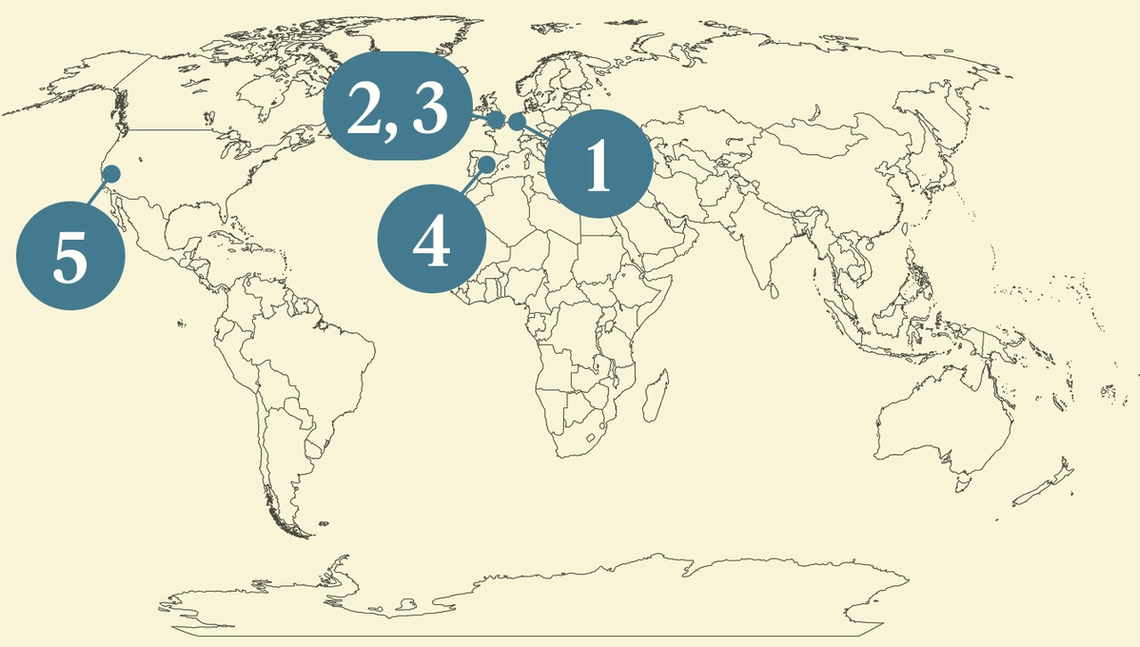
 As Russia again ramps up its attacks on Ukraine’s electricity grid ahead of the winter heating season, this time Kyiv has a new ally in its corner: El Niño. Last week, 8,000 households around Ukraine temporarily went dark after the Kremlin’s first large-scale grid attack since last winter. It was a disheartening preview of things to come: Just seven months ago, Ukrainians emerged from their harshest winter since the full-scale invasion, when relentless bombardment of energy plants and substations left many with no heat and few hours of daily power access for weeks at a time. This week, Russia’s Defense Ministry made clear that more of the same is coming following a record campaign of strikes by Ukraine’s long-distance drones against Russian oil refineries in the past two months, which according to Kyiv have now taken out more than half of Russia’s refining capacity. Ukraine has good reason to be worried: Moscow’s offensive position in the air war has improved since this time last year, with the deployment of jet-powered drones and a gaping deficit in Ukraine’s missile defense supplies. But a number of factors are working in Ukraine’s favor. Western aid for rebuilding the energy sector continues to flow in; some $250 million in energy hardware is expected for delivery between now and February, according to European officials. Ukraine is entering the winter with a natural gas surplus it didn’t have a year ago, and with a much higher share of its critical energy assets ensconced behind protective concrete barriers that are surprisingly effective at blunting damage from all but direct missile hits. More utility-scale renewables are online, and people and businesses across Ukrainian society have learned from successive bleak winters how to muddle through with batteries, generators, blankets, and candles. Finally, and perhaps decisively, there’s the weather. Last year’s winter in Ukraine was the coldest in decades. That’s the factor that turns a blackout from an inconvenience to a deadly threat. This year, however, an exceptionally strong and possibly even record-breaking El Niño weather pattern — driven by warm ocean surface temperatures in the Pacific — is expected to make for a warm and wet winter in Europe. That’s good news for the EU, which is staring down a gas shortage. It could be problematic for Russia, which will also likely be warm but will be exposed to above-average food and fuel import prices. For Ukraine, it’s an asset. But I’m still looking for an apartment with a working fireplace. |
|
High diesel prices ahead of midterms |
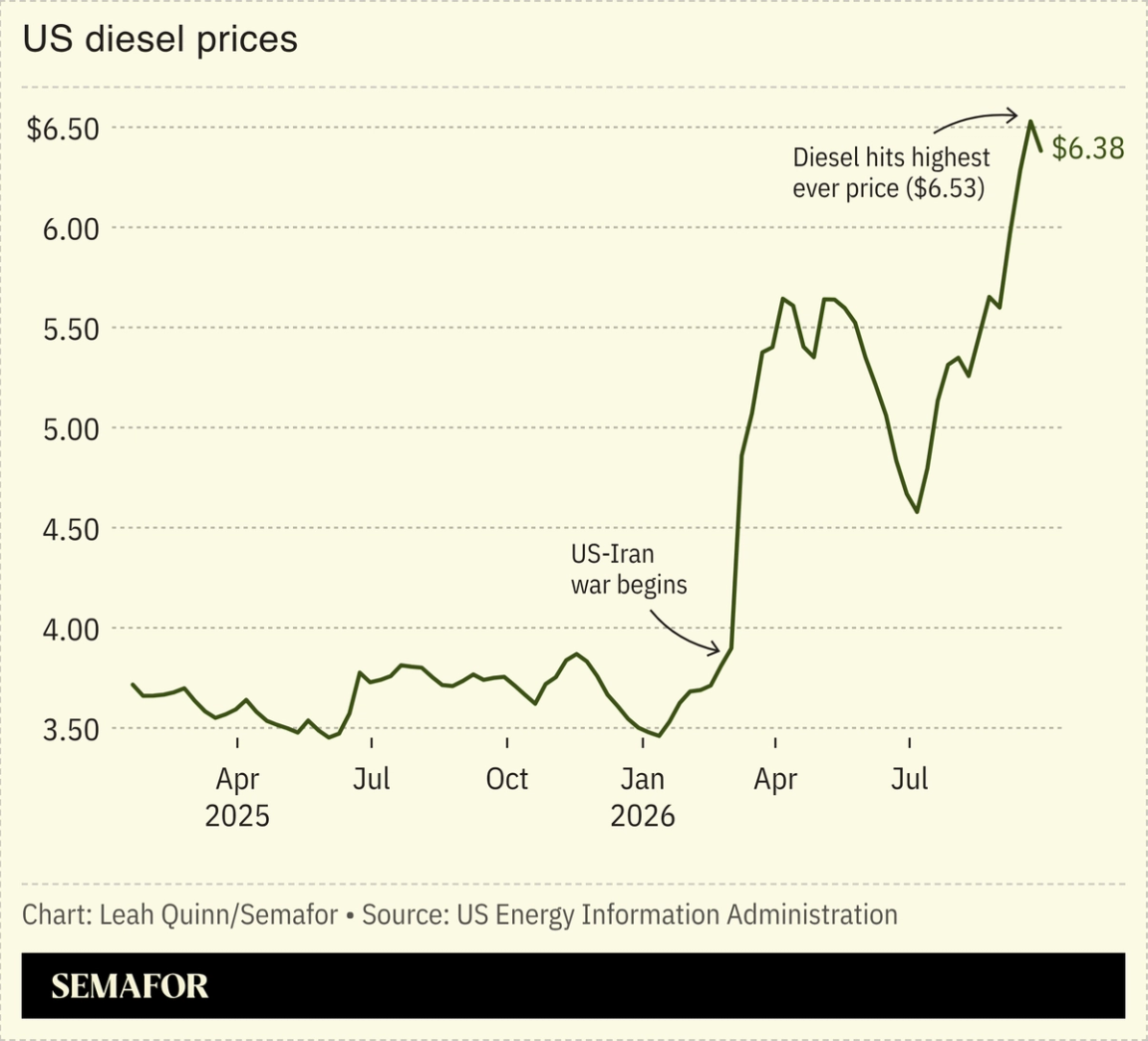 US President Donald Trump is running out of ways to lower fuel prices ahead of the midterm elections. An agreement by European countries to release spare reserves of diesel lowers the odds the Trump administration will impose a US diesel export ban, an approach that analysts said near-universally would backfire. National Economic Council Director Kevin Hassett told Fox News on Friday, just before the deal was announced, that “real relief on gas prices is coming virtually immediately,” and the administration later said it would expand access to tax-exempt diesel. But with just under a month to go until Election Day, there’s not much time to solve the underlying market dynamics keeping fuel prices high. US refineries are set to announce record-breaking profits, but a rush of diesel from Europe’s strategic reserves — precipitated by what some European leaders perceived as “blackmail” by the Trump administration — will disincentivize further US refining boosts. Meanwhile, attacks on tankers in the Strait of Hormuz are rising again and global oil reserves are “scarily thin,” Saudi Aramco’s chief executive said. |
|
Brookfield sharing the AI pot |
 The world’s biggest money managers, usually fierce rivals, see enough profit ahead in the data center power boom that they’re willing to play nice with each other. “There’s enough to go around for all of us,” Brookfield Asset Management CEO Connor Teskey told Semafor of a buildout his firm estimates could cost $7 trillion over the next decade. Data centers, as well as the hardware inside them and the power plants feeding them, are basically the same as bridges, ports, and other unsexy but economically fundamental stuff that firms like Brookfield exist to build, own, and operate — albeit “on a much larger scale and happening much faster,” Teskey said. However, he expects there will still be plenty of losers among data center financiers. For power projects, he’s wary of gas, which is slow to deploy, and keener on fuel cells, onshore renewables, batteries, and nuclear. “If there’s a single narrative that is most starkly divorced from the fundamentals we’re seeing on the ground,” he said, “it’s the idea that the demand for AI infrastructure and the energy and the supply chain that supports it is in some way fragile.” |
|
Greg Jackson’s ‘Octoverse’ |
| |  | Andrew Edgecliffe-Johnson |
| |
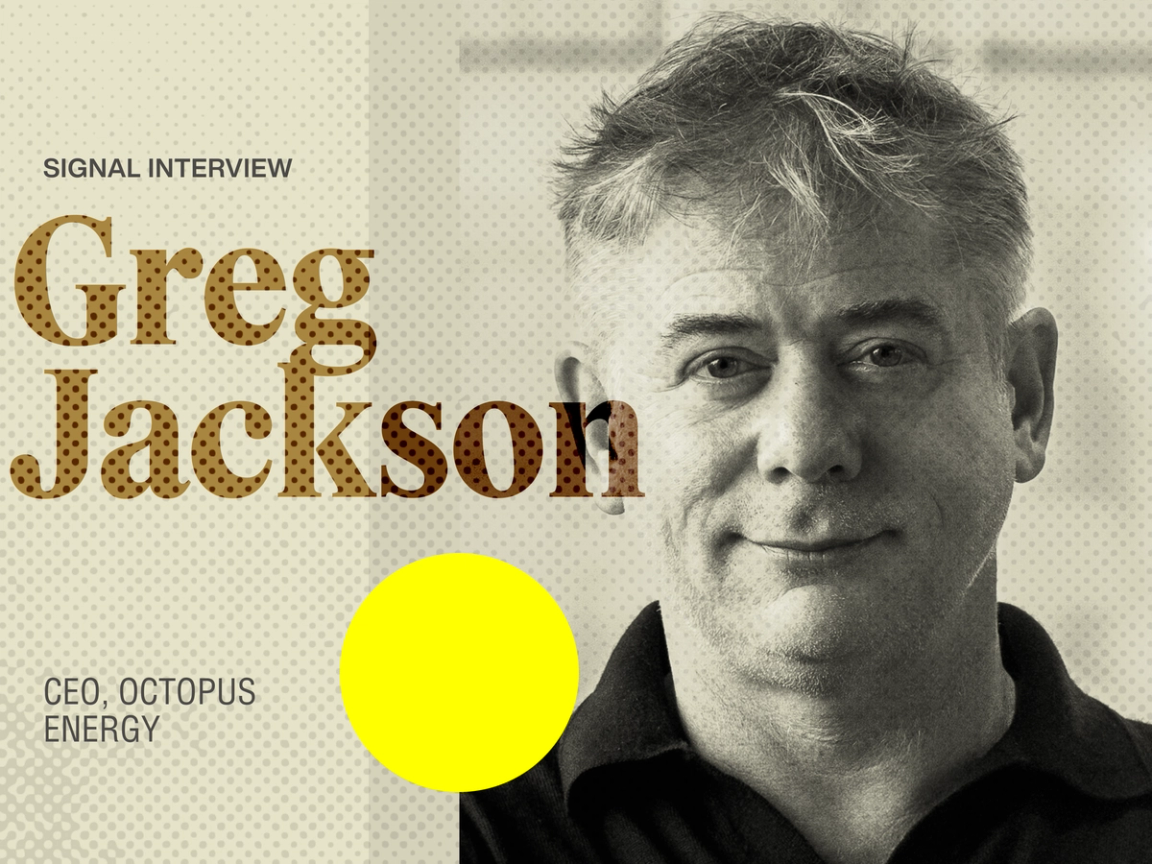 In about a decade, Greg Jackson has turned Octopus Energy from an outlandish idea into Britain’s largest energy provider. It now powers 12 million homes in eight countries, manages wind and solar farms, makes heat pumps, installs smart meters, leases out electric vehicles, and recently spun out its Kraken software, which serves utilities around the world. The tentacles of this “Octoverse” all lead back to Jackson, a serial founder who has built his 13,000-person company without bonuses, HR, IT teams, or a succession plan. His empire may look like an unwieldy one, but it is connected by an underlying insight, he says: “The technologies of electrification can deliver tremendous cost savings — but only if you build a new system.” |
|
Iberdrola takes utility crown |
 Iberdrola, the Spanish electric utility and renewable energy developer, surpassed Florida-based NextEra Energy as the world’s largest power provider by market capitalization on Tuesday, reaching above €141 billion. Iberdrola’s growing strength comes from its broader global footprint, which includes assets in Europe, North and South America, and Australia, a spokesperson said. Both NextEra and Iberdrola have made major investments in utility-scale renewables, and moved to capture explosive demand from data centers and economy-wide electrification. NextEra could be back in the throne soon, however, if US regulators approve its proposed $67 billion merger with Dominion. |
|
US solar makers target China |
 Alyssa Pointer/Reuters Alyssa Pointer/ReutersUS solar panel manufacturers are bullish on a breakthrough technology they believe could threaten China’s dominance of the industry. Manufacturers are racing to develop tandem solar technology that involves adding layers of materials to panels, generating 25% more energy than current devices, The New York Times reported. Chinese companies working on tandem solar are “maybe even behind us,” a US industry group head said. American companies are readying their products for the market, with the CEO of one startup that was awarded a $7.7 million government grant predicting the technology will “dominate the market” within six years. Experts say winning the race could help the US reclaim a share of the 80% of the global market that China controls. |
|
 The politics, policy, and business driving healthcare. Delivered weekly from David Lim, Semafor Healthcare will connect the dots between decisions in government, business, and technology to reveal how they impact the future of healthcare. Each edition will provide the analysis you need to understand and stay ahead of a rapidly changing landscape. Don’t miss the first edition — subscribe for free. |
|
 New Energy Norlys Perez/Reuters Norlys Perez/ReutersFossil FuelsTechPolitics & Policy |
|
|


