| | In this edition, the Fed reviews banks’ private-credit exposure, and how AI is changing the meaning ͏ ͏ ͏ ͏ ͏ ͏ |
| |  | Business |  |
| |
|
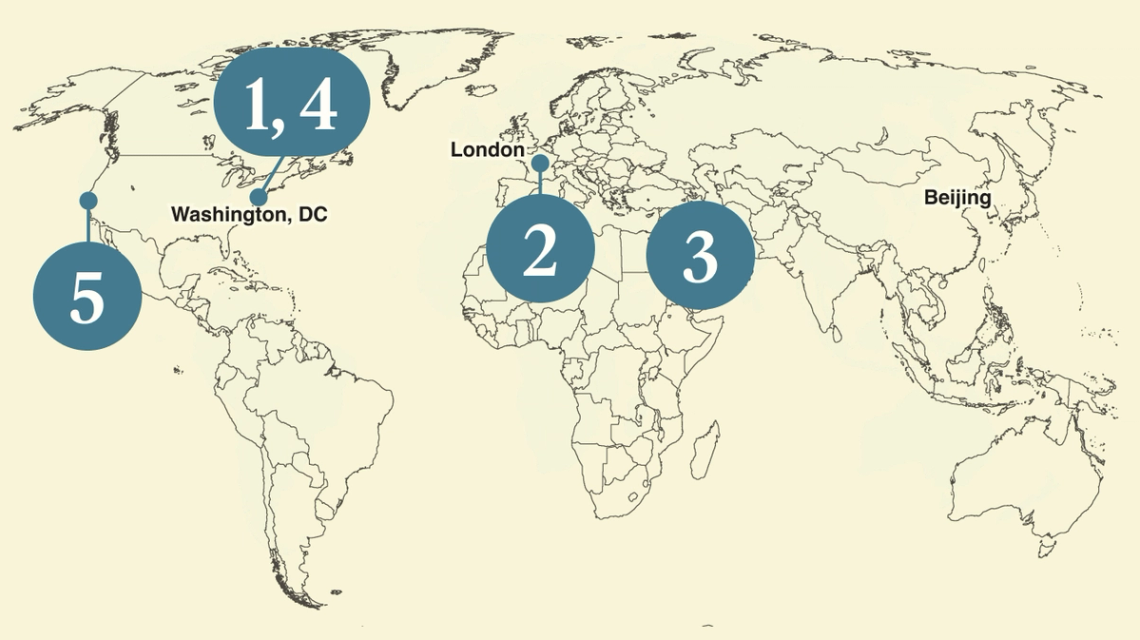 - Fed’s private credit sweep
- Euro bond worries
- Gulf funds steam ahead
- US has open-source, too
- Chipotle-Starbucks tie-up?
 Un-privatizing America’s prisons… Giorgia Meloni trademarks herself … Record earnings, and bonuses, hit Wall Street |
|
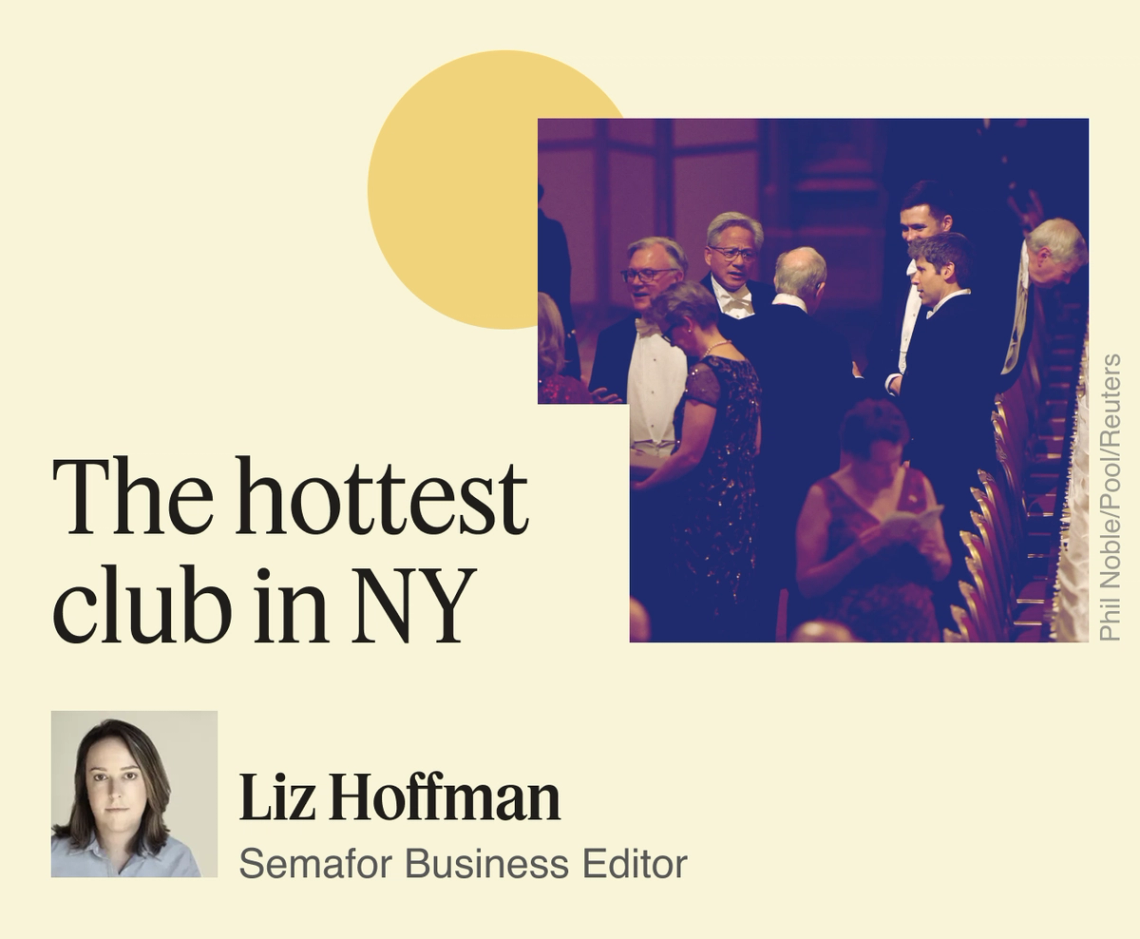 The keys to succeeding on Wall Street are to a) make money and b) make money differently than others. Performance is table stakes; outperformance gets you the glory. AI is messing with that logic. Nvidia’s $500 billion consortium includes the four largest alternative-asset managers in the world and six of the top eight. Blackstone and Apollo are jointly providing billions of dollars for Anthropic to buy compute. Anthropic’s AI-for-the-real-world consultancy offshoot raised $1.5 billion from Blackstone, Hellman & Friedman, Goldman Sachs, General Atlantic, Leonard Green, and Apollo. Nearly every big private-equity firm not on that list is backing OpenAI’s competing version. (Goldman, being Goldman, is in both.) Here is a handy chart. This is not how things usually work on Wall Street, where the goal is to snake investments away from rivals, not share them. The last time private equity clubbed up on deals too big for any one of them to handle solo, we got some of the worst buyouts in history. Some of the crowding can be explained by the sheer amount of money needed. “Why can you get five or six of the leading players at one table? Because there’s enough to go around,” Brookfield Asset Management CEO Connor Teskey told me last week. He thinks there will still be winners and losers in the AI trade as investors stake out corners within it; Brookfield has made bets on sovereign AI in Europe, Blue Owl is an AI landlord, Apollo is a lender willing to take on chip risk. But whether those are different bets or marketing gloss for the same big bet is less clear to me. AI is starting to look like an “IBGYBG” trade, a Wall Street phrase that made it into the US government’s postmortem report on the 2008 subprime crash: “I’ll be gone, you’ll be gone.” Everyone wins if it works, even if nobody looks like a standout genius. Everyone loses if it doesn’t, but nobody looks like a standout moron. The irony is that the investing world was just returning to a place where outperformance seemed possible again when AI arrived. Two decades of easy money had made everyone look like undifferentiated geniuses. A more fractured, risky, and dynamic world of wars, inflation, and tariffs might have encouraged investors to zig where others zagged. “I think we’ll start to see the pull of groupthink become a little weaker, and contrarianism start to pay off,” I wrote in early 2024. Oops. |
|
Fed reviews banks’ private-credit exposure |
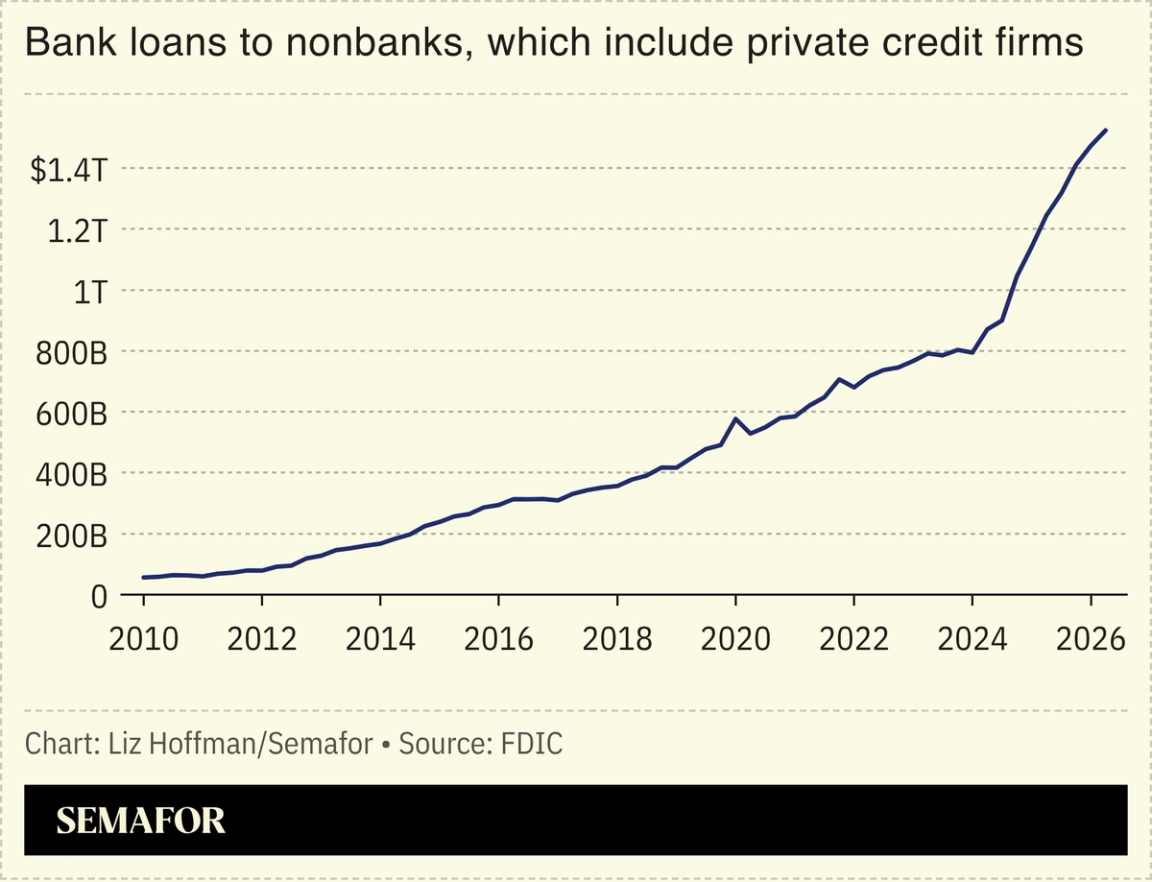 A booming corner of Wall Street is getting a closer look from regulators. Officials from the New York Fed have been on a tour of big banks in recent months asking questions about their lending to private-credit firms, Semafor’s Ellen DiMauro scoops. JPMorgan, Morgan Stanley, Wells Fargo, and Barclays have all been visited by regulators seeking to understand the size of their exposure, how they manage risk, and what kind of collateral they’ve lent against. This type of lending — yes, loans secured by other loans — has been one of the fastest-growing areas in finance, from a near-dead start a decade ago to hundreds of billions of dollars today. It’s included in what the FDIC calls “loans to nondepository institutions,” which has doubled in the past five years and now accounts for about 11% of all bank loans. The Fed’s review comes alongside other signals of concern from global regulators. The Financial Stability Board in May warned about “complex interlinkages” between private credit firms and banks, and the Securities and Exchange Commission issued a rare statement last week that showed it’s looking closely at whether fund managers are valuing their loans properly. — Ellen DiMauro |
|
FROGS replace PIIGS in European debt scare |
 Denis Balibouse/Reuters Denis Balibouse/ReutersPolitical unrest in France, where a fresh bout of protests have turned increasingly violent, is unnerving European bond markets. “You know it’s a European debt crisis when it has an acronym,” a Bloomberg columnist wrote, noting that the PIIGS of the early 2010s — Portugal, Ireland, and other debt-laden countries that dragged the bloc into crisis — have been replaced by FROGS, which stands for French Oversized Government and Social Security. Germany is in deadlock over tax hikes and Spain called for snap elections after a key housing law failed in parliament. France’s debt, swollen by years of crisis-era spending, has reached nearly 120% of GDP and investors doubt its fractured parliament can pass the cuts needed to rein in its deficit. With borrowing costs now above Greece’s and Italy’s, the country had “reached its borrowing limit,” said Ray Dalio, who’s been warning of a global debt bomb for years. |
|
Gulf SWFs on track for record year |
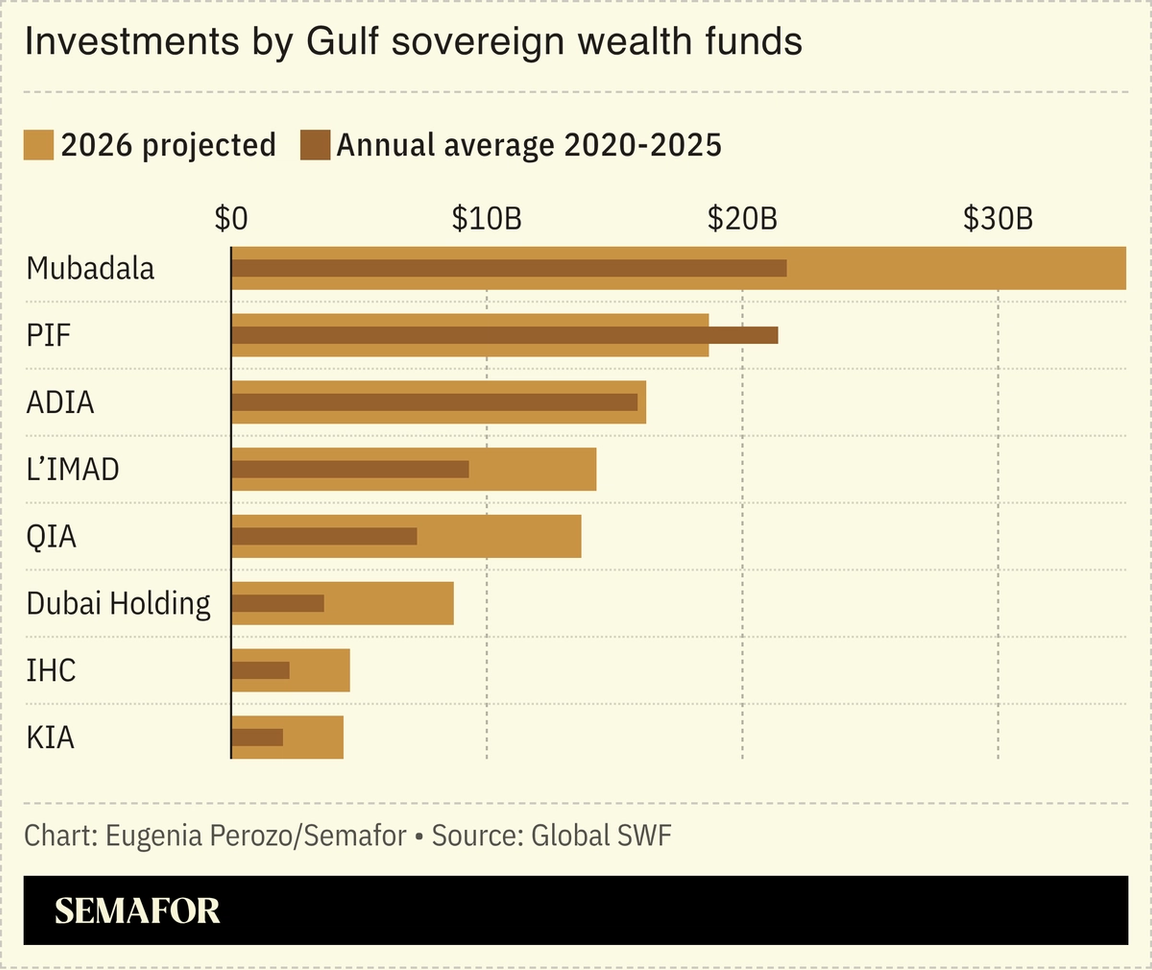 What war? Gulf sovereign wealth funds are on track for one of their most active dealmaking years ever. Regional funds are forecast to invest $136 billion by year-end, the second-most on record, according to consultancy Global SWF. Of the largest funds, only Saudi Arabia’s PIF is on track to invest less this year than it averaged in the previous five years. Nearly half of the region’s investments went to the US. Gulf funds are major backers of the $110 billion takeover of Warner Bros. that closed this week. Kuwait’s and Qatar’s funds may be called on to transfer money to their government budgets to help prop up state finances, hit by the decline in oil exports. But “we don’t think the long term direction of the major pools of capital in that region have changed dramatically,” Brookfield Asset Management CEO Connor Teskey recently told Semafor. — Matthew Martin |
|
 The politics, policy, and business driving healthcare. Delivered weekly by David Lim, Semafor Healthcare will connect the dots between decisions in government, business, and technology to reveal how they impact the future of healthcare. Each edition will provide the analysis you need to understand and stay ahead of a rapidly changing landscape. Don’t miss the first edition — subscribe for free. |
|
A new US open-source option |
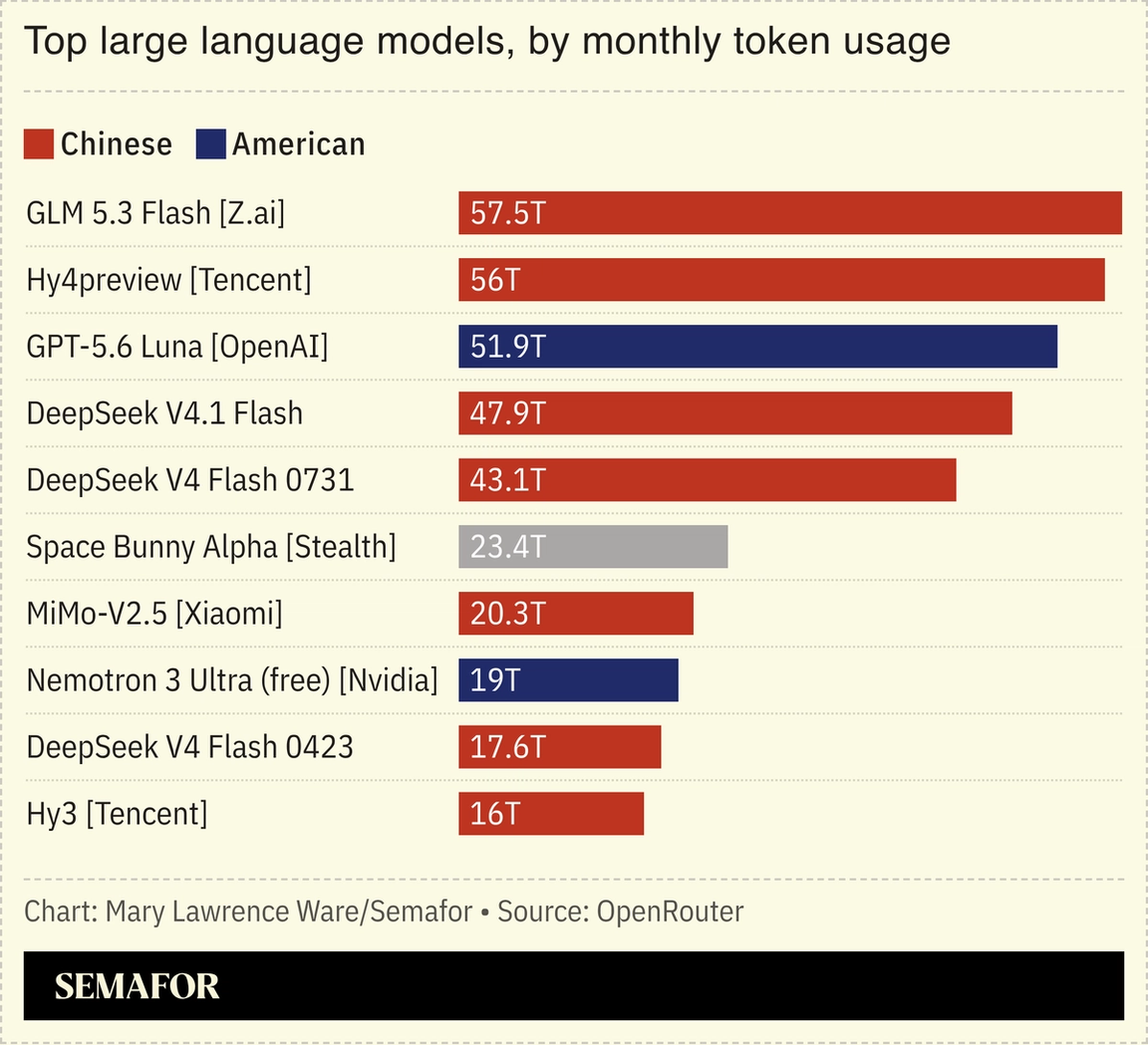 As mistrust of frontier AI labs bubbles over and token costs mount, companies now have a new made-in-America open-source model to consider: the sunnily named Beam from Reflection AI, which bills itself as a natsec-friendly answer to open-weight Chinese models, Semafor’s J.D. Capelouto and Ashley Gold report. The company, founded in 2024 by former DeepMind researchers, is positioning Beam as a “workhorse” that performs better than other Western open models with none of their just-trust-us baggage. The model needs three times less computing power to reason through a problem than comparable open models, CEO Misha Laskin told Semafor, making it faster and cheaper to run. “Any CEO that’s not taking advantage of open-source models is almost certainly wasting a lot of their shareholders’ money,” Pinterest CEO Bill Ready said recently, noting that the company was experimenting with Alibaba’s Qwen model for chatbots and other tools. Corporate candor has been met with congressional inquiries. |
|
Chipotle’s takeover prospects |
 Andrew Kelly, Daniel Becerril/Reuters Andrew Kelly, Daniel Becerril/ReutersAfter Semafor reported last week that Chipotle had tapped bankers to fend off a potential takeover, we started digging to see who might take over the $40 billion burrito maker. People close to the company tell Semafor that Chipotle hasn’t received a takeover bid, and we’re loath to peddle in deal rumors. But one theory that keeps coming up is notable, either because it highlights the dearth of good ideas out there or because it’s so out of left-field it just might bear entertaining: A Starbucks-Chipotle tie-up. No, we’re not talking about a pumpkin spice burrito bowl (in fact, we’re begging Brian Niccol, the former Chipotle CEO who now runs Starbucks, not to go there.) But a Yum Brands-esque approach where — like KFC, Pizza Hut, and Taco Bell — the chains operate separately but combine their real-estate footprints and back-office operations makes sense on paper. Niccol worked at Yum for more than a decade and understands that scale matters in razor-thin restaurant margins. And Starbucks could provide a platform to grow Chipotle’s nascent international business. Starbucks declined to comment. Chipotle did not return a request for comment. Of course, Starbucks would instantly rerate at a lower multiple if it pursued Chipotle, and would likely have to sell new stock to pay for it, further pressuring shares that are flat since Niccol took over in 2024. It would also require a pretty gutsy board of directors willing to make another bet on a CEO it’s still getting to know — and who has yet to prove out the turnaround strategy at his own company. — Rohan Goswami |
|
➚ BUY: Saints. While regulators fight over who oversees prediction markets, another authority has emerged channeling a higher power: “morally wrong,” declared the Mormon church, to the much-memed dismay of YOLO-ing Saints. ➘ SELL: Jets. The Trump administration says it has “shut down” Iranian air travel, but this Boeing 777 is still flying. “The danger is in your mind,” one passenger told The New York Times. |
|
 Van Gogh, Châtaigniers en fleurs (1890). Sotheby’s/Blaquier-Arrieta Collection. Van Gogh, Châtaigniers en fleurs (1890). Sotheby’s/Blaquier-Arrieta Collection.A great wealth transfer is underway in the art world, and it’s shaking masterpieces loose. Works by Van Gogh, Cézanne, and Renoir are heading to auction at Sotheby’s from one of the most distinguished private collections in Argentina. UBS estimates that nearly $83 trillion worth of private wealth, including art, will change hands in the next two decades. Today’s rising collectors can finally say: Thanks, boomers. |
|
|


