|
Years ago, I was taking a tour through the labs at the Massachusetts Institute of Technology in Cambridge with Nicholas Negroponte, the founder of the Media Lab, when I asked him about the speed of technological change in society. He was showing me all sorts of advancements that hadn't come to market or society yet, like self-driving cars and 3D printers and drones, all of which he predicted would arrive within the next decade (he was right). When I asked about the limitations of technology, Negroponte said the biggest challenge wasn't how fast the chips and code could advance, but whether society itself could
handle it. He predicted (so far, also correctly) that the speed of change over the next 20 years would be bigger than the speed of change over the past 20,000 years.
I have thought about that answer repeatedly, partly because I have been writing about technology for a little over two decades, and each time a new advancement arrived -- social media, smartphones, driverless cars -- I was fairly sure I was watching the fastest thing I would ever cover.
I was wrong.
Nothing compares to the speed of change with artificial intelligence. It has the potential to create new medicines, cure cancer, usher in the end of humanity, or all of the above. Seeing just how quickly AI has permeated society as of late, I'd argue that the speed of technological change over the past two years alone has been equivalent to the speed of change over the past 20,000 years.
Four years ago it showed up in the form of ChatGPT, which was, more or less, a very good search engine that could write you a passable limerick about a toaster that could speak in the tongue of the King James Bible after a few too many beers. Today, as Clara Shih, a former AI executive at Salesforce and Meta, told Jon Wertheim: a software product that once took dozens of people to build can be done by one, two or three people working with AI agents. She also warned that it could result in a lot of people losing their jobs, starting with entry-level workers.
Some economists, including Daron Acemoglu, the Nobel Prize-winning MIT professor who spoke to Jon in our piece
, warn that unemployment could triple within a decade if we stay on our current course. Then there are the tech founders who like to say that there won't be job loss, but that we will live happily ever after working alongside machines, the way we interact with ATMs and washing machines today. Kim Herlihy, a trial lawyer in Columbus who has an AI version of herself that critiques her opening statements, told Jon that AI is "never gonna walk into the courtroom and give an opening statement to the jury."
Maybe she's right, for now, at least.
What is clear is that the speed of change in AI isn't slowing down anytime soon. To illustrate that, we used AI ourselves to show that no one is safe from the potential job apocalypse, by having an AI Jon host the beginning of our introductory studio. Watch the behind-the-scenes video showing how we made an AI correspondent below (or you can always just have AI watch it for you).
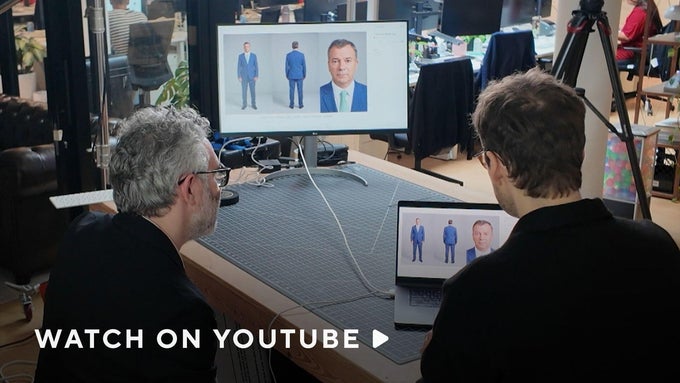
Which brings me back to Negroponte's predictions. All these years later I am still not sure if society can handle the speed of change that is about to envelop it, and watching a computer do a very passable impression of Jon Wertheim before the real one walked out told me we might not be far away from finding out.
Until next week...
Nick
|