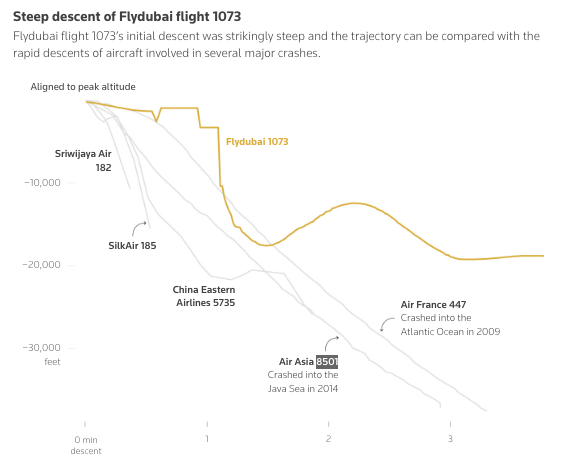
The flydubai co-pilot who stabbed his captain in an alleged attempt to crash the plane has told UAE interrogators he planned the attack before he was hired by the Dubai state-owned airline, according to two Israeli officials with knowledge of the probe.
Right-wing Brazilian Senator Flavio Bolsonaro will face leftist President Luiz Inacio Lula da Silva in a runoff of the presidential election after Bolsonaro exceeded expectations in the first-round vote with a slight lead over the incumbent.
Kryvyi Rih, the hometown of Ukrainian President Volodymyr Zelenskiy, is struggling to survive. The financial squeeze on the city underlines the challenges facing Ukraine as the government navigates its biggest budget crisis since Russia's 2022 full-scale invasion.
The woman at the center of the Cornell University rape case has been the target of threats, her lawyer said. The identity of Jane Doe has become part of fevered conversation surrounding the case. Women on social media have been posting #IamJaneDoe to counter those who have sought to name her publicly.
Schneider Electric at the Global Industrie exhibition in France. REUTERS/Benoit Tessier
France's Schneider Electric struck its biggest deal ever, agreeing to buy PTC in an all-cash deal valuing the US software company's equity at around $22.6 billion.
The US Supreme Court is set to hear a bid by oil companies ExxonMobil and Suncor Energy to thwart a lawsuit by officials in Boulder, Colorado, seeking monetary damages for harms caused by climate change, as the justices open a new nine-month term.
A former OpenAI safety employee who recently resigned criticized the company's approach to AI safety, arguing that a fast-paced culture focused on rapid development increases the risk of failures.
Crude oil exports from the Middle East rose above pre-war levels in four of the seven days of the final week of September despite attacks on vessels passing through the Strait of Hormuz.
Europe's uptake of electric vehicles is gaining momentum, with record sales so far this year driven by a slew of affordable models coming onto the market to bring carmakers in line with EU targets.
Children play football outside a market in Asmara, the largest city in Eritrea. REUTERS/Monicah Mwangi
Eritrea has long been isolated by the West, which views the East African country as among the most repressive in the world.
This small country of fewer than 4 million people has nonetheless acquired new geopolitical significance this year, during the Iran war, owing to its 1,000 km coastline along the Red Sea shipping route. The route has proved a critical alternative to the Strait of Hormuz.
Attacks on Red Sea trading vessels by Iran-backed Houthi militants in Yemen, which faces Eritrea across the route’s southern chokepoint, have made Eritrean waters potentially the most secure transit corridor.