Meta is building one of the world’s biggest undersea cable networks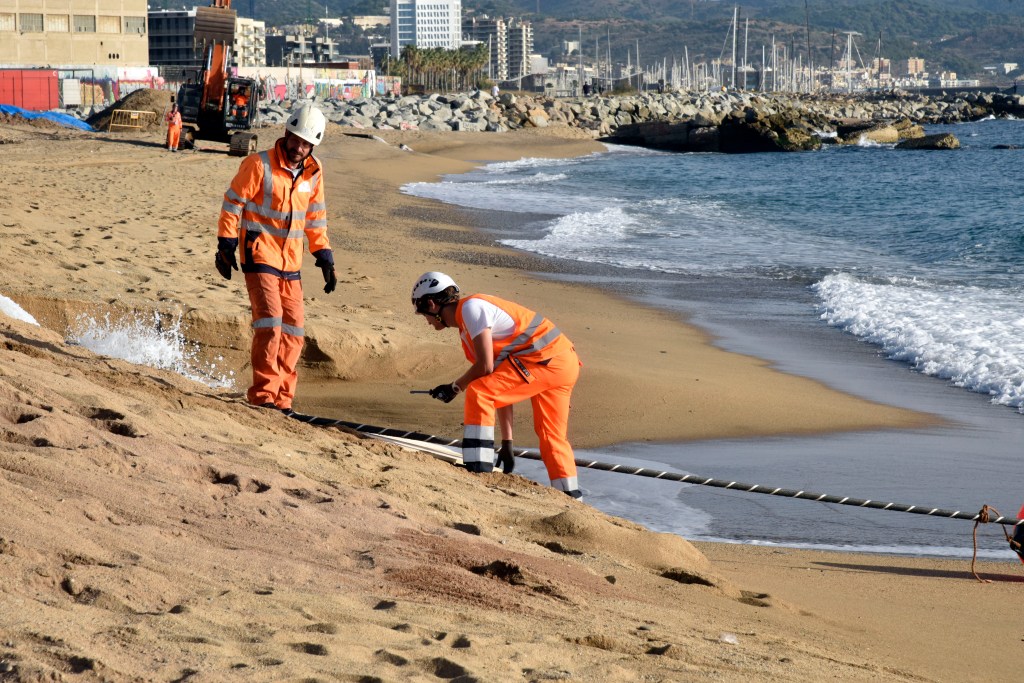
The 2Africa submarine cable arrives in Barcelona, Spain on October 25, 2022. (Photo: David Oller/Europa Press/Getty Images)David Oller/Europa Press/Getty Images
While data centers dominate headlines amid mounting local opposition over electricity bills, water use, and zoning fights, Meta has been expanding its infrastructure somewhere far less visible: the bottom of the ocean.
On Sept. 21,
the company announced Petal, a roughly 4,300-mile subsea cable connecting the U.S. and France. Meta says the cable, expected to enter service in 2029, will be the first to deliver petabit-scale capacity across an ocean—double what today’s most advanced transoceanic cables can handle, thanks to “two-core fiber” that fits two light paths inside each strand.
Projects like this rarely make headlines in an industry fixated on AI models and apps, but they’re what make those products run. Products like Meta’s personal AI agent Muse depend on moving enormous volumes of data between its data centers and its users around the world.
Subsea cables aren’t new territory for Meta, which is now valued at roughly $1.85 trillion. The company has spent the past decade building its presence on the seafloor and says it has invested in more than 20 subsea cable projects. Taken together, those projects touch every continent except Antarctica.
The most ambitious is Project Waterworth, announced in February 2025. Meta says the system will stretch more than 31,000 miles, longer than the Earth’s circumference. It will connect the U.S., Brazil, South Africa, India, and other regions across five continents.
Meta hasn’t built all of this alone. Petal is being developed with Japan’s NEC and Sumitomo Electric Industries, and French telecom Orange is handling the landing on France’s Atlantic coast. Meta has even partnered with rivals: The MAREA cable between Virginia and Spain, completed in 2017, is jointly owned with Microsoft and telecom company Telxius.
These projects don’t come cheap.
TechCrunch estimates that the Waterworth project could top $10 billion.
—James LaForge