|
|
|
Newsletter continues after sponsor message
|
|
|
Proponents of genetically modifying embryos say the technology could allow people with devastating inherited diseases to have healthy children. Critics worry it could lead to a genetically stratified dystopian future, as imagined in A Brave New World or the film Gattaca. But no matter what you think about it, companies are developing such embryos, and hoping to change the U.S. law that prohibits using them to create babies. NPR’s Rob Stein got exclusive access to tour the labs of one of these controversial startups, Origin Genomics in New York City.
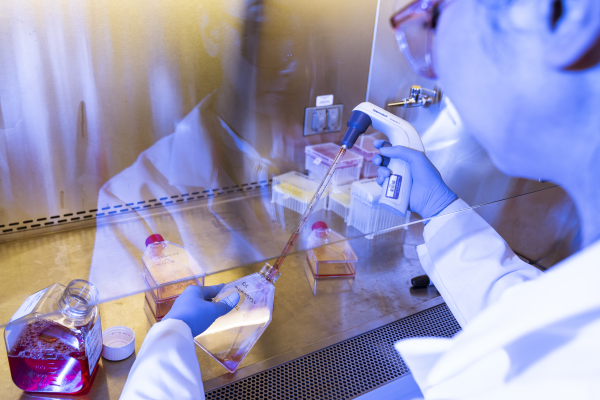
The embryos at the lab were donated by couples whose families have been plagued for generations by life-threatening genetic disorders like Huntington’s disease, cystic fibrosis and hereditary cancers. Scientists extract stem cells from the embryos to see which of their experimental gene editors might safely correct the genetic defects.
"What we are proposing is something completely revolutionary: Apply this amazing precision genome editing to embryos that have a mutation before they are born," says Cathy Tie, founder and CEO of Origin Genomics (pictured above). "That allows the next generation to not be born with these diseases. It changes the entire paradigm of medicine as we know it."
Most scientists think it's still premature to try to use genetically modified human embryos to produce babies — and it may never be safe. But newer, more precise gene-editing techniques, such as prime editing and base editing, have improved the accuracy of the technology.
Other companies are already screening embryos for traits like IQ and height in addition to risk for diseases. "I just don't think they're being honest with us about why they're really doing this," says Fyodor Urnov, who studies gene editing at the University of California, Berkeley. "They're really in the business of embryo — and thus ultimately baby — improvement."
Stein also spoke with a Manhattan couple who provided embryos for Origin’s lab, and are also investors in the startup. Nicole and Asaf Ezra have been struggling to get pregnant through IVF. But most embryos they’ve produced contain an inherited genetic mutation that causes polyps in the digestive system. Many of Nicole’s relatives who carry the mutation have developed colon cancer.
"We just don't want to pass on cancer to our kids," Asaf says. "Who would want that, right?"
Check out the full story to see more photos from the lab, and learn more about the weighty debate over creating genetically modified babies.
Also: Scientists are modifying wildlife DNA. Should these species be released into nature? |
|
Now is your moment.Public media is our collective right to a free and independent press in action.
Our journalism is free of corporate or political influence — we’re accountable only to you, the public.
But a free press is only sustained if we all take action. Together, we decide whether this service will merely survive… or thrive. Join the community that makes this work possible by donating now. |
|
|
|
|
Erik McGregor/LightRocket via Getty Images |
|
For nearly 50 years, the federal government has said people with disabilities should live, work and learn, in the most integrated setting possible rather than be segregated in institutions like nursing homes.
Last week, a federal judge agreed to strip out mentions of "integration" from federal regulations tied to Section 504 of the Rehabilitation Act, a landmark civil rights law that prohibits disability discrimination and regulates federally funded disability programs. The judge did so after the Justice Department declined to defend its own rules in a lawsuit brought by several states challenging the legality of those rules, as NPR’s Jonaki Mehta reports.
It felt "like a knife in your chest,” when he heard about the ruling, said Bruce Darling, president and CEO of the Center for Disability Rights. “What people are hearing is that the federal government has made a determination that [disabled people] don't have a right to live in freedom, that they can be locked up against their will,” he says.
It's important to note that the court's decision did not undo integration protections tied to the Americans with Disabilities Act (ADA) or those established by decades of case law, says Jennifer Mathis, a disability rights lawyer. But she says the lack of clarity introduced by the ruling will impact disabled peoples’ rights and how states behave. What’s more, states are under pressure from the government to reduce Medicaid spending and “looking for things to cut,” she says. Mathis worries that state leaders will now feel freer to take away funds from programs for community-based living.
"There's nothing that is more cherished and hard-won than the right to live, work and participate and be included in your community," says Alison Barkoff, who worked on disability rights enforcement during the Obama administration and is now a health law and policy professor at George Washington University. She says the disability community is hard at work trying to protect integration.
Thanks to recent advocacy efforts, Barkoff says some members of Congress have reaffirmed their commitment to the rights of people with disabilities to get services they need in their community. This week, a bipartisan group of lawmakers introduced a resolution asserting the federal government's longstanding interpretation of the Supreme Court’s landmark Olmstead decision. Delaware already passed a law incorporating the regulations in Section 504 that were stripped from federal law, and Barkoff says other states are moving in a similar direction. Bruce Darling of the Center for Disability Rights helped draft the Latonya Reeves Freedom Act, a bipartisan bill that would codify integration for disabled people into federal law.
Learn more.
Plus: Meal deliveries can save money and improve health. Will they survive Medicaid cuts? |
|
Malte Mueller/Getty Images |
|
We hope you enjoyed these stories. Find more of NPR's health journalism online.
All our best,
Andrea Muraskin and your NPR Health editors |
|
Listen to your local NPR station. |
|
Visit NPR.org to hear live radio from WAMU 88.5 (edit station). |
|
|
| |
|
|
|
|
|
|
|
|
You received this message because you're subscribed to Health emails. This email was sent by National Public Radio, Inc., 1111 North Capitol Street NE, Washington, DC 20002
Unsubscribe | Privacy Policy |
 |
|
|
|
|
|
|
|