
|



 |
Ahead of PN’s 5th anniversary next week, we’re offering paid subscriptions at the special yearly rate of $40 (or about 16¢ per edition). This newsletter is only possible thanks to the support of paid subscribers. If you’re not already one of them, please sign up and keep PN thriving for many years to come.
Thanks for reading, and here’s to the next five years.
During his first presidential campaign in 2016, amid a strong economy President Barack Obama revived after the 2008 financial crisis, Donald Trump lied repeatedly about the national unemployment rate. Although it was roughly 4 percent, Trump repeatedly claimed that it was 30 percent and even 40 percent.
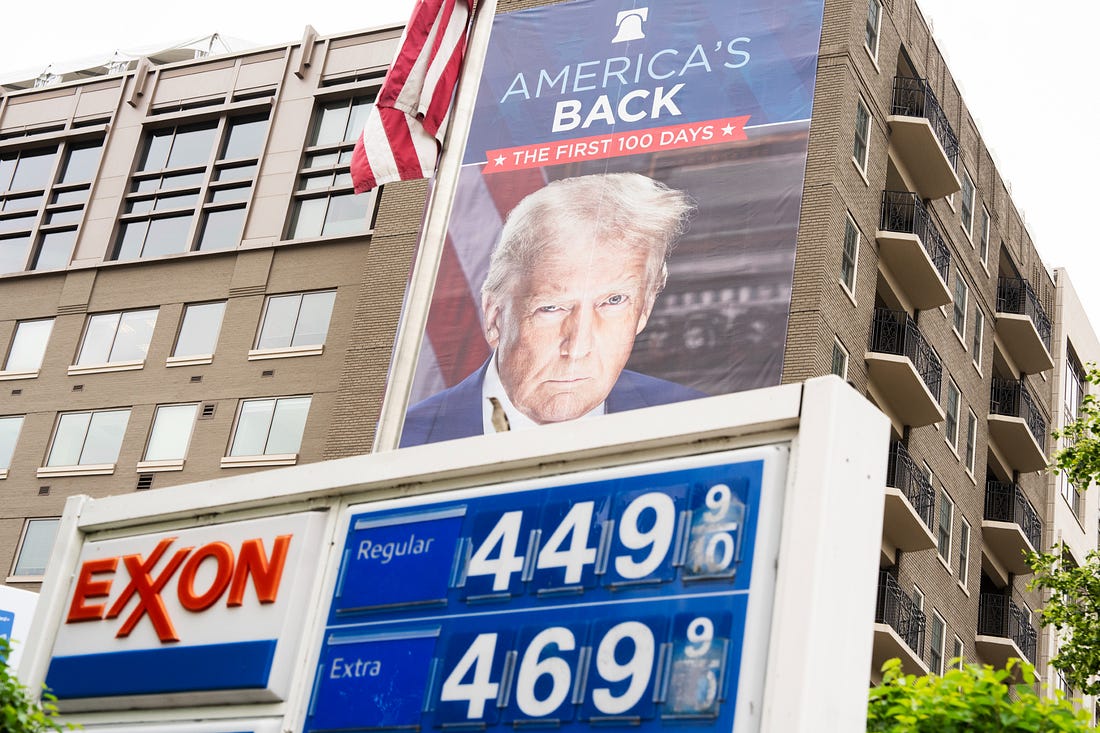
Now Trump faces a paralyzing predicament. There are no public billboards displaying the latest monthly unemployment figures. But Americans can see the real retail price of gas in bright lights displayed at every filling station, truck stop, and highway rest stop they pass.
 |
|
Petrol politics in the 2026 election cycle are doubly damning for Donald because Americans are suddenly focused on the price of diesel almost as much as regular gas. The price of the latter has risen about a dollar since the start of Trump’s war of choice against Iran, but diesel prices have nearly doubled in the 20 months since Trump took office.
This unprecedented, budget-crippling surge in diesel is tanking — so to speak — not only Trump’s approval ratings but the chances that many petrified Republicans will survive an already bad midterm cycle.
Diesel damage
Because their cars run on electric or regular gas, most American drivers have long ignored the diesel prices listed above those separate, differently-colored hoses on the left side of gas pumps. Diesel prices only affect farmers and truckers, right?
Not quite. The price of food grown on farms and delivered by diesel-fueled trucks, not to mention every other commodity thusly delivered, includes diesel costs. When diesel prices rise dramatically, so do prices for most consumer goods.
In fact, in August when diesel cost at least a dollar less than currently, the US Labor Department reported that consumer prices were already 3.4 percent higher than August 2025; the surge in diesel’s price in September should further widen year-against inflation comparisons in the coming months.
Rising diesel prices also affect wha