
| Forwarded this email? Subscribe for more |



 |
| By The Free Press |
It’s Friday, October 2. This is The Front Page, your daily window into the world of The Free Press—and our take on the world at large. Today: Arthur Brooks wants a hobby. Should we bring back the firing squad—or get rid of the death penalty altogether? And much more.
But first: Is Iraq the next front in the Iran war?
Yesterday, President Donald Trump said the war with Iran will be over by the midterms, or soon after. But getting there may be harder than he lets on. Negotiations have stalled over Iran’s nuclear program, which Washington wants on the table now and Tehran refuses to address until its own demands are satisfied, including an end to the blockade in the Strait of Hormuz and the release of billions in frozen funds. Today we have two pieces on where things stand—and why the war may soon spill into a different front.
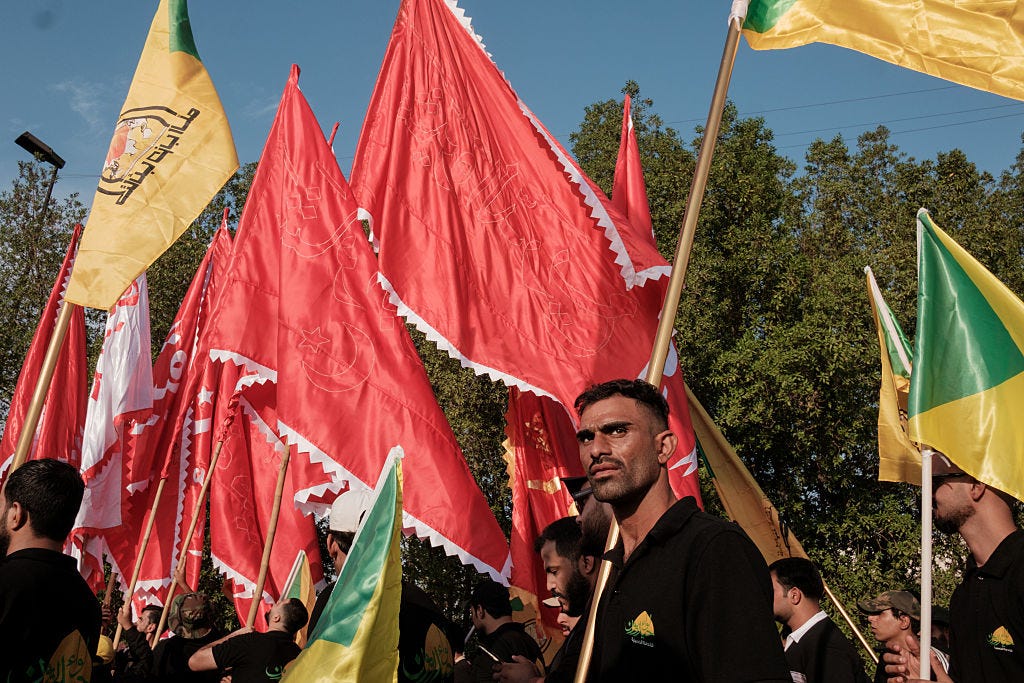
Michael Doran says Trump has the upper hand for now, with American pressure draining Iran’s economy. But the war is shifting power in Tehran from religious clerics to the generals of the Revolutionary Guards. And rather than cut a deal, Doran argues, they’re preparing to widen the war, turning neighboring Iraq into a launchpad against America’s allies. “Iran is indeed undergoing a regime change, just not the one Washington hoped for,” he writes. Read his piece on what the regime is planning.

Meanwhile, the last American troops left Iraq this week, closing out more than two decades of U.S. military involvement there. Elliot Ackerman, who led a Marine rifle platoon there in 2004, calls it a strategic blunder—one America has made before, with disastrous results. Read his column on what we risk by walking away.
—The Editors
 |
A Botched Execution in Tennessee
This week, Tennessee’s attempt to execute Christa Pike, who was sentenced to death in the 1990s for the brutal murder of a fellow student, ended with her surviving two doses of pentobarbital and being rushed to the hospital. Today, we have two pieces on what that failure reveals about capital punishment.
When Oregon revived the death penalty after a three-decade pause, Frank Thompson was the prison official charged with designing how it would work. By the time his job was done, he had turned against the practice completely. Now 83, he talks with Noah Bernstein about his faith and his unusual proposal for lawmakers whose policies determine whether convicts live or die. Read their conversation here.

Lethal injection has become America’s go-to method of execution. Nicholas Clairmont argues that if the state is going to kill murderers, it should bring back the firing squad: a faster, more reliable method that’s honest about what an execution actually is. “If we can’t stomach a killing that looks like a killing, we shouldn’t do it at all,” he writes. Read his piece here.
 |
Arthur Brooks: Mike Tomlin’s ‘Minecraft’ Hobby Is a Lesson in Happiness | |||
 | |||
|