|
|
|
|
|
|
|
|
|
The Home of the Week is a Frank Lloyd Wright-inspired refuge on B.C.'s Pender Island. Nicole Eastman/Nicole Eastman
|
|
|
|
|
This week: Why your property tax bills are a ticking time bomb, and an unconventional way to save for a downpayment. Plus, the case against making mortgage interest payments tax-deductible, and one property worth a look. |
|
|
|
|
|
|
|
|
|
|
Ontario homeowners are sitting on a ticking tax bomb |
|
|
|
|
|
|
|
|
|
|
|
|
|
The valuations Ontario municipalities use to calculate your property bills have been frozen for six years, and many homeowners could be in for a shock if the freeze ends. COLE BURSTON/The Canadian Press
|
|
|
|
|
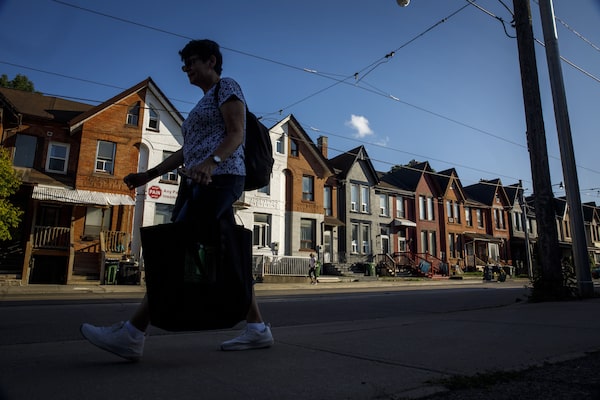
If you own a home in Ontario, be prepared to take cover. Ever since the province froze the price estimate that municipalities use to calculate property taxes in 2020, your bills have been a ticking time bomb. And as Jeff Gray reports, lifting the freeze could have explosive political and financial consequences – but so could leaving it in place. |
|
|
|
|
As you probably well know from your property tax bills, the freeze at 2016-assessed values hasn’t stopped municipalities from raising property tax rates. But if Premier Doug Ford ends the six-year halt, people whose home values rose more than the average in their communities are in for some major sticker-shock when their next bills come in. On the other hand, if your home sank in value, you’ve probably been paying more than you otherwise would have, perhaps by thousands of dollars a year. |
|
|
|
|
So is it time to rip the Band-Aid off? Not everyone agrees, and the Ontario government says it’s consulting on the issue. But if you’re curious about whether you’ve been overpaying or might see your property tax bill skyrocket if the freeze lifts, read Jeff’s story on which homeowners have been most affected. |
|
|
|
|
|
|
|
|
|
|
How house-sitting helped a Yellowknife couple save up a $72,000 downpayment |
|
|
|
|
|
|
|
|
|
House-sitting is an unconventional path to homeownership, but it worked for this couple. Illustration by Diana Bolton
|
|
|
|
|
Could you live for 18 months with no permanent address? One couple decided to give up renting and house-sit full-time in order to save for a downpayment. And while no path to homeownership is easy, not paying rent certainly helps. |
|
|
|
|
Nicholas, 35, an electrician, had discovered the unconventional savings approach in Yellowknife, where he house sat and took care of pets for three months. Then about a year before he and his 36-year-old fiancée, a speech therapist, planned to move to Whitehorse, they gave up renting full time and decided to house-sit full-time for as long as they could. “I was like, ‘This is pretty sick,’” he told Zahra Khozema. “I get this whole house by myself and I get to enjoy some pets.” |
|
|
|
|
To be sure, there were drawbacks: the chaos of living out of boxes and your car, figuring out where to send mail and moving sometimes every few weeks. But how much did they save, and what did it mean they could afford in Whitehorse? Read the story to see where they landed. |
|
|
|
|
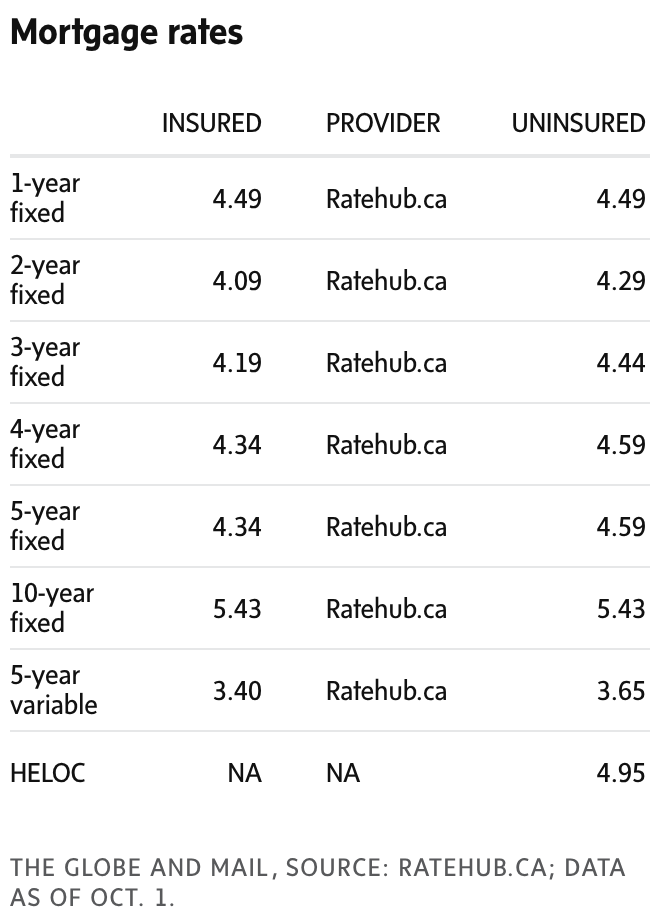
This week’s lowest fixed and variable mortgage rates in Canada |
|
|
|
|
|
|
|
|
|
|
|
|
|
|
|
|
|
|
A clear, simple housing fix (that is also wrong) |
|
|
|
|
|
|
|
|
|
There are many great ways to reform taxes in Canada, but as the Editorial Board argues, letting homeowners deduct mortgage interest from their taxable income isn't one of them. Illustration by Dakota McFadzean
|
|
|
|
|
If you’re thinking of buying a new home, the idea of being able to deduct your mortgage interest from your taxable income might sound like a good one. Developers are lobbying Ottawa for the change, Rachelle Younglai reported
a couple of weeks ago, in hopes it’ll help more buyers afford to purchase newly constructed homes, and would be balanced by the corresponding decrease in their capital-gains exemption when they do choose to sell. However, the Globe’s editorial board argues the proposal is a simple solution to a complex problem that also happens to be wrong. |
|
|
|
|
Just last weekend, we published a number of ways to improve tax policy,
increase fairness across generations and boost rental construction. “The mortgage interest idea is – for good reason – not one of them,” writes the Editorial Board. First, it could inflate demand by allowing people to take on bigger payments, driving up prices for everyone. It could also create an incentive where someone comes out ahead by minimizing their down payment, taking on a larger mortgage, and saving more off the deduction – good for them, but not the federal government’s finances. |
|
|
|
|
And what happens when it’s time to retire and they have remorse for taking the deduction that leaves them to foot a higher capital gains bill when they sell? “It’s easy to imagine the people who took the deduction trying to have their cake and eat it too,” argues the board. “But in the real world, nothing would stop them enjoying the immediate benefit and then clamouring in decades to come for special tax treatment. And if there are enough people in this group they could prove a potent political force, difficult to ignore.” Read the full editorial and decide whether you agree. |
|
|
|
|
|
|
|
|
|
|
Should you ditch your bathtub for a walk-in shower? |
|
|
|
|
|
|