| | Global leaders weigh diesel export bans, and a major Texas data center navigates dicey politics. ͏ ͏ ͏ ͏ ͏ ͏ |
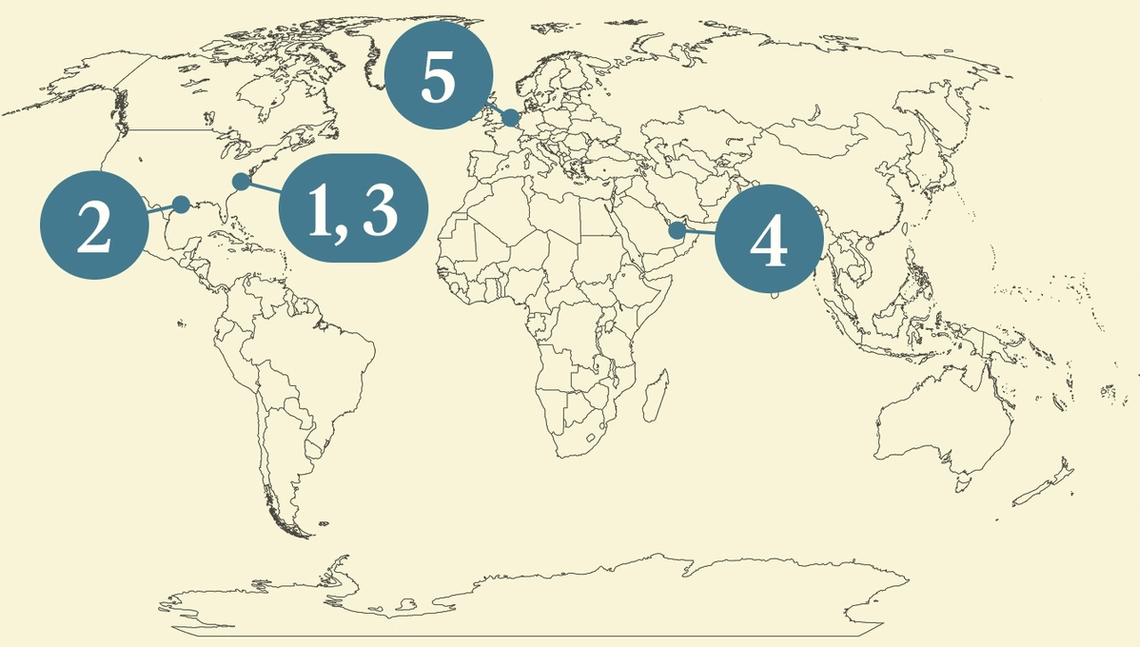
| |  Washington, D.C. Washington, D.C. | Pecos |  Brussels Brussels |
 | Energy |  |
| |
|
 - Leaders weigh export bans
- Data center politics
- Permitting progress
- Fundraising for water
- Emissions gap
 Senate Dems block power price bill, and Western policymakers fret CATL’s battery dominance. |
|
Export bans for high prices |
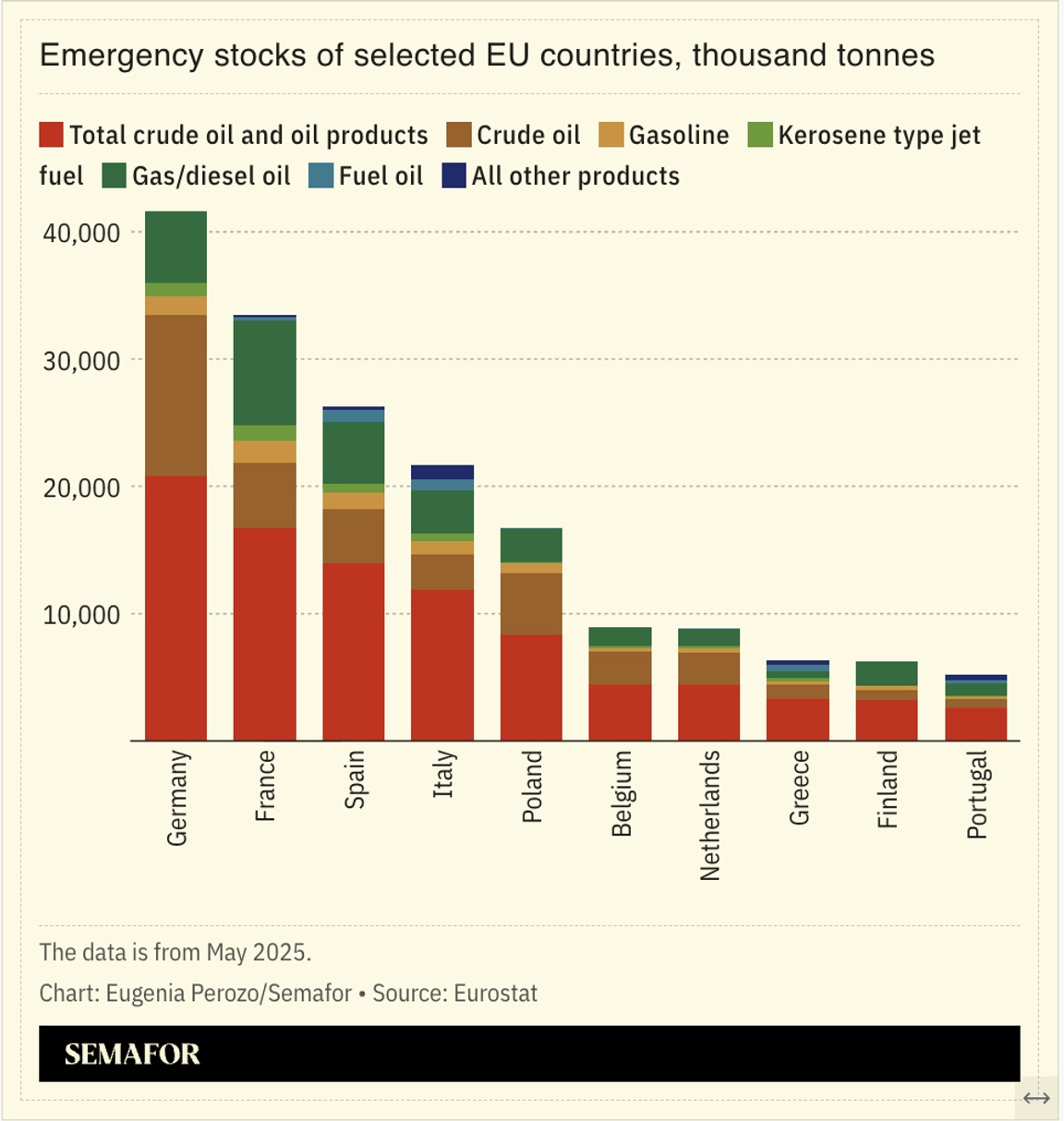 The world’s biggest economies and diesel exporters moved forward with energy export bans amid governments’ attempts to bring fuel prices down, as the world enters the seventh month of the Iran war. US President Donald Trump said a diesel export ban was still an option, despite facing major backlash from his top advisers, the oil sector, and allies wary of the effect further pressure on global supply would have on prices. The US has reportedly told France and Germany that to avoid an export ban they should release 120 million barrels of diesel from emergency stocks — an option which the European Commission is set to discuss today. Separately, Russia extended its diesel export ban for at least another month while China suspended fuel exports in October, a move which will further squeeze global demand in energy markets. There are, however, some signs that oil is starting to flow from the Middle East again. Shipments from the region are now at their highest levels since the war began. |
|
Texas politics could delay data center investment decision |
 Shelby Tauber/Reuters Shelby Tauber/ReutersTexas state politics could delay the final investment decision on one of the US’ largest new data center projects. Project Kilby, a joint venture between Chevron and the newly-formed energy project developer Joulent, is set to use nearly 3 gigawatts of “behind-the-meter” gas turbines — that is, unconnected to the state grid — to power a massive Microsoft data center in West Texas. Preliminary earthmoving work is already underway at the site while the developers finalize construction contracts and await final state permits. But the final investment decision, originally expected by the end of this year, could be pushed to 2027 following a moratorium on new data center permits imposed last month by Gov. Greg Abbott, according to Daniel Droog, Chevron’s vice president for power solutions. In general across the AI infrastructure industry, which has been growing rapidly in Texas, “the permitting and regulatory side has caused some slowdown or potential delay in the system,” Droog said in an interview. Still, Kilby is on track to produce its first electrons by 2028, he said. The project also has some new management: Two former executives from the LNG exporter Cheniere were tapped by Joulent for C-level leadership roles, Semafor is first to report. |
|
Permitting-reform progress |
 Kylie Cooper/Reuters Kylie Cooper/ReutersThe US Senate released long-awaited bipartisan legislation on permitting reform, a proposal which faces an uphill road to passage despite numerous compromises from both parties. The bill is the closest that Congress has come to a solution to the country’s onerous permitting process — universally acknowledged as the most important root cause of US energy problems — since a 2024 effort that ultimately fell apart before that year’s election. The bill restricts the scope and deadlines for environmental litigation against proposed projects, streamlines the process for permitting long-distance transmission lines across jurisdictions, and aims to protect individual energy technologies — fossil fuels or renewables — from being targeted by policymakers. But there are still obstacles ahead: Congress won’t vote on the bill until after the midterm elections, and House Democrats have said they will aim to renegotiate parts of it if they regain a majority in that chamber. |
|
UAE pushes water investment |
 Rula Rouhana/Reuters Rula Rouhana/ReutersThe UAE is pushing governments and private financial institutions to drastically scale up investment in global water infrastructure, a senior government official told Semafor. Although he declined to disclose a specific fundraising target, Abdulla Balalaa, the country’s assistant minister of foreign affairs for energy and sustainability, said that a primary goal of a major UN-backed water summit taking place in Abu Dhabi in December will be to shrink what is currently a nearly $7 billion gap in global water security finance. Despite attacks by Iran on desalination plants this year, the UAE hasn’t experienced a single day of water supply cuts, Balalaa said, in part due to investments it has made in AI-enabled water efficiency systems. But in general, water investment continues to be constrained by a lack of supportive regulation, especially in developing countries: “Water has always been under-prioritized, taken for granted, and held hostage to something else,” he said. “This requires a paradigm shift.” |
|
 Omar Havana/Reuters Omar Havana/ReutersThe EU’s CO2 emissions are declining too slowly to meet its 2030 climate targets, a new report found. While the bloc saw a 2% decline in the first half of 2026, compared to the same period of time last year, if it continues at the current rate, its 2030 targets would only be met by 2034. The biggest drop in emissions came from Europe’s industry and buildings, which saw a 10.8% reduction in oil emissions. This was mostly driven by disruption from the Strait of Hormuz, which squeezed oil supply and fueled prices. The Centre for Research on Energy and Clean Air’s analysis of the 2022 energy crisis suggests some of this decline will reverse, as prices ease and buyers restock. Wind and solar generated more power than coal in the first half of the year, while gas was the only fossil fuel whose emissions grew, despite supply shocks. |
|
 Behind closed doors, a new era of healthcare policy is taking shape. From AI and access to care, to the race for new drugs and China’s growing role in global medicine, the forces remaking healthcare are accelerating, with implications for healthcare systems worldwide. Introducing Semafor Healthcare, your weekly read on the politics, policy, and business driving healthcare. Delivered weekly from David Lim, Semafor Healthcare will deliver the analysis and reporting leaders need to understand the forces reshaping healthcare, and what comes next. Subscribe for free. |
|
 New Energy- China’s CATL leads the charge for large scale batteries that will power the energy sector, addressing a long-standing obstacle for storing wind and solar energy.
- A Pakistani coastal city is at an energy crossroads, as a Chinese coal mega project developed under the Belt and Road Initiative is facing a huge wave of solar energy.
Fossil Fuels- The Trump administration announced a slate of energy projects– including a gas project in Alaska that has been long-delayed due to questions over its viability– as part of a South Korean investment package.
- Executives from Qatar’s UCC Oil and Gas Holding said they are in talks to enter the Venezuelan oil market, after they were handed a license to develop the Loran gas project.
FinancePolitics & PolicyEVsFood & Agriculture Lisa Leutner/Reuters Lisa Leutner/Reuters |
|
|


