| | In this edition, the White House goes it alone on tech accelerationism, and Meta is having a consume͏ ͏ ͏ ͏ ͏ ͏ |
| |  | Technology |  |
| |
|
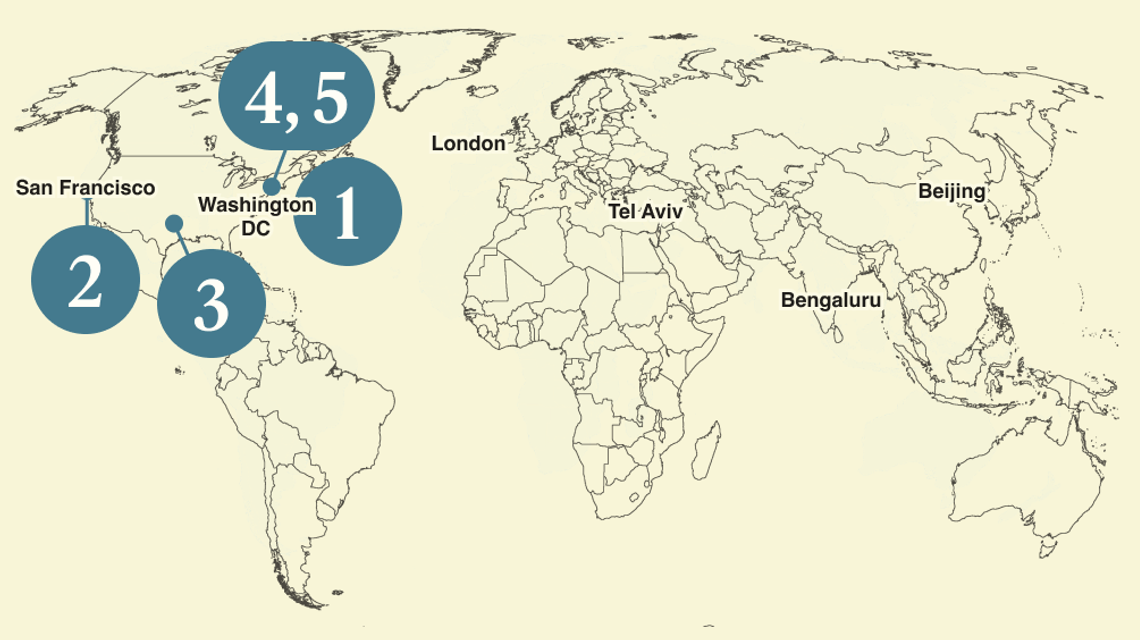 - WH goes it alone
- Meta’s kidult marketing
- Oracle’s warning
- The rise of AI filmmaking
- Will AI solve CEO loneliness?
 The only solution to AI use in academia may be not prohibiting it at all, and McDonald’s bets on AI to salvage its plunging sales. |
|
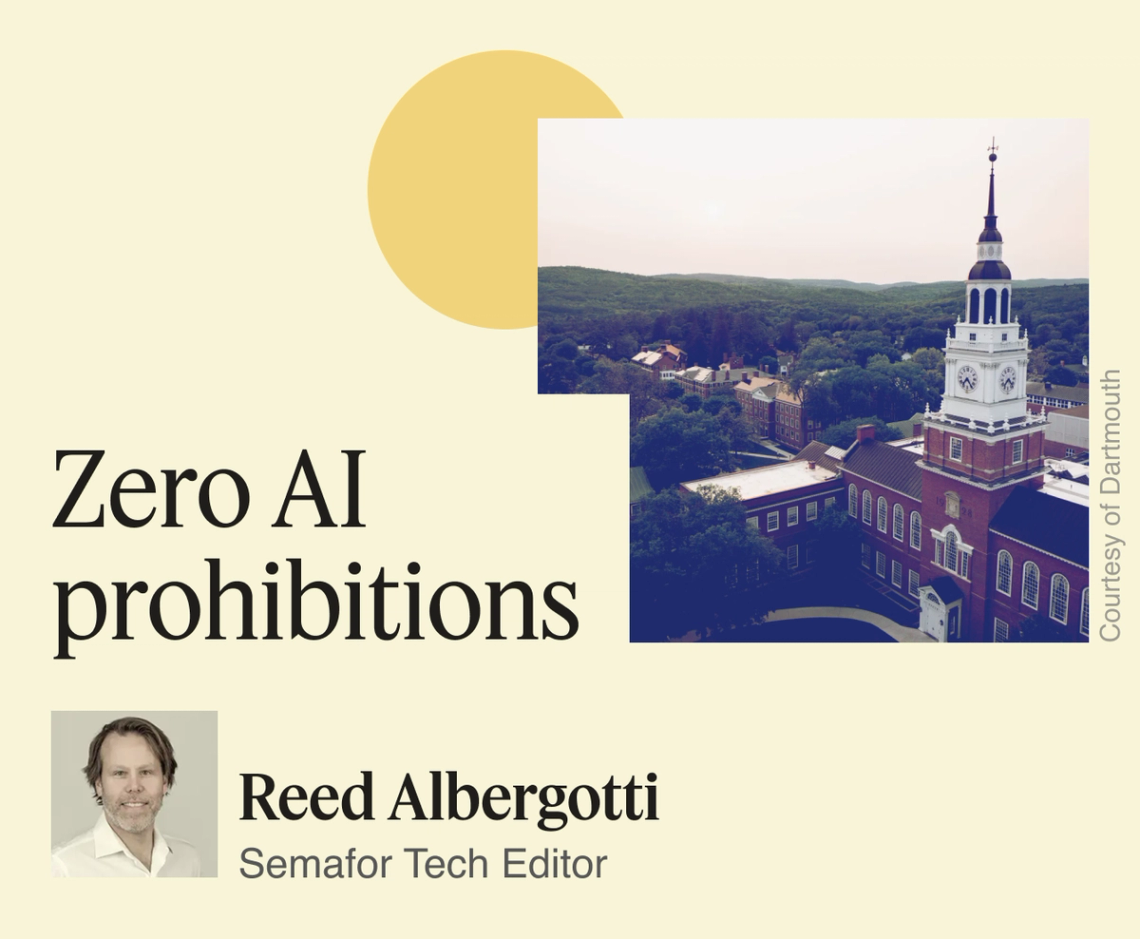 The Dartmouth student newspaper followed our story on its provost’s use of AI with even more examples of his AI-generated writing, including his own statement to the paper in response to its investigation. Dartmouth allows professors to make their own individual AI policies for their classes. But the ongoing coverage highlights a dilemma for universities: If they ban or limit AI use for students, they must also follow those rules (or prepare for a public shaming). Every institute of higher education is struggling with how to manage new technology — Cornell University this past week published its own 240-page report about the future of the American university, which warned of “the rise of AI slop in research publications.” In the publish-or-perish, high-volume game of academia, AI is already an essential tool for anyone aiming for a career atop the ivory tower. That reality leaves only one choice: Zero AI prohibitions. This isn’t as radical as it sounds — and it doesn’t mean students need to outsource their cognitive skills to AI. Professors can still limit technology in the actual classroom and begin expecting more from students’ assignments and professors’ research. That could mean condensing time frames. A research paper that might have taken a quarter could be given a week to complete. Undergrads could be required to do real, publishable research. “In a world where machines can synthesize, generate, and analyze at scale, the university’s most important response is neither to restrict AI nor to embrace it uncritically, but to become far more intentional about what remains indispensable in the learning process,” wrote the Cornell professors. Eventually, AI will give rise to a new archetype of success and prompt academia to assign more value to creativity and less on process. It could allow more students, including those with disabilities like ADHD, to thrive in this environment. The computer age did something similar, amplifying the abilities of the math geniuses and the geeks. Academia can embrace it, or fight it. But it can’t beat it. |
|
WH isolated in brushing off AI safety |
 Shannon Stapleton/Reuters Shannon Stapleton/ReutersThe White House and its allies are lonely in their insistence that AI development in America must accelerate without governments setting ground rules. At the UN General Assembly in New York, as well as in meetings with Chinese leader Xi Jinping in Washington this week, President Donald Trump’s team was clear: US companies are the leaders in AI; they plan to keep it that way; and they reject any international attempts to rein in the technology. Trump, with his call to leave AI “exactly where it is,” contrasts with Xi, who said responsible AI development is necessary — as other Chinese officials said this week that they support a global governance framework. Without official support from the US, however, any such agreement will be difficult to execute. As a result, nations may be left setting nonbinding rules and best practices without the buy-in of the biggest companies’ home country. Meanwhile, frontier labs are pushing forward with their own self-regulatory schemes, which will ask them to agree on testing standards in a highly competitive environment. — Ashley Gold |
|
Meta’s Muse taps kidult market |
 Courtesy of Meta Courtesy of MetaCall it Meta-mentum. The Mark Zuckerberg-led tech giant is having a consumer AI moment after a rough summer of negative headlines about its glasses and social media addiction trials. Now, its new Muse agent is looking like a commercial hit, lifting Meta shares more than 25% since the launch earlier this month. Some analysts predict it could be the catalyst for agentic AI to leap from business to consumer applications. And alongside its new $1,299 VR glasses, Meta this week unveiled a Tamagotchi-like keychain called Muse Charm that allows a user to summon the agent with a tap, featuring avatars of its fluffy Muse mascot. In a world of Labubus and “kidults,” the cutesy aesthetic is a smart play for the company as an antidote to the intellectual and brainy vibe that much of the industry strives for. But like faddish gadgets, video games, and toys, including Meta’s older-generation VR headsets (remember the metaverse?), Charm and Muse risk fizzling out like a summer pop song when the first frost hits. — J.D. Capelouto |
|
The AI school-to-studio pipeline |
 Kris Tripplaar/Semafor Kris Tripplaar/SemaforFilm schools are starting to generate a pipeline of AI filmmakers skilled in using the newest tools to make movies — talent that is easier to hire than to train internal teams on, say film executives. “How do we find people who already know how to use this?” is a common question studios are asking now, said Cristóbal Valenzuela, the CEO of AI-powered software firm Runway. Runway launched its inaugural AI filmmaking course in 2024 at NYU’s Martin Scorsese Virtual Production Center. Courses to train on its tools are now offered at USC, Rhode Island School of Design, MIT, and Harvard, as well as universities across Europe and Latin America. Other AI research labs building AI-enabled creative tools, such as Google and OpenAI, are also teaching filmmakers and other creatives how to incorporate AI into the process. Google offers a residency for creatives experimenting with their AI studio, Flow, to bridge the gap between filmmakers and Google engineers. While AI fluency isn’t yet a prerequisite for movie making, some of the residency’s creatives are betting it soon will be. “You’re going to have to learn how to use [these tools] if you do want to be in the industry,” said Brad Tangonan, a longtime filmmaker and an alumnus of Google’s Flow sessions residency. — Jake Angelo |
|
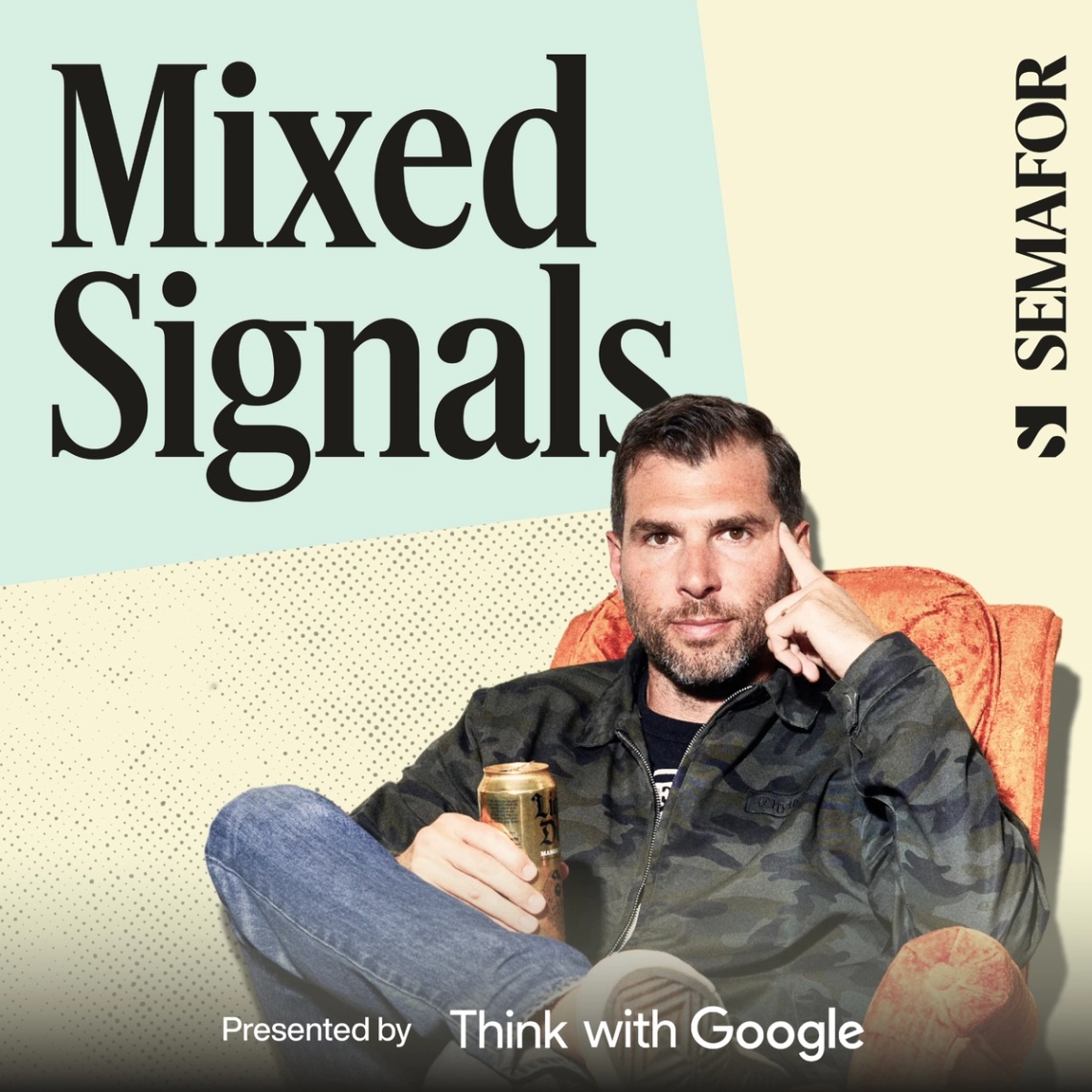 He built a billion-dollar water company by using comedy. On this week’s episode of Mixed Signals, Liquid Death founder and CEO Mike Cessario joins Ben and Liz (who filled in for Max) to explain why he thinks comedy is a more durable marketing genre than celebrity testimonials, why big companies almost never win when they sue smaller ones, and whether Liquid Death will fizzle out into the graveyard of buzzy consumer brands that came before it. Plus, why he thinks comedy is the one thing Coca-Cola can’t buy. |
|
AI’s financial Jenga towers wobble |
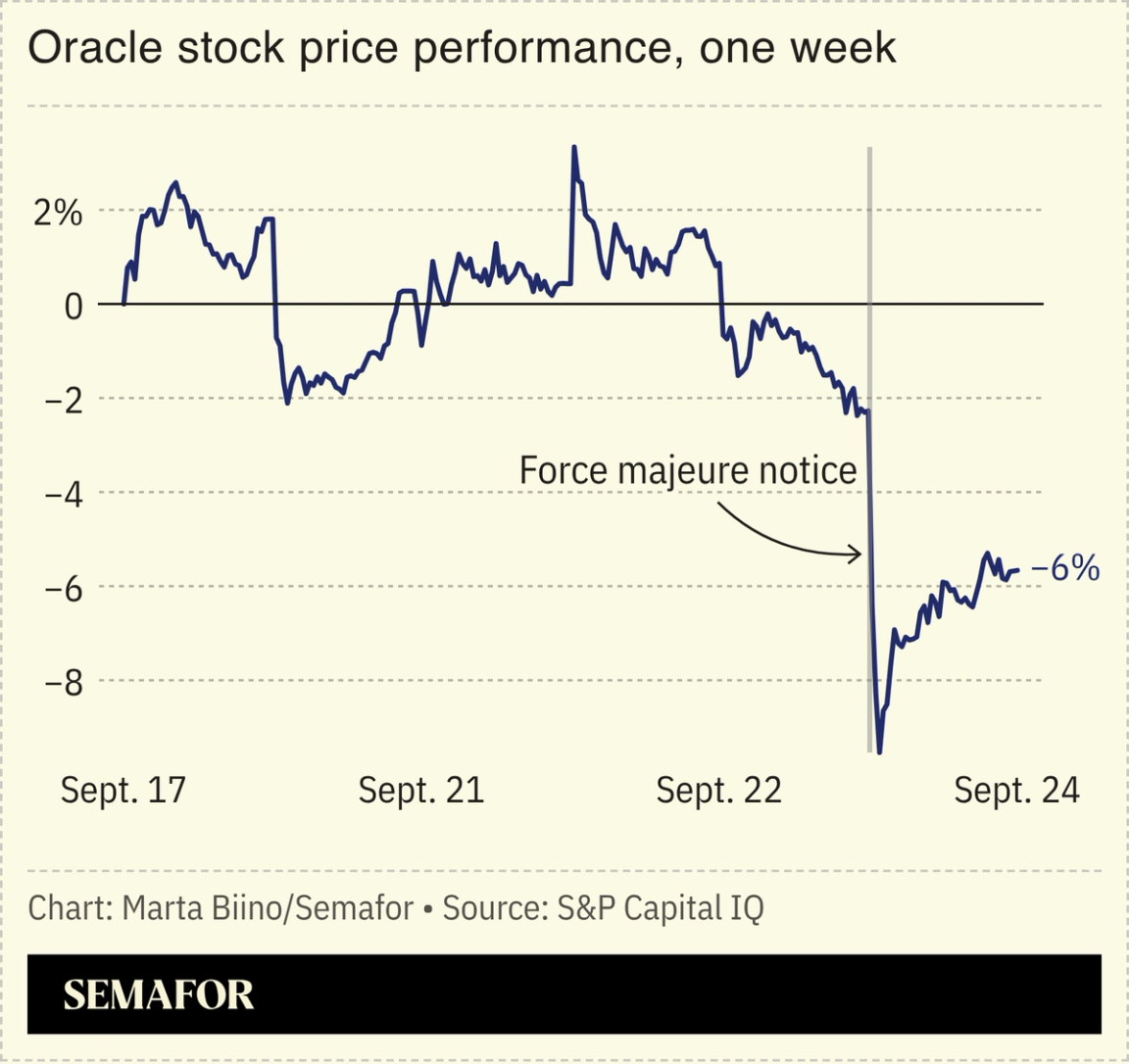 Experts are debating the existential risks of AI, but the financial risks are already here, as local officials and residents near data-center sites push back on the developments. In the latest wobble, Oracle is seeking to delay lease payments on a New Mexico data center that is part of the massive Stargate AI buildout Trump unveiled last year. State officials have repeatedly denied permits for the gas pipeline needed to power the project, delaying its progress by at least six months. Timing is everything in the infrastructure buildout that powers the AI race. In an exquisitely arranged patchwork of loans, insurance policies, and milestone-triggered payments, a single element falling out of place can expose financial backers and insurers to losses that are “going to be dramatically higher than anyone is currently thinking about,” Joe Peiser, CEO of risk capital at insurance broker Aon, told Semafor’s Tim McDonnell. — Liz Hoffman |
|
How AI restructures power |
 Nohria in 2019. © La Nacion via ZUMA Press. Nohria in 2019. © La Nacion via ZUMA Press.AI is restructuring power in large businesses and could make CEOs less lonely, the former dean of Harvard Business School said. Nitin Nohria told Semafor CEO Editor Andrew Edgecliffe-Johnson that AI doesn’t necessarily make the CEO less powerful, but “it makes the corporate infrastructure that CEOs have usually surrounded themselves with feel more threatened.” Nohria sees AI as the defining challenge for this generation of CEOs, threatening the structures on which they and their organizations have long depended. The technology heralds a new era of decentralization, he believes, in which expertise is pushed out from corporate headquarters to the staffers on the front lines. It also “provides opportunities for CEOs to have a virtual board of directors, a new person on the team, and a way of interrogating their own thinking, which may reduce the loneliness of being a CEO.” |
|
 Today, the global sports industry is a $2.3 trillion business, roughly equivalent to Canada’s GDP. By 2050, it could grow to nearly $8 trillion as expanding global audiences, investment, and innovation reshape the business of sport. During an event held on the sidelines of the Presidents Cup, Semafor will convene leaders including Tim Buckley, Senior Vice President of External Affairs, NCAA; Kari Fleischauer, COO, Gotham FC; and Hafsatu Kamara, OLY, Co-Founder, AFRICA RISE and CEO, Sierra Leone Authority of American Football, to explore the forces transforming the global sports industry, from infrastructure investment and international expansion to the continued rise of women’s sports. Chicago | Sept. 26 | Request Invite |
|
 May James/Reuters May James/ReutersMcDonald’s is betting that “Archy,” a new AI drive-thru system, can revitalize the fast-food chain as its sales slump and its stock plunges. The company says the voice-enabled, English- and Spanish-speaking AI has a more than 90% accuracy rate at early-test restaurants, with positive customer feedback. But at other fast-food chains, customers don’t seem to be lovin’ the tech: Burger King, which rolled out an AI-enabled drive-thru system earlier this year, is rethinking its strategy following customer backlash. “There are drive offs because guests don’t want to talk to a bot,” said Chakri So |
|
|


