| | In this edition: Namibia seeks more local minerals processing, Nigeria and the US sign a mining deal͏ ͏ ͏ ͏ ͏ ͏ |
| |  | Africa |  |
| |
|
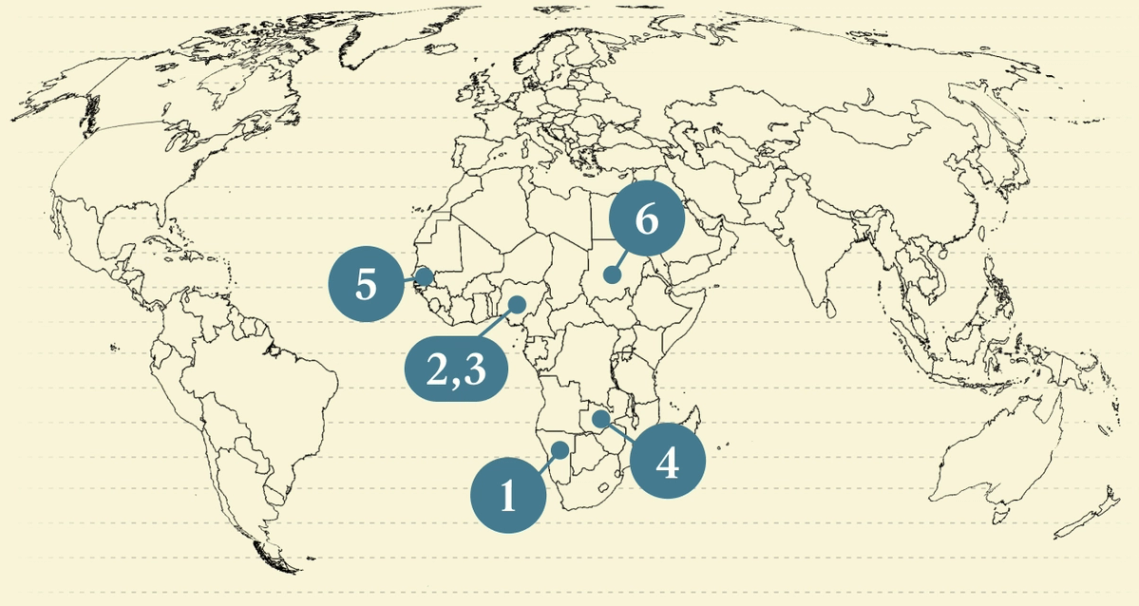 - Namibia eyes local refining
- Nigeria, US minerals deal
- Nigeria’s giant rate cut
- Zambia nears health deal
- AFC pushes Senegal growth
- US ups pressure on Sudan
 Weekend reads, and the auctioning of a rare Ethiopian manuscript sparks outrage. |
|
 One of the most eye-catching features of this UN General Assembly has been the drive to secure deals — particularly for critical minerals — playing out on the margins of the gathering. From the African perspective, the subtext boils down to one word: resilience. These deals offer partnerships, a ballast in a fractured world. And, increasingly, the aim is to partner with other countries closer to home. Mineral-rich African nations are converging around a push to pivot from simply exporting raw materials to a greater emphasis on local processing to add value and jobs that can generate long-term growth. The underlying motivation for African policymakers is to untether their economies from commodity cycles and, by extension, the upheavals that come with them. There are dangers, of course. UN Secretary-General António Guterres warned of potential exploitation around the scramble for minerals. “No more plundering,” he said at an event in New York. But this emphasis on building resilience goes far beyond the issue of mineral resources. It was on show this week at Semafor’s The Next 3 Billion event, permeating discussions on a range of subjects. In public health, the head of Africa Centres for Disease Control and Prevention stressed the need for the continent to manufacture its own vaccines, and to do so in regional groupings. Similarly, Africa Finance Corporation’s head emphasized the role African financial markets and pension funds can play in boosting economic growth. Nowhere is this approach clearer than in energy. That thinking is driving talk of a refining hub in East Africa. And, again, the idea is premised on working together. One key success of Aliko Dangote’s mega-refinery in Nigeria is that it showed the importance of developing autonomy. Africa’s largest crude producer, so long undermined by its lack of refining capacity, doesn’t need to rely on the rest of the world for fuel anymore. Kenya’s trade minister told Semafor that for his country, the lesson is that resilience requires more than securing supplies, but also building the capacity to process them closer to home and doing so at a scale that serves regional markets. That is the logic behind the proposed $16 billion Dangote refinery in Lamu, which breaks ground next week. “Africa is now standing up to its role,” he said. |
|
Namibia demands local processing |
| |  | Yinka Adegoke |
| |
 Eduardo Munoz/Reuters Eduardo Munoz/ReutersNamibia’s president warned foreign investors that access to the country’s critical minerals depended on building processing plants in the country, not just extracting and exporting. “When you are coming to Namibia, you don’t want to be a briefcase business,” President Netumbo Nandi-Ndaitwah told Semafor at an event on the sidelines of the UN General Assembly in New York. The message reflects a recurring theme among African leaders this week as governments seek to turn the global competition for critical minerals into investment, industrialization, and jobs at home. Nandi-Ndaitwah said she will write into law rules requiring foreign investors to partner with local businesses, a goal Namibia has pursued unsuccessfully for 15 years. The country already requires 15% local ownership for new mining licenses, which officials floated raising to 51% last year. Namibia — a major uranium producer, which also has deposits of lithium, rare earths, copper, and graphite — is betting its mineral wealth and stability give it leverage. The pressure is also domestic, with unemployment close to 40%: Nandi-Ndaitwah warned, “we are sitting on a time bomb.” |
|
Nigeria and US sign minerals agreement |
 Afolabi Sotunde/Reuters Afolabi Sotunde/ReutersNigeria and the US signed an agreement to increase Washington’s investment into the West African country’s minerals sector. The investment framework is the latest step in Abuja’s push to compete for investment dollars flowing into Africa’s minerals sector. Governments across the continent are prioritizing local value addition instead of raw minerals exports and are focused on improving processing capacity. Nigeria, which values its minerals sector at about $700 billion, launched a grant program this year that will fund up to 70% of exploration costs by mining license-holders to identify untapped reserves of more than 44 minerals — including lithium, nickel, cobalt and rare earths — across 500 locations. Global demand for many of the minerals has soared in recent years due to their use in the energy transition or digital infrastructure that underpins AI. — Alexander Onukwue |
|
Nigeria on course for rate easing cycle |
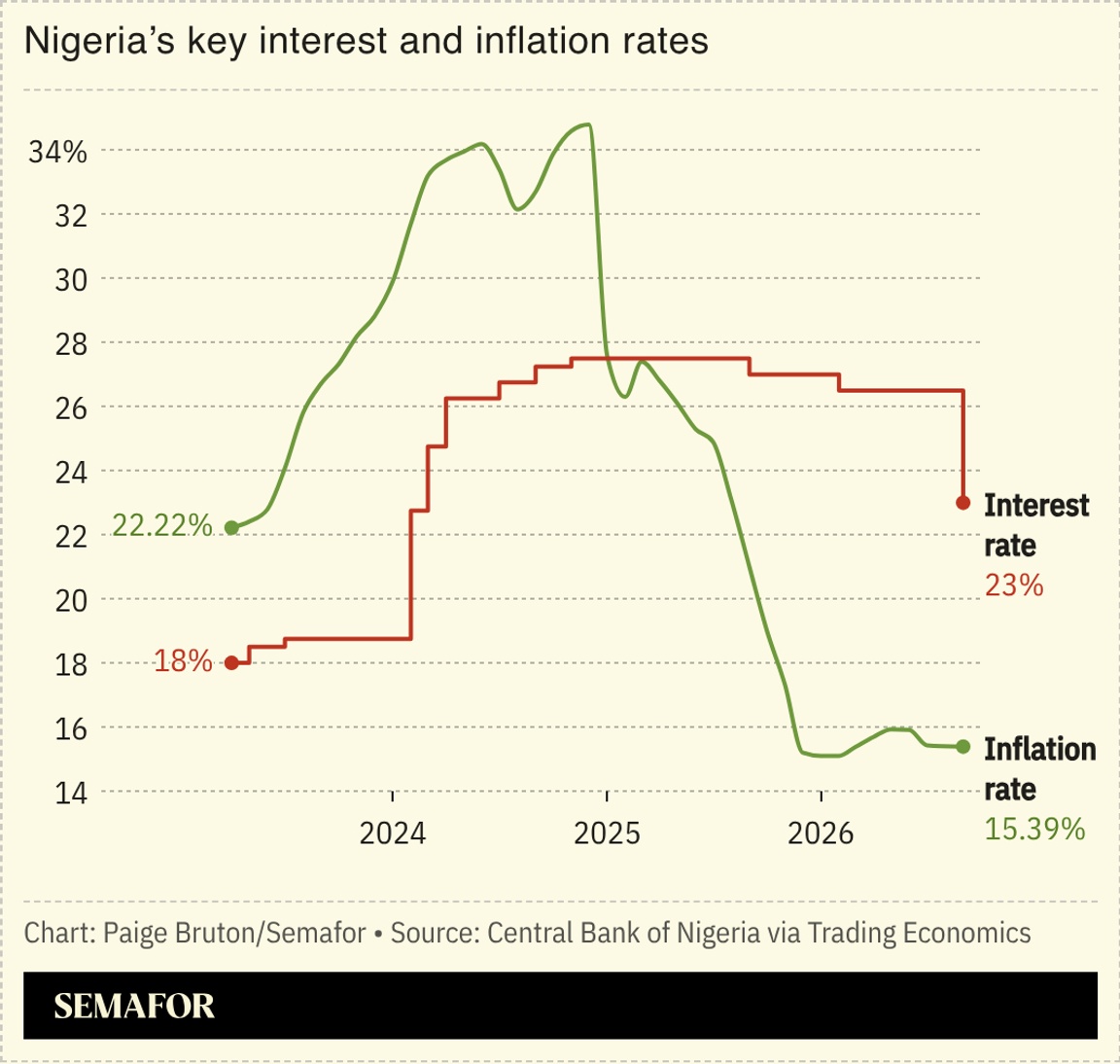 Nigeria’s largest interest rate cut in two decades raised the possibility of an easing cycle next year, analysts said. The central bank said its 3.5 percentage point cut this week was a reset aimed at making monetary policy more effective. The move should help debt-laden firms to refinance existing borrowing or access new capital more easily, Lagos-based investment bank CardinalStone said in a note. The move could also reduce the Nigerian government’s debt service costs, Nigerian economist Bismarck Rewane said. Nigeria has faced high inflation in the three years since the removal of fuel subsidies raised costs for households and businesses. A sequence of rate hikes to tackle inflation is now giving way to cuts, and increased oil and gas export earnings that have boosted the naira should give room for further reductions, said David Omojomolo of Capital Economics. — Alexander Onukwue |
|
Zambia say US health pact close to resolution |
| | | Yinka Adegoke |
| |
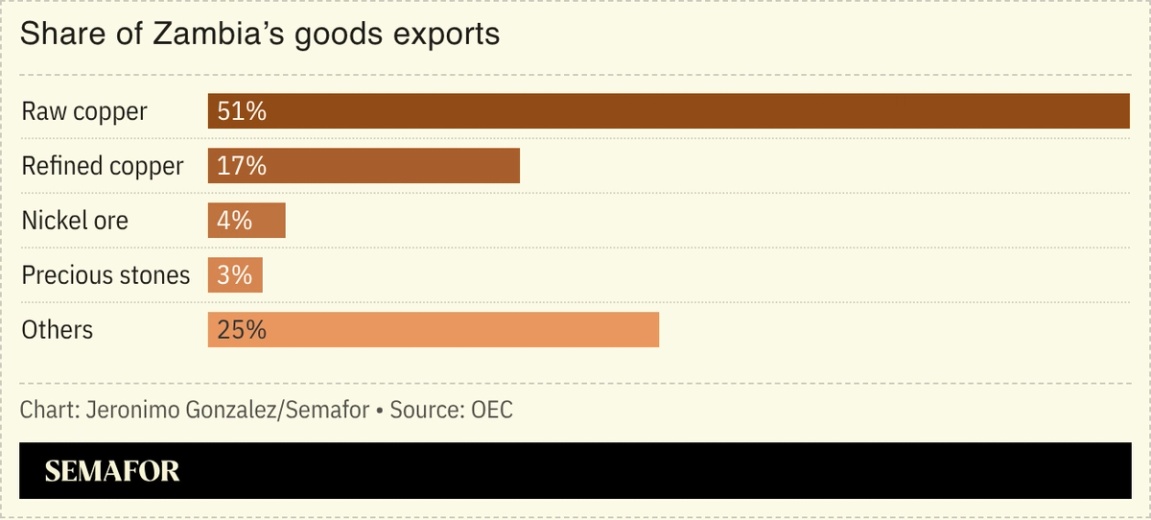 Zambia is close to resolving a monthslong dispute with the US over a proposed health agreement, the southern African nation’s foreign minister told Semafor. Foreign Minister Mulambo Haimbe said the two sides had also agreed to drop a proposed link between the health pact and a separate critical minerals deal. “I believe that it has now been agreed that those provisions be replaced completely,” he said, adding that the revised deal was ready to sign now the minerals linkage “has also been set aside.” The US State Department has not publicly confirmed the change. A Zambian statement said the countries would deepen cooperation on health, investment, and critical minerals, but did not confirm the changes. Zambia is seeking more critical minerals investment while maintaining ties with China and expanding commercial relations with the US. |
|
| | Semafor Next 3 Billion • Exclusive |  | |
AFC advises Senegal to focus on growth |
 Kevin Dale/Semafor Kevin Dale/SemaforThe Africa Finance Corporation advised Senegal’s government to resist growth-limiting conditions as Dakar negotiates its new $2.2 billion International Monetary Fund program, the multilateral lender’s CEO revealed. Speaking at Semafor’s The Next 3 Billion summit in New York, Samaila Zubairu said the AFC engaged directly with Senegal’s new administration after the discovery of undisclosed loans under the prior government sent public debt past 130% of GDP. Zubairu said Dakar should insist on revenue expanding investments — such as infrastructure and formalizing mineral value chains — rather than relying solely on fiscal belt-tightening. “Growth is the only way out of tight fiscal positions,” he said, adding that African economies must be allowed to grow their economies to overcome debt problems. “We can’t pay back if we don’t have revenue,” said Zubairu. The AFC’s intervention in Dakar highlights an escalating effort by African regional lenders to counter traditional Western-led bailout conditions. The IMF classifies at least a third of African countries as being in debt distress, or at least at high risk of it. A number of other nations — such as Ethiopia, Ghana, and Zambia — have in recent years agreed to IMF deals that mandated budget cuts and sparked public debate and protests. — Tiisetso Motsoeneng and Alexis Akwagyiram |
|
US increases pressure on Sudan |
| | Lauren Morganbesser and Adrian Elimian |
| |
 Sudan army chief Abdel Fattah al-Burhan. Sudan Transitional Sovereignty Council/Handout via Reuters. Sudan army chief Abdel Fattah al-Burhan. Sudan Transitional Sovereignty Council/Handout via Reuters.The US State Department declared this week that neither of Sudan’s two warring factions was fit to govern, sharpening Washington’s pressure campaign as its push for a ceasefire stalls. The State Department in a statement Tuesday vowed to raise the cost of fighting “on all belligerents and the networks which fuel the conflict.” The comments come after more than a year of US efforts, led by President Donald Trump’s Africa adviser Massad Boulos, to secure a temporary ceasefire in Sudan’s three-year-old war, in which both sides have been accused of widespread abuses against civilians. This week, the US reportedly rejected a visa for Sudanese armed forces leader Gen. Abdel Fattah al-Burhan ahead of a planned appearance at the UN General Assembly. |
|
 - The Trump administration has committed $410 million to its third-country immigration program, which includes 31 countries, mostly in Africa and Latin America, according to a wide-ranging review of government documents conducted in a collaborative investigation run by Forbidden Stories by the Washington Post. So far, more than 25,000 people have been deported to countries that are not their countries of origin, several of which have been noted by the State Department for human rights abuses against their citizens, particularly those held in prisons. “The whole point was to circumvent [congressional] notification that money was being sent to a government known to be corrupt,” one former State Department official noted. The Trump administration wanted “fast money, with no strings attached.”
|
|
|


