| | A new Hormuz proposal, Trump’s diesel export ban, and a boom in biofuels.͏ ͏ ͏ ͏ ͏ ͏ |
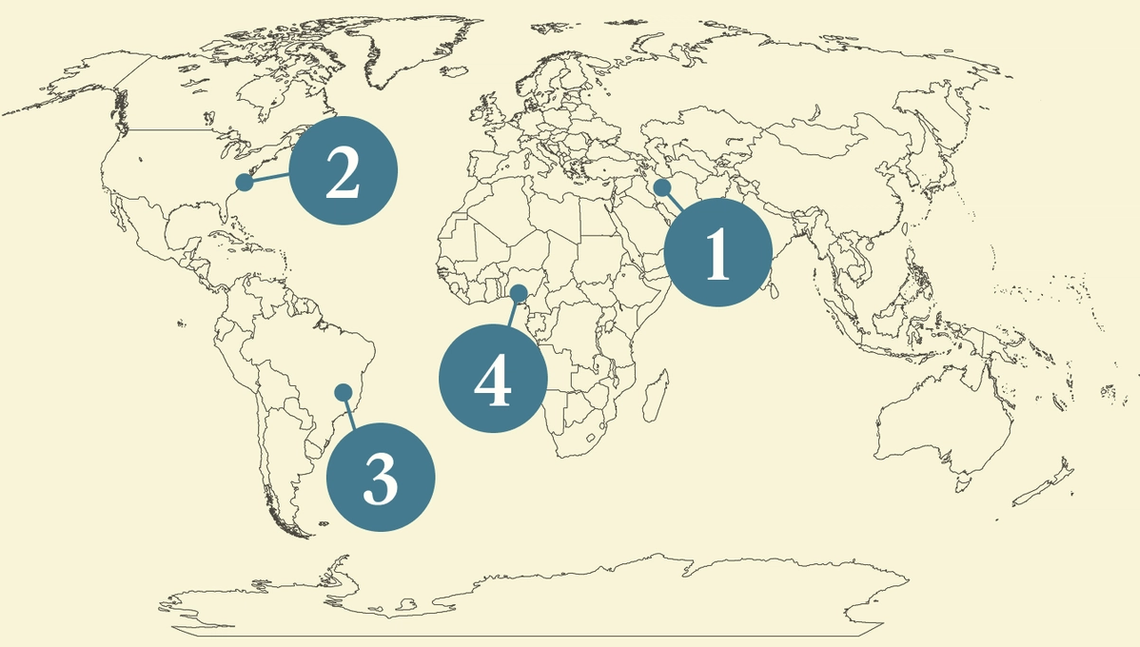
| |  Tehran Tehran |  Washington, D.C. Washington, D.C. | Lagos |
 | | | Climate Week Edition |
| |
|
 - A new proposal
- Diesel ban pushback
- Biofuel boom
- Mining deals
 India’s coal crunch, and Canada’s carbon credit push. |
|
 We should probably talk less about data centers. That might sound like blasphemy, and also hypocritical, given how often I do exactly that. To be clear, the challenges have barely begun: What we’re seeing being built today is only a small fraction of the data center capacity in the pipeline. “If there’s a single narrative in the market that is most starkly divorced from the fundamentals we’re seeing on the ground, it’s that the demand for AI infrastructure and the energy that supports it is in some way fragile,” Connor Teskey, CEO of Brookfield Asset Management, told me this week. But if there’s one thing I took away from New York Climate Week, it’s that the raging debate around AI infrastructure is just the tip of the iceberg of a much larger economy-wide struggle to cope with surging power demand. Between now and 2030, according to S&P Global, only 18% of new global power demand will come from data centers. The rest — air conditioning, onshore manufacturing, electrified buildings and vehicles — will also require an unprecedented and challenging power infrastructure buildout that barely got a mention in the dozens of conversations I had this week. We can already take a few lessons from the data center experience that will apply to the broader power rush, starting with that it’s a crucible for innovation. But it’s clear that without more rapid policy reform and technology advances, the imperative of fast growth will lead to the adoption of solutions that are both unsustainable for the climate and economically inefficient, such as installing more behind-the-meter gas turbines. Power project developers and their customers — Big Tech or otherwise — also need to be much more transparent and accountable to the communities they build in to avoid backlashes and blockages that only make the problem harder and more expensive to solve. Even as policymakers and hyperscalers chip away at the narrow data center challenge, our current moment of AI infrastructure anxiety only proves how much we need to brace for many more difficult conversations ahead. Thank you so much to everyone who took time to meet me this week. Special shoutout to those of you who joined our happy hour last night, always my favorite evening of Climate Week, which this year brought together people working on critical mineral mining, commercial-scale solar, trade research, energy bonds, low-carbon fuels, Taiwanese drones, environmental lawsuits, and the “Grateful Dead of carbon credits” (although don’t ask me to explain what that last one means). Special thanks to our excellent contributor Chloé Farand, who always makes my life much easier. We’re back to our regular programming next week. |
|
A seven-day proposal to reopen Hormuz |
 Stringer/Reuters Stringer/ReutersOil prices fell slightly on news that Tehran made a new proposal to reopen the Strait of Hormuz, which Iran’s foreign minister said could unblock the key trading route within a week and restart talks to end the war. The proposal builds on an earlier agreement to extend a ceasefire, which collapsed in July. US and Iranian negotiators are discussing a phased deal to reopen the strait and lift Washington’s economic blockade, Reuters reported. But so far, neither side has been willing to surrender leverage first and the timing is key: Reaching a deal before the midterms could benefit Trump by easing the sky-high fuel prices that have become a major issue for Americans voters. The political incentive for an agreement could wane after the November polls, however. Meanwhile, Iran-backed Houthis continued to target Saudi oil export infrastructure on the Red Sea coast as the kingdom pumps more crude through its East-West pipeline, but is yet to resume the loading of tankers. |
|
 Aimee Dilger/Reuters Aimee Dilger/ReutersThe diesel export ban US President Donald Trump is mulling in an effort to bring down record-high prices could backfire in two ways: Further dividing Republicans while risking even pricier gasoline. If his administration does push ahead, its main cheerleaders will be GOP candidates in tight races in the midterms. But most congressional Republicans want nothing to do with the idea, no matter how close they are to the administration. “The better policy would be for states like California to lift the restrictions that they’re imposing on the exploitation and the refining of diesel,” Sen. Bill Hagerty, R-Tenn., told Semafor. Oil-state lawmakers were harsher: Sen. John Cornyn, R-Texas, derided the export ban as “a gimmick” that “won’t work.” The frosty response from Trump’s own party is particularly notable after a year that began with Republicans stiff-arming his earliest ideas to lower the cost of living. — Eleanor Mueller and Nicholas Wu |
|
Expanding biofuel production |
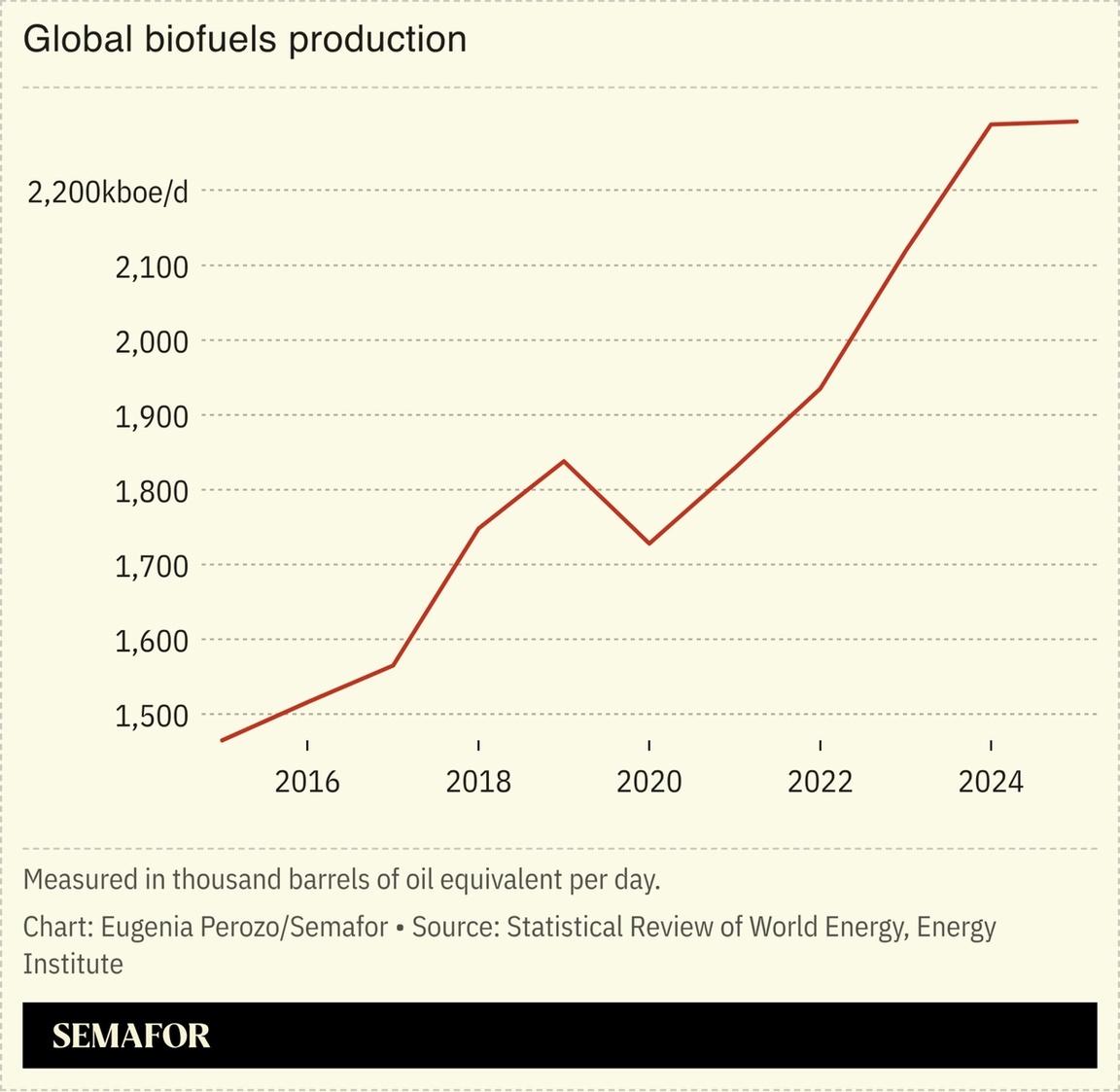 A global boom in biofuels intended to ease expensive gasoline and diesel imports caused by the Middle East war could require an additional area the size of Germany to be converted for fuel production, new analysis by think-tank Chatham House found. As fuel prices soar, major economies including Brazil, India, Indonesia, and the US are advancing policies to expand biofuel mandates in petroleum products. Global biofuel production is expected to rise by around 70% between 2025 and 2030. French President Emmanuel Macron recently asked the European Commission to allow more biofuels in diesel to help keep prices under control. Chatham House found that if growing demand was not carefully managed, it was likely to lead to more deforestation and push up prices of key crops and products, such as corn and vegetable oil, which would worsen food security. These long-term pressures on land would be difficult — perhaps even impossible — to reverse, the report said. “Policymakers must therefore treat biofuels as a targeted transitional measure to help bridge the current oil crisis, rather than a permanent solution to the problem of energy security,” the report’s authors concluded. |
|
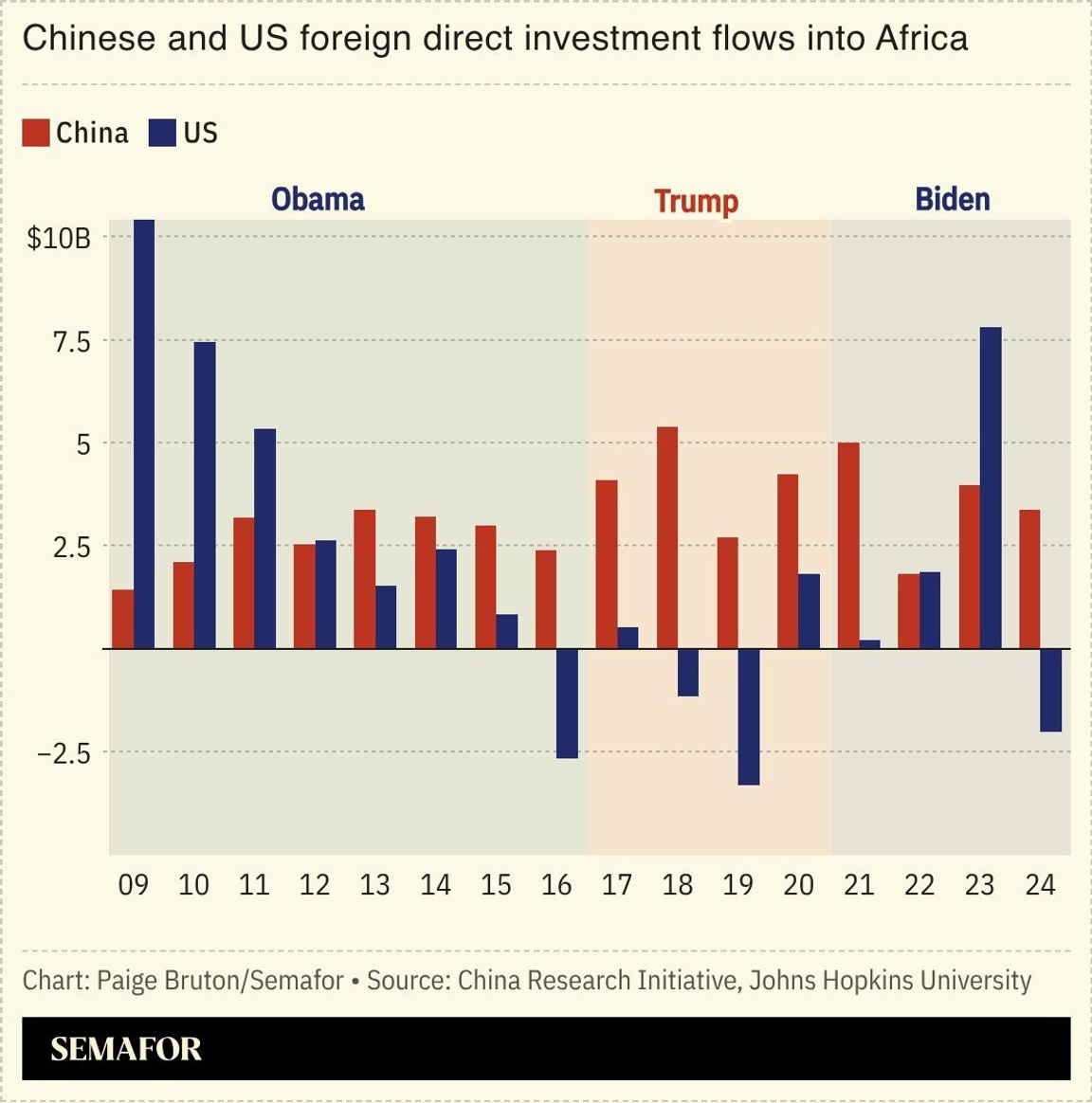 The US and Nigeria agreed a plan to boost American mining investment, a move that comes as Washington accelerates its push to dislodge China in Africa. The Trump administration has unveiled a raft of deals aimed at increasing US financing in the continent, including a uranium mining agreement in Niger, digital infrastructure investments, and several critical mineral projects. African countries, meanwhile, are pushing to control more of the mineral supply chain, including refining and processing, which could help them meet their industrialization goals. “The opportunity is real,” Semafor Africa’s editor wrote. “The harder question is what African economies can build that will remain competitive after the foreign partners and commodity boom move on.” |
|
 - Corporate venture capital firm HearstLab showcases start-ups strengthening grid infrastructure.
- The Symposium on Advanced Electrification Systems discusses advances in energy storage systems.
- The Korea Climate Tech Summit returns with a packed programme from start-ups and venture capital firms.
|
|
 Fossil Fuels- India is considering telling power plants to blend imported coal with domestic supplies for the first time in two years to ease a supply crunch.
- Liberia is lobbying governments to remove the carbon price from a global shipping climate agreement due to be adopted later this year, arguing it would hike the cost of food, fertilizers, and exports.
FinanceTechPolitics & Policy- The EU urged US President Donald Trump to keep diesel flowing, after he floated the idea of an export ban to keep domestic prices down. The EU energy commissioner warned this winter would be the worst for energy prices since 2022.
- Two prominent Democratic senators released a report that estimated the fossil fuel industry is set to receive $190 billion in subsidies and tax breaks over the next 10 years after responding to Trump’s call for donations for the 2024 election.
Minerals & Mining- The US Export-Import Bank will make up to $7 billion in loans available to support energy and critical minerals projects in Argentina, as Washington seeks to shore up supplies.
EVs Food & Agriculture |
|
|


