| | In today’s edition: US sanctions sever Iranian flights to the Gulf, how the Houthis routed their riv͏ ͏ ͏ ͏ ͏ ͏ |
| |  | Gulf |  |
| |
|
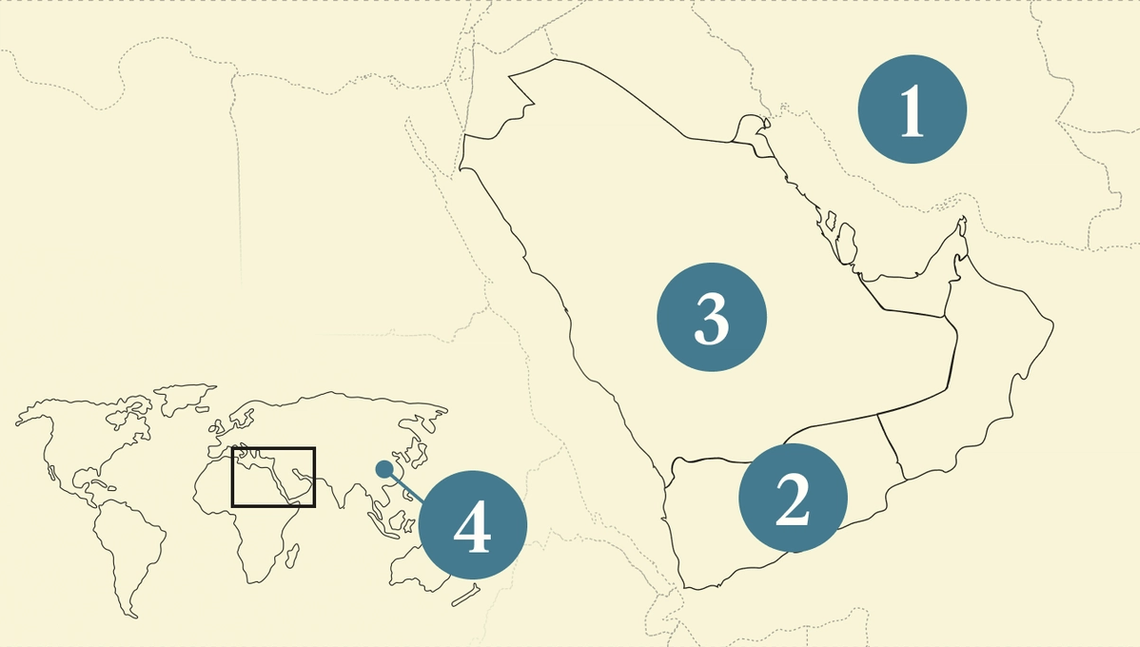 - Iran air links cut
- Inside the Houthi advance
- Saudi’s IPO revival
- Aviation moves upstream
 Saudi government budget data and an OPEC+ meeting in the week ahead. |
|
Iran offers terms as flights stop |
 Mike Segar/Reuters Mike Segar/ReutersIran’s neighbors complied with US restrictions on flights to Iran, with the UAE suspending all service “until further notice,” joining Azerbaijan, Iraq, and Oman in severing air links. The squeeze came as Iran pushed a fast-track proposal to end the war. Under Tehran’s seven-day plan, hostilities would end, including in Lebanon, while the US would lift its naval blockade, waive oil sanctions, and release at least $12 billion in frozen assets. Iran would reopen the Strait of Hormuz on the final day, and nuclear talks would follow — essentially June’s deal on a faster clock. A US official told The New York Times that Washington would not rush into an agreement. Iranian hardliners insist the terms are fixed. Mohsen Rezaei, secretary of Iran’s Supreme National Security Council, kept up the threats, warning regional countries’ airports “cannot have any flights either.” In Washington, Chinese leader Xi Jinping and US President Donald Trump are set to conclude a summit with little progress on the most pressing issues, including AI regulation, China’s opposition to American support for Taiwan, and Beijing’s reported support for Iran. Xi backed a return to the June ceasefire between the US and Iran in their meeting, Xinhua reported. — Ed Clowes |
|
How the Houthis seized momentum |
 Houthi Military Media/Handout via Reuters Houthi Military Media/Handout via ReutersThe Houthis’ lightning advance along Yemen’s Red Sea coast succeeded for several reasons: divided opponents, Iranian advisers, Chinese help, and a battle-hardened leader who gambled that Saudi Arabia wouldn’t respond in time. The group exploited rifts among rival forces, hacked their battlefield communications, and got direct help from Iranian Revolutionary Guard advisers, the Associated Press reported. The Houthis have also improved their own weapons-manufacturing capabilities, using Chinese machinery, chemicals, and components to build drones and missiles inside Yemen, Bloomberg reported. Their leader, Abdulmalik al-Houthi, has long been underestimated, and, despite Iran’s backing, isn’t simply following Tehran’s orders, according to the Financial Times. April Longley Alley, a senior fellow at the Washington Institute, offered an explanation for why al-Houthi wagered on the offensive: He saw an opportunity to “shift the balance of power on the ground.” she wrote. The Houthis “felt the Saudis were on the back foot.” — Mohammed Sergie |
|
Changes coming for Tadawul |
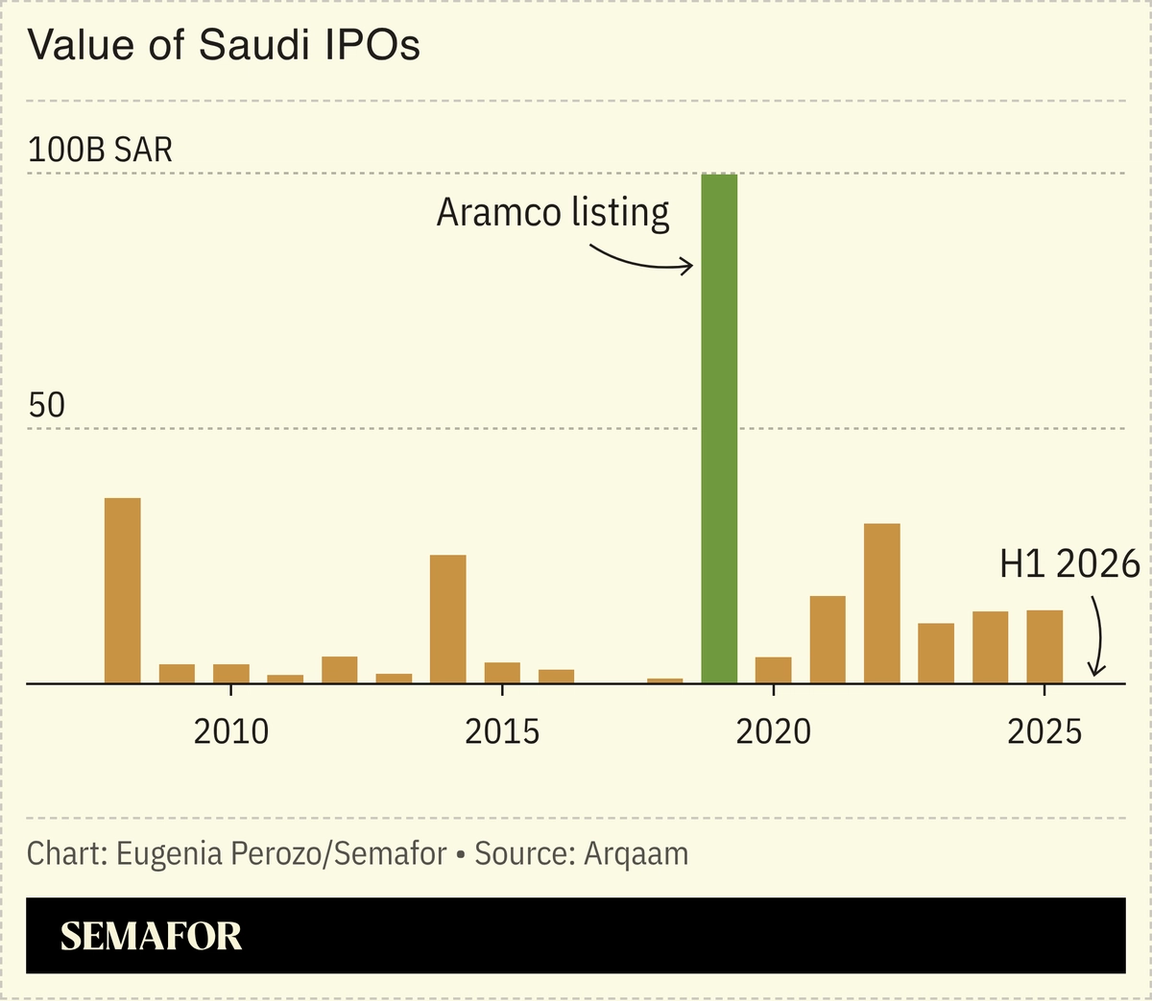 Saudi Arabia’s Capital Market Authority proposed rules to overhaul the kingdom’s IPO process in an effort to revive a stagnant stock market that is a crucial source of external capital. The changes begin with book-building: Underwriters must commit to buy all shares on offer and banks have to ensure that investor orders are backed by cash. The rules target the practice of inflating order books, which has left many oversubscribed stocks with disappointing debuts. Semafor previously reported the CMA was probing investment banks over the poor performance of recent listings. The regulator has introduced other measures to spur trading, including cutting fees and boosting allocations of IPOs to retail investors. The Iran war has been a drag on an already sluggish market, prompting several companies to shelve listings. Gulf IPOs have raised about $1.1 billion so far this year — less than sub-Saharan Africa, according to Bloomberg. — Kelsey Warner |
|
Abu Dhabi firm sells rebuilt engine to China |
 thesanadgroup/Instagram thesanadgroup/InstagramMubadala-owned Sanad sold a rebuilt Rolls-Royce Trent 700 engine to a Chinese customer, the Abu Dhabi maintenance firm’s first such sale in China and the latest evidence of Gulf companies pushing deeper into the aviation supply chain. Sanad is one of the world’s biggest maintenance providers for the Trent 700, which powers about two-thirds of the global Airbus A330 fleet. It rebuilt the engine in Abu Dhabi. Gulf airlines are among the world’s largest long-haul carriers, and the region’s airports have grown to accommodate passengers and a surging cargo business. Governments have been looking to build out the region’s aviation sector, targeting areas beyond their traditional spheres of dominance. Emirates is building a $5.1 billion engineering facility in Dubai that can service 28 aircraft at once. GE Aerospace is expanding in Dubai and Doha and growing its workforce in both cities by 30%. — Mohammed Sergie |
|
| |