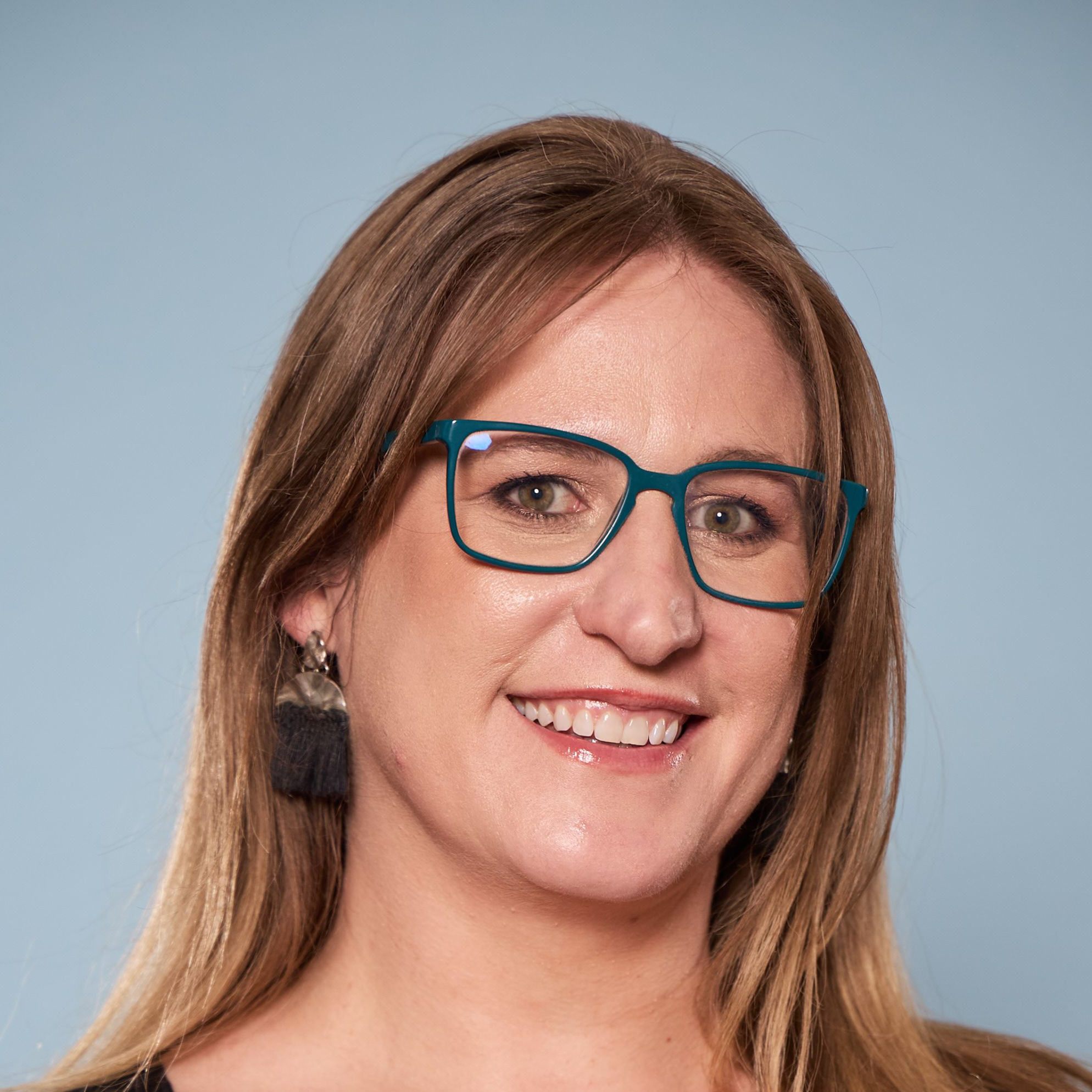
| The Senate health panel put President Donald Trump’s pick to lead the Food and Drug Administration under the microscope during her confirmation on Thursday, with many lawmakers trying to figure out whether she would resist political pressure while at the agency in charge of regulating medications, vaccines, tobacco products and parts of the food supply. In her opening statement, Heidi Overton, physician and member of the White House’s Domestic Policy Council, emphasized speeding up drug development, reducing regulatory barriers and ensuring that the United States is able to compete with China on biotech research. “If I have the privilege of being confirmed, I will work with the dedicated career professionals to make sure every aspect of clinical trials and drug development is optimized,” Overton said. “This will not only bring development back to the United States, it will bring cures to patients faster.” → But a majority of the hearing focused on everything except that topic: vaccine policy, issues related to food safety and labeling, in addition to an ongoing FDA safety study of mifepristone, which is one of the two drugs used in medication abortions. The questions repeatedly put Overton in the position of navigating competing demands from Trump, Republicans on the Senate Health, Education, Labor and Pensions Committee (HELP), and Democrats concerned about political interference at the FDA. VACCINES — Multiple senators noted that Overton had stood behind Trump during an Oval Office briefing as he called the combined measles, mumps and rubella (MMR) vaccine “lethal,” without any evidence, and pressed her to admit the president was wrong — and how, if confirmed, she would handle disagreements on science. In each instance, Overton demurred. “I’ve had robust discussions with the president. I would give him my best advice, and I would follow the statutory requirements for the role of FDA commissioner regarding individual product determinations for safety and efficacy,” she said. At other points, Overton said that the president simply wants to offer parents additional options, and dodged answering several questions about whether Trump was wrong in his pronouncements about vaccine safety — saying at one point that he “works with all of his advisers to get the best information.” Overton said, when pressed by HELP Committee Chair Bill Cassidy (R-Louisiana), that the MMR vaccine is safe and effective. ABORTION PILLS — Abortion was another tightrope. Many conservatives, including Cassidy and others on the panel, have called medication abortion unsafe, urged regulators to add prescribing restrictions on the drug and even probed drugmakers. In 2023, while at the America First Policy Institute, Overton co-wrote a post that questioned the FDA’s determination that mifepristone is safe and urged more restrictions on the drug. But Sen. Lisa Murkowski (R-Alaska), a crucial vote for advancing Overton’s nomination, raised concerns about “political pressure to revisit the approval status” of mifepristone — which the FDA approved in 2000. During the Biden administration, some restrictions — including a requirement to see a doctor in person in order to get mifepristone — were rolled back amid the covid-19 pandemic. Murkowski said that reinstating the in-person prescribing requirement would put 80 percent of the communities in her state “in a very challenging position in terms of access to providers [and] access to this FDA-approved drug.” When asked about mifepristone’s safety by Sens. Patty Murray (D-Washington) and Tammy Baldwin (D-Wisconsin), Overton cited the FDA’s approval of the drug as safe and effective, saying that she supports the safety study underway at the agency. Later in the hearing, Sen. Josh Hawley (R-Missouri), an anti-abortion lawmaker who has pushed to revoke FDA approval of mifepristone, pressed her on the drug’s safety. “That’s not the FDA’s position in court,” Hawley said, referring to two lawsuits filed by multiple states seeking to reduce access to the drug. (The FDA has, itself, had to walk a fine line between disavowing loosening the restrictions while defending the agency’s decisionmaking.) Hawley added that top Trump administration officials have said that the decision surrounding the restrictions was made with a “lack of adequate consideration,” and asked Overton if she agreed. “My view is critical that we have to complete that safety analysis,” Overton replied. TOBACCO — Flavored vapes became another flash point. Lawmakers in both parties, who were concerned it could increase nicotine addiction among children, also grilled her on the FDA’s decisions to expand approvals for vapes with flavors such as blueberry and mango. Democrats asked about the tobacco industry’s influence within the administration, pointing to reports of large political donations that preceded policy changes. Former FDA commissioner Marty Makary departed the agency shortly after. Overton emphasized that career FDA scientists made the determination because flavors were key in helping some adults quit cigarettes, while still saying that more should be done to protect youths from illegal products and flavored vapes more broadly. WHAT TO WATCH It’s not yet clear whether Overton has the Republican votes to advance her nomination. In his opening remarks, Cassidy told Overton that knowing whether she would “use [her] authority to stand up for sound science and protect children’s health” and ensure that “uninformed ideologies do not influence FDA’s decision on whether to approve individual products, even if the president is pressuring,” would be required to gain the committee’s support. →A reporter asked Cassidy immediately after the hearing whether Overton’s answers, particularly about the MMR vaccine, had been enough to secure his support. “I would decline to comment at this time,” he said from behind the dais. Read more: Rachel Roubein in The Washington Post newsroom has more on Overton and the divide on vaccines. The World Health Organization is now financially “stabilized” in the wake of the U.S. withdrawal from the organization last year, WHO Director-General Tedros Adhanom Ghebreyesus said on Thursday. He made the comments at a Foreign Policy event held alongside the U.N. General Assembly meeting in New York. My WP Intelligence colleague Nour Wood was there, and sends this dispatch: The U.S. had consistently been WHO’s largest funder, representing more than 15 percent of its revenue in recent years prior to withdrawal. Following U.S. departure, which had prompted concerns about the potential impacts on the organization, WHO was able to compensate with cost-cutting measures and increasing fees on other countries. → The organization laid off 22 percent of its staff, but is also on a path to double membership fees from remaining member states. Zoom out: WHO member states have been increasing their payments every two years by 20 percent, aiming to fully double their fees by 2030 in an effort to establish a more predictable financing model. Although the scheduled fee increases were originally agreed upon in 2022, the move has since provided an unintended safety net to deal with the U.S.’s retreat from global health funding writ large. Why it matters: The U.S. withdrawal has put WHO’s long-planned financing overhaul to an early test, forcing the organization to show that a model built around higher member state contributions can withstand the loss of its biggest funder. Ghebreyesus has hope that the U.S. will eventually come back to the organization one day, pointing to the cooperation between the U.S. and WHO on the hantavirus outbreak stemming from a cruise ship this April, and continued coordination on the ongoing Ebola outbreak in the Democratic Republic of Congo. “It’s not about the money — we already have that,” Ghebreyesus said. “It’s about the solidarity [and] cooperation. It’s about U.S. leadership, because the U.S. has excellent [health] institutions.” An FDA advisory panel on Wednesday backed a cancer-detecting blood test made by Grail, the first step in potential approval by regulators. But there are still questions about whether Galleri, Grail’s multi-cancer detection test designed for patients age 50 and older, can detect cancer early enough to meaningfully improve outcomes. The company has emphasized that it’s intended to be used alongside, not instead of, existing cancer screening. The FDA’s Medical Devices Advisory Committee voted 7-2, with one abstention, that the benefits of Galleri outweigh its risks. The panel voted unanimously that the test is safe, but was more divided on effectiveness, voting 6-4 in favor. Galleri is supposed to be able to detect more than 50 types of cancer, including some of the deadliest types of the disease. But some critics have raised questions about whether earlier detection with the test actually improves outcomes — as well as the potential for false positives and missed cancer diagnoses. Grail says its Galleri blood test detected roughly four to seven times as many cancers as standard screening alone in clinical studies, with most of those cancers caught at earlier stages. Why it matters: The test has been on the market since 2021 but has not secured FDA approval. The advisory panel vote doesn’t mean that regulators will ultimately approve the test, but the agency often leans on the panel’s recommendations. If the FDA does give Grail’s Galleri the green light, it opens up a larger customer base. Earlier this year, Congress created a Medicare payment pathway for FDA-authorized multi-cancer detection tests, meaning approval could put Galleri on a path toward federal reimbursement following years as a roughly $949 out-of-pocket test. FDA approval would likely also lead to coverage f |