|
Empires rise and fall, money comes and goes, and, in the words of Michael Scott, “how the turn tables.” You don’t have to be a historian to notice that the balance between the haves and the have-only-somes is shifting rapidly. David Ellison cleared the final significant hurdle this week in his effort to buy Warner Bros. Discovery, bringing him within striking distance of a $110 billion media empire. Meanwhile, the CEOs on the AI frontier increasingly seem to hold the keys to the future—a concentration of power that former president Barack Obama warned about onstage this week at Colgate University as he called for greater government oversight of the industry. And Anthropic is barreling toward an IPO that, should it reach the company’s reported ambitions, could be the largest in history. Across the pond, meanwhile, the old money set is facing pressures of its own. Britain’s private schools are contending with a new 20% tax on tuition and a shrinking pool of wealthy families, even as one of England’s most storied institutions, Harrow School, takes its 450-year-old brand global—licensing its name and educational model to schools everywhere from New York to Dubai. I’m Vanity Fair staff writer Clara Molot, filling in for Julia Black. You can read Ashley Baker’s story below Mentioned in this issue: Barack Obama, Donald Trump, Harrow School, Prince George, Prince William, Prince Harry, Andreessen Horowitz, David Ellison, Paramount, Warner Bros. Discovery, Anthropic, SoftBank, and more… |
|
|
|
|
|
| |
ILLUSTRATOR CHRISTIAN ZELAYA | |
Millionaires Are Dwindling in the UK. Can One of Its Most Prestigious Boarding Schools Survive? As the UK’s private schools face a 20% tax on tuition and the loss of some of the country’s wealthiest residents, Harrow School finds itself in the middle of an ambitious expansion and licensing initiative, bringing its brand of education to seven countries. Will it work? SEP 22, 2026 BY ASHLEY BAKER |
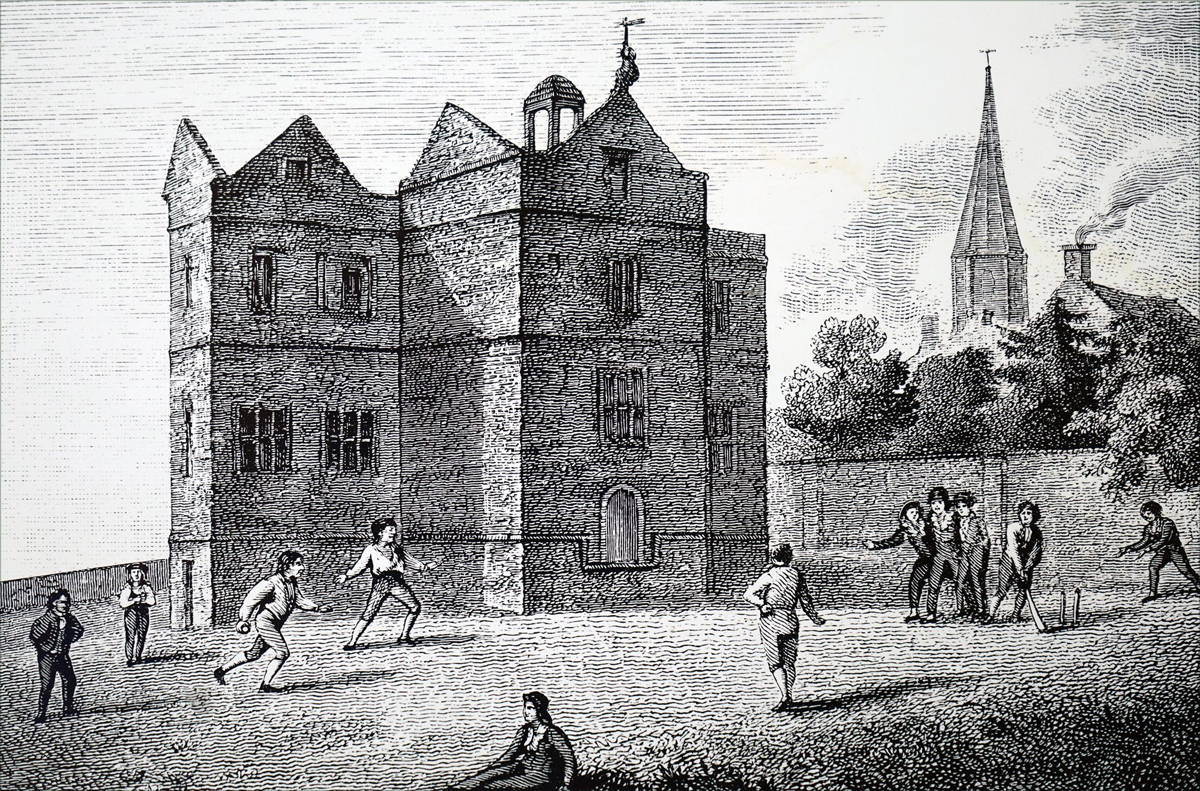
On a 324-acre swath of northwestern London, smartly dressed locals walk their chocolate dapple dachshunds toward the sharp tower of St. Mary’s Church, past the tombstone where a young Lord Byron used to sit on clear days and stare all the way to Windsor. They will encounter a few tourists, along with many teenage boys in smart tailoring and, if it’s summer, straw boater hats, carrying their books to class. Welcome to Harrow School, one of the most prestigious in the world. Founded in 1572 amidst a wave of grammar schools chartered under Queen Elizabeth I, Harrow has educated Winston Churchill (and six other British prime ministers), Jawaharlal Nehru, Anthony Trollope, Richard Curtis, Benedict Cumberbatch, and the cofounder of Pret a Manger. Its magnificent buildings, erected over the centuries, reveal the splendors of British architectural history. Harrow is also a Hollywood favorite, used as a filming location in The Crown (standing in for Eton, its longtime rival) and doubling for Cambridge’s Trinity College in the 2014 film The Theory of Everything. And its education is as excellent as ever: This year, more than 90% of Harrow students earned high marks on Advanced Levels examinations, which determine university admissions. |
|
|
“Being in an institution that is so grand and so epic makes you think grand and epic thoughts,” says one Old Harrovian (the moniker for a former Harrow pupil) who is now a managing director at a prestigious investment bank. “It did not give me arrogance and hubris. It just made me feel incredibly grateful.” But as the United Kingdom’s private schools are facing unprecedented economic headwinds, including a 20% tax on tuition and the loss of some of the country’s wealthiest residents, Harrow is looking to new markets like Abu Dhabi, Bengaluru, and even New York to guarantee its future. Currently in the midst of an ambitious expansion and licensing operation, the Harrow name graces 18 international schools across seven countries and 14 cities. But what will it all mean for the mothership? Every September, around 830 boys from ages 13 to 18 take planes, trains, and automobiles to install themselves in their boarding houses at Harrow on the Hill. Trunks packed with Harrow’s signature “bluers” (navy blazers) and “greyers” (grey trousers) come from all over the world. According to another Old Harrovian, who attended the school from 1990 to 1995 and went on to work on Wall Street, “It was notable when one of the students wasn’t British. And now it seems like very, very high numbers [of international students]. I’m hearing, anecdotally, it’s like 50%.” According to Harrow, 20% of its students come from overseas, with their parents living outside of the UK. In the United Kingdom, it’s a historically challenging moment for private schools. In January 2025, the Labour government levied a 20% value added tax (VAT) on tuition, turning already eye-watering fees into astronomical ones. One year of tuition at Harrow currently costs 65,970 British pounds (about $89,000), while the median gross annual earnings in the country is just 39,039 pounds (about $52,500). And then, four months later, the administration scrapped the UK’s infamous non-dom (“domicile”) tax regime, which allowed some residents who kept permanent homes abroad to be exempted from British tax on income that was earned overseas. This contributed to an exodus of wealthy residents to alluring cities like Milan, Lisbon, and Dubai, which have more favorable tax systems. According to an analysis published this summer by the Adam Smith Institute, a think tank, the number of millionaires living in the UK fell to its lowest level since the 2008 financial crisis, with an estimated 442,000 sterling millionaires currently in the country, compared to over one million in 2020. (UBS’s Global Wealth Report 2026, however, estimates there are 2.4 million USD millionaires in the UK, compared to 23.6 million USD millionaires living in the United States.)
Belt-tightening is more than just a trend here; it’s become a way of life. In June, The Times of London reported that private schools throughout the UK have lost 30,000 pupils since January 2025, and about 100 independent schools have closed entirely. “[Harrow] was already always very expensive, but now the money is just not there in the British population,” says the New York–based Old Harrovian. Harrow has alternative revenue streams—summer school programs, renting out buildings for weddings and private events—and this month, kicked off a strategic partnership with Downe House, a girls’ boarding school in Berkshire, that will share resources and governance. But the licensing of the Harrow name, done through Harrow International Schools Limited, a subsidiary of the charitable corporation that owns Harrow School, is integral to its future success. The Harrow brand is particularly strong in Asia, where the operator AISL oversees 12 Harrow-branded schools—10 in China, one in Appi, Japan, and another in Bangkok, which was the first to open, in 1998. In 2024, Harrow announced an agreement with Taaleem, an educational enterprise in the United Arab Emirates, to open six Harrow schools in the Gulf region, in Saudi Arabia, the UAE, Bahrain, Oman, Qatar, and Kuwait. Amity Education Group, which operates 11 universities and 25 schools in India, opened Harrow Bengaluru in 2023 followed by Harrow New York, on Long Island, in September 2025. These international enterprises generated 5.9 British pounds (about $8 million) in net income for Harrow in the 2024-2025 school year, according to Harrow’s annual report. Like many of the Harrow schools, the New York location is a thing of beauty, situated on a 170-acre oceanfront property in Oakdale, Long Island, equidistant from New York City and the Hamptons. Its signature building was constructed between 1897 and 1900 as the sprawling country residence of Frederick Gilbert Bourne, president of the Singer sewing machine corporation. “The state parks, the beaches, the forests, and the museums that are available to our students at a stone’s throw is just really unique,” says Matthew Sipple, the principal of Harrow New York. During the 2025-2026 school year, its first in operation, Harrow New York taught sixth through ninth grades. According to Sipple, there were between five and eight children per grade level, divided between boarders and day students. Effective this month, Harrow New York offers 10th grade as well, and class sizes are expected to be closer to 10 students—which still suggests a striking, and concerning, lack of demand. Matt Butler, the founder of the educational advisory firm Butler Method International, worked with an English family that was relocating to New York and toured Harrow New York approximately 18 months ago. “[The school] poured $100 million into the campus, but there were no fields,” he says. “There were going to be maybe six students [in a year group]. They rolled out the red carpet for this family. The parents are deeply committed to education, so they really took the opportunity to visit it seriously. But if you’re an English family coming to America, you’re not thinking, Oh, good, we have a Harrow here. You’re thinking, We want to get into Horace Mann, Riverdale, or Spence—something that feels rooted in New York.” Harrow New York has already reduced fees to $50,544 for day students and $76,875 for seven-day boarders. They also offered a $15,000 discount for the first two years of attendance—$30,000 total—to all new students entering this fall. Butler believes that a Harrow-branded prep school in New York might make sense if Harrow, in London, was a popular boarding-school destination for Manhattan’s best and brightest. But, he says, “The problem with Harrow doing this is that it is at odds with so many of the characteristics of the institution.” Harrow School admits only boys and prepares its students for A-levels, Harrow New York is co-ed and offers an International Baccalaureate curriculum. “There’s no clear reason why opening a school in Long Island would fulfill its mission in any way,” says Butler. Harrow is not the first British school to try its luck in New York. Wetherby-Pembridge, a hybrid of London’s Wetherby School for boys and the Pembridge Hall school for girls, opened in a five-story townhouse on East 96th Street in 2017. It was owned by Alpha Plus Group, now a subsidiary of Inspired Education Holdings, which is backed by private equity groups and institutional investors. The timing of Wetherby-Pembridge was ripe—it opened just as Prince George was expected to start at Wetherby, which Prince William and Prince Harry attended. But the Windsors shocked the establishment by enrolling George at Thomas’s Battersea, a co-ed institution with a large campus on the south side of the Thames. Meanwhile, the Wetherby-Pembridge operation failed to attract enough students willing to pay its $45,000-year tuition, even with a headmistress who came from the mothership, and it closed in 2023. Harrow New York may be vulnerable to a similar fate, but perhaps this sort of gamble is a necessary evil to ensure Harrow’s continuity, in one form or another. “Maybe in 100 years’ time, the Harrow School will not be known in the UK, but as a ‘once in the UK,’” says the investment banker. “The key point that I would urge any government to do is look at the positives about these institutions and try to make them not die or disappear, because even though they do support only a tiny fraction of the population, they are absolutely incredible experiences. If done correctly, and not taxed out of existence, they are doing quite amazing, amazing things.” And yet after much hand-wringing and number-crunching, he ultimately decided to send his sons to day schools in London instead of Harrow. “I just couldn’t afford it,” he says. “And that’s ridiculous.” |
|