| | In today’s edition: Houthi attacks put Riyadh back on alert, Qatar says there’s no getting around Ho͏ ͏ ͏ ͏ ͏ ͏ |
| |  | Gulf |  |
| |
|
 - Riyadh on alert
- QIA domestic spin-off
- For Qatar, Hormuz is crucial
- BlueFive sells ‘Made in Mecca’
- Hilton bounces back
 Saudi Arabia’s religious police seek a softer image. |
|
Houthi attacks puncture Saudi wartime calm |
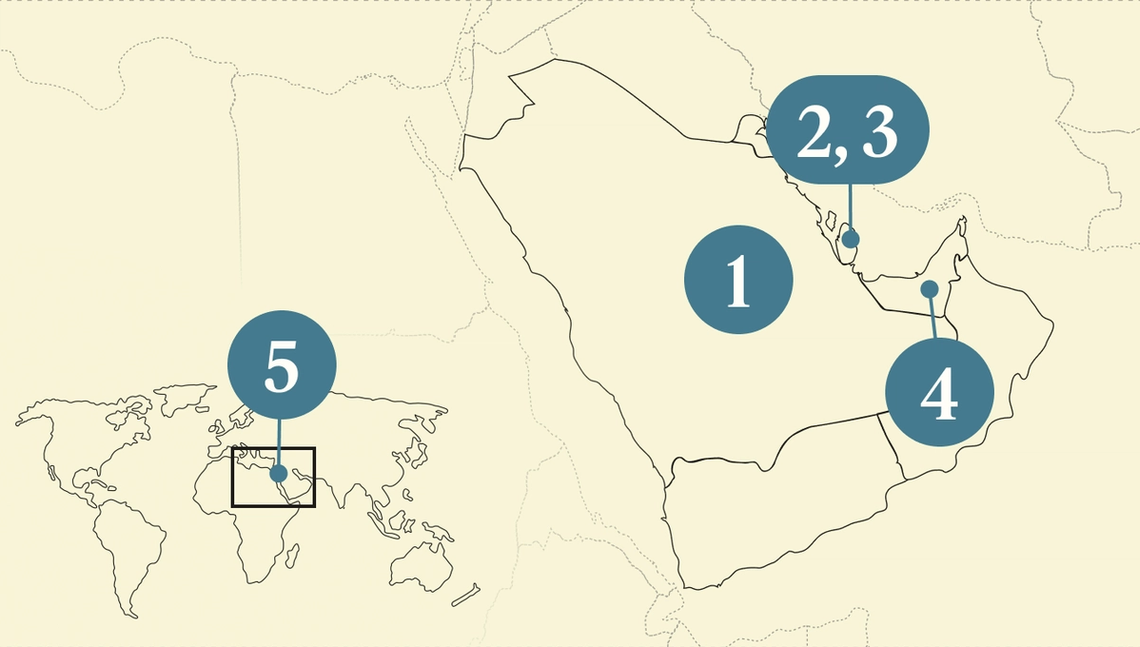
 Reuters ReutersThe sense that Saudi Arabia — or at least its capital and major cities — has largely ridden out the Iran war was punctured by a wave of Houthi attacks over the weekend that set off air alerts. A large fire near Riyadh airport added to the security concerns. The Houthis have made significant advances in Yemen and launched attacks on oil facilities and other targets in the kingdom. Crown Prince Mohammed bin Salman has reportedly asked US President Donald Trump multiple times for military support, but Trump pulled back from striking Houthi targets over the weekend, according to The New York Times. Even as the war escalates, attention is turning to diplomacy. Trump said he would “probably” be open to meeting Iranian President Masoud Pezeshkian on the sidelines of the UN General Assembly in New York this week. Oil prices slid to their lowest in more than a week on signs of diplomacy and indications that energy is still flowing through the Strait of Hormuz. — Matthew Martin |
|
QIA consolidates domestic portfolio |
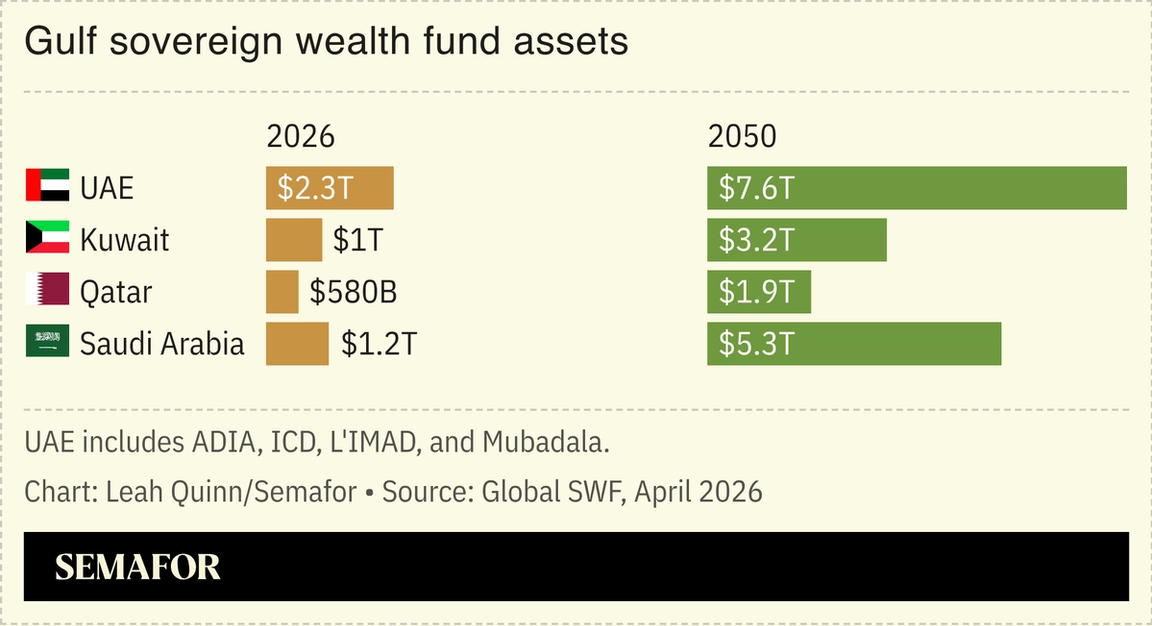 Doha is moving the Qatar Investment Authority’s domestic assets into a separate unit as it seeks to attract more foreign capital and increase private sector involvement in the economy. The sovereign wealth fund moved companies including AI-focused Qai, Qatar Airways, and Qatar National Bank into a new division, Doha Investment, which will hold more than 40 firms and plans to build new businesses in advanced manufacturing, healthcare, and supply chains. The restructuring — under discussion since 2017, when QIA managed about half its current estimated $580 billion in assets — will help the fund fulfill its dual mandate of investing surplus energy income abroad while creating “national champions” at home, Finance Minister Ali AlKuwari said at the Qatar Economic Forum, Powered by Bloomberg, in New York. Qatar’s economy is expected to contract this year due to the war’s disruption of energy exports. The drag on the non-oil sector may be partly offset by a domestic stimulus unveiled Sunday: more than $60 billion in opportunities for private investors over five years, comprising $38.5 billion in infrastructure projects and another $22.5 billion in real estate and hospitality. — Mohammed Sergie |
|
Al-Kaabi: Hormuz ‘cannot be obsolete’ |
 Courtesy of Qatar Economic Forum, Powered by Bloomberg Courtesy of Qatar Economic Forum, Powered by BloombergThe Strait of Hormuz “cannot be obsolete,” despite the Trump administration’s assertions, Qatar’s energy minister said. Rejecting US Treasury Secretary Scott Bessent’s view that it could become a “worthless piece of water” as alternatives emerge, Saad Sherida Al-Kaabi noted the route carries far more than oil and that other goods can’t be moved as efficiently by land or air. Doha has studied exporting gas via pipeline, but decided against it “based on commercial and technical criteria,” he said at the Qatar Economic Forum. The country plans to expand LNG capacity from 77 million tons per year to 142 million by 2030, and duplicating that infrastructure isn’t feasible. The expansion could be delayed if equipment can’t reach Qatar through Hormuz, Al-Kaabi said. The first new LNG plant is expected to start operations next year, and facilities damaged in Iranian strikes will take around three years to repair, he added. — Mohammed Sergie |
|
Deals still flow for BlueFive Capital |
| |  | Kelsey Warner |
| |
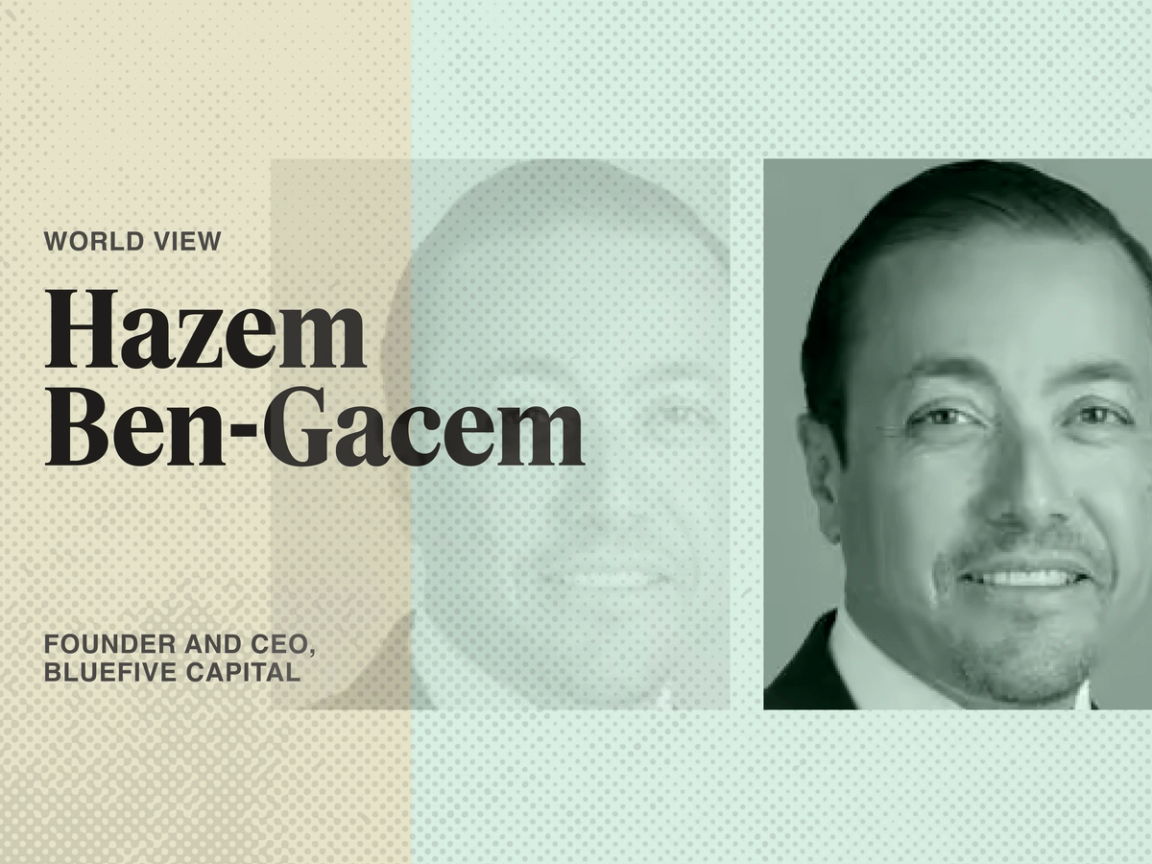 The Middle East conflict hasn’t slowed dealmaking in the Gulf, the head of one of the region’s fastest-growing investment firms said. “I’m surprised that there’s no difference in the pace and scale of investment, particularly in those strategic sectors that continue to accelerate: technology, agriculture, infrastructure,” Hazem Ben-Gacem, founder and CEO of Abu Dhabi-based BlueFive Capital, told Semafor in an interview. BlueFive has opened an office in Beijing and invested $1.2 billion in China, with an eye on tech transfer to the Gulf, he said. The firm, with $15 billion in assets under management, sees automation as crucial to its investment strategy, given the Gulf’s reliance on expat labor, especially in services and tourism. Ben-Gacem also plans to open an office in Jakarta to tap demand for Islamic finance, which BlueFive offers through a Saudi-based portfolio company. “The same way I feel good having a ‘Made in Italy’ label on my suit, when I’m in Jakarta or Kuala Lumpur and I buy a Sharia-compliant product, I want to have a ‘Made in Mecca’ label,” he said. Read about the other, more unusual target BlueFive is eyeing.
|
|
Hotel operators see tourism comeback |
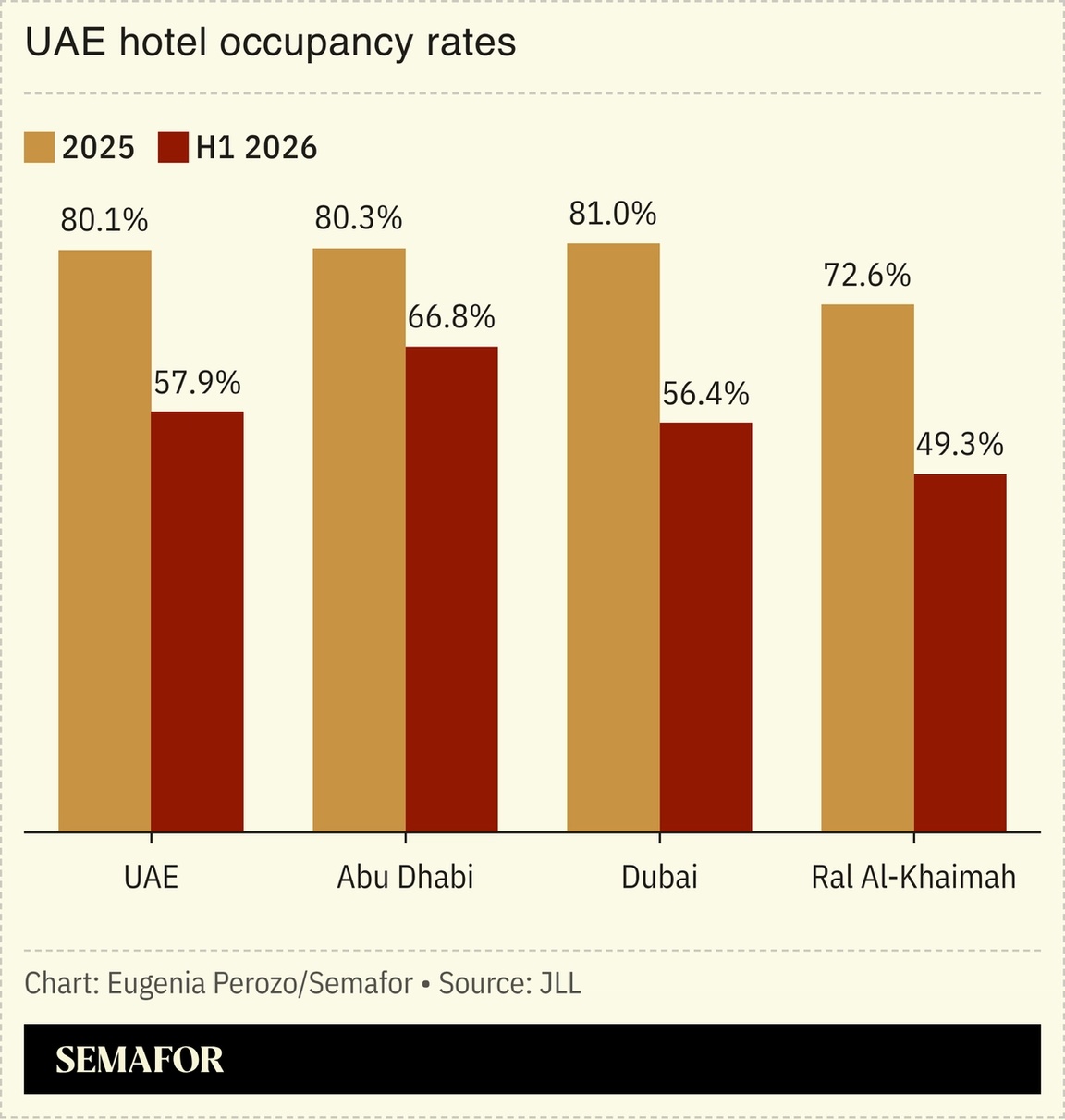 Hilton’s Middle East business is rebounding quickly from the Iran war. Regional revenue plunged by almost a third earlier this year, but is set to be roughly flat year-on-year in the third quarter, its regional head told The National. A return to pre-war growth is expected next year. There have been early signs of recovery across the hotel industry after government incentives and discounts lured residents to Dubai resorts over the summer. Now the focus is shifting to foreigners for the high season: Abu Dhabi’s tourism department is working with Indian travel firms to bring 75,500 more visitors from its top overseas market. Investors are also making longer-term bets, with Accor nearing a hotel deal at the long-dormant Dubai Pearl site near the Palm Jumeirah — a project first announced in 2002 — its regional chief told AGBI. |
|
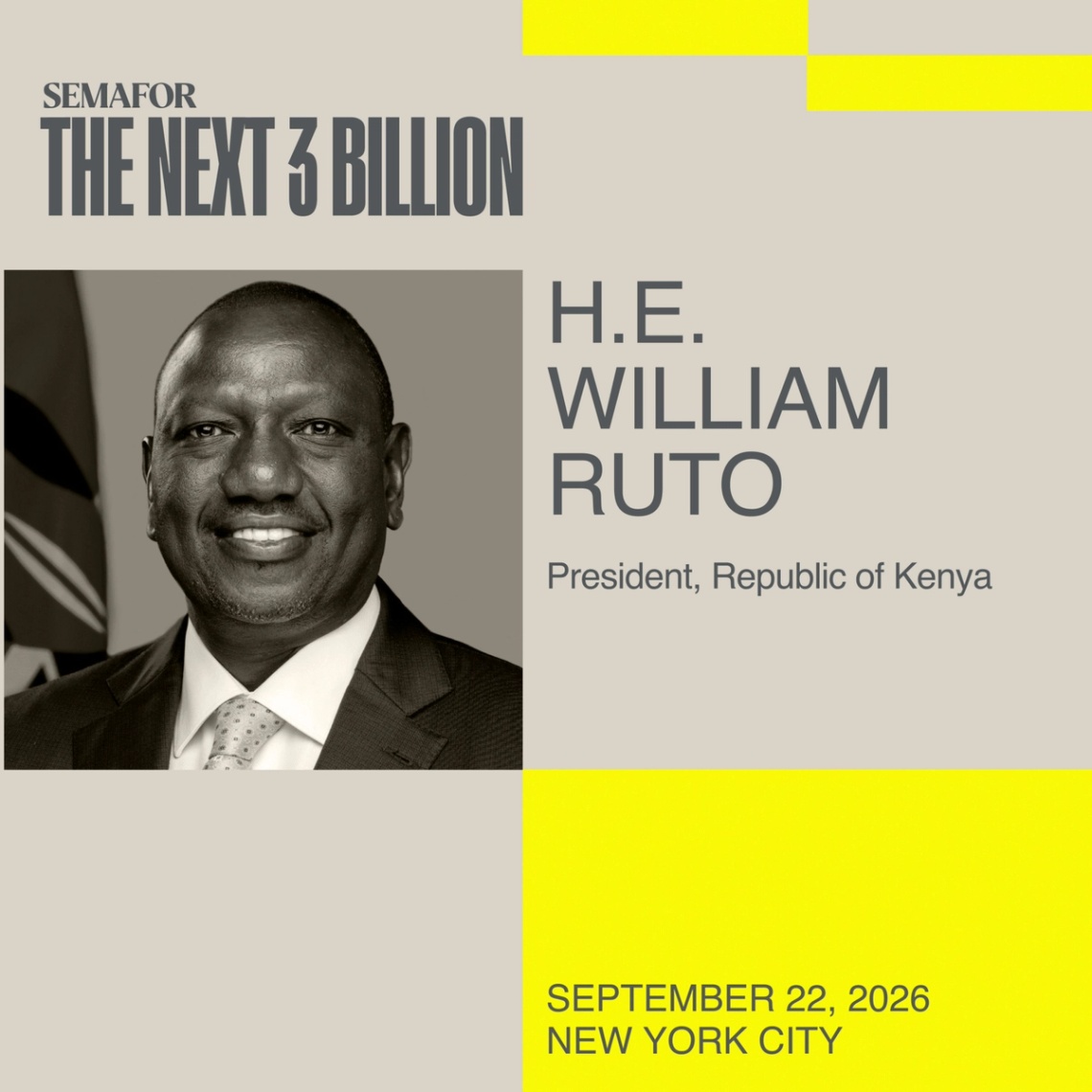 On Tuesday, Sept. 22 in New York City, H.E. William Samoei Ruto, President of the Republic of Kenya, will join us for The Next 3 Billion. Semafor will bring together leaders including H.E. Judith Suminwa, Prime Minister, Democratic Republic of the Congo; Dr. Ngozi Okonjo-Iweala, Director-General, World Trade Organization; Sanda Ojiambo, Assistant Secretary-General, CEO and Executive Director, United Nations Global Compact; James Manyika, SVP, Research, Labs, Technology & Society, Google-Alphabet; and more to explore how AI, energy, and global development can expand access, unlock opportunity, and drive inclusive growth across the world’s fastest-growing regions. Sept. 22 | New York City | Delegate Application |
|
 Economy- Dubai inflation rose to 5.5% in August, up from 5.3% in July, on higher fuel prices. Emirates NBD nearly doubled its year-end inflation forecast to 5.6%, citing a longer spell of elevated oil prices. — Enterprise News
Entertainment- Theme park and hotel operator Baan Holding, formerly Al Hokair Group, is building a Hasbro-themed family entertainment center in Jeddah. The facility is expected to open in the first quarter of 2027, the latest addition to Saudi Arabia’s growing entertainment sector, which spans Six Flags, UFC fight nights, and an upcoming Dragon Ball theme park. — Argaam
Environment- Kuwait is trying to bring mangroves back to its coastline, planting seeds imported from Gulf neighbors, including Oman, at the Jahra Nature Reserve. The project aims to revive trees that last grew in Kuwait in the 1940s. — Kuwait Times
Sovereign Wealth- Abu Dhabi’s L’IMAD Holding is weighing a bid for a stake in New York-based cargo airline Atlas Air, owned by a consortium led by Apollo Global Management, in a deal that could value the business at $10 billion or more. The emirate’s newest sovereign fund, which has been building its logistics portfolio, recently took over ownership of AD Ports. — Bloomberg
|
|
 Saudi Press Agency Saudi Press AgencyIf you were wondering where Saudi Arabia’s religious police have gone after vanishing about a decade ago, they are still around, but with a different focus. Officially known as the “Committee for the Promotion of Virtue and Prevention of Vice,” the government entity that once enforced a strict reading of Islamic law now holds talks warning against extremism and preaching loyalty to the flag and the vision to transform Saudi society. At an exhibition in Al-Baha, in the conservative southwest Sarawat mountain region, the group delivered that message to an audience where many still object to women appearing in public without a headscarf and abaya. — Manal Albarakati |
|
|


