What a CFR Expert Saw in Haiti |
By Ivana Saric
Digital Editor, Council on Foreign Relations |
This summer, the U.S. Supreme Court ruled that the federal government could terminate Temporary Protected Status for Haitians. The status allowed up to 350,000 immigrants to live and work in the United States due to unsafe conditions at home. Without it, they face deportation.
In June, CFR’s Sam Vigersky, who went to Haiti as a UN aid worker after the 2010 earthquakes, traveled back to document the conditions on the island nation himself. The result is a sweeping visual story published on CFR.org this week. The Daily Brief recently caught up with Vigersky for behind-the-scenes insight into his reporting process and what he witnessed on the ground. Vigersky said he was struck by the “stress and collective trauma across Port-au-Prince” upon his return.
“You can read quarterly reports about murders, kidnappings, and gang advances,” he told the Daily Brief. “What you can’t quantify is the impact of living under constant threat. Whether your job is in a hospital or office, leaving home each day is a life-and-death gamble. People told me repeatedly that the gangs are tracking routines and movements before kidnappings. Children are being deployed as lookouts. Gang members are dressing in police uniforms. Nowhere felt safe.”
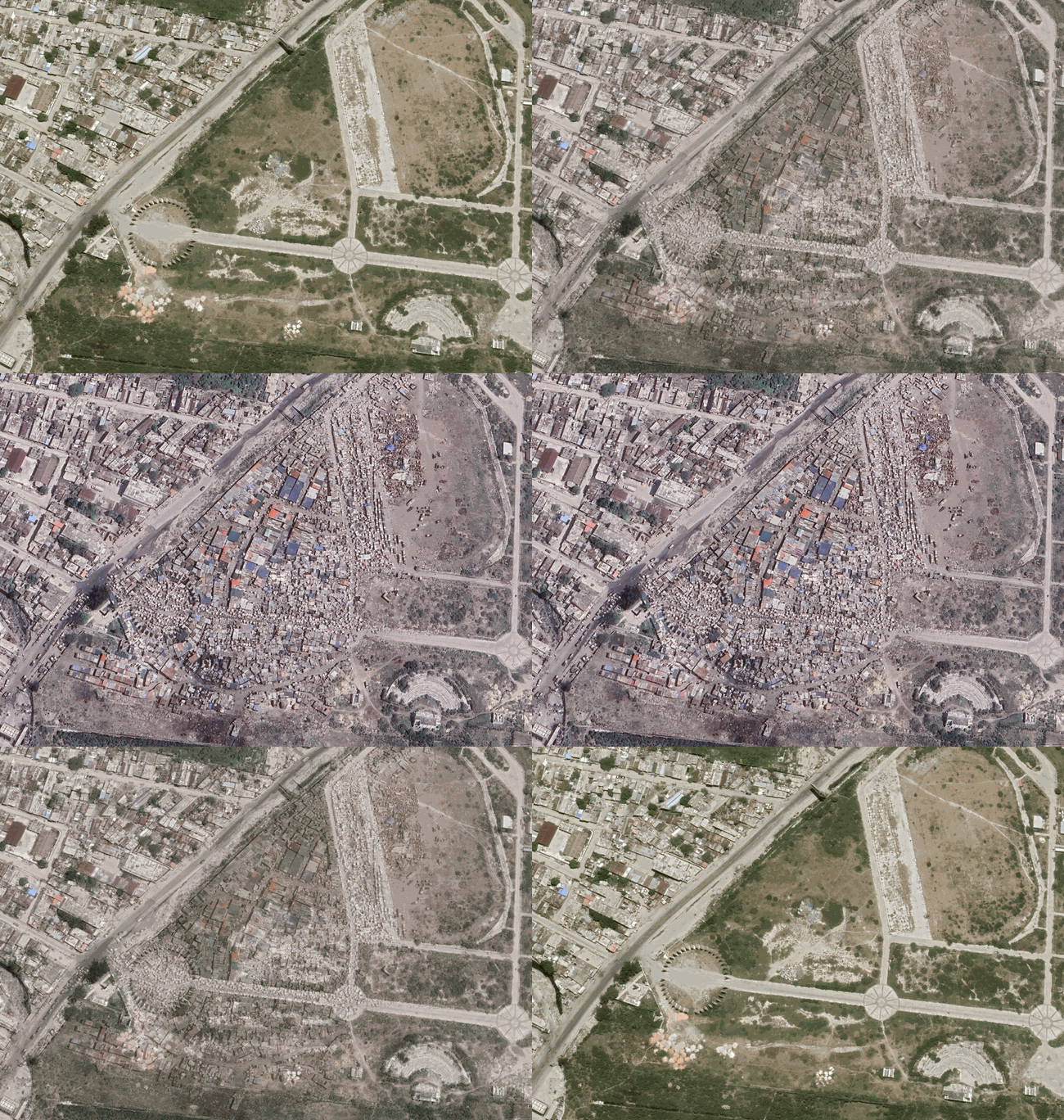
Reports indicate that gangs now control up to 90 percent of the capital of Port-au-Prince. Gang violence has displaced 1.5 million people over the past four years and destroyed countless homes in the process, leaving many living in tents and makeshift shelters. The change can be seen in visuals like the one below. |
The worsening humanitarian situation has coincided with the Trump administration’s aid cuts. The United States has backed security measures: it is pushing a counter-gang offensive built around the UN-authorized Gang Suppression Force and has indicated it plans to work with Vectus Global, a private military company running a lethal drone operation in Haiti.
The current international paradigm on the island has “no natural comparisons,” Vigersky said. “What’s happening in Haiti is an extreme collision of forces reshaping the world in other conflict settings,” he explained. “Private military companies are proliferating. Lethal drones are increasingly accessible. And the appetite for traditional, blue helmet UN peacekeeping operations has nearly vanished.”
Learn more about Vigersky’s trip to Haiti in the video below, and read his full article on CFR.org. The Daily Brief will be back Monday with more news and CFR analysis.
|
|
|
|
What Do You Want to Read on a Friday Afternoon?
|
From behind-the-scenes looks at the Council’s work to responding to your questions, the Daily Brief team is mulling ways to make our Friday editions a little different. Let us know at dailybrief@cfr.org. |
|
|
|
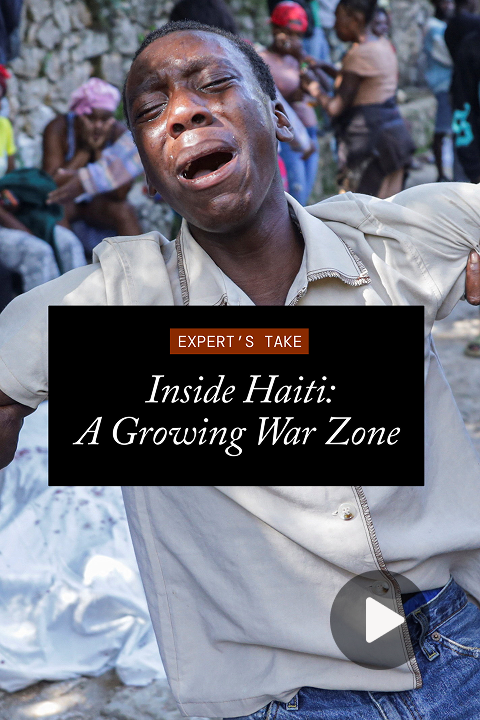
When Vigersky arrived in Haiti, he witnessed a country ravaged by armed conflict, government collapse, natural disasters, mass displacement, and looming famine. Watch the video to follow along as he explains the converging crises facing the island nation and see footage from his travels.
The United States is preparing to send potentially hundreds of thousands of Haitian immigrants back to the country, as the Trump administration claims the country is safe to return to. “To me, it appears more dangerous than ever,” Vigersky says. |
|
| |
|
Heading into the weekend, the Daily Brief is sharing three CFR long reads to enjoy until we return next week:
|
|
|
|
Every day, the Daily Brief brings you a curated list of the top stories from around the world. |
- Protests Break Out After Dozens of Miners Die in Nigerian Custody. Thirty-seven people suspected of working in an illegal mine were found dead yesterday, sparking public outrage.
-
Kidnapped British Citizen Rescued During Deadly Shootout in Malawi. Nusrat Osman was abducted last week and rescued yesterday in a police operation. Two suspects were killed, two others remain at large.
|
-
Brazil’s Lula Increases Welfare Benefits Ahead of Elections. The country’s president announced a 15 percent increase in his flagship social services program’s monthly payment. A first round of presidential elections will be held in October; polls indicate challenger Sen. Flávio Bolsonaro has a similar level of support.
- New U.S. Sanctions Put on Cuba. The State Department announced new sanctions on the island nation yesterday, which affect Cuban nickel reserves, four military enterprises, and three military officials.
|
-
Former Malaysian PM to Complete Sentence Under House Arrest. The country’s king granted former Prime Minister Najib Razak a pardon today. Razak had been convicted for involvement in one of the largest financial crimes of the century. He has denied the charges.
- South Korea Rejects U.S. Call for Military Support. In spite of U.S. pressure, the country’s president said today he would not deploy military assets to the Middle East to support the Iran war.
|
-
Macron Warns of Growing Russian Hybrid Threat. French President Emmanuel Macron said today that threats from Russia were growing and that he had asked the government to prepare plans to secure critical infrastructure.
-
Germany Receives First F-35 Jet. The aircraft, made by U.S. company Lockheed Martin, will replace the country’s old Tornadoes. But the move has reignited a debate about European security-sharing and dependence on the United States.
|
-
UN Report: More than 112,000 Recently Displaced In Yemen. The UN migration agency said today that aid agencies were reporting mass displacements, and urged warring parties to de-escalate.
-
Bloomberg: Saudi Aramco Pauses Crude Deliveries for Some European Refiners. The shortage comes after Saudi Arabia’s East-West pipeline to the Red Sea was attacked by drones last week. It will partly resume operations in days, and full capacity in an estimated six weeks, an unnamed source said.
|
|
|
|
Host: Ivana Saric
Editor: Xian Chiang Waren
Email Operations: Eric Rojas
Editorial Director, News: Phil McCausland
Editor-at-Large: Robert McMahon
Chief Digital Content Officer: Millie Tran |
|
|
|
58 East 68th Street, New York, NY 10065 |
1777 F Street, NW, Washington, DC 20006 |
|
|
|
|