Policy changes, but facts endure. AP delivers accurate, fact-based journalism to keep the world informed in every administration. Support independent reporting today. Donate. |
|
|
By Holly Meyer and David Crary |
|
| |
|
By Holly Meyer and David Crary |
|
| |
|
Hello, World of Faith leaders.
This week, we look at how a pastor in Wyoming upset her Arapaho neighbors, and we check-in on the long-term effects of immigration enforcement on the faith community in Minneapolis. We also take you to the West Bank, where a settler community is celebrating a new synagogue. |
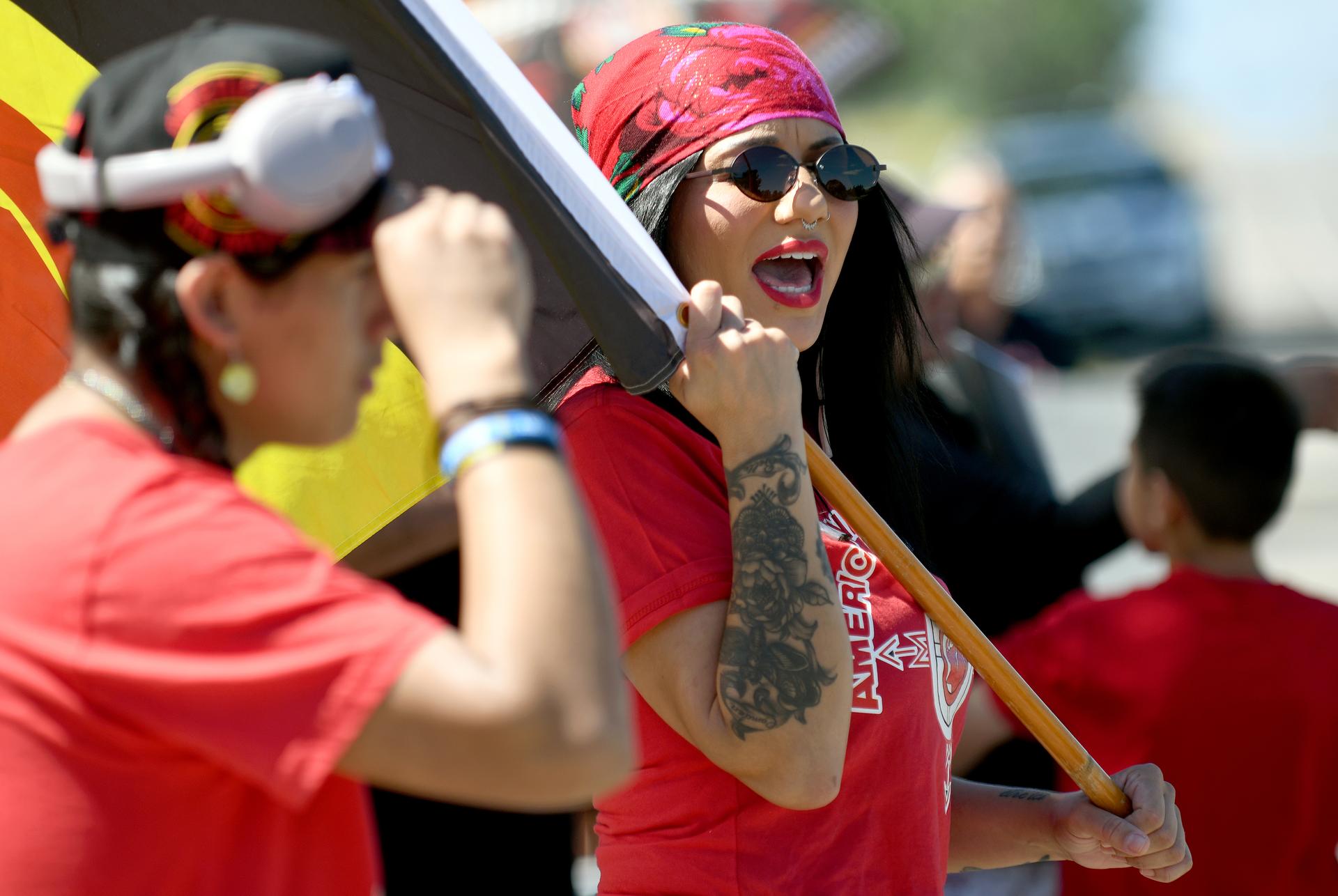
Danelle Kawasaki, a spokeswoman for the Montana American Indian Movement, protests near the Foundations for Nations church in Arapahoe, Wyo. (AP Photo/Thomas Peipert) |
A Christian pastor called Arapaho ceremonies 'idol worship.' Now the tribe wants her church gone |
In the weeks since a Christian pastor on the Wind River Reservation likened Arapaho ceremonial ways to “idol worship,” the Sunday morning rhythm has become familiar. Congregants gather inside Foundations for Nations church to pray. Protesters outside do the same. The Northern Arapaho tribal government has demanded that the church and its non-Native pastor, Sarah Lucas, leave the reservation in Wyoming. Read more.
|
|
|
-
The standoff tests the boundaries of religious freedom and the right of a tribal nation to govern according to its own values and protocols.
- The conflict stems from a video that circulated in July as Arapaho people surfaced from their weeklong sundance ceremony. In it, Lucas called that cornerstone of Arapaho spiritual life “idol worship.”
- Lucas, who owns the land under her church, says she isn't going anywhere. She says her words reflect her interpretation of the Bible and are constitutionally protected.
|
|
|
Minnesota churches roiled by legal battle over ICE surveillance and right to protest |
Court cases involving Twin Cities churches and immigration enforcement highlight how the acrimonious debate continues to roil faith communities more than six months since the federal surge in Minnesota. The state turned into a symbol of defiance of the Trump administration’s policies. Read more.
|
|
|
-
In one case, a Baptist church has asked for the government to be reprimanded after spying on protest-related activity on its property.
- In another case, protesters have asked for their charges to be dismissed after they disrupted a worship service at a church with a pastor who served as an Immigration and Customs Enforcement official.
-
Even congregations uninvolved in the court cases say they’re still feeling the repercussions of the weekslong surge in immigration operations last winter. Protesters confronted federal law enforcement daily, and the killing of two protesters sparked global outcry.
|
|
|
Israeli settlers, some armed, celebrate a new synagogue in the occupied West Bank |
Israeli settlers, some carrying rifles, sang, danced and carried Torah scrolls as they inaugurated a synagogue at the newly revived settlement of Homesh. For those attending the event Wednesday, it was a celebration. For Palestinians living nearby, the return of settlers to the site carried a very different meaning. Read more.
|
|
|
-
Homesh lies deep in the northern occupied West Bank, near the Palestinian village of Burqa. Israel dismantled the settlement in 2005 but approved its reestablishment last year, allowing settlers to live there and connect to Israel’s water and electricity networks.
-
Palestinian residents of Burqa say the settlement restricts access to privately owned farmland around the site. Israel’s Supreme Court has acknowledged that land at the original settlement belonged to Palestinians from the village.
-
Homesh is part of a broader expansion of Israeli settlements that has further restricted Palestinian movement and access to land. The expansion has coincided with a sharp rise in settler attacks against Palestinians and their property.
|
|
|
|