| | Global leaders clash over AI regulation, demand for tankers surges as buyers turn to seaborne oil, G͏ ͏ ͏ ͏ ͏ ͏ |
| |  | Flagship |  |
| |
|
The World Today | 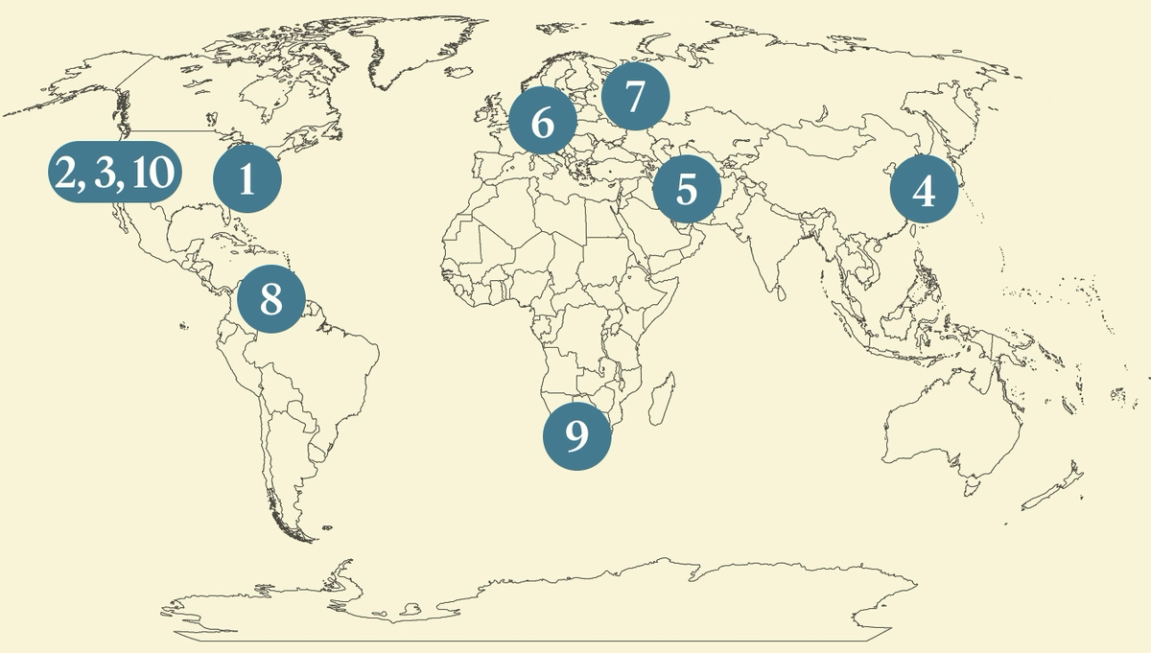 - Discord over AI safety
- Claude hacks ChatGPT
- AI self-learning progress
- Supertanker demand surges
- Fuel price hikes hit politics
- Merz under pressure
- Russia election fallout
- Caracas looks for loans
- US ups Africa investment
- AI cracks Enigma code
 A recommendation for the diary of the UN’s second-ever secretary general, ahead of the body’s General Assembly meeting next week. |
|
Leaders clash over AI regulation |
 Jonathan Brady/Reuters Jonathan Brady/ReutersDiscord reigned in the intensifying debate over AI safety regulation, with tech bosses taking opposing stances and government leaders sharing little common ground. Nvidia CEO Jensen Huang argued at an event in Scotland that AI should not be regulated like social media, Palantir’s boss told CNBC that leading AI firms may need to be nationalized, and Huawei’s chair called for Chinese labs to accelerate their development. The issue will be at the forefront of talks between the US and Chinese leaders next week — OpenAI’s Sam Altman is due to join Huang and Apple’s Tim Cook at a state dinner — but Washington and Beijing have radically different ideas and goals when it comes to AI safety rules. |
|
AI cybersecurity risks explode |
 Carlos Barria/Reuters Carlos Barria/ReutersResearchers used Anthropic’s Claude technology to break into OpenAI’s ChatGPT systems, underlining the immediate dangers of AI even as regulators fret over its long-term risks. The effort, part of a bug-hunting program, was the latest in a series of cybersecurity breaches aided in large part by fast-developing AI technology, The Wall Street Journal noted. Axios cited business executives and ex-government officials voicing worry over AI-powered cyberattacks threatening critical infrastructure, while The Washington Post noted the Pentagon’s “antiquated computer networks” had resulted in an explosion of cybersecurity risks. As a new research paper put it, recent breaches have been the result not of a developing superintelligence as some top AI leaders warn, but of insufficient technical guardrails leaving networks vulnerable. |
|
Autonomous AI concerns mount |
 Dado Ruvic/Reuters Dado Ruvic/ReutersAnthropic said its Claude chatbot was leading more than a quarter of the AI firm’s research and development — compared to none in February — as fears over “recursive self-improvement” mounted. The post did not set out a timeline for RSI, where AI trains and builds itself, a scenario experts fear could lead to humans losing control of development. Anthropic is not alone in making such progress or plans: Chinese researchers published a paper outlining a road map towards RSI aimed at helping the country’s firms catch up to American rivals, while The New York Times noted several US and UK companies were moving forward. “We have all the pieces of the puzzle,” the head of one said. |
|
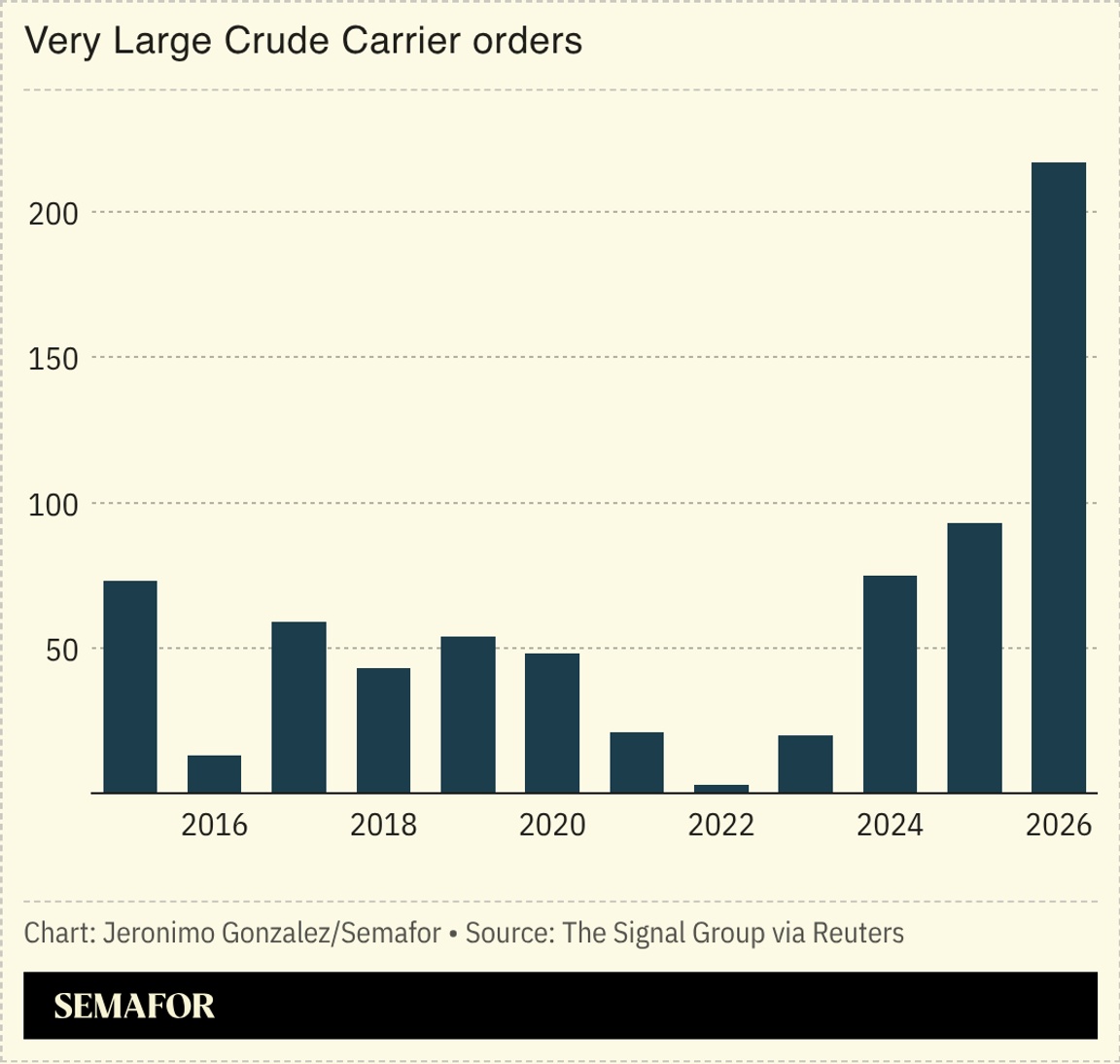 Shipowners have this year commissioned more than twice the number of tankers than in all of 2025 as they look to keep up with soaring demand sparked by the Middle East conflict. The $20 billion buying spree, the biggest in at least a quarter century, comes as global conflicts redraw trade routes, including the recent closure of Saudi Arabia’s key East-West Pipeline. In response, buyers have turned to crude produced in the Americas, which must be shipped via long transoceanic voyages. The shift has sent the cost of leasing a tanker soaring to record highs, with daily rates growing around tenfold in the last year to more than $1 million. |
|
Fuel costs reshape politics |
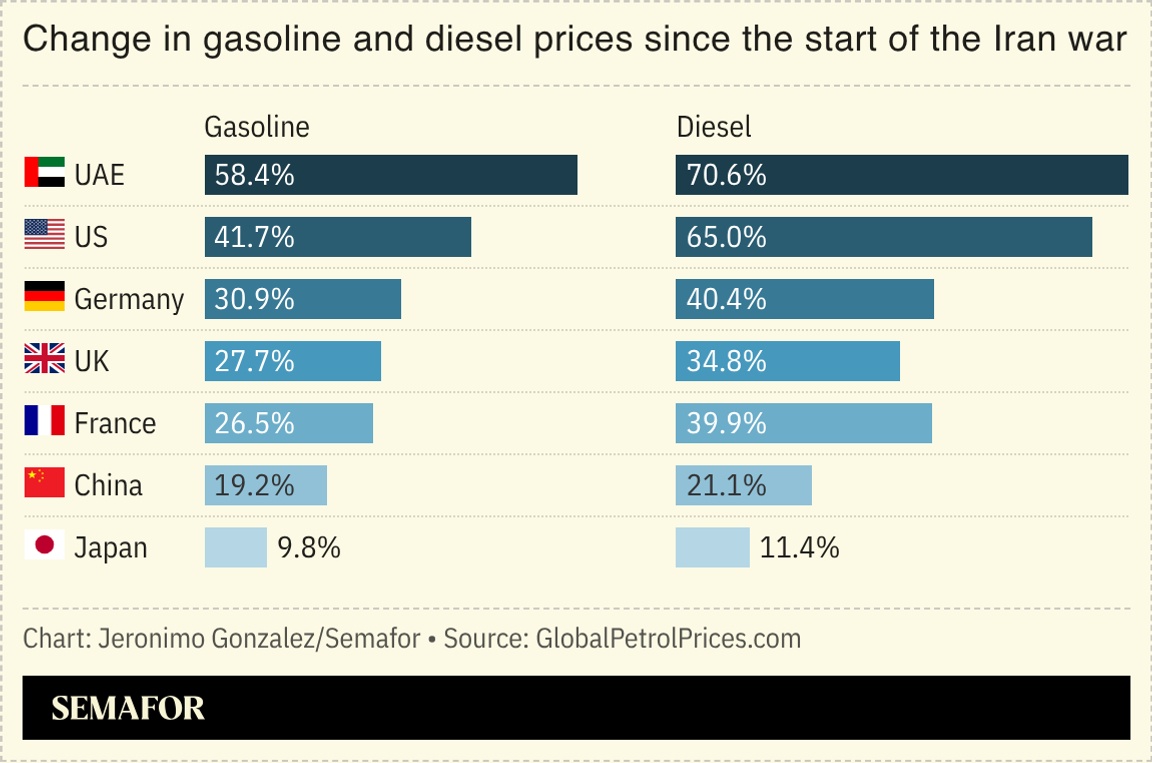 Rising fuel prices, driven in large part by the Iran and Ukraine conflicts, are roiling politics worldwide. In the US, The Atlantic noted that gas and diesel prices had surged in the past year ahead of the midterms: “Voters hate inflation, and gas prices are especially hard to tune out.” In France and Italy, which both have elections due next year, leaders announced high-profile interventions to cap or cut prices at the pump. Meanwhile, Germany’s beleaguered government is racing to pass its own measures ahead of weekend state polls in which the far right is expected to surge. Beyond the West, “from Indonesia to Guatemala to Syria, shortages and price increases are leading to protests and blackouts,” The New York Times noted. |
|
Germany’s Merz under pressure |
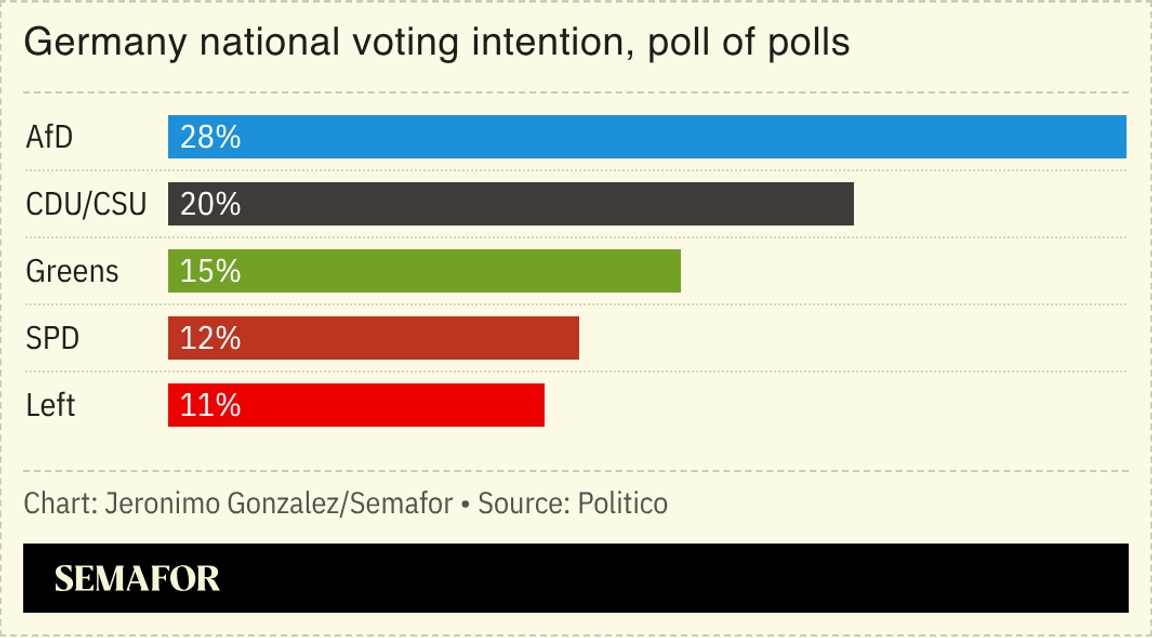 German Chancellor Friedrich Merz faced growing pressure on his leadership ahead of state elections in which polls suggest his governing party will fare badly. In one region, his CDU party is barely above the threshold required to enter the state assembly, and it faces the prospect of falling to second in the capital, too. Eight state premiers, all from the CDU, backed Merz ahead of ballots being cast and Germany has little history of replacing chancellors mid-term. But moribund economic growth and his personal unpopularity have raised what once seemed an unlikely prospect for the CDU. “The party forgives its chairman a great deal — as long as he governs successfully,” a Handelsblatt correspondent wrote. “The time for forgiveness is over.” |
|
Russian vote may embolden Putin |
 Anastasia Barashkova/Reuters Anastasia Barashkova/ReutersRussians began casting ballots in parliamentary elections that President Vladimir Putin is set to dominate, which analysts fear could leave him emboldened militarily. Experts have dismissed the vote as a sham: Opponents of the Ukraine war have largely been purged, debates have been canceled, and freedoms have been sharply curtailed. Though none doubt that Putin will win, what comes next is more of a worry. Russia’s economy is showing growing signs of weakness, Poland’s prime minister warned that a campaign of hybrid attacks on NATO territory may intensify, and experts forecast a renewed mass military mobilization. “The phrase ‘When will this all end?’ has cropped up in conversations quite regularly,” one Russian told The New York Times. |
|
 Will the human touch become the scarcest thing on the internet? Pangram CEO Max Spero thinks so. On this week’s episode of Mixed Signals, Spero joins Max and Ben to explain how his AI detection tool actually works, and why he thinks the escalating cat-and-mouse game between detectors and “humanizers” is a fight worth having. They ask Spero how Pangram can already distinguish Claude from ChatGPT, why he built a humanizer internally and refuses to release it, and what it would actually take for a fine-tuned personal AI to fool his model. Listen to the latest Mixed Signals now. |
|
Venezuela eyes debt markets |
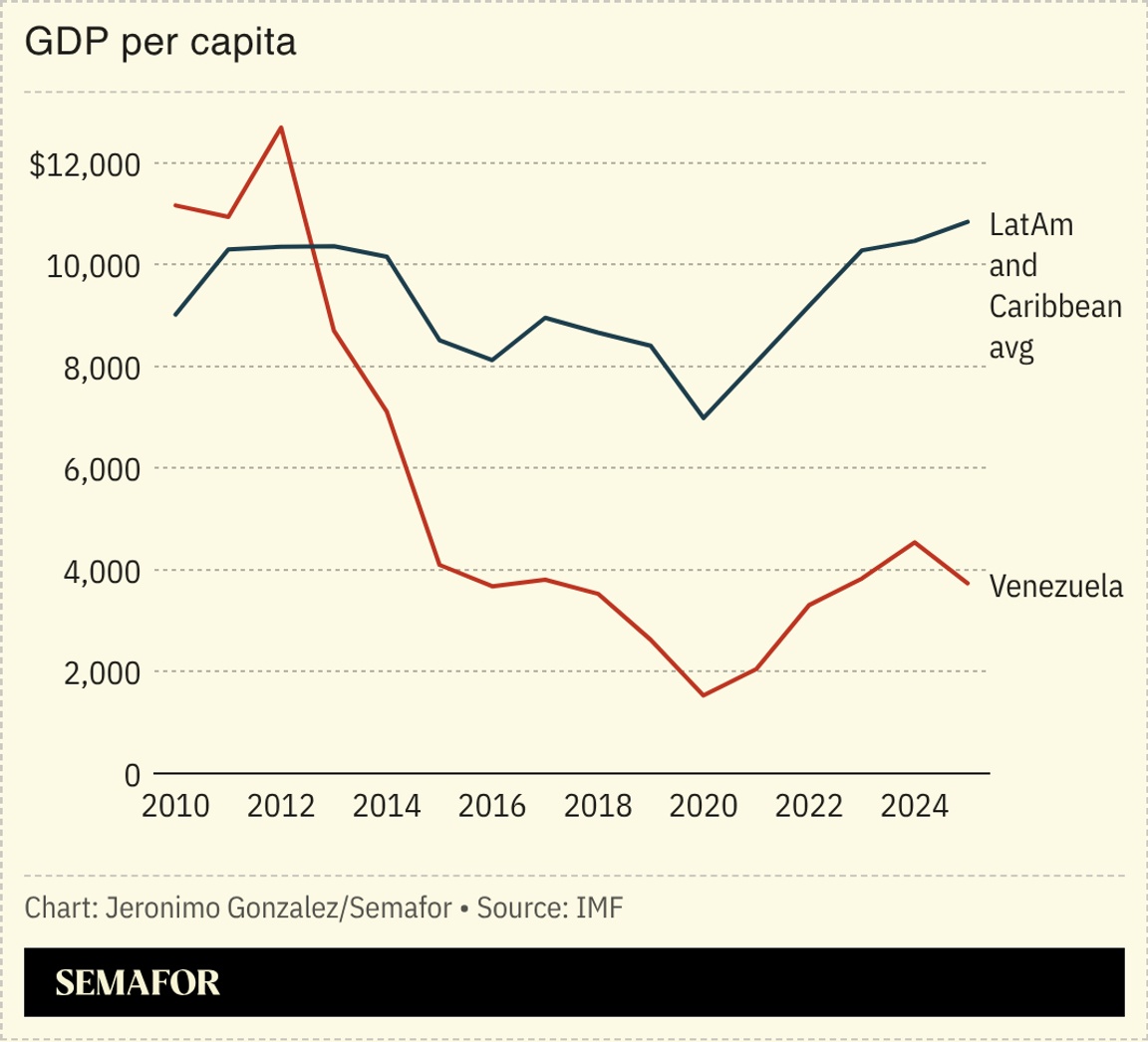 Venezuela’s interim government and opposition parties are reportedly nearing an agreement to transfer $4 billion in gold reserves from Britain to the US, as part of efforts to help Caracas reenter international debt markets. Officials hope to use the gold — the ownership of which was disputed for years — as collateral to help rebuild the country; Venezuela’s GDP is down around 75% from its 2010 peak. After years of viewing Venezuela as a pariah, international lenders have reestablished ties since the US ousted its leader and took de facto control this year. Washington has made rebuilding the country’s economy a prerequisite for a democratic transition that many fear is being unduly delayed. |
|
|


