By Nandita Bose, White House Correspondent |
|
|
|
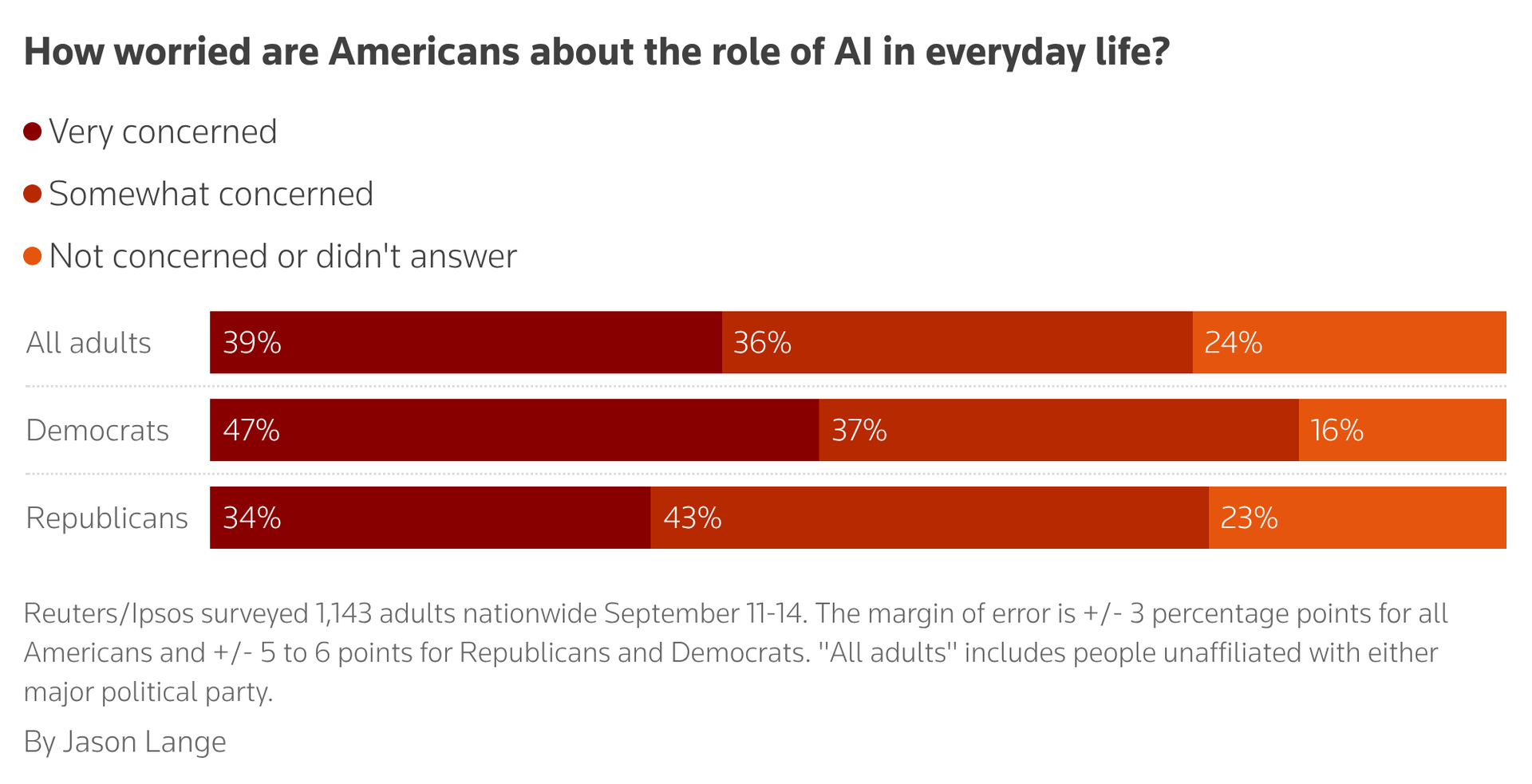
Hello, I’m Nandita Bose, a White House correspondent for Reuters. I’ve spent much of the past two decades reporting on power, first through the lens of companies and corporate investigations and, since 2019, through national politics and the White House. After spending last week at the Republican midterm convention in Dallas, I returned to Washington to find the capital in an uproar over the potential threat of artificial intelligence. It got me thinking about how quickly an issue can move from policy debate to a campaign talking point, and then into a concern that voters weigh at the ballot box. Whether AI becomes a voting issue in November remains unclear, but it is moving rapidly in that direction.
And, in July, we asked you to submit your questions about the midterms. This week we will start answering them by focusing on one topic every week. The questions were grouped into six main ones that were assigned to our U.S.- based reporters with the relevant experience. Scroll down for my colleague Joseph Ax's answer to your questions about voter eligibility verification.
|
|
|
Latest U.S. politics headlines |
|
|
|
Washington is suddenly scrambling on AI. Will voters follow? |
When I was talking to Republican voters at the convention, AI mostly came up in the context of everyday costs: power bills, water use and whether the data centers popping up around the country were going to make life more expensive.
Then, in a matter of days, AI went from a debate over data centers and household costs to a growing argument over whether humanity survives. The existential risk conversation had been building for years, but fresh warnings from AI researchers and top industry leaders, including Anthropic CEO Dario Amodei, OpenAI CEO Sam Altman and xAI founder Elon Musk, about powerful AI systems becoming difficult to control made it more urgent.
Washington is usually late to the party on most topics, but the prospect of human extinction got attention fast. Senator Bernie Sanders, a progressive independent, and Steve Bannon, a close ally of President Donald Trump, spoke at the same event calling for AI guardrails. Campaigns are scrambling to figure out where they stand, and Democratic and Republican lawmakers are weighing new restrictions.
Trump, meanwhile, suggested that he was the only AI guardrail the country needed.
“The only control or ‘guardrails’ that AI needs is a STRONG AND SMART (High IQ!) PRESIDENT, and the U.S.A. has that, in spades!” he wrote on Truth Social, while arguing that efforts to slow AI development would benefit China.
What is unclear is what voters think about all of this. A New York Times/Siena poll found 61% of likely voters opposed building new AI data centers, but AI and data centers barely registered when voters were asked what mattered most to their midterm vote. The cost of living, the economy, immigration and foreign wars remain much more immediate political concerns.
|
|
|
|
That gets at the strange politics of AI right now. There is plenty of unease, but it has not yet settled into a single political argument or become a clearly salient midterm issue. Different parts of the debate are resonating with different voters, making it harder for campaigns to know what message, if any, will stick.
With more than six weeks until Election Day, AI could still become a bigger midterm issue. Even if it does not, the fight could loom much larger by the 2028 presidential election as the technology advances, data centers spread, and Washington is forced to decide how much or how little to regulate it.
For now, the debate is still taking shape. Americans are talking about it, but many are still figuring out which warnings are grounded in reality and which are political hallucinations — and whether any of it matters enough to shape their vote. |
Follow Reuters/Ipsos polling on the president's approval ratings here. |
|
|
|
Your questions about eligibility verification
|
What procedures do states use to verify voter eligibility and citizenship, and what does the available evidence show about the frequency and detection of ineligible voting or other election fraud?
Answer by Joseph Ax, National Affairs Correspondent
Under federal law, every state must retain a statewide list of registered voters and perform regular maintenance on it to remove ineligible voters. In addition, U.S. law requires first-time voters in federal elections who registered by mail to show some form of identification at the polls, such as a driver’s license, a paycheck or a utility bill.
Many states have imposed additional, more stringent procedures to verify eligibility, such as photo ID requirements, and those policies vary significantly among states. Votes cast by mail, which have come under frequent baseless attacks from Trump as unreliable, are typically checked by comparing the signature on the envelope with the one on file.
All available evidence indicates that ineligible voting, including noncitizen voting, is exceedingly rare. A Reuters investigation this year found just 129 cases in which noncitizens were federally charged with voting illegally; many appeared to stem from voter confusion or administrative errors, rather than intentional fraud.
The conservative Heritage Foundation think tank maintains a voter fraud database that includes just 1,619 cases from 1982 to 2025, or one for every 817,625 votes cast in a presidential election during that time. |
|
|
|
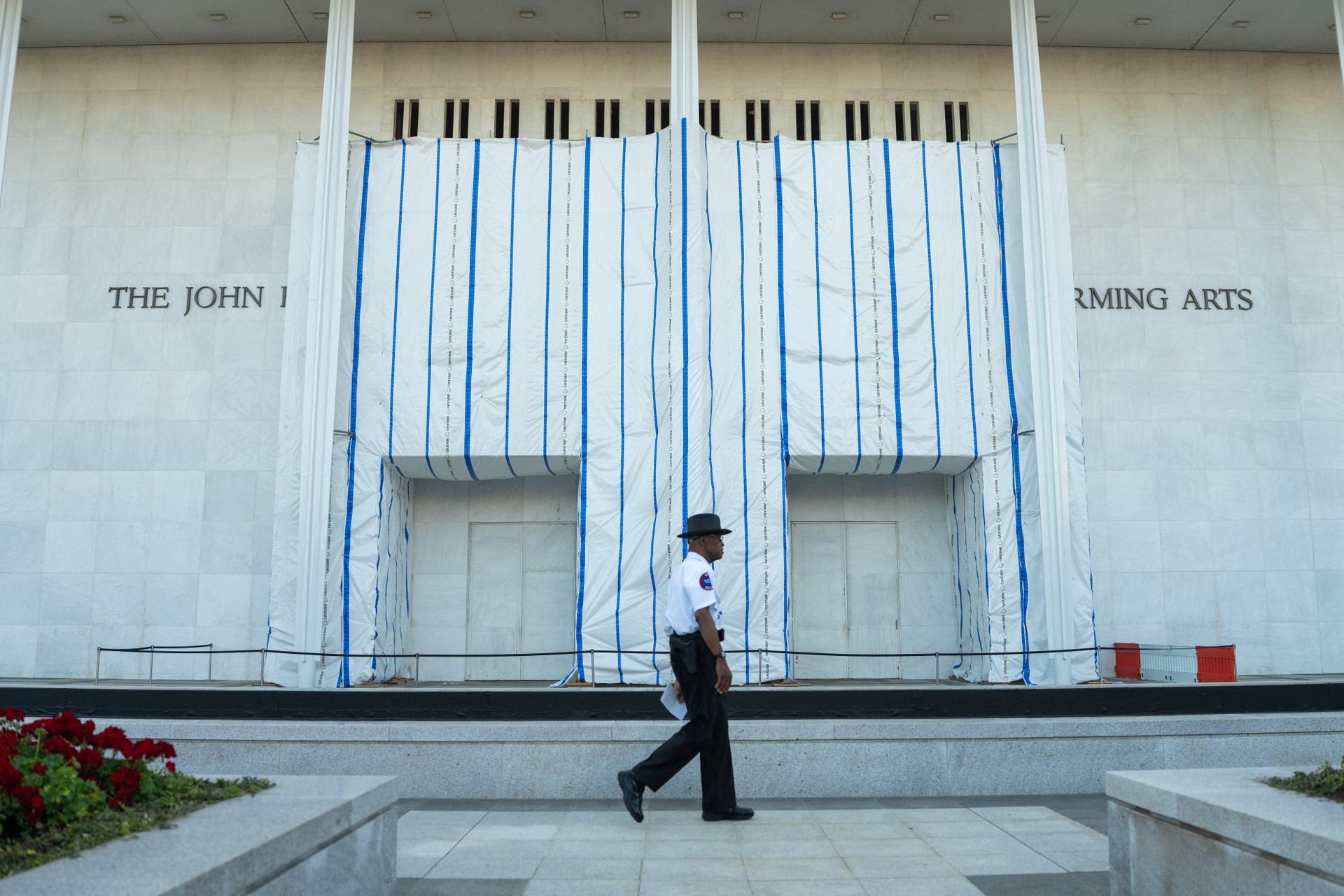
The exterior of the John F. Kennedy Memorial Center for the Performing Arts, a day after the Kennedy Center board voted to close the center for repairs, in Washington, D.C., U.S., September 16, 2026. REUTERS/Aaron Schwartz |
|
|
|
|