Hello Power Up readers,
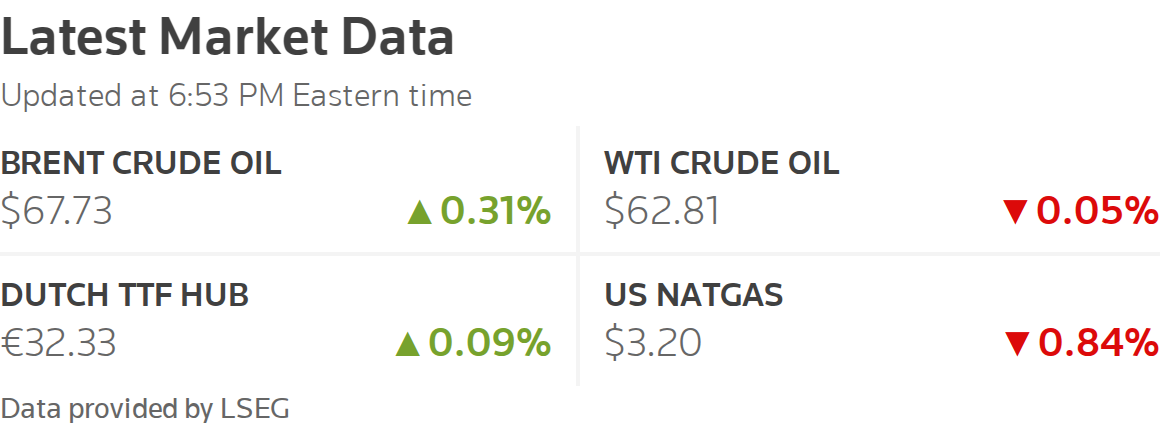
The oil market has once again shown how quickly it can adapt to abrupt changes on the ground. A week ago, an attack by Iranian-backed Houthi rebels in Yemen and drone strikes by Iranian-backed militias in Iraq paralysed what had become Saudi Arabia's main route for exporting oil since the start of the Iran war. Oil prices surged to over $108 a barrel on fears of fresh disruption to global supplies.
But as we've seen time and again in recent months, things rarely stay still for long in the energy sector, and now Saudi Arabia is diverting oil back to its Gulf Coast. More on this below.
While crude supply disruptions remain the market's main focus, tightening diesel supplies and surging prices now appear top of mind for President Donald Trump. Read my latest column to find out more.
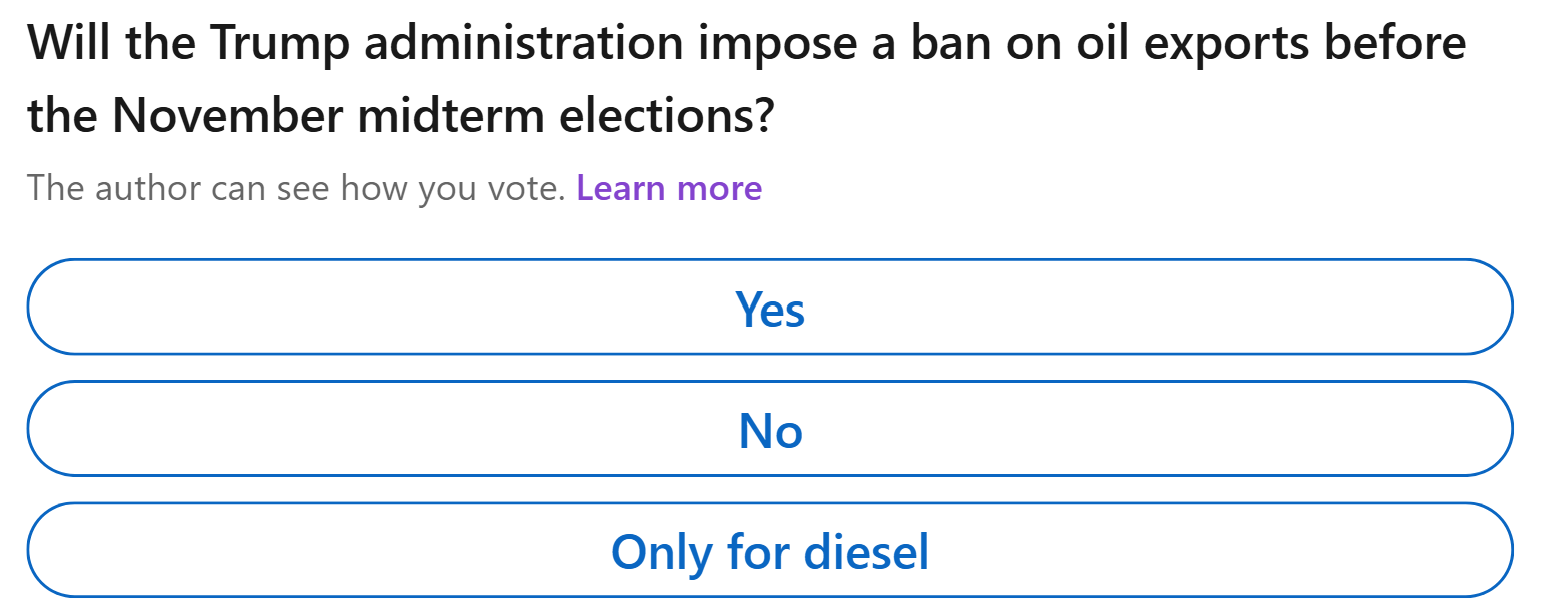
Finally, will the Trump administration ban oil exports? Let us know in our weekly poll.
As always, feel free to contact me at ron.bousso@thomsonreuters.com or connect with me on LinkedIn with any questions or thoughts. |
|
|
-
Bad weather: The Middle East is not the only place where maritime chokepoints are under threat. Traffic through the Panama Canal linking the Pacific and Atlantic oceans faces a threat from changing weather patterns, writes ROI Energy Transition Columnist Gavin Maguire.
-
Asia to the rescue: Asia's imports of liquefied natural gas in September are set to be the weakest for that month in eight years as high spot prices deter buyers in China and South Asia, much to Europe’s benefit, argues ROI Asia Commodities Columnist Clyde Russell.
-
The only way: The International Energy Agency's chief said on Thursday the shift toward electrification remained firmly backed by capital markets even as grid capacity and affordability challenges persist.
-
King Coal is back: Indian power producers' coal imports in August rose to a 15-month high as a heat wave and lower hydropower generation boosted electricity demand, prompting utilities to turn to costly overseas supplies.
-
Back to Venezuela: ExxonMobil is negotiating to return to Venezuela and has shown interest in the large Petromonagas heavy oil project in the Orinoco Belt, where the US energy major previously had a stake, as well as in areas in the neighboring Carabobo block, according to people familiar with the matter.
|
|
|
Saudi Arabia, the world's top oil exporter before the Iran war, has proven to be highly flexible during this now seven-month conflict. That was on display again in recent days, as the Kingdom, facing the closure of its East-West pipeline, diverted oil to its east coast Ras Tanura export terminal, where tankers are being loaded to sail through the Strait of Hormuz.
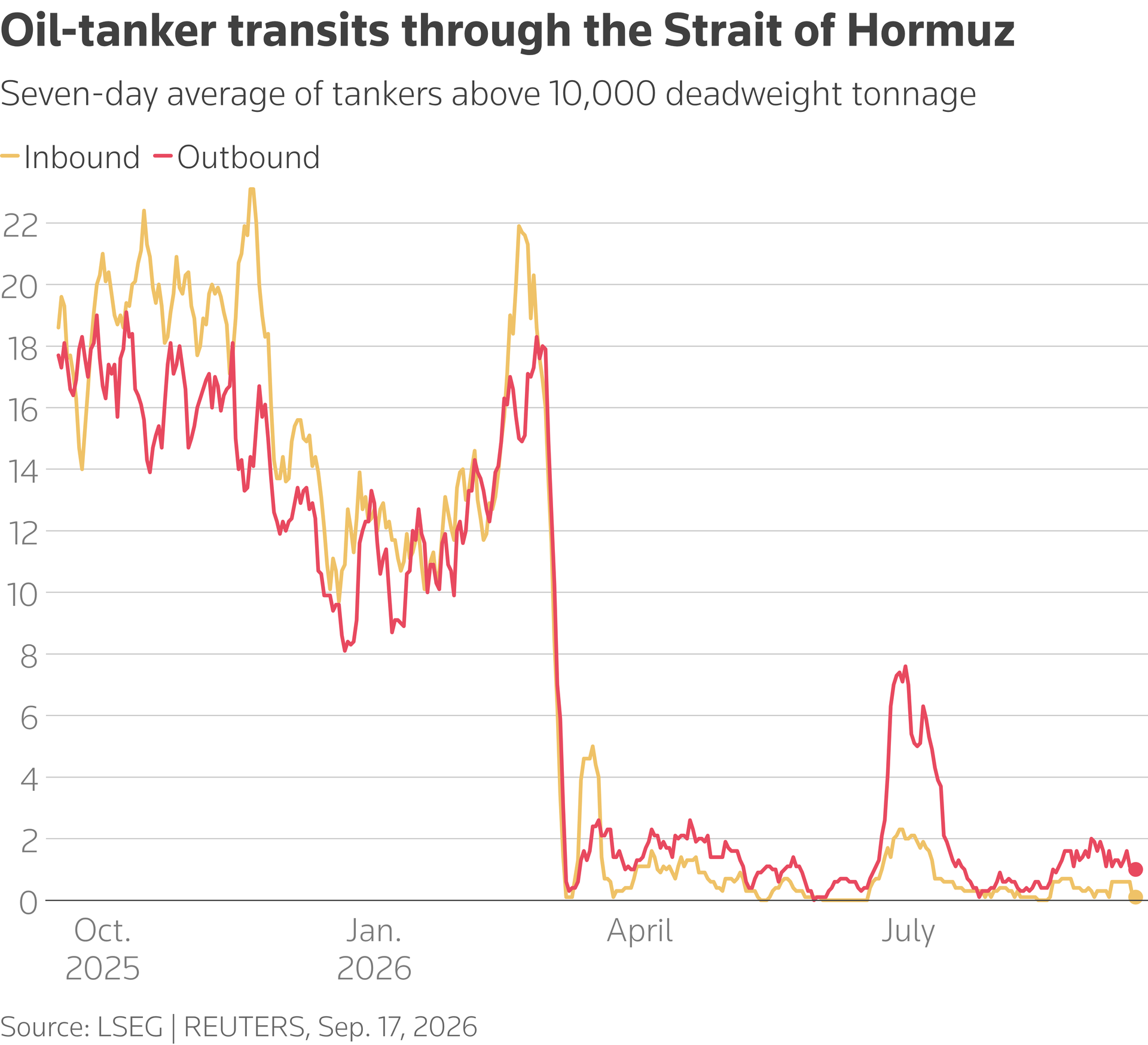
Though traffic through the narrow waterway remains constrained amid sporadic Iranian attacks on ships in the area, oil producers are increasingly willing to take the risk. These volumes are helping offset some of the exports lost on the West Coast, easing pressure on oil prices, which fell back below $105 a barrel on Thursday.
|
When the East-West pipeline will resume operations is anyone's guess. Two pumping stations serving the critical pipeline were damaged in an attack last week, and the repair timeline remains unclear, according to assessments from three oil and security sources.
The rapid advances of the Iran-backed Houthi rebels in Yemen in recent weeks tightened their grip over the Bab el-Mandeb strait at the southern end of the Red Sea. It also emboldened Tehran in its continued standoff with Washington, which has so far stayed on the sidelines of the fighting in Yemen. |
|
|
Diesel made headlines this week when President Donald Trump said on Monday that he had brokered an energy infrastructure truce between Russia and Ukraine under which Kyiv would halt drone strikes on Russian diesel production.
While neither side appears to have adhered to the deal so far, the episode highlights how surging diesel prices have become a real political problem threatening the global economy. But even if the arrangement would hold, the global refining industry, and diesel markets in particular, remain caught in the crossfire of two major conflicts that are unlikely to be resolved quickly. |
|
|
|