Hello, Today’s newsletter focuses on two scientific research papers that link climate change to the catastrophic glacier collapse that flooded parts of Nepal and Tibet in late August, killing around 1,400 people and leaving thousands still missing.
The first bit of fresh scientific research shows how rapidly warming temperatures in the region have caused glaciers to thin and have melted ice and permafrost buried deep in the bedrock of the Himalayas, according to the World Weather Attribution group of researchers.
The other new research, based on satellite data going back to the 1970s, has documented how major polar ice losses in Greenland and Antarctica — home to Earth's two great ice sheets — have contributed to rising global sea levels. Scientists said that the findings offer fresh evidence of the effects of human-caused global climate change. Also on my radar today: |
|
|
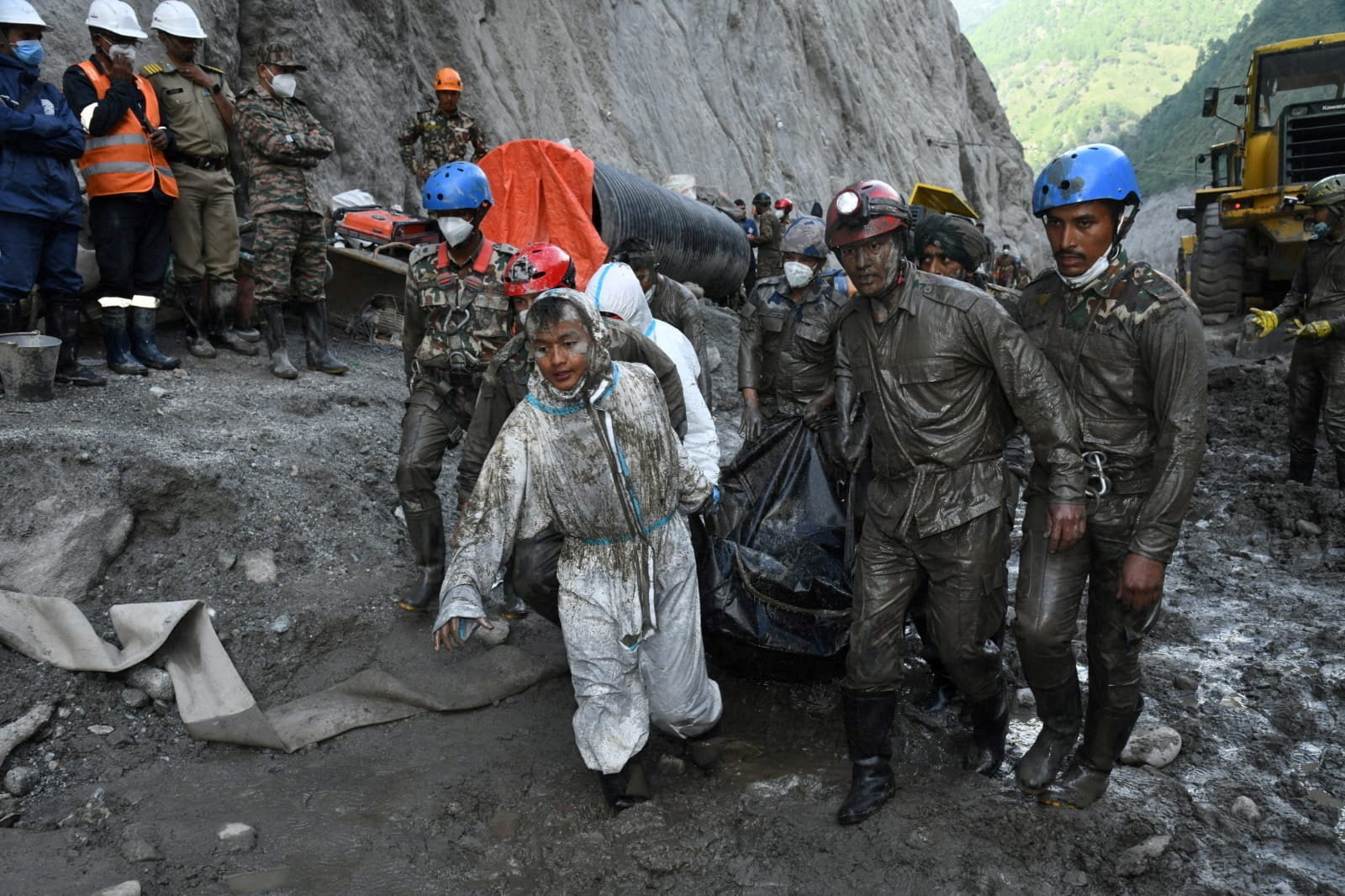
Search and rescue teams carry a victim from the Chilime Hydropower Project tunnel, following deadly flash floods and mudslides hit parts of Nepal. Nepal Army/Handout via REUTERS |
Human-caused climate change and Nepal |
While it is difficult to ascertain the precise role played by climate change in the collapse of around 2 sq km (0.8 sq miles) of rock wall and glacier ice on the Langtang Lirung mountain last month, soaring temperatures created the preconditions that made it more likely, researchers involved in the WWA study said.
WWA uses peer-reviewed methods to assess the role played by global warming in extreme weather events, according to its website.
"There's absolutely no doubt that human-induced climate change played a role here in the preconditioning of the disaster through permafrost thawing, through thinning of the glaciers, through having more rainfall instead of snow," said Friederike Otto, a climatologist at Imperial College London.
The study said mean temperatures were around 5 degrees Celsius (9 degrees Fahrenheit) higher than normal in the Himalayan region in August, with 1.5 C of the increase coming from climate change. Glaciers in the region have been thinning by about half a metre per year (about 1.6 feet) since the year 2000, changing stresses on the rock. Melting permafrost is also likely to have weakened the rock wall, the study said. |
|
|
|
The most complete account to date of ice loss |
Speaking of glaciers, Greenland and Antarctica lost a combined 11.3 trillion tons of ice between 1979 and 2023, adding 1.24 inches (3.14 cm) to the worldwide sea-level rise, according to data from 27 satellite missions.
The study, employing the longest satellite data record of changes in ice sheets ever gathered to give the most complete account to date of ice loss in Greenland and Antarctica, was conducted by the Ice Sheet Mass Balance Inter-comparison Exercise team, an international group of polar scientists.
"To put this very large number into context, 11.3 trillion tons of ice is enough ice to fill in a cube that would be 23 kilometers (14.3 miles) in height," said climate scientist Inès Otosaka of Northumbria University in England, lead author of the study published on Wednesday in the journal Scientific Data.
Of the ice loss documented in the study, about 60% came from Greenland and 40% from Antarctica, even though Greenland is about one-eighth the size of Antarctica. Click here to read more about the rapid rate of ice sheets melting. |
U.S. Secretary of State Marco Rubio speaks to reporters in Barranquilla, Colombia. Fernando Vergara/Pool via REUTERS |
-
US v South Africa migration: U.S. Secretary of State Marco Rubio announced a new visa restriction policy targeting some foreign nationals from South Africa as President Donald Trump's administration continues to criticize the African nation over actions aimed at addressing racial inequality that Trump claims hurt the white population.
-
Corporate money in elections: Montana voters will decide this November whether to make their state the first in the nation to bar corporations from spending money on elections through a ballot initiative. With similar, coordinated efforts underway in over 30 states, Montana could help set a critical precedent, experts say, and potentially lead to another showdown at the Supreme Court. Click here for the insightful legal story.
-
Sudan humanitarian crisis: United Nations Secretary-General Antonio Guterres called for countries providing weapons to the warring parties in Sudan that are used to attack civilians to be held accountable. Sudan's war, which erupted in April 2023 following a power struggle between the military and the Rapid Support Forces, has displaced more than 14 million people and created one of the world's worst humanitarian crises.
-
France strikes: French unions across multiple sectors held a day of strikes to protest issues from pay rates to rising fuel prices on Tuesday, with the power union throttling electricity supply and halting gas transit as other workers joined the marches. Unions fear the introduction of austerity measures as the French government continues to battle with cutting down its deficit and slow economic growth.
-
London Heathrow expansion: Advice published by Britain’s Climate Change Committee (CCC), at the government's request, concluded there is no credible pathway under current policies for the country to expand its London Heathrow Airport and still meet its target of reaching net zero emissions by 2050 unless airlines are required to take full responsibility for their emissions. Click here to read more about the report.
|
|
|
|
Alice Akunga, UNICEF Representative to Nepal, shares her thoughts on the devastating effects the floods have had on children: "Beyond the visible destruction, these floods have left deep emotional scars on children and families. "The floods struck during the school day, shattering children's sense of safety in an instant.
"Many children witnessed distressing events and are now struggling with fear, anxiety and grief, with some unable to speak about what they experienced. "Alongside humanitarian supplies and restoration of critical infrastructure, children need mental health and psychosocial support to help them process what happened, regain a sense of security and begin to recover." |
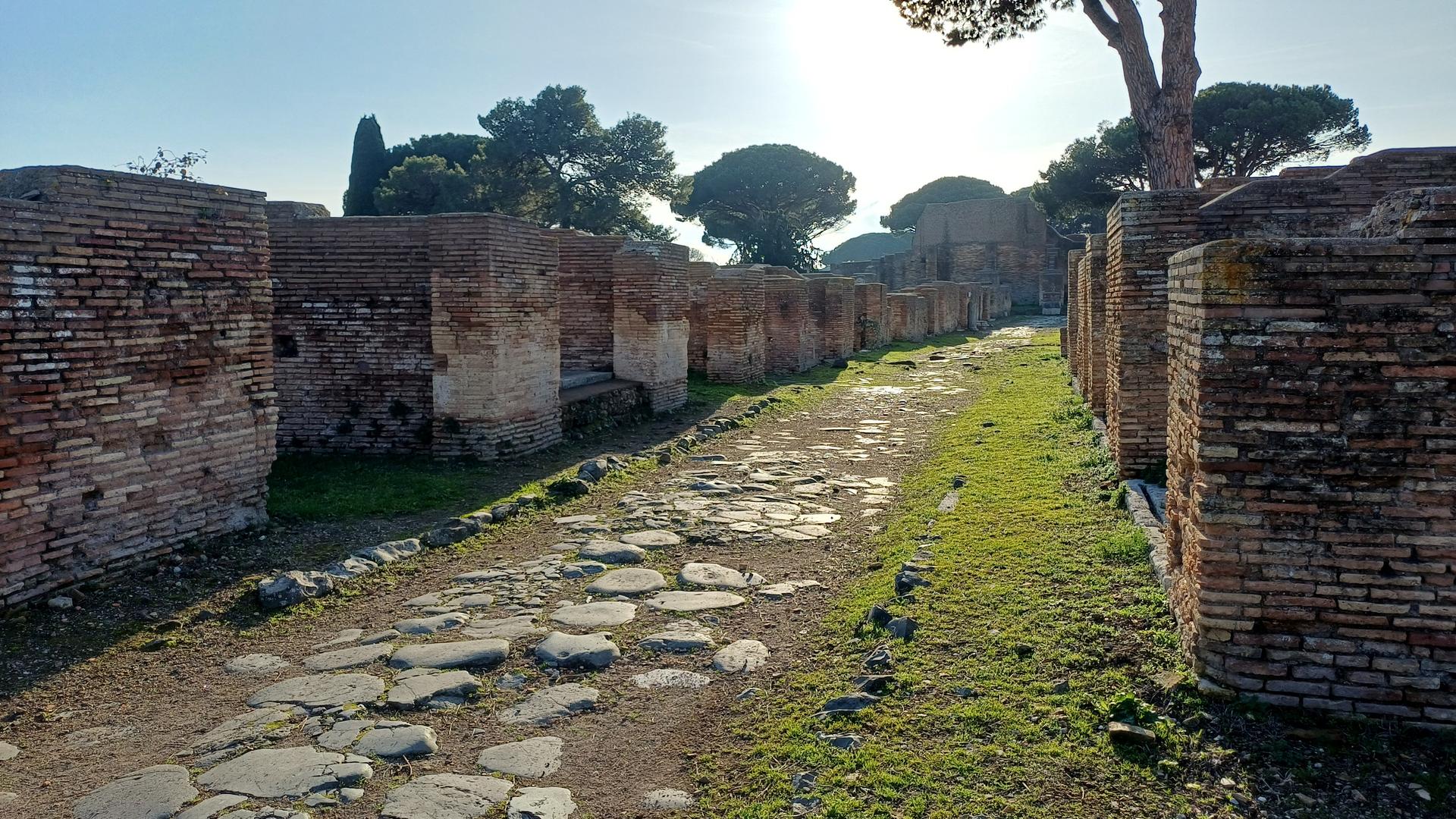
A street in Ostia, the ancient seaport of Rome, Italy, at the mouth of the river Tiber, is pictured in this photograph. Tom Brughmans/Handout via REUTERS |
Today’s spotlight sticks with the theme of new research as a study showed that the old adage "all roads lead to Rome" was not exactly true, and the empire's later imperial capital Constantinople — present-day Istanbul — was a better fit for that maxim. Researchers conducted a detailed structural analysis of the empire's road network, spanning roughly 190,000 miles (300,000 km) of routes crisscrossing Europe, the Middle East and North Africa.
"Rome itself was centrally located on the roads on the Tyrrhenian coast of Italy. But when we consider all movement within the entire Italian peninsula, we were shocked to discover that the most central road actually follows the opposite Adriatic coastline, bypassing Rome altogether," said classical archaeologist Tom Brughmans of Aarhus University in Denmark, who helped lead the study in the journal Nature Communications. Click here to learn more about the research.
|
|
|
|
|