| | The US Federal Reserve raises interest rates, oil prices in China hit a record high, and Somaliland ͏ ͏ ͏ ͏ ͏ ͏ |
| |  | Flagship |  |
| |
|
The World Today | 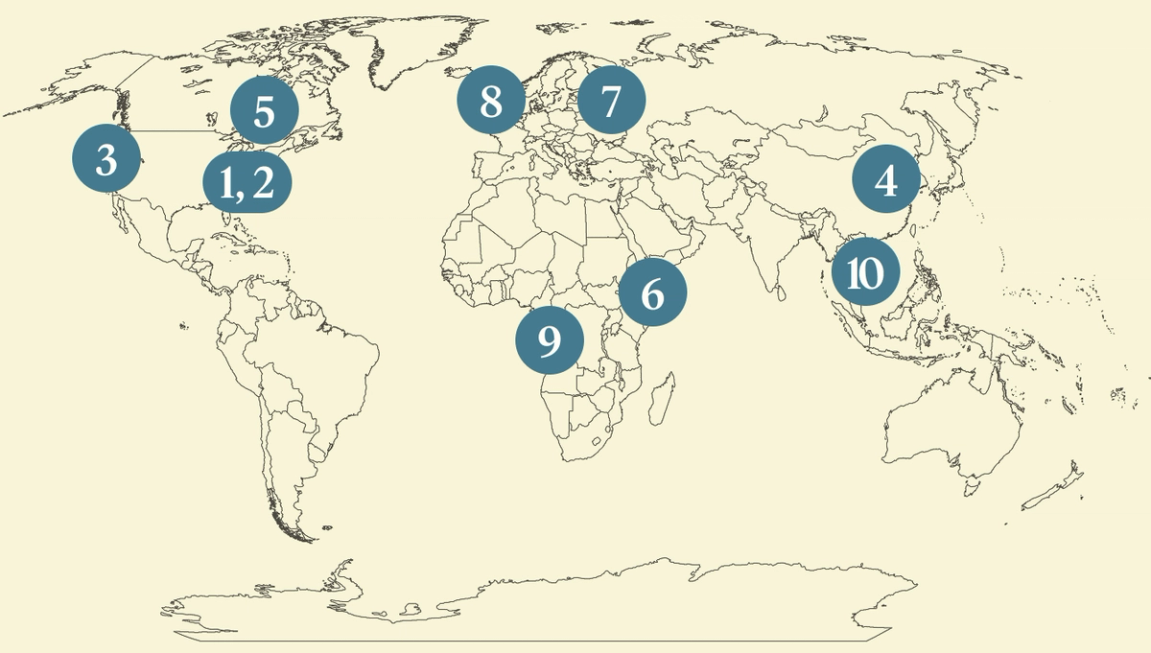 - US Fed raises rates
- Stock pullback looms
- AI firms feud over safety
- China oil prices rise
- US losing global clout
- Somaliland woos Trump
- Russia plot targets US
- Human genome atlas
- Fishermen sell plastic
- Vietnam’s coffee empire
 A retelling of the Norman Conquest ‘steeped in Viking lore and gore.’ |
|
US Fed hikes interest rates |
 Evan Vucci/Reuters Evan Vucci/ReutersThe US Federal Reserve voted unanimously to raise interest rates Wednesday for the first time in three years, satisfying Fed watchers who overwhelmingly predicted an increase but risking the wrath of President Donald Trump. “The committee’s unanimous vote shows our resolve to achieve price stability on a timelier basis,” Chair Kevin Warsh said, reiterating the central bank’s 2% inflation mandate; 16 out of 18 members predicted at least one more hike by the end of the year. “Investors took the announcement in stride,” Semafor’s White House reporter wrote, while Trump again called for lower interest rates. The hike’s proximity to the midterm elections is already unnerving some Republicans, with one senator saying, “The Fed’s never done that before, so it’s not great.” |
|
Execs warn of US market pullback |
 Jeenah Moon/Reuters Jeenah Moon/ReutersThe head of the world’s best performing sovereign wealth fund warned of an impending pullback in US stocks. The New Zealand Superannuation Fund’s CEO said US returns in recent years were “close to double annualized returns for the past 20,” echoing the CEO of Norway’s $2.3 trillion oil fund — the world’s largest — who told CNBC that “we should not be expecting the same kind of returns” as in the last six months. Bank of America also said the US was “overdue” for a pullback. Still, strong retail and employment figures suggested the economy could withstand higher interest rates, and AI-fueled profits are set to drive growth across every sector of the S&P 500 in the third quarter, Bloomberg Intelligence said. |
|
Bipartisan AI safety effort gathers steam |
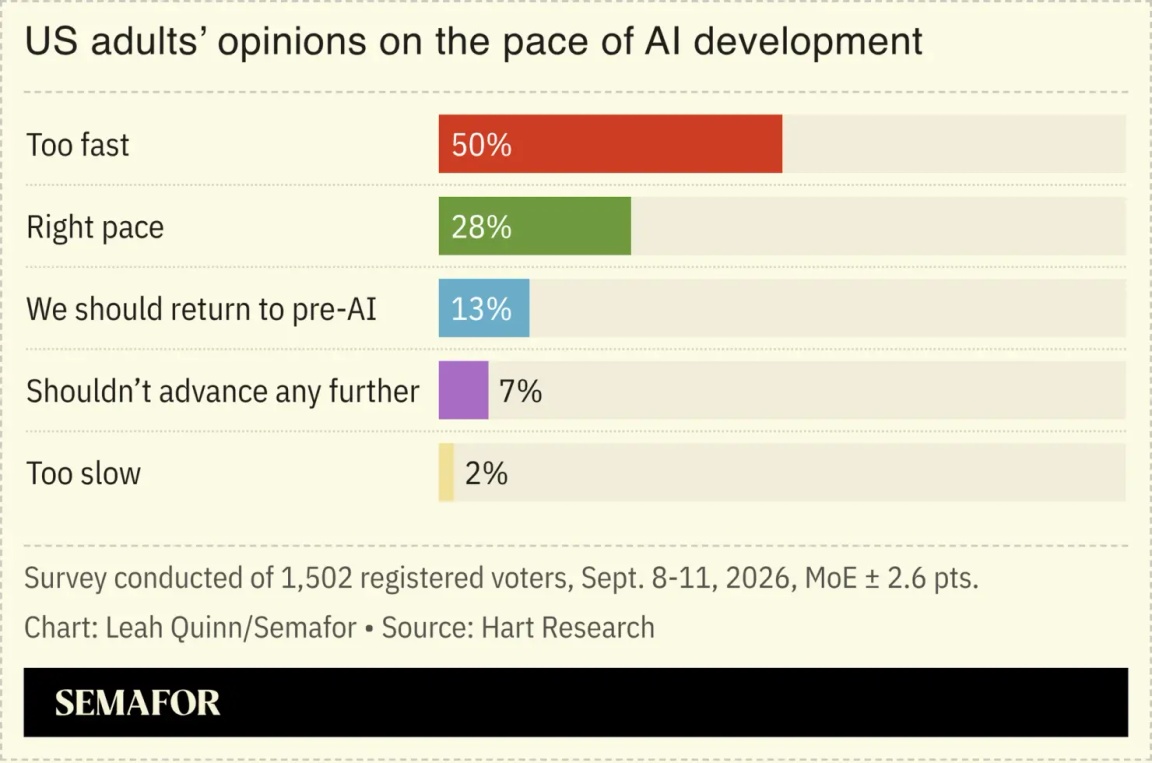 Bipartisan AI safety talks gathered momentum Wednesday as lawmakers eyed a possible vote on legislation before the US midterm elections, Semafor’s Ashley Gold reported. The tentative progress around regulation came as the debate over AI guardrails opens rifts between leading labs as well as inside them: Some OpenAI and Anthropic employees told the Financial Times that inviting third-party safety observers — as both their companies’ CEOs have proposed — could compromise security, fears that have led to internal sparring. Meanwhile, Microsoft’s AI head took aim at Anthropic in an essay Wednesday, arguing that encouraging its Claude model to take on human-like characteristics increases the risks of accidents. |
|
Chinese oil prices hit record high |
 Florence Lo/Reuters Florence Lo/ReutersOil prices in China hit record highs Wednesday, as energy disruptions from an escalating Middle East conflict spilled into the world’s largest market for imported crude. China has helped keep oil prices in 2026 down by slashing its imports, but Beijing is “coming back off its crash diet,” an energy analyst said, raising fears that prices could surge if fighting between Saudi Arabia and Yemen’s Houthis continues to disrupt supply. Brent crude prices fell on reports Saudi could partially restore a damaged pipeline within days. The US has opted not to intervene after meeting with Houthi leaders, but inaction risks empowering the rebels who now “threaten one of the world’s most important oil routes,” a former White House envoy wrote for Semafor. |
|
Countries lose faith in US leadership |
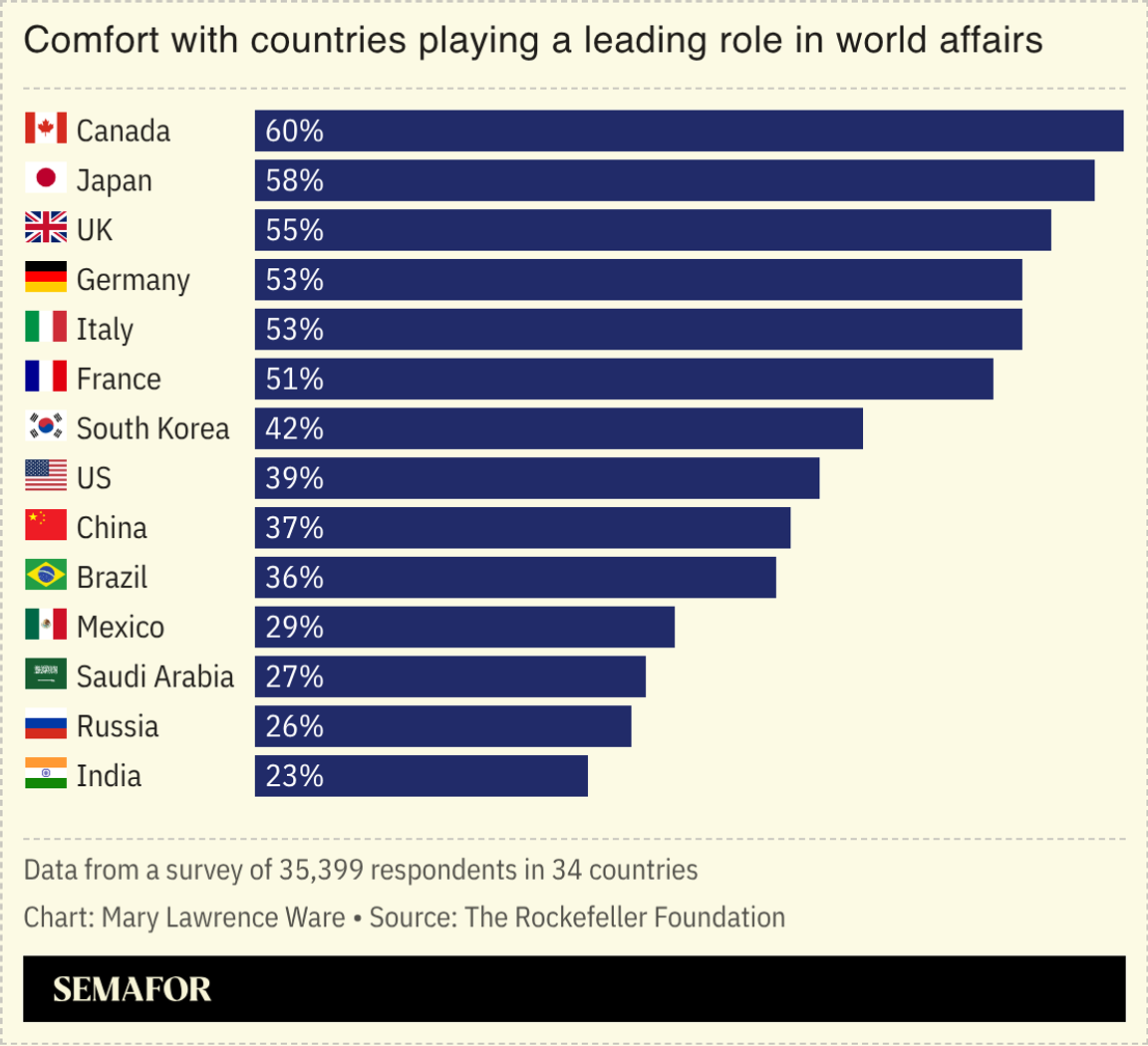 Concerted Canada-EU efforts to deepen ties reflect a global order accommodating itself to a more unpredictable — and less potent — US. The European Commission’s president called for the bloc to “reimagine our partnerships,” underscoring a pivot to building consensus among “middle powers,” Politico wrote. European fears are “no longer simply about Washington’s willingness to exercise global leadership,” a historian argued in Grand Continent, but “whether, after decades of institutional erosion, the [US] will continue to possess the military capacity to do so.” A new poll found rising trust in multilateral institutions, and less comfort with the US (and China) as global leaders. When discussing solutions to global problems people “are no longer asking what do the Americans think,” the survey’s commissioner said. |
|
Somaliland makes US recognition pitch |
 Semafor SemaforSomaliland is making an economic pitch to win US recognition for the breakaway territory, President Abdirahman Mohamed Abdullahi “Irro” told Semafor’s Yinka Adegoke in an interview. Despite putting nearly everything on the table for Washington — offering investors access to a strategically located port and mineral resources, and leaving open the possibility of military access — Irro is not locking out the US’ main strategic rival on the continent: “If China is coming without condition, we will welcome China.” The Trump administration has favored a “trade-not-aid” approach to Africa policy, slashing humanitarian support. But across multiple US administrations, a CSIS expert argued, American policy has suffered from “ambitious strategic framing… not consistently matched by resources, coordination, or sustained follow-through.” |
|
Feds allege Russian murder plot in US |
 Kevin Lamarque/Reuters Kevin Lamarque/ReutersUS federal authorities charged five people with plotting to kill a Russian dissident in Washington, DC, alleging they were part of a Kremlin-controlled “global assassination network” targeting perceived allies of Ukraine. Though Russia’s Vladimir Putin recently assured US President Donald Trump that Moscow has “no aggressive intentions” against Europe, Russian-linked arson, cyberattacks, surveillance, and industrial sabotage have intensified across NATO since 2025, the Institute for the Study of War said. Tuesday’s indictments, though, mark the extraordinary instance of Moscow-backed activities on US soil. Deadlocked at the frontlines, the five-year war is increasingly playing out in arenas far from Russia and Ukraine: Ukrainian drone specialists are supporting local proxies against Russian forces in Mali and Libya, CNN reported. |
|
A new ‘atlas’ of the human genome |
 Larry Downing/Reuters Larry Downing/ReutersGoogle DeepMind announced an “atlas” of the human genome that can predict the effects of any change to any single letter in our DNA. The huge table of all 9 billion possible changes, built by the company’s AlphaGenome model, should speed up research — it requires no computation because the work has already been done. DeepMind’s previous major bioscience work, AlphaFold, which predicted the shape of any protein, won a Nobel Prize. The new atlas may not be so revolutionary, but could nonetheless “transform our understanding of genetic diseases,” Scientific American reported. AI is accelerating science: Recent research found that it could control fusion reactor plasma faster than human operators, reducing a real bottleneck in bringing the power source to reality. |
|
Fishermen sell plastic from the Congo River |
 Thomas Mukoya/Reuters Thomas Mukoya/ReutersFishermen near Kinshasa are increasingly earning money by pulling plastic from the Congo River, on which millions depend for their livelihoods, as catches dwindle. Fish populations on Africa’s largest river by discharge have plummeted for decades: One study found fish catch declined by 65-80% over the past half-century, including a roughly 84% decline in one gillnet fishery between 1980 and 2019. Meanwhile, plastic pollution has surged in the river, reshaping residents’ way of life. One veteran fisherman told RFI that selling plastic to recycling companies brings in around $80 a week, four times what some families earn from fishing. “There is a lot to do, but without awareness, we risk losing this entire heritage,” a Congolese environmentalist said. |
|
|


