| | US oil executives warn that the global fuel crisis has arrived, the 10-year Treasury yield hits its ͏ ͏ ͏ ͏ ͏ ͏ |
| |  | Flagship |  |
| |
|
The World Today | 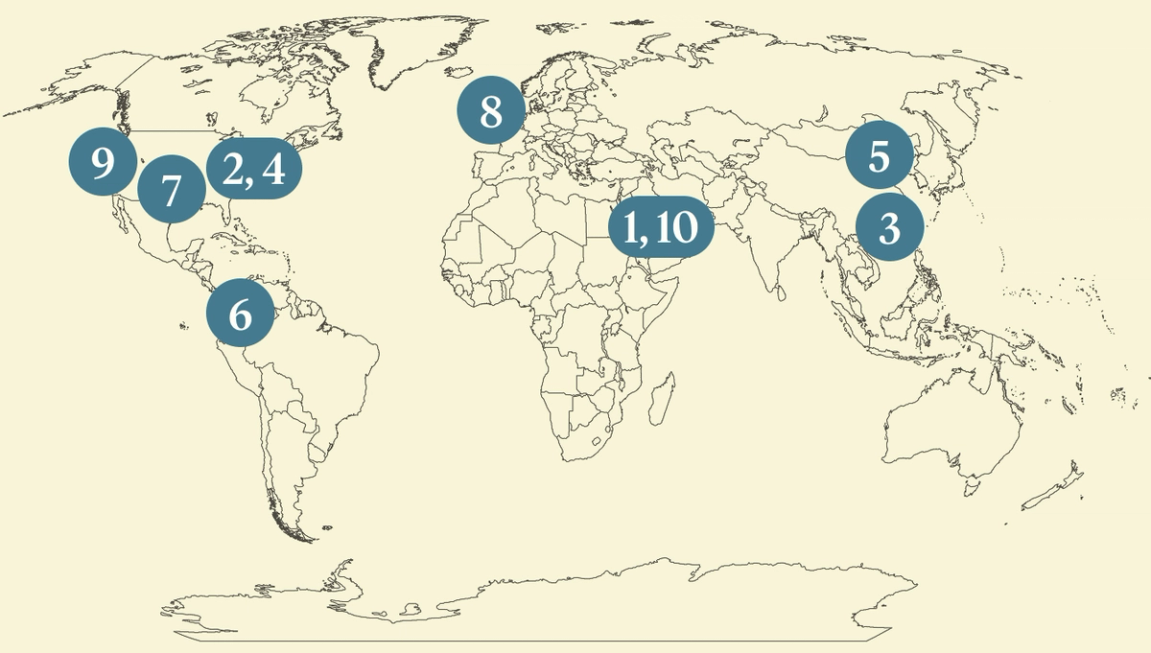 - Execs say oil crisis is here
- Bessent defends bond moves
- AI clouds Trump-Xi summit
- Kalshi AI price tracker nixed
- China buys more soybeans
- Colombia sprays coca crops
- Walmart’s GLP-1 coaches
- Bullish on AI bioscience
- Tax codes for the AI age
- Soccer’s changing structures
 ‘A masterclass in the ethics of espionage.’ |
|
Executives warn of oil crisis |
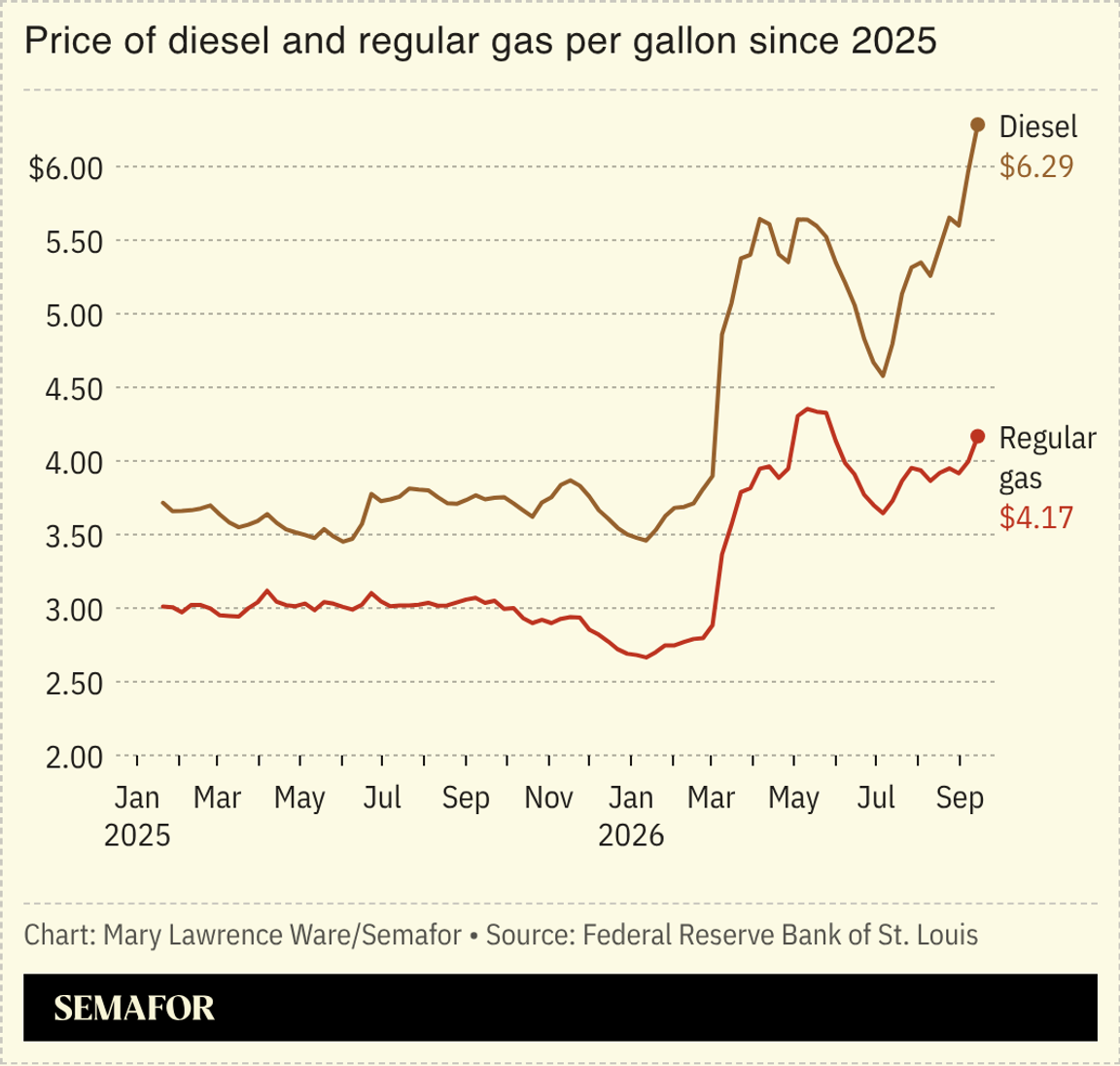 US diesel prices hit record highs Tuesday, as executives warned that the monthslong crunch in oil markets was entering its most acute phase. Commercial and strategic oil stockpiles are running low, and the buffers helping “mitigate the price and supply risk… have largely now played out,” Chevron’s CEO said. Saudi Arabia canceled some oil shipments to Europe Tuesday, sending importers scrambling for alternatives; the kingdom said that the East-West pipeline, taken offline after a drone attack, could be down for weeks. The White House insisted that high prices were a “temporary disruption,” but energy CEOs who warned for months about an impending fuel crisis now “say it is here,” The Wall Street Journal wrote. |
|
US 10-year yield highest since 2007 |
 Annabelle Gordon/Reuters Annabelle Gordon/ReutersUS Treasury Secretary Scott Bessent defended his bond buyback program in contentious congressional hearings Tuesday, as the 10-year Treasury yield climbed to its highest level since the 2007 global financial crisis. Bessent suggested the spike could have been worse without Treasury’s intervention; he also defended a separate operation to prop up the Japanese yen as preventing Tokyo from selling its US debt, which would have pushed yields higher. “Bessent’s intervention risks whipping up a blaze that could cause damage well beyond America,” PIMCO’s former CEO argued in The Economist, as a surge in global bond yields prompted central banks to coalesce around monetary tightening. US Federal Reserve watchers put the odds of a rate hike Wednesday at 92%. |
|
US-China pact on AI unlikely |
 Evan Vucci/Reuters Evan Vucci/ReutersA sweeping AI deal during US President Donald Trump and Chinese leader Xi Jinping’s meeting next week is unlikely, despite some tech leaders calling for cooperation. Elon Musk proposed that the countries’ top firms could evaluate one another’s models before release, while OpenAI’s CEO said Xi and Trump could win the Nobel Peace Prize for a one-page AI deal. But US-China ties are plagued by lack of mutual trust, Beijing’s former US envoy said Tuesday, and a China scholar argued that Beijing is “unlikely to take American calls for restraint seriously” before Washington regulates its own tech, viewing such rhetoric as calculated to constrain China: A DeepSeek engineer likened US “pacing” calls to Nazi Germany acquiring atomic weapons before the Allies. |
|
Kalshi pressured on AI compute futures |
 Dado Ruvic/Reuters Dado Ruvic/ReutersThe US Commerce Department last month ordered prediction market Kalshi to take down a product tracking the price of AI compute, Semafor’s Liz Hoffman and Reed Albergotti reported, a rare federal intervention offering insight into Washington’s fractious AI regulation debate. Though a Commerce spokesman denied the report, officials reportedly cited national security concerns, potentially fearing the tool could destabilize the AI stocks underpinning a historic US investment boom. Meanwhile, the White House and top Republicans have largely rejected growing calls for federal guardrails on AI development, calling for labs to ensure their own products’ safety. One antitrust regulator, though, voiced skepticism of a nascent safety coordination effort between OpenAI, Anthropic, and Google, saying it “sure sounds like moat digging.” |
|
China meets US trade pledge |
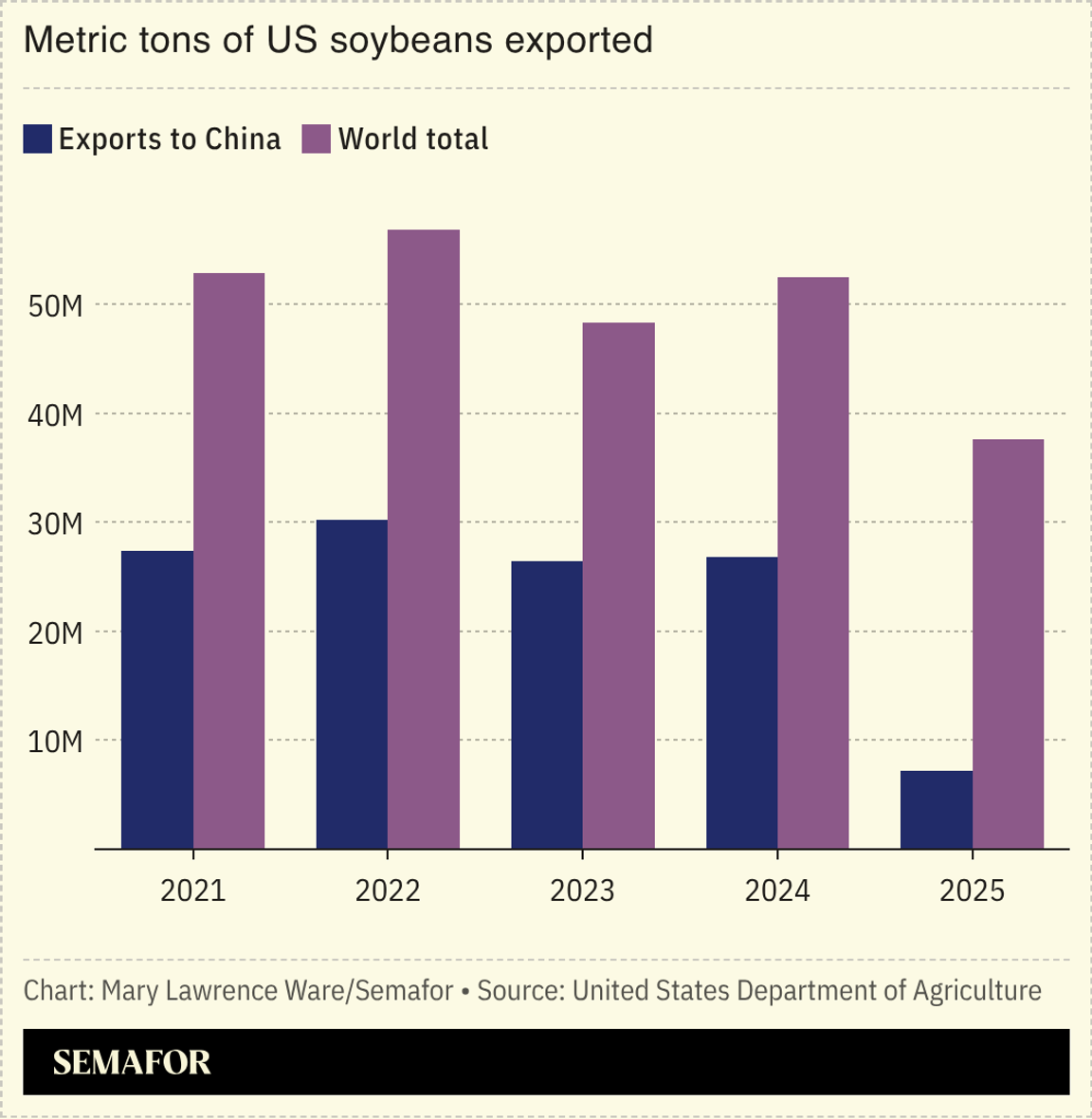 China bought at least 1 million metric tons of US soybeans last week, Reuters reported, as the country ramps up purchases ahead of Chinese leader Xi Jinping’s visit to Washington this month. Beijing has now fulfilled more than half of the 25 million-ton annual target it committed to through 2028 as part of last year’s trade truce with Washington, Bloomberg noted, offering at least “one bright spot” for the upcoming summit, which has been clouded by a debate over AI guardrails amid the superpowers’ fierce technological rivalry. The meeting between the countries’ leaders “could offer another test of China’s commitments” to buying US agricultural products, DTN/Progressive Farmer wrote, but frictions over AI competition and Taiwan could impede progress on trade. |
|
Colombia to resume spraying cocaine crops |
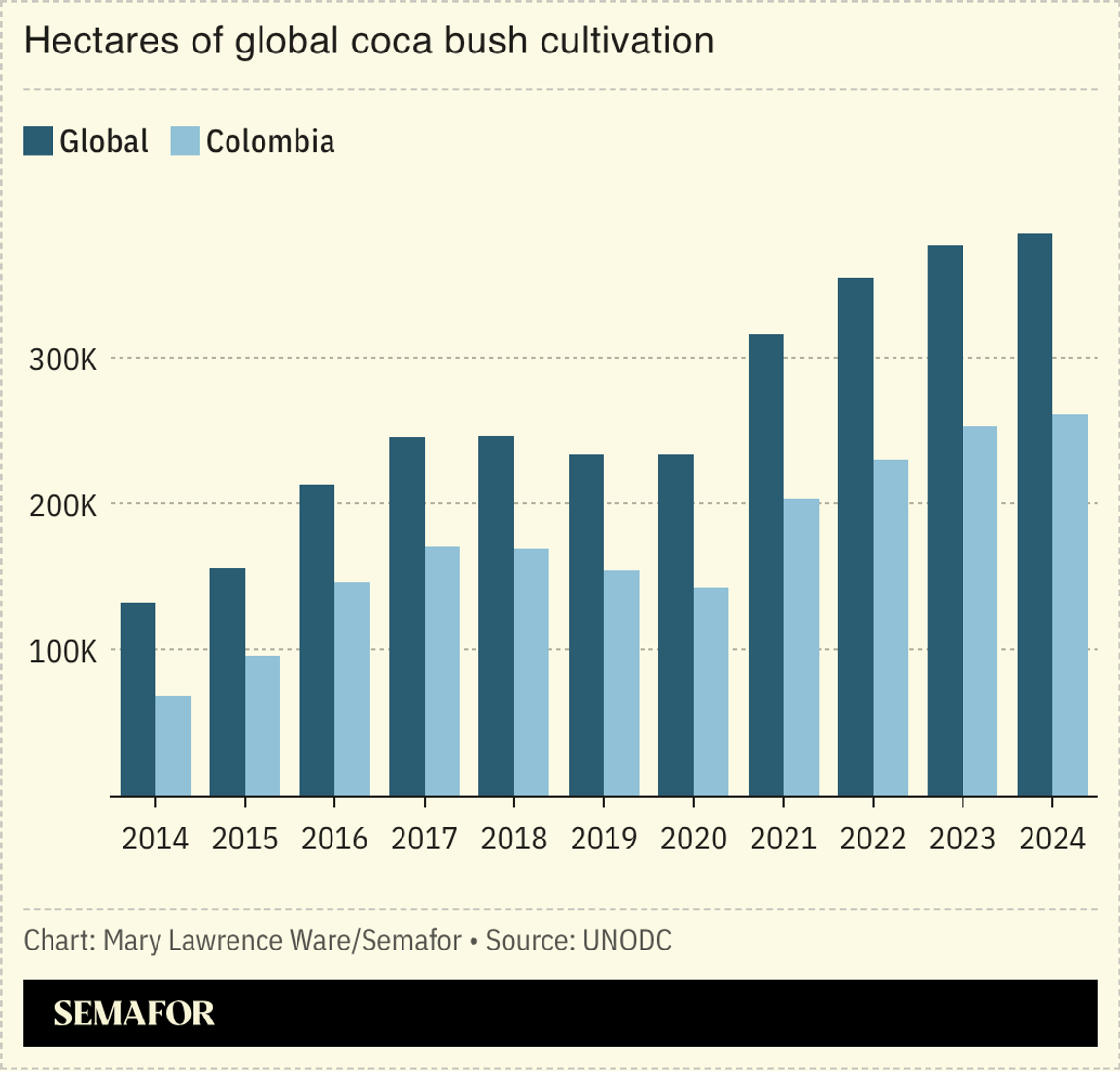 Colombia said it would resume aerial spraying of coca crops for the first time since 2015, as Medellín heeds US calls to combat record cocaine production. The trial initiative sprang from recent talks between Colombia’s new rightist president and US Secretary of State Marco Rubio, The New York Times reported; the diplomacy signaled a shift in the Trump administration’s anti-narcotics tactics as it seeks to assert dominance in the Western Hemisphere, but Rubio warned that Washington would “still blow up ships if need be.” Crime and violence concerns topped a regional poll this year, and the swift embrace of Washington’s hard-line playbook in Colombia, Peru, and Ecuador reflects “just how desperate leaders are to show progress,” a Latin America expert said. |
|
Walmart hires GLP-1 coaches |
 Semafor/Kris Tripplaar Semafor/Kris TripplaarWalmart is hiring dedicated GLP-1 coaches to advise shoppers on weight management, diabetes, and maternal health, the retail giant’s chief medical officer said at Semafor’s Future of Health Forum on Tuesday. The share of US adults using GLP-1 drugs for weight loss has hit a record 11% in 2026, Gallup found, quadrupling from 2024 and reshaping American shopping habits. Walmart’s pharmacists will also advise on sleep, exercise, and stress management, as downward price pressures on the medication prompt a refocus on the suite of goods and services surrounding GLP-1 usage. “Retailers are betting that if they can become the front door for obesity care, they’ll earn a relationship that extends far beyond a single GLP-1 prescription,” a healthcare analyst told CNBC. |
|
Early boost for AI bioscience |
 Benoit Tessier/Reuters Benoit Tessier/ReutersAn AI-designed treatment for chronic lung disease could slow biological aging, an early boost for bullish claims about AI bioscience. Several processes track chronological aging well, notably methylation, chemical changes in our DNA. In a small trial, the new treatment slowed six of these “biological clocks.” Researchers have made strong claims for AI’s impact on human mortality — the head of a UK chip firm said this week that the technology would cure cancer “in our lifetimes,” and Anthropic’s Dario Amodei has said AI-enabled biology would hasten progress made by biologists. Amid warnings about AI’s misuse, the head of drug discovery at Isomorphic Labs pushed back against calls for a slowdown, telling Semafor that the company’s AI models are “locked down in-house.” |
|
 Evelyn Hockstein/Reuters Evelyn Hockstein/ReutersGlobal tax codes should adapt to the growing impact of AI on labor markets, a prominent venture capitalist argued. Writing in The Information, OpenAI investor Vinod Khosla said AI will significantly reduce the need for labor across all income levels. That should push policymakers to expand the social safety net, a move that would help drive up acceptance of the technology. “Major technological revolutions should force a renegotiation of society’s basic economic contract,” Khosla wrote. Though consensus largely exists that AI will reshape labor markets around the world — initial signs in the US point to a growing gap in the demand for college and non-college educated workers — there is less agreement on the timing of a large-scale disruption. |
|
|


