Plus, a possible China shakeup

Get expert insight into the technologies and trends shaping the global automotive industry on Reuters.com. Subscribe for $1/week.


Auto File

Auto File

By Nick Carey, Senior European Autos Correspondent

Greetings from London!

Before we jump into major car industry headlines, a last reminder that from September 22, Auto File will become exclusively available as part of the Reuters subscription. 

Subscribe today for £1/week to continue receiving the newsletter and gain unlimited access to Reuters.com, with fewer ads and reporting tailored to your interests. 

Auto File will remain your source for in-depth coverage of the automotive sector as it navigates its most tumultuous period in the last century. But we will aim to take you deeper into the biggest stories for more behind-the-scenes insights.

As the last week shows, there is never a shortage of stories to dissect.

Which brings us to today’s Auto File…

Today

  • Trump: okay if Chinese make cars in U.S.
  • China auto shakeup coming?
  • VinFast keeps it in the family  


Trump says it would be okay for China to make these in America - REUTERS/Carlos Barria.

Trump revisits China theme

One of the reasons U.S. lawmakers have been pushing for a law to codify a ban on Chinese cars in the U.S. market is that President Donald Trump periodically ruminates publicly on the idea of allowing Chinese automakers to build cars there.

The fear of many in the U.S. auto industry is that Trump, a dealmaker, would allow Chinese carmakers to assemble cars as part of a grand bargain with Xi Jinping.

As Reuters colleague David Shepardson reports, Trump weighed in – again – at the end of last week.

You can read about it here.

In an interview on Fox News, Trump said that if China’s automakers wanted to come to the United States to build their cars: “I’d be okay with that.”

This came just days after the Trump administration fiercely criticized Ford for its partnerships with Chinese companies.

The criticism of Ford brought to the surface longstanding tensions between the No. 2 U.S. automaker and the Trump administration – though the White House also almost simultaneously praised Ford for investing in U.S. production.

If you worked at Ford HQ, you could be forgiven for wondering whether doing business with the Chinese is a good or bad thing.


Essential Reading

  • China targets mass deployment of self-driving cars
  • China’s clean-tech exports in Southeast Asia
  • Mexico-U.S. push for pre-election trade deal  


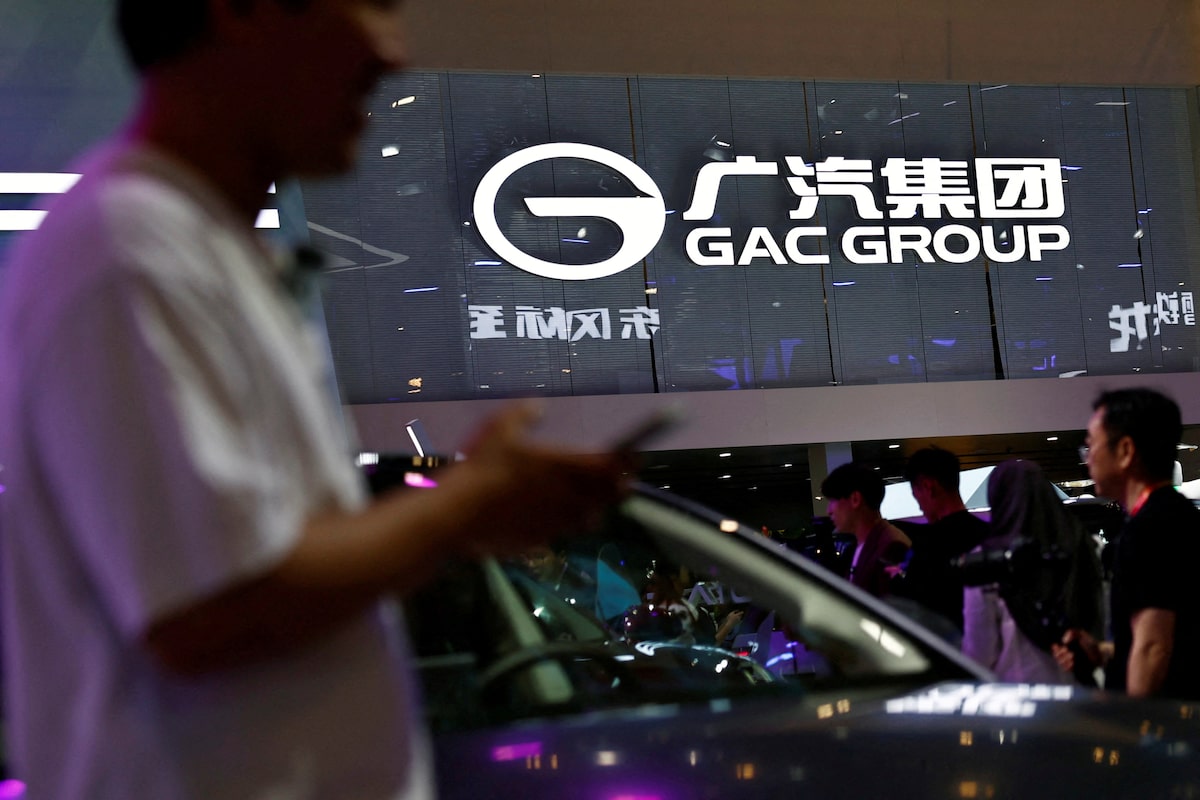
Could GAC-FAW deal mean a shakeup is coming? - REUTERS/Tingshu Wang.

Looming China shakeup

A hallmark of China’s dramatic rise to become the world’s largest car market has been excess production capacity and too many automakers.

A decade ago, automakers had assumed the industry would keep on growing at a rapid clip for many years and built factories to accommodate that growth, but sales have stagnated and even fallen this year.

Exacerbating the problem, EV makers were incentivized to build new factories instead of retooling old ones.

Now China has tens of millions of units of excess car production, but there has been little appetite from the state, provincial and even local governments that prop up automakers to bite the bullet and force consolidation.

But a transaction disclosed on Monday that would have FAW become the second-largest shareholder in GAC – both state-owned Chinese automakers and Toyota’s main partners in China – could signal a shakeup is coming.

There is plenty of overlap between FAW and GAC and last week, China's top economic planner reiterated support for mergers and restructuring among major automakers.

Consolidation could take years but watch this space.


Yet another new CEO for VinFast - REUTERS/Mike Blake. 

VinFast Jr CEO

VinFast has been grappling with scaling up its operations. After burning through billions of dollars the Vietnamese EV maker unveiled a restructuring plan earlier this year.

And after churning through CEOs, VinFast at the weekend named Chair Pham Nhat Quan Anh, the eldest son of founder Pham Nhat Vuong, as new CEO.

Aged 33, Anh must now steer VinFast while also remaining CEO of VinMetal, a steel producer within the Vingroup conglomerate. Juggling two CEO roles is never easy, especially if one of the companies is struggling.

The ⁠complexity of the restructuring and the involvement of investors with ties to Vingroup and founder Vuong has raised concerns for some analysts and shareholders.


Stellantis’ balancing act

World No. 4 Stellantis is unique in that it straddles the U.S. market and Europe like no other automaker, with the lion’s share of its profit coming from U.S. pickup truck and SUV sales.

Not so long ago, the auto industry was focused on globalization. But since Trump’s first presidency, globalization has been gradually replaced by regionalization.

CEO Antonio Filosa says that now means the world is divided into two parts: “One is the United States ... and then we have the rest of the world.”

Stellantis must juggle different regulations across that divide, while also forging new partnerships with Chinese automakers to sell cars and fill up empty factories in Europe.

How it manages those geopolitical and regulatory divides will determine whether Stellantis succeeds in the long run.


Fast Laps

Volkswagen estimates the total cost of job cuts and potential plant closures, ‌part of a landmark restructuring pact struck last week, at around €16 billion ($18.6 billion), a person familiar with the matter said.

Tesla plans to bring its