| | Spiraling fears about the safety risks of AI will do little to stem the tide of capital into data ce͏ ͏ ͏ ͏ ͏ ͏ |
| |  Houston Houston |  Lagos Lagos | San Francisco |
 | Energy |  |
| |
|
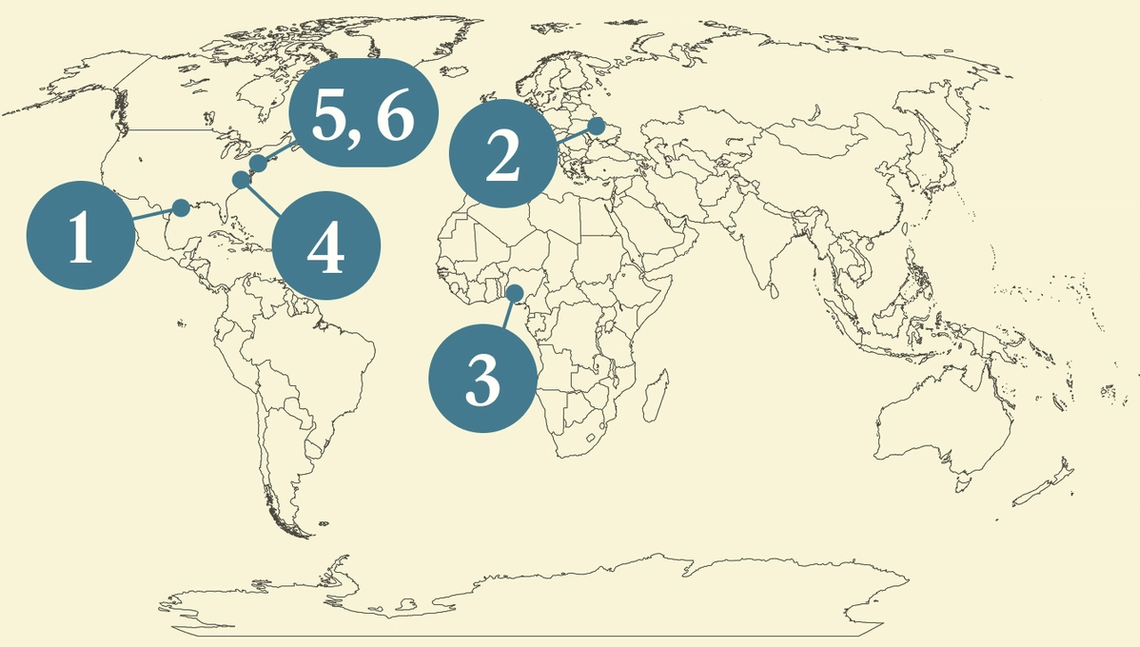 - G20 confronts price spike
- No ceasefire yet
- D(angote) Day
- Dems pitch energy plan
- Chip transparency
- Highly exposed
 Trump is overruled on coal plants, but heeded by development banks. |
|
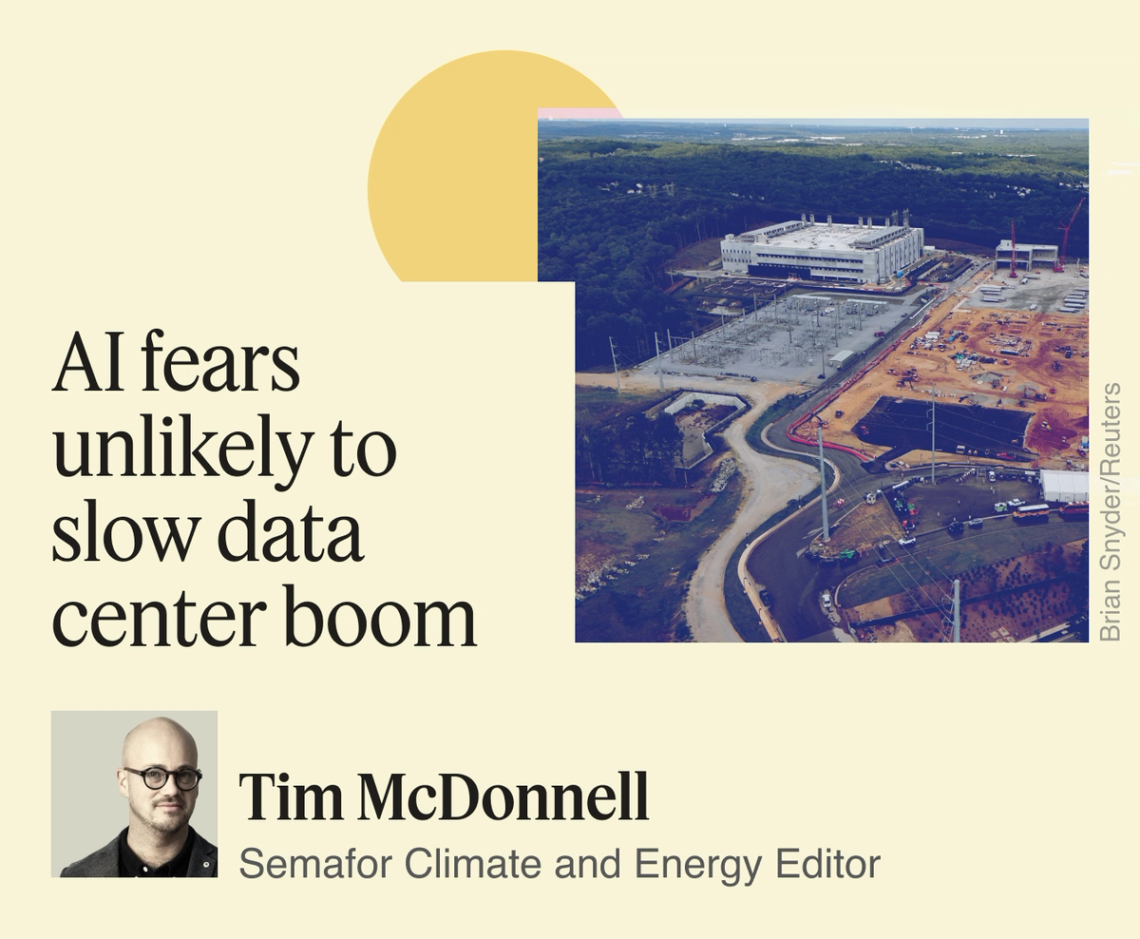 The sudden but very loud ringing of alarm bells by top AI executives about the risk that we’re hurtling toward the machine-assisted demise of human civilization could be seen as a risk factor for investors in physical digital infrastructure. But the bigger obstacle to the data center buildout is still bureaucracy, not the “pacing” of AI model development. As Wall Street and Silicon Valley pour ever-larger sums into data center construction, the fear of stranded assets is always lurking in the background. US energy investors have been burned before when big waves of power demand were predicted but failed to materialize. What if the hundreds of billions now being directed into new power plants, transmission lines, and hardware manufacturing capacity to serve AI data centers is a boondoggle, rather than an urgent economic and geostrategic imperative? A massive public backlash to AI over its safety, and a corresponding voluntary or enforced slowdown of model development, could drive toward that outcome. But there’s no sign data center builders are hitting the brakes. “Right now, we’re watching a development frenzy imposed by acute demand,” Ted Brandt, CEO of the energy-focused investment bank Marathon Capital, told me. “It’s hard to predict how [AI] regulation might affect either supply or demand, but we expect the development frenzy to continue.” Even with some basic guardrails for cutting-edge AI in place, an historic power sector buildout is still required to run all our more quotidian electrification needs. And while lawmakers remain divided on what to do about AI, they are more aligned on imposing new energy rules on data center developers, as a House of Representatives vote expected today will likely show. Energy companies are navigating mixed signals from different constituencies as they’re called upon to build more in the interest of affordability, but face an uncertain real demand outlook and NIMBY backlash. Still, those are familiar risks. Fear of the robot apocalypse looks less material at this point. |
|
G20 confronts price spike |
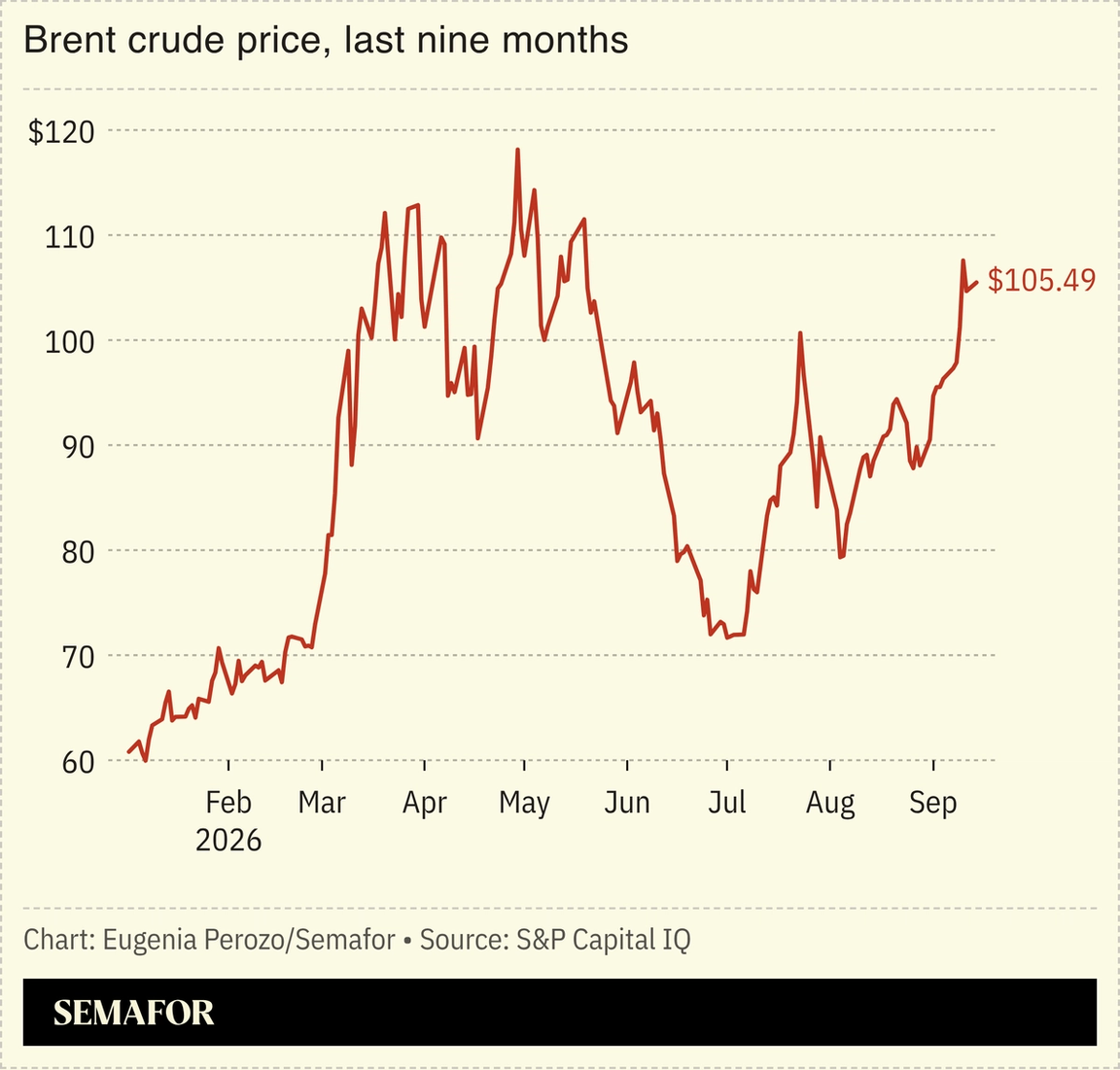 Brent crude oil reached nearly $110 per barrel following a strike that disabled a critical export pipeline in Saudi Arabia. Now, the kingdom is looking to fall back on the Strait of Hormuz, despite ongoing risk there. But that attempt may be limited by a ship shortage; the cost of hiring a tanker on the benchmark Gulf-China route topped $1 million for the first time Monday. As the oil supply deficit deepens and US diesel prices hit a fresh record high, G20 energy ministers are meeting in Houston. There, conversations — with the surprise inclusion of Russian officials — will focus on another possible coordinated release of strategic crude reserves, Europe’s gas supply, and new drilling deals in Venezuela, former US officials told Semafor. US Environmental Protection Agency head Lee Zeldin also took the chance to tear out the last remaining climate pollution standards from the Biden administration and move to obstruct their reinstatement in the future. |
|
 Courtesy of State Emergency Service Of Ukraine In Odesa Region/ Handout via Reuters Courtesy of State Emergency Service Of Ukraine In Odesa Region/ Handout via ReutersUkrainian President Volodymyr Zelenskyy downplayed an assertion by US President Donald Trump that Kyiv and Moscow had agreed to a ceasefire for mutual attacks on energy infrastructure. Although “there is now a strong US proposal” for an energy ceasefire, Zelenskyy tweeted on Monday, “so far, no one has seen any genuine desire on Russia’s part to move toward ending the war.” Over the past few days, Trump and his top officials have sought to blame Ukraine’s strikes on Russian oil refineries for the recent runup in diesel prices, although analysts are clear that trade disruptions from the Iran war are a much more important driver. The reemergence of energy on the negotiating table indicates that as much as Ukraine is bracing for another cold, dark winter, it is also feeling empowered by its long-range drone campaign, which drove Russian oil production to a 17-year low and fuel imports to a high seven times greater than the previous record. Meanwhile, the US House is set to vote this week on the Russia sanctions bill championed by the late Sen. Lindsay Graham — but it could be undermined by drooping Republican support and growing Democratic opposition. |
|
| |  | Alexander Onukwue |
| |
 Alexander Onukwue/Semafor Alexander Onukwue/SemaforAfrica’s richest man, Aliko Dangote, tapped the opening gong Monday morning on the floor of the Lagos exchange to open the continent’s largest public listing. The $20 billion Dangote Refinery, built on swampland on the outskirts of Lagos, becomes the fourth Dangote Industries subsidiary to go public in Nigeria. The company is expected to raise more than $4 billion at about a $50 billion valuation, if demand matches the year-long buzz, which was partly driven by the company’s pledge to pay dividends in US dollars. The refinery will likely account for up to 40% of the Lagos exchange’s capitalization when its shares start trading post IPO in November. “We are going to fully, fully share all our prosperity with the people,” Dangote, 69, said in a packed and celebratory hall of bankers, investors and stock brokers, for whom the multibillion-dollar Dangote Refinery IPO has been the most talked-about business event in Nigeria all year. |
|
 Daniel Cole/Reuters Daniel Cole/ReutersNine Democrats in the US House of Representatives presented an energy and environmental “policy blueprint for 2027” with a focus on affordability, as midterm races heat up. The Thriving Economy Project report consists of over 800 policy recommendations across issues including data centers, energy security, agriculture, and manufacturing in the most comprehensive energy platform Democrats have put forward in years. It includes ideas that already have bipartisan support, as well as others that stand little chance of becoming law even if Democrats retake a Congressional majority. “It is very rare that energy policy is a salient issue in the electorate,” Rep. Sean Casten, D-Ill. told Semafor. The hope is to have “a lot of well-vetted solutions” so that new and returning lawmakers have a clear path to deliver on campaign promises, he said. Policies related to nuclear energy and R&D are more likely to receive bipartisan support, he added, while dissent over extractive industries will continue to be a sticking point. — Eugenia Perozo |
|
Chipmaker urges transparency |
| |  | J.D. Capelouto |
| |
 Semafor SemaforCommunities and governments should demand AI data center providers report how much energy they are wasting, rather than put blanket bans on the facilities, the CEO of chipmaker Onsemi told Semafor. Data center moratoriums like the one enacted in New York are “short-sighted,” Hassane El-Khoury said during a tour of the company’s manufacturing facility in East Fishkill, New York. Instead, he said, policymakers and critics should identify specific problems they want to address, rather than shun the AI infrastructure buildout as a whole. “A lot of the pushback is coming from a lack of awareness of what the subject matter is and the problem at stake,” El-Khoury said. The company is talking to federal and state lawmakers — starting in Arizona, where Onsemi is based — to discuss energy transparency standards for reporting how much raw energy a data center is consuming and how efficiently it’s using that power. |
|
The cost of climate blindness |
 Publicly traded companies increasingly know they are at risk from climate change impacts, but few have a plan in place to defend themselves, according to a study by the ratings firm MSCI. It examined disclosures from 25,000 global companies between 2023 and 2025, and found that while 81% of them acknowledged some exposure to physical climate impacts, fewer than one-third have a detailed plan of and for that risk. Some 37% of global companies fall into a “high-risk, low-preparedness” category, MSCI said, leaving their shareholders exposed to more than $1 trillion in annual losses that could be prevented with cost-effective adaptation measures. The majority of companies didn’t routinely disclose climate risks until after suffering multiple disasters, the report noted, concluding that ignorance is unaffordable. |
|
 Semafor is expanding its coverage of healthcare with a new weekly briefing led by veteran journalist David Lim. At the intersection of politics, policy, and business, Semafor Healthcare will bring clarity to the forces shaping the industry, explaining how decisions in government affect the private sector and global economy. The briefing will go beyond the headlines to show what is really driving health policy in the US and around the world. Each week, readers will get original reporting, scoops, and analysis on the people and institutions driving change across healthcare, from policymakers and major companies to scientists, investors, and technology leaders. |
|
 New Energy |
|
|


