| | US President Donald Trump dismisses tech leaders’ calls for AI guardrails, the 10-year US Treasury y͏ ͏ ͏ ͏ ͏ ͏ |
| |  | Flagship |  |
| |
|
The World Today |  - Global tech stocks plunge
- Trump rejects AI warnings
- Europe can’t afford AI lag
- 10-year Treasury yield hits 5%
- Saudi boosts Hormuz supply
- Kyiv open to energy truce
- Carney deepens EU ties
- Drone attacks spread
- English debate in China
- Shoulder season travel
 A ‘gripping account’ detailing a New York Times journalist’s efforts to relocate Afghan employees in 2021. |
|
AI slowdown calls prompt chip selloff |
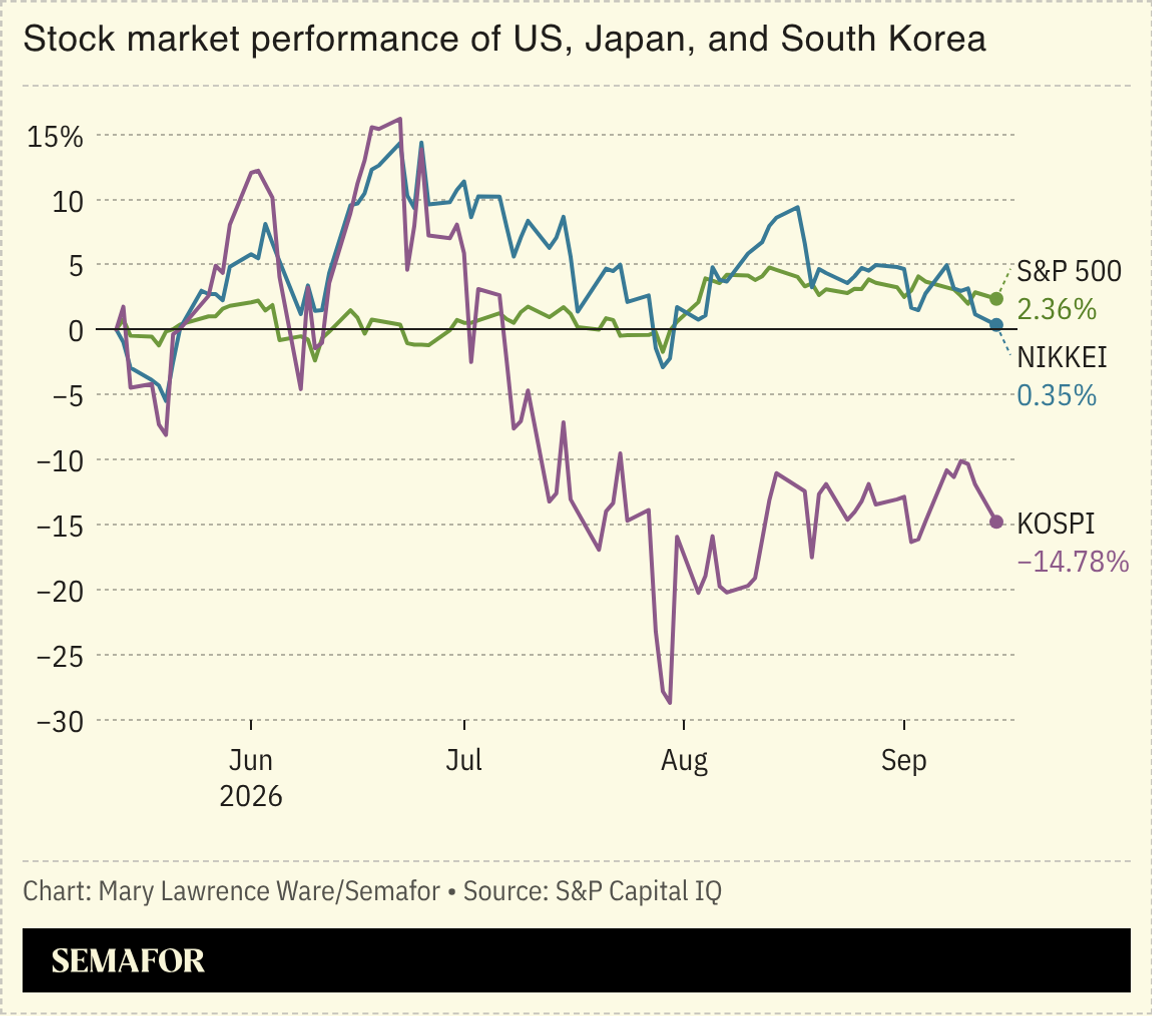 Global AI stocks fell Monday after top AI leaders endorsed slowing down the development of frontier models. Microsoft joined OpenAI, Anthropic, and SpaceXAI on Monday in endorsing a more prudent approach, raising investor fears that less compute spend could dampen the investment boom driving a global rally. While OpenAI has ruled out an IPO this year, Anthropic is moving ahead, informing investors it expects a second straight profitable quarter. “The competitive race between companies and countries remains intense, and it’s difficult to imagine firms voluntarily stepping back while rivals continue to push ahead,” Deutsche Bank analysts wrote. “We have to keep developing,” Microsoft’s Mustafa Suleyman said. “We just have to do it with a little bit more caution and care.” |
|
Trump dismisses calls for AI guardrails |
 Evan Vucci/Reuters Evan Vucci/ReutersUS President Donald Trump on Monday continued to downplay the need for AI regulation, saying the only guardrails the technology needs is a “STRONG AND SMART (High IQ!) PRESIDENT.” Trump also dismissed tech leaders’ warnings that the technology could pose a threat to humanity as a “hoax,” as his apparent disregard for AI safety is worrying even some White House officials, CNN reported. Meanwhile, Democratic presidential hopefuls are setting themselves against Trump’s AI boosterism, Semafor’s Dave Weigel reported, but only two potential 2028 contenders so far have signed on to legislation that would halt new hyperscale data center construction, highlighting lawmakers’ lack of consensus on how to tackle the issue. |
|
Europe can’t afford an AI slowdown |
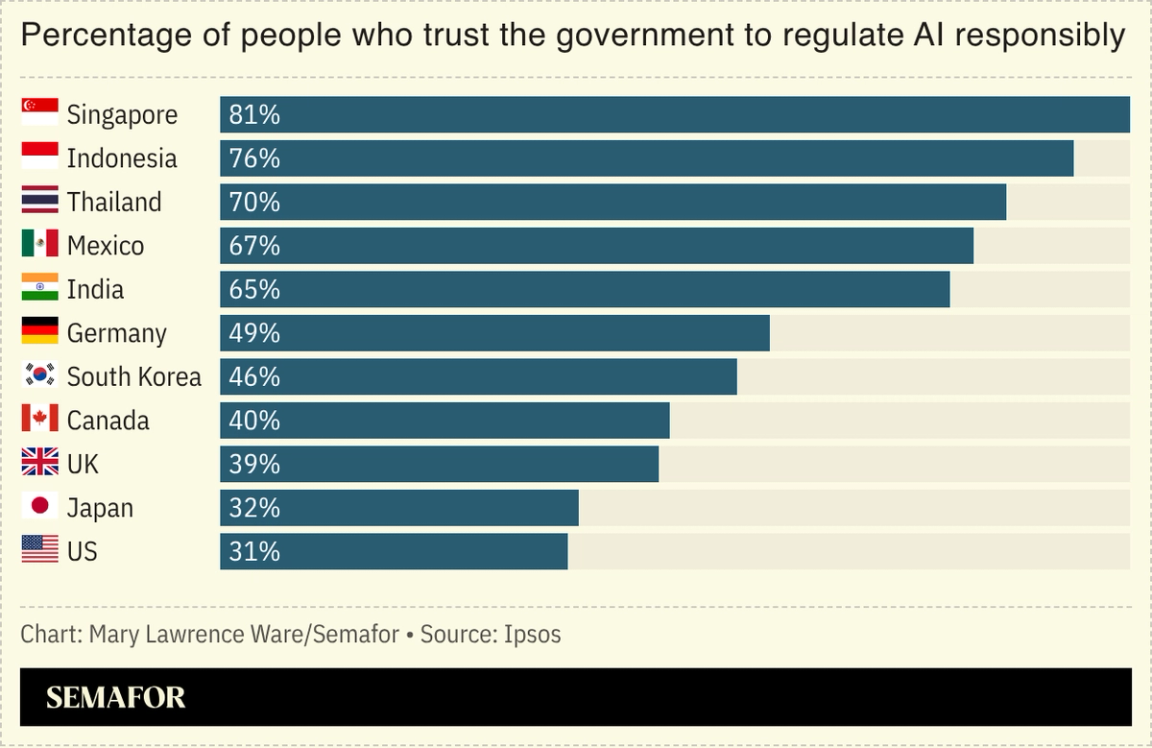 As American tech leaders and policymakers debate the existential risks of AI and the necessity of regulating frontier development, other countries are focusing their efforts on catching up to the US. China views the AI race as a primary strategic battleground with the US, The Wall Street Journal reported, with top Chinese labs locked in on developing models whose capabilities approach the most advanced American tech: “For some engineers… the apocalypse feels like a first-world problem.” Germany said Monday that halting AI development was not a “viable option” for Europe, citing further research and testing required for achieving “digital sovereignty.” Australia, meanwhile, is in talks to host data centers for OpenAI to train its models, with a view toward Canberra influencing the tech’s global development. |
|
10-year Treasury yield hits 5% |
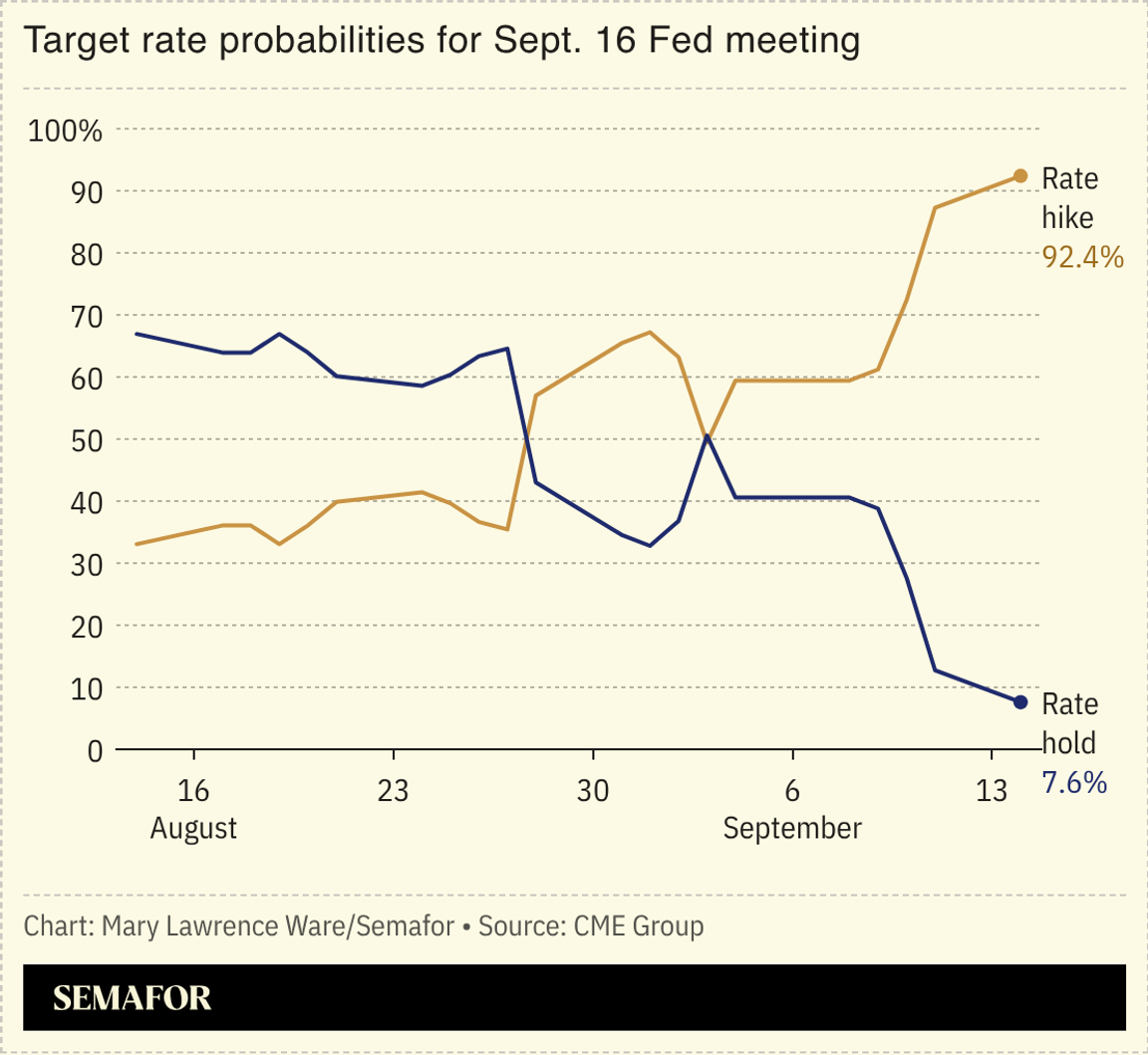 The 10-year US Treasury yield topped 5% Monday for the first time since 2023 as the widening Middle East conflict pushed oil prices up, cementing policymakers’ shift to a more hawkish posture. The possibility of a rate hike at the Federal Reserve’s upcoming meeting this week edged above 90% on Monday, following a hot US inflation reading; the ECB raised rates last week, and traders expect the Bank of Japan to do the same on Friday. Successive energy supply shocks have prompted central banks to rip up the “look-through doctrine” that assumes such disruptions are transitory, a Bloomberg columnist argued. “The greater risk now is inaction, even if tighter policy spreads economic pain via higher borrowing costs and weaker growth.” |
|
Saudi eyes more Hormuz transits |
 Aerial photo of damaged East-West pipeline. Planet Labs PBC/Handout via Reuters Aerial photo of damaged East-West pipeline. Planet Labs PBC/Handout via ReutersSaudi Arabia is looking to boost oil shipments through the Strait of Hormuz after drone attacks took out a key pipeline bypassing the contested waterway. Saudi stocks suffered their largest intraday fall since April after extensive damage to the East-West pipeline, which is responsible for 4% of global crude supplies. But Saudi attempts to lift Hormuz transits may be limited by a ship shortage; the cost of hiring a tanker on the benchmark Gulf-China route topped $1 million for the first time Monday. The UK is reportedly considering helping the kingdom fight the Houthis, underscoring Europe’s concerns about a worsening energy crisis as it heads into winter. “Saudi Arabia now finds itself on the frontline,” a Financial Times columnist wrote. |
|
Kyiv signals openness to energy truce |
 Alina Smutko/Reuters Alina Smutko/ReutersKyiv contradicted US President Donald Trump’s claim Monday that Ukraine and Russia had agreed to pause strikes against energy infrastructure, but signaled it would be open to a truce while casting doubt on Moscow’s willingness. Trump added that the rise in the global price of diesel was “mostly caused by the Russia/Ukraine War, not Iran,” one day after calling on Kyiv to halt attacks on Russian refineries. Russia and Ukraine have expressed willingness to continue negotiations under Washington’s auspices, possibly as soon as October, though few expect tangible progress. Kyiv faces the “toughest winter” of the five-year war, the UN warned, though Ukraine’s prime minister said a resilience plan would allow them to “get through… with dignity.” |
|
Carney looks to deepen Canada-EU ties |
 Todd Korol/Reuters Todd Korol/ReutersCanada’s Prime Minister Mark Carney signaled willingness to resume talks with the US to end the countries’ trade standoff, even as Ottawa moved to deepen its ties across the Atlantic. Carney told Bloomberg that the collapse in negotiations gave Canada the opportunity to clarify its “red lines,” adding, “We’re ready to sit down.” Meanwhile, Ottawa is pursuing “associate member” status with the EU, while looking to back the bloc’s loan to Ukraine. Carney this week is also delivering a speech to the European Parliament, which plans to open an office in Canada. The EU should seek partners that share “genuine like-mindedness around democratic values,” a European expert argued. “Canada should be among the first candidates.” |
|
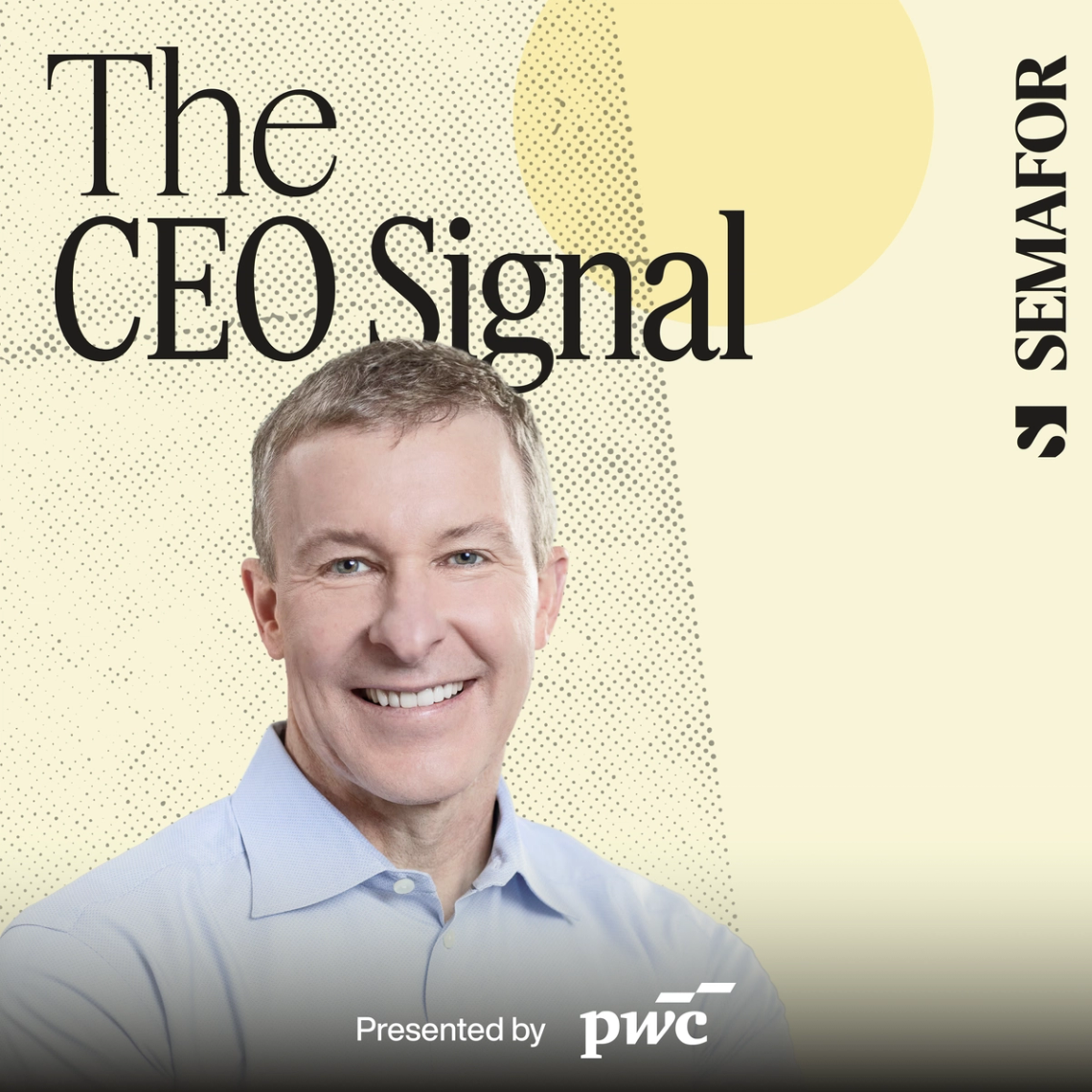 United Airlines CEO Scott Kirby believes America needs “a flag carrier.” Now he is betting regulators will let him create one. On this week’s episode of The CEO Signal, presented by PwC, Kirby argues that airlines are not commodities and that greater scale could benefit customers — even as he acknowledges a fundamental obstacle to consolidation: “We can’t get it done without a willing partner, and we don’t have one.” As a former card counter, Kirby applies poker logic to business, embracing calculated risks. He tells Penny and Andrew why United gambled on expanding its fleet during Covid, why CEOs “don’t have to be totally right,” and why their job is not to work hard, but “to think hard.” Watch the latest episode of The CEO Signal now. |
|
Global cities unprepared for drones |
 Bob Strong/Reuters Bob Strong/ReutersThe widening zone of drone attacks, extending beyond conflict areas, points to the growing risk facing ill-prepared cities across Europe and the Middle East, analysts warned. Drones have been reported in at least six European countries in the past year, while Iranian drones have struck multiple Gulf cities, Bloomberg noted. The issue is one myriad cities are grappling with: Interceptors are too expensive to combat low-cost attacks, mesh canopies are crude and unsightly, and emerging technologies are a long way off. The technology’s proliferation has helped “erase the old geography of conflict,” a former CIA operative wrote: “The question now is whether the world’s other expensive cities — think London, Singapore, New York — are ready.” |
|
Debate in China over English’s role |
|
|


