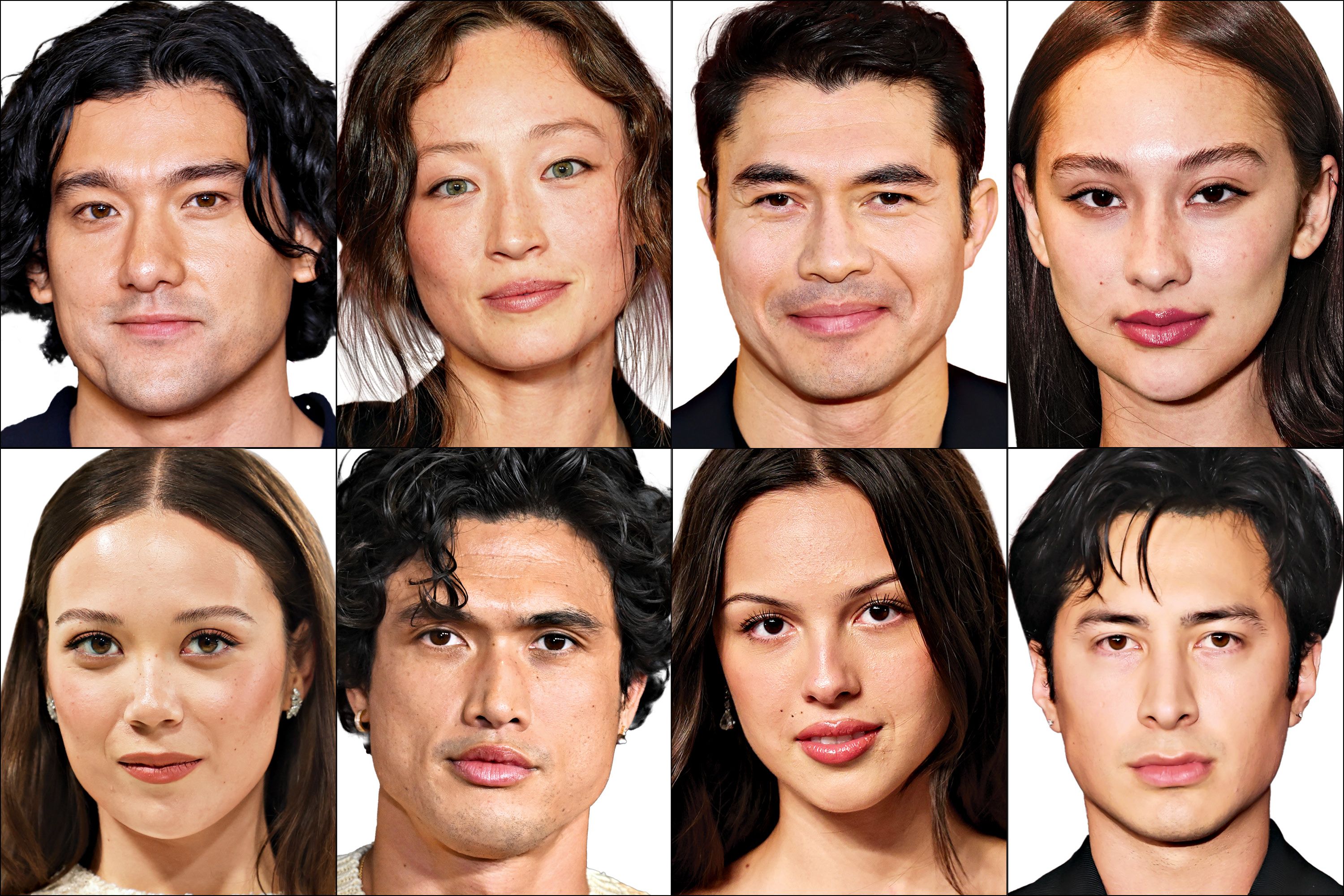
Over Taiwanese breakfast, Claira Janover, a lively 28-year-old working for the AI fashion start-up Phia, is explaining the latest vernacular from Wasia. For much of her life, Janover, who identifies as Chinese and Jewish, used the word hapa to describe herself, a Hawaiian term meaning “half” that was in common usage until arguments that this was cultural appropriation set it on the wane. Before Wasian there was Blasian (“Black and Asian”), popular during the height of Tiger Woods mania, when the pro golfer referred to himself as “Cablinasian.” In its irony-laced way, Wasian, a portmanteau of white and Asian, makes itself instantly knowable, like Cronut or Brangelina.
“Unfortunately, it’s kind of catchy,” says Janover. She continues: There’s quapa for people who are a quarter-Asian (like Keanu Reeves), and panda for “mixed-Asian squared,” i.e., someone with two mixed Asian parents (like the kids of Henry Golding and Liv Lo). The linguistic taxonomy is coeval with a broader demographic shift. In the U.S., there are more multiracial Asians, specifically Wasians, than ever before. “I don’t think we existed culturally until the last, like, five, ten years,” says Janover.
What was once an isolating experience is now a mass coming of age.