This issue: About that glowing Dwight Garner review, Gillian Anderson answers the Book Gossip Questionnaire, and our thoughts on the new novels from R.F. Kuang and Chloe Benjamin. |
|
|
|
|
Senior newsletter editor, New York |
|
|
|
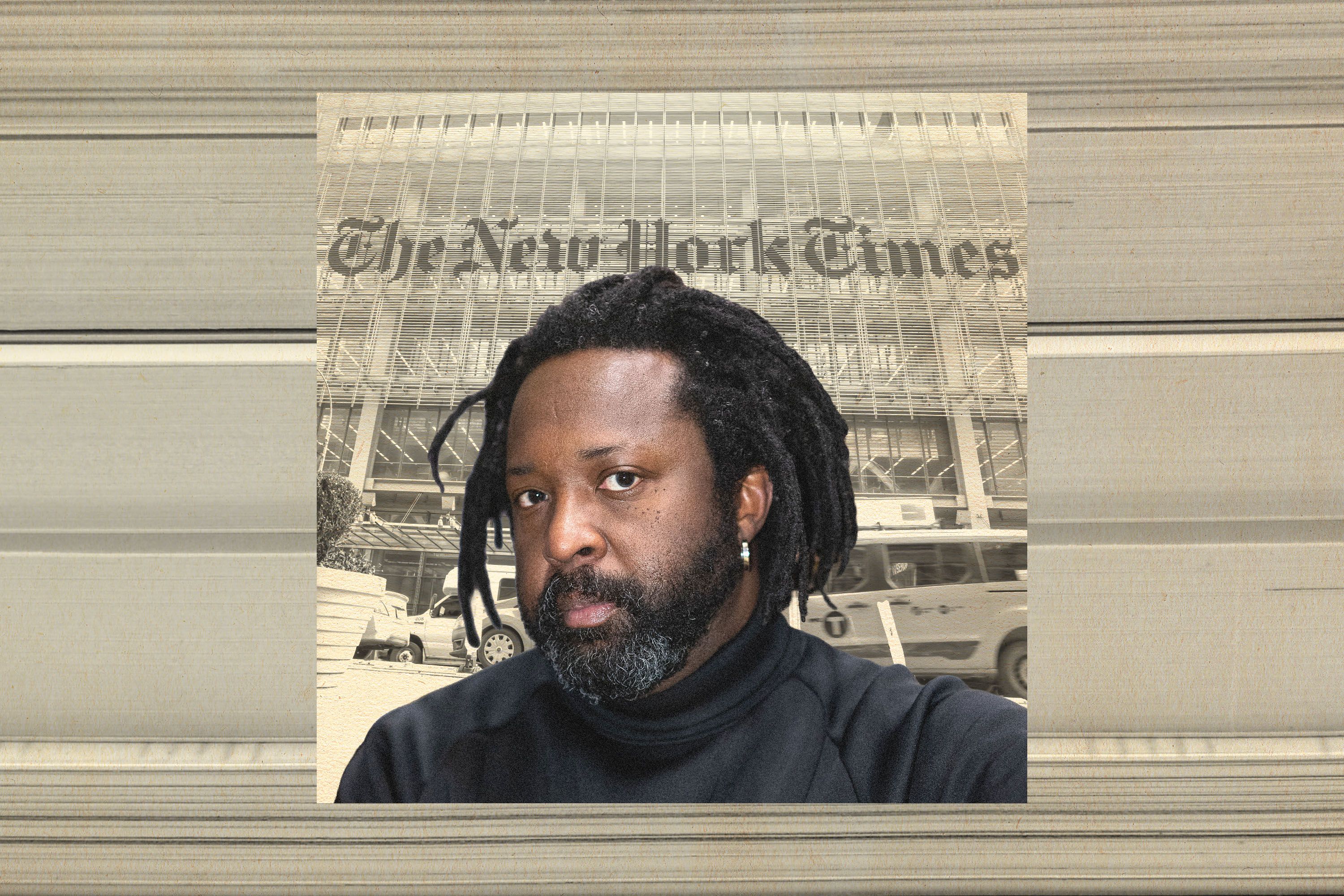
The Disappearers, Indeed! Copies of Marlon James’s new novel fly off the shelves following Dwight Garner's review.
|
Photo-Illustration: Vulture; Photos: Getty |
|
|
|
Journalists like to remind lay readers that they do not usually write with their own headlines, but the superlative one that accompanied the New York Times’ review of Marlon James’s latest novel last week came directly from Dwight Garner’s laudatory article. The critic heralded The Disappearers as “a masterpiece, the novel of the decade and possibly of the century thus far” and compared it to Song of Solomon, Midnight’s Children, and Absalom, Absalom!. He also called it a “maximalist banquet” with “incandescent” sex writing and “one of the signal reading experiences of my adult life.” James, whose latest totals 617 pages, posted the review on Facebook: “Y’all know I’m a man of more than a few words. I’m speechless.”
As a now-deleted tweet with the first few hundred words of the book circulated online, haters and skeptics were all too characteristically quick to issue judgment about the prose. But it didn’t matter — wherever there were copies of The Disappearers, they disappeared nearly overnight. The novel peaked at No. 6 on Amazon’s “Best Sellers” list, which is updated in real time, then promptly sold out on the site — “a publisher’s nightmare,” according to one Big Five publicity director — just one day after publication. The team at Riverhead shared that the novel had an original print run for the U.S. and Canada of 37,000 copies and that 50,000 more were on the way.
Rarely are reviews — a form of book coverage already on the brink of extinction and often hidden behind paywalls — guaranteed to influence sales, even those published in the paper of record. While some book-industry insiders I spoke to believe a good Times review can still affect sales, others said you can no longer count on it. “I’ve had a range of Times reviews for my books over the last two to three years with no impact, including reviews that run on the cover of the Book Review. It’s just not a thing anymore,” said one publicity director at a Big Five. As another Big Five publicity director pointed out, Times reviews are just another one of those once-guaranteed sale levers — along with “Fresh Air” and CBS News Sunday Morning — that, “as attention has spread across different formats, particularly as readers turned to social media,” just don’t really work anymore.
But no one can seem to remember a review as unapologetically effusive as Garner’s to compare it to. “Most reviews are gentle plot summaries with some neutral deposit of adjectives,” argued one Big Five publicity director, often because reviewers are freelancers or themselves authors, all sharing connections in an unstable and codependent world. The Times, on the other hand, is “one of the only places that still has staff critics like this. Dwight is not asking these authors for blurbs every two years. Readers want to know who’s the staff critic and who’s the person’s ex-roommate’s friend,” she said.
Of course, a book’s sales reflect the sum of publicity efforts around it (the Times also ran a profile of James that day, for one), but in the case of The Disappearers, Garner’s glowing review may have disproportionately moved the needle. Last week, Jack Kyono, director of marketing at McNally Jackson, said there was a lot of small talk about the Times review’s headline at the register. “Hi! What does it feel like to have a bomb go off over a weekend?” sales representative Tom Benton wrote to Riverhead’s publicity team. An editor at a Big Five opined that the sales fervor around the book was “almost entirely because of how crazy that Times headline was.”
One clear result of Garner’s review: Publishing professionals are newly optimistic that criticism can fuel attention and debate. “There’s something so special when a review ricochets far enough that I’m hearing from friends outside of publishing writing to me, ‘Hey, have you heard of this book?’” said one publicist. The sources I spoke with were also curious to see how The Disappearers, which is short-listed for the Booker, will go over with the general reading public. Over text, I asked James whether he worried about the book being overhyped as a result of the review. “Once a book is out it’s not really mine anymore so I don’t worry about anything people might say about it,” he wrote. “Also I’d be glad if ANY book is hyped for once.” |
|
|
|
Subscribe now to get unlimited access to everything New York, including subscriber-only newsletters, exclusive perks, the New York app, and more. |
|
|
|
THE BOOK GOSSIP QUESTIONNAIRE |
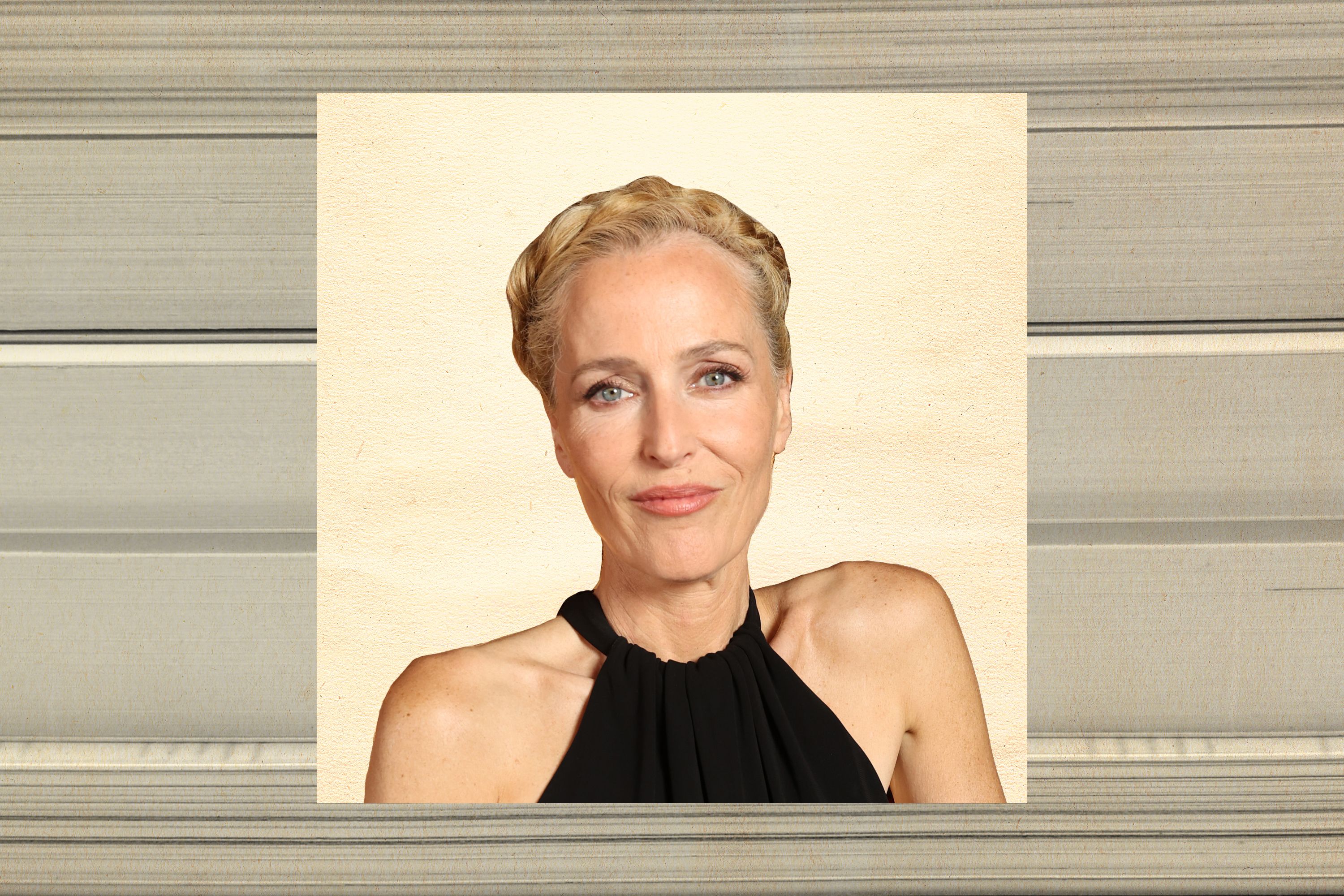
Gillian Anderson’s Vices Are Sugar and Work |
Photo-Illustration: Vulture; Photo: John Phillips/Getty Images for G Spot/MUBI/Picturehouse |
|
|
|
You may have noticed that Gillian Anderson has had sex on the brain. For her 2024 best seller Want, the 58-year-old actress issued a global call asking women to anonymously divulge their sexual desires and fantasies, especially the ones they’d never shared before. Consider it a passion project: In recent years, Anderson has appeared onscreen in overtly sex-positive roles, from the Netflix high-school comedy series Sex Education to this summer’s queer and horny cult-favorite film, Jane Schoenbrun’s Teenage Sex and Death at Camp Miasma. Next week, she will publish More, a follow-up collection of anonymous letters — including one of her own — that promises to be more explicit and more invested in uncoupling shame from fantasy and using fantasy as a vehicle for self-knowledge. The title, Anderson writes in the intro, is an “affirmation that our sexual desires are not frivolous — they are fundamental.”
|
|
|
|
- The book you’ve reread the most.
Tennessee Williams: Mad Pilgrimage of the Flesh, by John Lahr. I listened to it on audiobook while I was doing A Streetcar Named Desire because the only thing I could think about was Streetcar, and I didn’t want to keep going through my lines while I was sleeping, so I listened to the book on a loop, read by a truly fantastic Elizabeth Ashley, to keep the topic alive. -
Finish the sentence: I can’t write without _____.
Silence - Recount a recurring dream.
I’m in a house with a plate-glass window and on the other side of the window is the deepest part of the ocean. - The last album you listened to all the way through.
Lemonade, by Beyoncé. -
How many hours a day do you read and where?
Lately, I listen to audiobooks in bed while falling asleep. So that’s anywhere from five minutes to 45 minutes a day. - Describe what you’re working on now without revealing the plot.
A play about a middle-aged couple in the early 1960s who love and hate each other in equal measure and subject a younger couple to the drama of their pain. - Describe a physical place of great importance to you.
A spot on the edge of the ocean in the Pacific Northwest. It’s a pine-backed beach that, pre–global warming, used to hold anemones and purple and pink starfish. - The book you wish you’d written.
Anything by Ann Patchett. - A director, living or dead, you’d most like to see adapt one of your books.
I’m not telling. - Describe your reading habits in three words.
Frustrated, lazy, and intermittent. - What book was the most formative to you as a person?
The Power of Now, by Eckhart Tolle. I read it after a breakup in the early 2000s, and it taught me how to do it with grace and love.
- The writer you’d most like to have a conversation with, living or dead?
Toni Morrison. - What was the last meal you cooked, and who was it for?
I made steaks, potato salad, and grilled vegetables for my three kids. - Your most successful tool/method/substance/ritual for getting unblocked?
Patience, time, and space. - Your vice, if you identify as having one?
Sugar and work in equal measure. - The last thing that really made you laugh.
Trying to learn the dance routine in rehearsals for Who's Afraid of Virginia Woolf? and attempting to recite rhyming verse while dancing to a jazz song. - Your favorite piece of book gossip, whether historical or current.
That while Ernest Hemingway worked on For Whom the Bell Tolls in the late 1930s and early 1940s, his third wife, Martha Gellhorn, took it upon herself to have his beloved cats sterilized while he was away. - A writer you want to sound like:
Douglas Stuart. - A writer you actually sound like:
Not a clue. Is that a problem? - The question you wish more people asked you?
“Would you like me to massage your shoulders?”
|
|
|
|
Two September Releases, One to Borrow and One to Buy |
|
|
|
Taipei Story, by R.F. Kuang
In the years since she published her 2018 historical fantasy The Poppy War, Kuang has become an outright literary sensation — and something of a lightning rod — a feat made more interesting thanks to her frequent genre-switching. Since 2020 alone, the Georgetown and Oxbridge alum (and current Yale scholar) has published two fantasies (Babel and Katabasis), a satirical thriller (Yellowface), and now a work of contemporary literary fiction: Taipei Story, about a young college student studying abroad in the Taiwanese capital. To call Taipei Story a departure would be to partially mischaracterize Kuang’s backlist: The book surveys much of the territory Kuang has always keenly explored across genres, especially with its assessments of colonialism and of translation as a tool that’s beautiful but inherently flawed. Kuang’s protagonist is Lily Chen, a Chinese American student who travels to Taipei to immerse herself in the culture and study Mandarin Chinese. She hopes doing so will allow her to converse with her grandparents and reconnect with her family history. But when her grandfather dies, she’s plunged into a grief deepened by the inherent contradictions of language. Don’t expect much in the way of twisty plot here: Taipei Story is told mostly through short vignettes, and there are no magical puzzles or identity-stealing opportunists driving the story forward. It’s nevertheless a well-written, emotionally astute novel, one I enjoyed and finished quickly. But I don’t know that I need it on my shelf in perpetuity — and a more focused narrative might have really made the story sing. Borrow. —Lauren Puckett-Pope
Under Story, by Chloe Benjamin
The Immortalists author’s third novel explores grief by way of a world opposite our own. Post-divorce, Laurel, a mycologist in Wisconsin, decides to become a dishwasher at a research base in Antarctica. While she’s there, a strange glowing dome appears and — once her physicist ex, Eli, arrives too — sparks a theory that the answer to their relationship problems just might lie beneath it. With as few spoilers as possible, I will admit it’s difficult, at times, to grasp the exact mechanics of the place where Laurel and Eli eventually find themselves; however, it’s extremely unique and unlike anything I have read before. But the real beauty and story lies in the mundane as the couple learns to navigate their new world while revisiting their past. I devoured this nearly 500-page novel in three days, unable to turn away. Buy. —Ashley Wolfgang
|
|
|
|
Correction: Sheila Heti said, “Everyone who is projecting onto Natalie Portman a sense of betrayal over her alleged appearance in the book is in fact enacting the very projection and storytelling that the book is thinking about, and is critiquing as kind of dehumanizing.” The August 25 edition of the newsletter misattributed the quote. |
|
|
|
If you're enjoying Book Gossip, forward it to a friend. Send us tips, gossip, or feedback at bookgossip@nymag.com. |
|
|
|
|