| | The US army secretary’s departure clouds the Pentagon’s drone ambitions, China warns its automakers ͏ ͏ ͏ ͏ ͏ ͏ |
| |  | Flagship |  |
| |
|
The World Today | 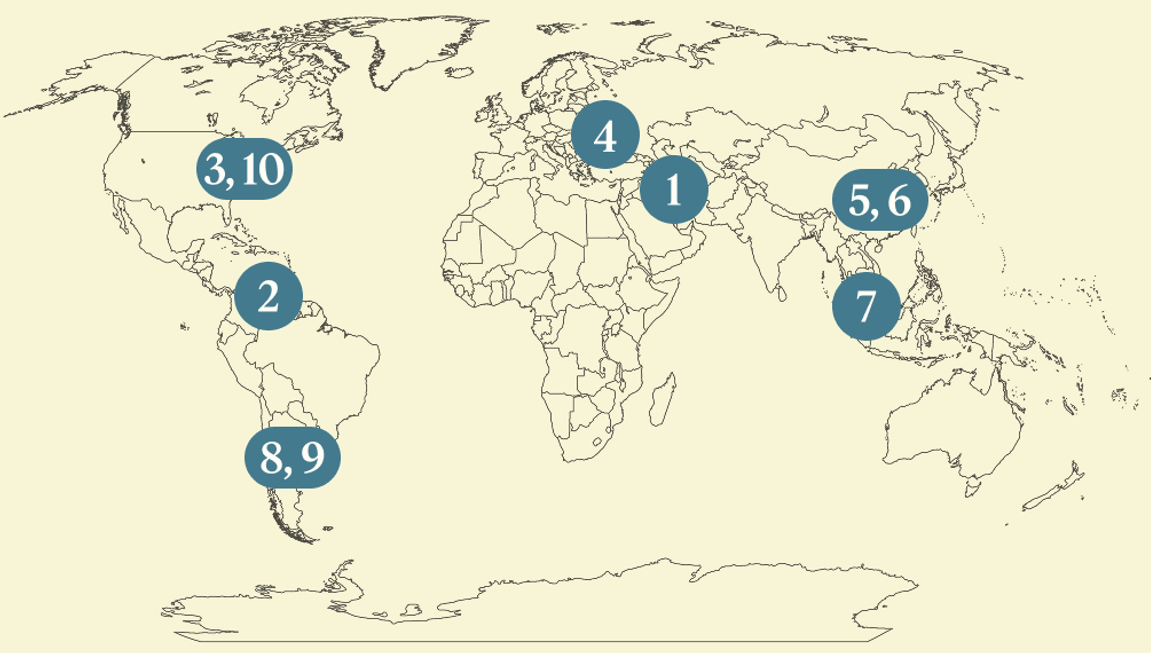 - Renewed US-Iran fighting
- Venezuela deal questions
- ‘Drone guy’ quits Pentagon
- Drone lessons from Kyiv
- Beijing warns EV makers
- A peerless superpower
- Divergence in Asian FX
- Contraband in Argentina
- Soccer’s best player
- Causal claims in science
 A memoir from a former political prisoner in Egypt is a ‘heroic clarion call for moral decency.’ |
|
US launches new strikes against Iran |
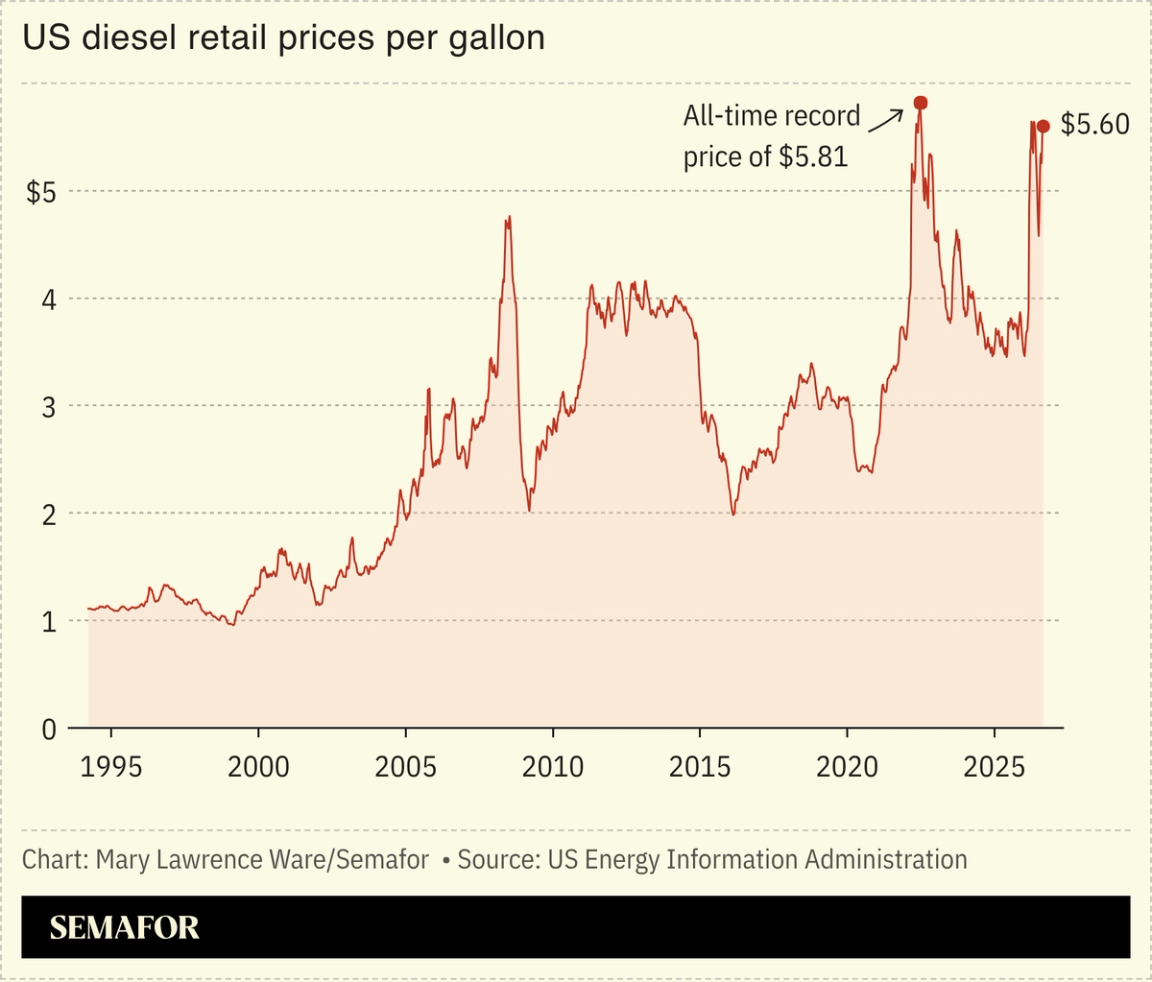 The US launched retaliatory strikes on Iran Tuesday after Tehran targeted American forces in Jordan and the UAE, interrupting a weekslong lull in the six-month conflict and sending oil prices to $95 a barrel. Two supertankers carrying Saudi oil were struck on Monday, undermining the White House’s claims that the Strait of Hormuz is safe for navigation. US President Donald Trump said Iran will be “totally wiped out” if it hits back, threats that “are indicative of the reality that administration officials privately acknowledge: There’s no good way out of the war,” Semafor’s Shelby Talcott wrote. The flareup comes as Trump summoned oil executives to the White House Tuesday, with diesel prices approaching all-time highs ahead of November’s midterm elections. |
|
Chevron nears Venezuela oil deal |
|
Driscoll exit clouds US drone efforts |
 Tom Brenner/Reuters Tom Brenner/ReutersUS Army Secretary Dan Driscoll’s resignation on Monday could undermine efforts to modernize Washington’s armed forces, analysts said. US President Donald Trump’s “drone guy,” Driscoll reportedly clashed with Defense Secretary Pete Hegseth over the army’s “transformation and readiness” efforts, which Driscoll believed were hamstrung by Hegseth’s firing of generals, CNN reported. Last month, the army said it would fold a cutting-edge drone unit that had been formed to imbibe lessons from Ukraine’s battlefield successes, a decision reflecting the new chief’s “back-to-basics” approach. Driscoll also courted private-equity and credit deals to revamp procurement and build data centers on military lands, Semafor’s Business team noted, with his departure costing Wall Street financiers their “uniformed cheerleader.” |
|
Ukraine’s drone expertise in demand |
 Valentyn Ogirenko/Reuters Valentyn Ogirenko/ReutersUkraine is intensifying its aerial assault against Russia with drones that fly for longer and carry a larger payload, boosting Kyiv’s profile as allied nations race to distill its battle-tested insights. Ukraine is “churning out cutting-edge military technology” at a speed with “few parallels in modern history,” The Wall Street Journal wrote. That expertise is in high demand: Italy is bringing on Ukraine’s ousted defense minister and drone impresario to advise on strategy, as Poland, facing heightened incursions from Russia, prepares for joint drone exercises with the US that are explicitly modeled on Ukrainian soldiers’ experiences. Taiwan also recently credited Ukraine with inspiring its drone push. China, meanwhile, is turning to Moscow for “the latest battlefield lessons,” The Economist reported. |
|
Beijing frets over auto price wars |
 Tingshu Wang/Reuters Tingshu Wang/ReutersChina’s regulators warned the country’s automakers on Tuesday not to launch aggressive pricing strategies in overseas markets, as the sector’s blistering global expansion raises fears of so-called involution. Calling for “rational and orderly” expansion, Beijing hopes to avoid the price war dynamics that have eroded profits among its domestic e-commerce giants, and which could also spark harsher trade measures from partners seeking to protect their own auto industries. China is also ramping up scrutiny of rapid assembly line processes over safety concerns — anxieties that are beginning to bleed into executives’ rhetoric: “Cars aren’t fast-moving consumer goods,” Chery’s vice president recently wrote. “They touch the safety of millions of families… There are simply some development timelines we cannot afford to shortcut.” |
|
US needs ‘allied scale’ to compete with China |
 Evan Vucci/Reuters Evan Vucci/ReutersThe US’ best hope for competing with China’s industrial might is to achieve what some experts call “allied scale.” Outmatched in sheer size by China, the US would command one and a half times China’s share of global manufacturing by partnering with allies, two former Biden administration advisers wrote. But US President Donald Trump’s tariff wars are “reversing that logic,” Semafor’s China columnist argued, and Washington’s initiatives to counter Beijing’s dominance — the “Pax Silica” rare earths effort and shipbuilding partnerships with Asian allies — remain largely ad hoc. A Chatham House analysis found that China’s economic and technological engine could help it overcome its structural weaknesses, driving it to peerless superpower status in a decade. |
|
Asian currencies lifted by AI exports |
 Issei Kato/Reuters Issei Kato/ReutersThe US’ insatiable appetite for AI is lifting currencies halfway around the world. Currencies from South Korea, Taiwan, and Malaysia — which all export chips or other components used in the AI buildout — have outperformed those in countries less exposed to Silicon Valley’s spending, according to new Goldman Sachs analysis, as the manufacturers recycle US dollars into local currencies. That has partially shielded them from inflation dynamics hitting other Asian economies and worsened by the Iran war, which has choked off fuel imports: Asia’s refined fuel imports hit a new low in August. South Korea’s August exports rose roughly 70% from last year on a surge in memory demand, new trade data showed Tuesday. |
|
Argentina’s contraband problem |
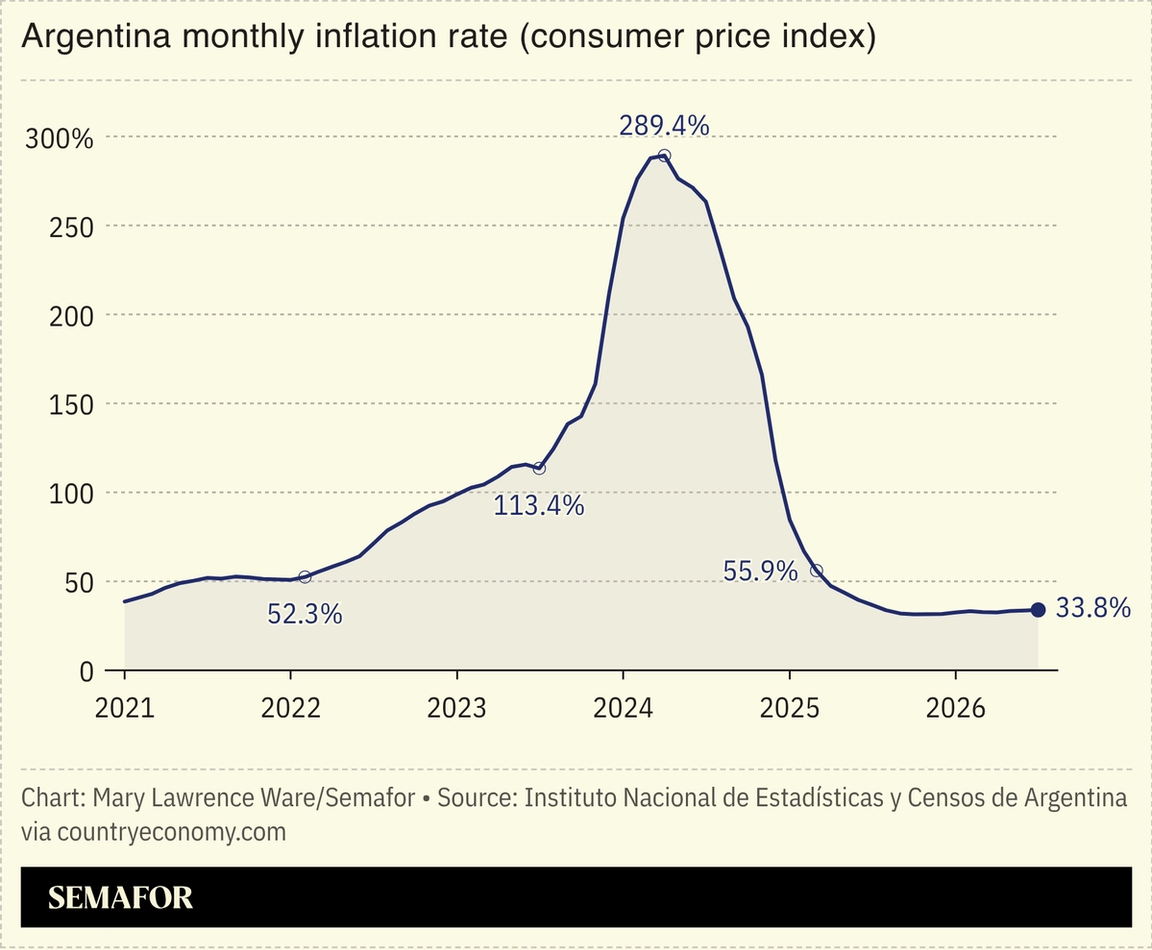 Argentina’s economic success has paradoxically led to an explosion in contraband goods. President Javier Milei has stabilized the peso, which previously traded on the black market far below the official rate, making dollars — and thus off-the-books imports — prohibitively expensive. But as the rates have converged, contraband has become economically viable. Estimates suggest 40% of beers, 30% of tires, and 33% of cellphones sold are brought in illegally. “Having two exchange rates was terrible for the economy” but it prevented smuggling, an Argentine union leader told the Financial Times: “Now [we need] a much stronger border.” Milei’s slashing of import controls has also played a role; the shift has reduced domestic manufacturing, but brought down consumer prices and slowed Argentina’s brutal inflation. |
|
Lionel Messi announces retirement |
 Carl Recine/Reuters Carl Recine/ReutersLionel Messi is retiring from international soccer at 39, marking the beginning of the end of the career of arguably history’s best player. He will still play for his club, Inter Miami. “If you work in analytics,” one soccer analyst wrote recently, you will be asked about who is the greatest of all time, especially between Messi and Portugal’s Cristiano Ronaldo. Most people are surprised by the quick response: “Oh, it’s Messi.” The two have scored roughly similar numbers of goals over extraordinarily long careers, but Messi did so while creating far more chances for his teammates and getting more involved in play: He “was not the best player of his era. He was the three best players of his era.” |
|
Scientific papers overstate causal claims |
Scientific papers often claim causal relationships when their evidence can only show correlations. Observational studies look at statistical links: Are rich people more likely to be happy, does social media use correlate with depression? But (usually) they can’t show the direction of causality: Perhaps wealth causes happiness, perhaps happiness causes wealth, perhaps some third thing causes both. |
|
|


