|
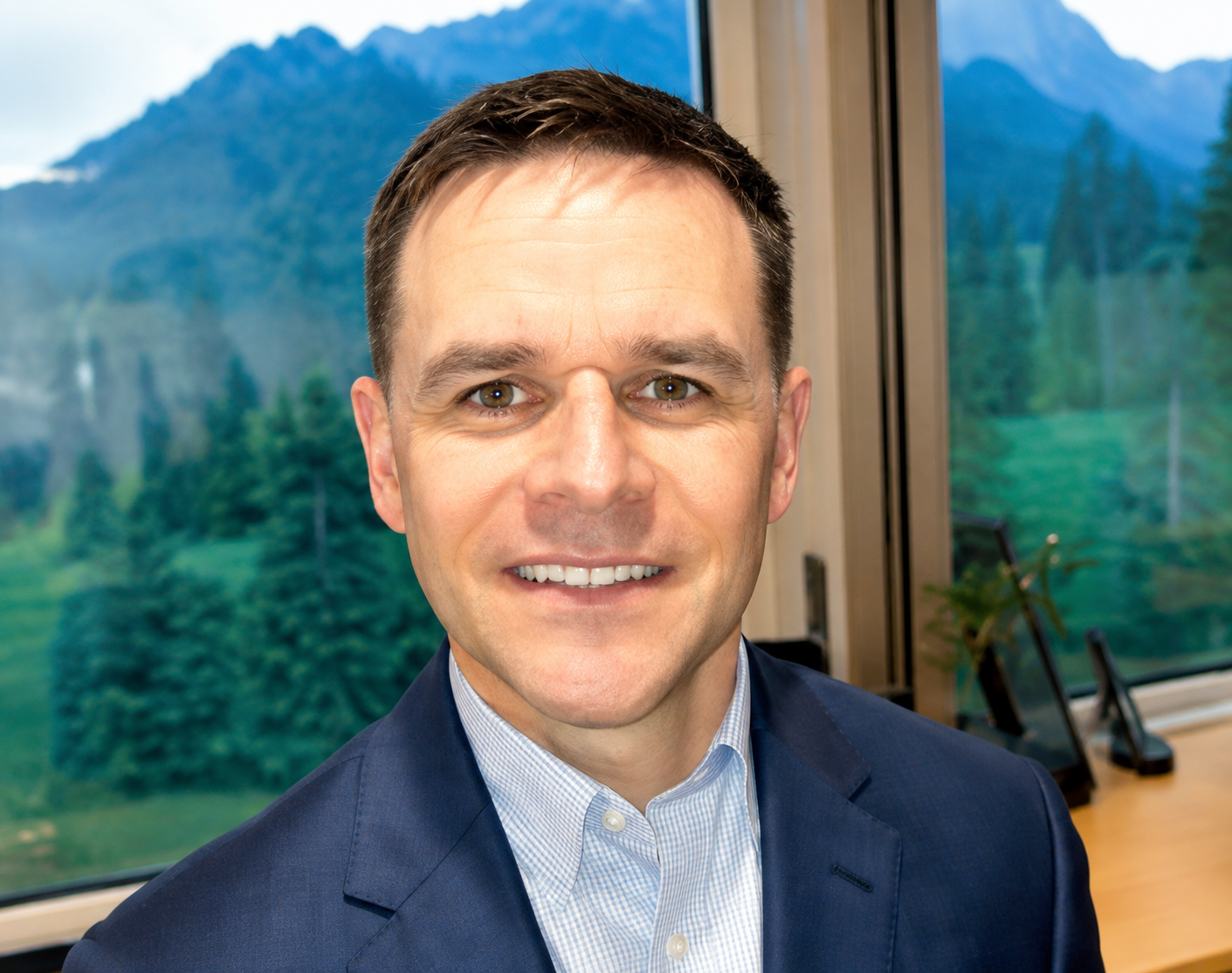
By Stephanie Rasmuson Patrick Burke has spent years as a business, public policy, and Christian leader in Massachusetts. Burke spent years building a Massachusetts laboratory business, learning along the way that leadership is often less about directing people and more about finding the right people, equipping them, and trusting them to lead. Today, Burke is applying those lessons well beyond the business world. The Massachusetts entrepreneur and Marine Corps veteran serves as chairman of Massachusetts Family Action (MFA), chairs the board of Restorative Hope Ministries, and serves on the board of Massachusetts Family Institute (MFI). He has also held leadership roles with Clearway Clinic, a Christian medical clinic with locations in Worcester and Springfield. Across those roles, Burke sees a common thread: putting his Christian faith into practice and developing people capable of carrying a mission forward. "The most important thing, for me anyways, is that I put God first," Burke said. "In everything I do, I want to turn to him." Burke grew up in Uxbridge, Massachusetts, as the middle of three boys in a close-knit Christian family. "I really honestly couldn't have been more blessed with the parents that I had," Burke said. His parents were teachers, and both eventually taught at his high school. Burke attended Our Lady of the Valley Regional School in Uxbridge through eighth grade before attending Holy Name Central Catholic High School in Worcester. Despite growing up around educators, Burke felt drawn toward business and leadership. His first major leadership lessons, however, came outside a classroom. After high school, he spent four years in the U.S. Marine Corps. "The Marine Corps did a wonderful job of mentoring you, sometimes beating you down but building you up at the same time," Burke recalled. During his final two years, Burke was selected for a five-person team working to automate maintenance and supply systems. The assignment gave him opportunities to study programming, networking, and emerging technology while helping move operations away from older mainframe systems. More important than the technical training, Burke said, was the mindset the Marines instilled in him. "It didn't matter what got in my way; I knew I could get to the other side," he said. "And I knew to bring people with me." That persistence would become particularly valuable in business. Burke eventually joined Jordi Labs in 2006, partnering with Dr. Mark Jordi, a polymer chemist. Established in 1980, the Massachusetts company specializes in analytical chemistry and materials testing, including polymer analysis, chemical identification, and extractables-and-leachables testing used by medical-device, pharmaceutical, and other manufacturers. When Burke joined, he recalled, the company had roughly eight employees and little money for expansion. The solution was what Burke calls "sweat equity." He and his business partner routinely arrived early, worked until dinner, returned home to see their families, and then went back to work after their children were in bed. "We would work until 2 or 3 a.m.," Burke said. "We did that for almost 2 years until our bodies broke down." Over time, they built a larger team and expanded the business. Jordi Labs eventually moved from Bellingham to a 34,000-square-foot facility in Mansfield in 2013, providing additional space for research and development, production, analytical services, and administrative operations. The growth did not come without setbacks. Burke recalled a fire that destroyed one of the company's buildings and its entire production line. Rather than allow the loss to derail the business, the team leaned on its service operations while rebuilding production. Another test came during Hurricane Sandy in 2012. Burke said Jordi Labs lost power for eight days while preparing to relocate to a larger building. The company had planned the move over about three months. Instead, the team completed it in three days. "It was just such a tremendous goal to achieve in 3 days: to move all that equipment and get it up and operational," Burke said. Experiences like those gradually changed Burke's leadership philosophy. His time in the Marines taught him to push toward an objective. In business, however, he began to see that an effective leader did not always need to dictate how the team achieved it. "The best way became hiring really good people with similar values and empowering them to make each role their own," Burke said. As Jordi Labs grew, Burke recognized that he needed more training in organizational leadership and business. He later earned an MBA from Bryant University. Burke ultimately spent more than 15 years helping operate Jordi Labs and overseeing areas including finance, accounting, and systems management. In September 2022, RQM+, a company that provides regulatory, quality, clinical, and laboratory services to medical technology businesses, acquired Jordi Labs. For Burke, selling the company opened a new chapter: one increasingly focused on service. Burke's relationship with MFI began several years before he joined its board. He said he first contacted MFI while navigating a workplace dispute involving an employee's request concerning gender pronouns and a preferred name. Burke said his Christian convictions conflicted with the request, and then-MFI president Andrew Beckwith, an attorney, helped the company navigate the issue. Beckwith served as MFI's president for almost a decade and brought both legal and Marine Corps experience to the organization. Burke and his business partner subsequently became supporters of MFI, and Burke joined its board of trustees in 2024. MFI later asked him to serve as chairman of MFA, its advocacy partner. Massachusetts Family Institute is a nonprofit, nonpartisan public-policy organization that uses education, advocacy, and legal action in support of its positions on life, family, education, and religious liberty. Massachusetts Family Action is organized as a 501(c)(4), allowing it to engage more directly in grassroots political advocacy. MFA focuses in part on identifying and training people interested in running for local and state office. "We are identifying and training future leaders that are like-minded with MFA," Burke said. For Burke, the work is particularly urgent as Massachusetts debates education, parental rights, religious liberty, and abortion policy. Burke said those debates intensified this summer after Gov. Maura Healey signed legislation that will allow a physician to perform an abortion after 24 weeks based on the physician's professional judgment. The change will allow for elective abortions throughout the third trimester. Burke said disagreements over such issues have reinforced the importance of prayer and trusted people in his life. "I need to seek God in prayer, and I need to understand what He wants me to do," Burke said. Burke's commitment to his beliefs extends beyond public policy. He has served as chairman of Clearway Clinic's board. Clearway Clinic was founded in Worcester in 2000 as Compassion Pregnancy Center, became a state-licensed medical clinic in 2013, and opened a Springfield location in 2018. The faith-based nonprofit provides free medical services and pregnancy support. It does not provide abortions or refer patients for them. In 2025, Clearway celebrated its 25th anniversary. Burke said one of his priorities is helping the organization expand into Boston. "Out of all the issues for me, that is number one," Burke said of protecting unborn life. "I don't know what could be more basic than life." Burke also chairs Restorative Hope Ministries, a newer Christian organization focused on survivors of human trafficking. Its mission centers on employment preparation, job skills, life skills, and resources intended to help survivors overcome barriers to education and employment. Burke said he became involved through Melissa Mills, the organization's executive director and a longtime friend from church. She had discussed the idea with him years before launching the organization. "We are training and empowering them," Burke said. "We are helping them walk with Jesus as well." For all of Burke's professional and nonprofit work, his idea of legacy begins at home. He and his wife are raising the youngest of three daughters, a 7-year-old whom they homeschool. His two older daughters, ages 28 and 32, are married, and his oldest has three children of her own, making Burke and his wife grandparents. Burke met his wife at church, where she sang in the choir and he played drums. Their courtship took patience: Burke recalled that a full year passed between their first and second dates. "I kept fighting, and eventually I wore her down," he joked. Today, Burke credits his wife with grounding him and taking the lead in educating their youngest daughter. "She makes me a better person each day," he said. His daughters and grandchildren also give Burke a personal reason for the work he now undertakes across Massachusetts. He wants the next generation, he said, to have the freedom to live according to its convictions and continue ministries like the ones he supports today. Burke has two main priorities: advancing plans for Clearway's Boston expansion and continuing to develop Massachusetts Family Action's political and civic efforts. Those goals continue a leadership philosophy Burke has spent decades developing: first in the Marines, then in business, and now through Christian nonprofit and public-policy work. The settings have changed, but the underlying principle has not: establish the mission, find good people, equip them to lead, and keep moving when obstacles appear.
|