| | In today’s edition: Hormuz hopes rise, American diplomats return to Gulf posts, and Trump’s Saudi nu͏ ͏ ͏ ͏ ͏ ͏ |
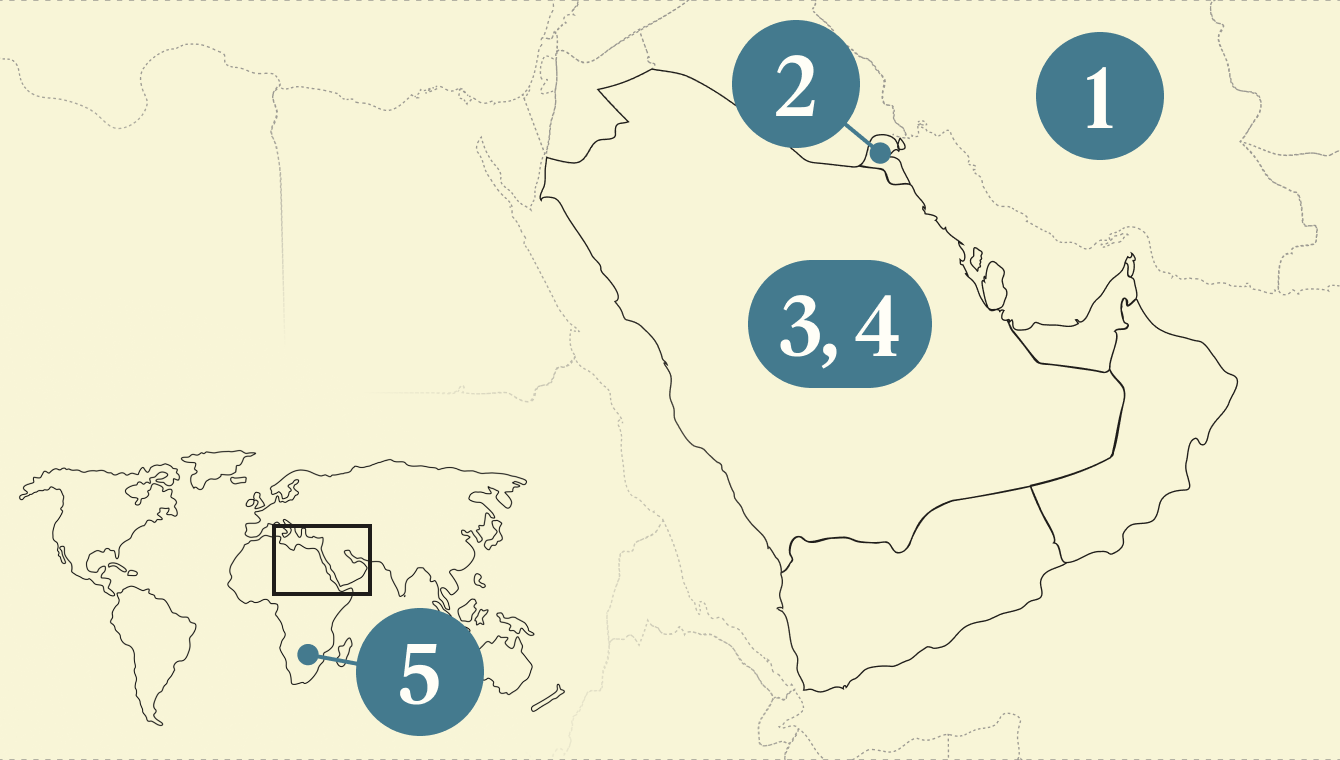
| |  Riyadh Riyadh |  Gaborone Gaborone | Abu Dhabi |
 | Gulf |  |
| |
|
 - From combat to sanctions
- US diplomats return
- Saudi nuclear deal in Congress
- Riyadh revamps market rules
- M42’s gene deal in Africa
 Buying a house in Saudi Arabia is like picking up a bouquet of flowers in Holland. |
|
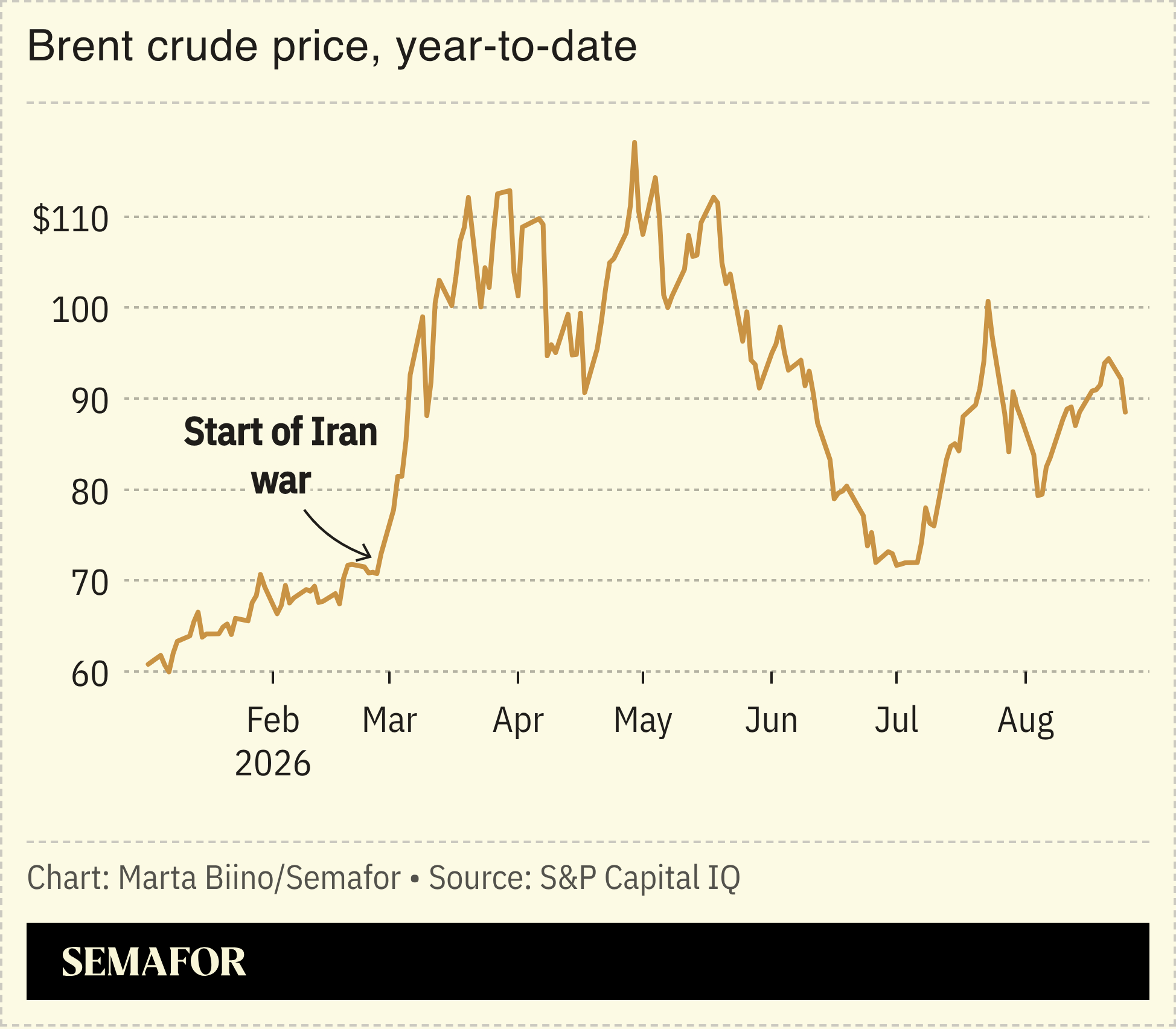 Oil prices eased as efforts to reopen the Strait of Hormuz appeared to gain momentum. US officials said US Navy minesweeping has cleared most of the strait and that increasing tanker traffic through its southern lane has stripped Tehran of leverage, making the temporary, joint shipping corridor under discussion with Muscat irrelevant. Benchmark crude eased to about $86 a barrel after Pakistan reported “significant progress” toward ending the war. But Iran has said a full reopening depends on the war ending and the blockade on its oil exports being lifted, and the Red Cross has warned the effects will be felt well into next year. As the conflict cools, the US is shifting from strikes to economic pressure on Iran, Secretary of State Marco Rubio told counterparts from allied countries in recent phone calls, Axios reported. Washington will hold off on new strikes unless Iran attacks first, while tightening a naval blockade and adding Treasury sanctions, and will push as much oil through the Strait of Hormuz as possible. The policy is expected to continue at least until after the US midterm elections. |
|
American diplomats return |
 The US Embassy in Kuwait City. Eric Lee/Pool/Reuters. The US Embassy in Kuwait City. Eric Lee/Pool/Reuters.The US is restaffing diplomatic posts across the Middle East after diplomats were evacuated because of the Iran war, sources told Semafor, a move that cements the notion that Washington has no imminent plans to return to full-blown military conflict. “Based on our latest assessment, we are adjusting our staffing posture at certain posts in the Middle East to ensure we can continue advancing US foreign policy objectives while protecting the safety and security of our personnel,” a State Department spokesperson said. A Trump administration official noted individual countries in the region were at different phases of the rollout. The guidance allows families of diplomats to return to most posts, including Saudi Arabia and the UAE, according to a regional embassy source. Bahrain and Kuwait, which have continued to face sporadic Iranian attacks, will have the lowest staffing of the Gulf embassies, with three-quarters of Foreign Service members returning. — Shelby Talcott and Kelsey Warner |
|
Congress reviews US-Saudi nuclear pact |
 Kylie Cooper/Reuters Kylie Cooper/ReutersUS President Donald Trump submitted a recent nuclear agreement with Saudi Arabia to Congress for review, while insisting that the kingdom normalize relations with Israel as part of the deal. Trump blindsided the Saudis after the deal was signed in July when he announced that the kingdom would need to establish diplomatic ties with Israel if Riyadh wanted it to go ahead. An administration official told The Wall Street Journal that the pact was still dependent on normalization; Saudi Arabia has still not commented. The agreement is also controversial as it could give Saudi Arabia approval to enrich uranium, something critics warn could spark nuclear proliferation across the Middle East. A US-Saudi nuclear pact was originally part of a grand bargain negotiated by the Biden administration that would have also given the Saudis a security guarantee, access to advanced US weaponry, and deeper trade ties, in exchange for normalization with Israel. That deal was upended by Hamas’ Oct. 7, 2023 attacks. |
|
Saudi looks to attract derivative traders |
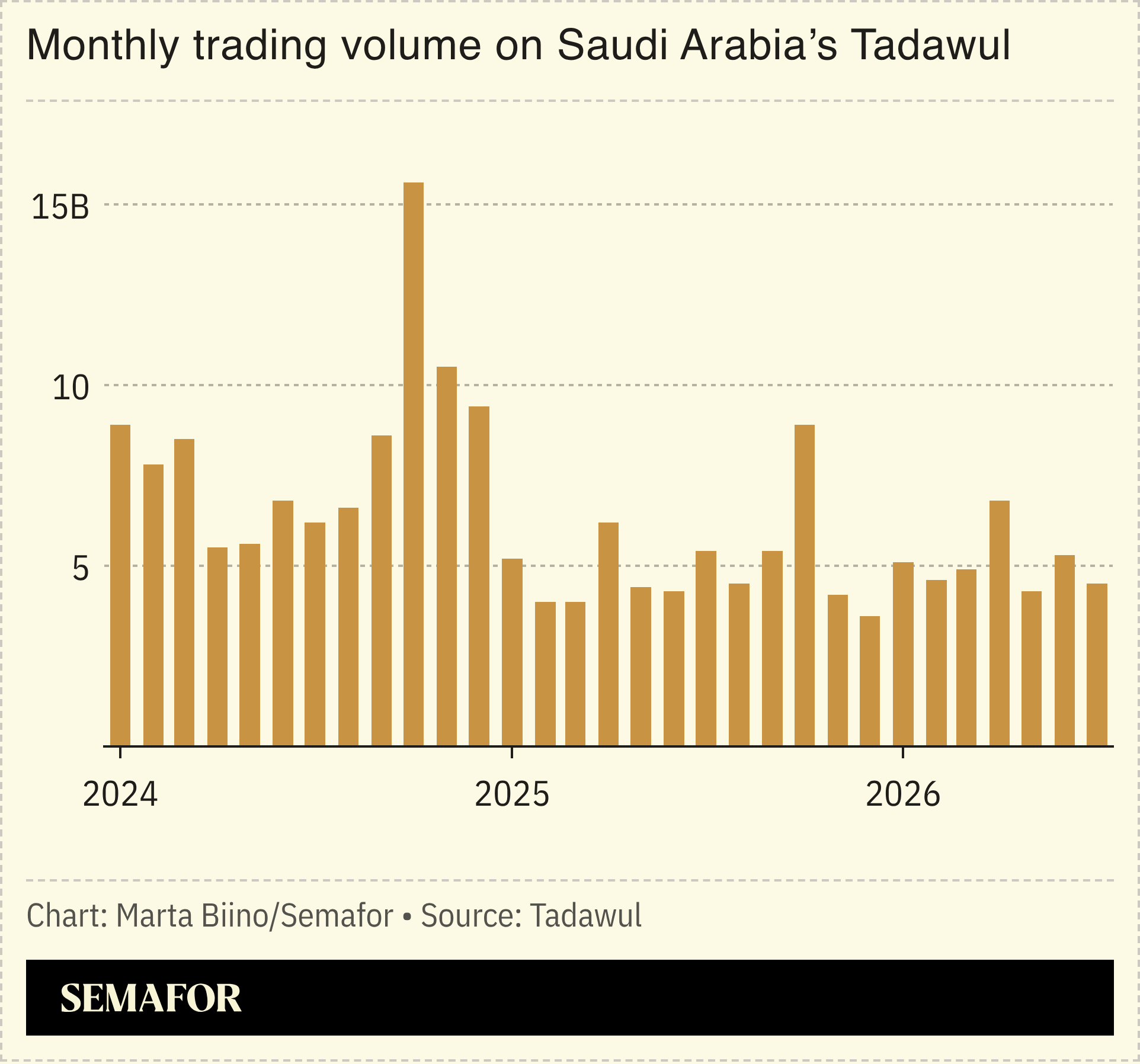 Saudi Arabia has overhauled rules around derivatives trading in the latest bid by the kingdom’s bourse to attract more foreign cash and boost liquidity. The new rules, first reported by Semafor, involve slashing fees and securing a group of international firms that agree to act as market makers on futures contracts. They are the latest efforts by the Tadawul exchange to revive its performance, which was impacted by a slowing economy even before the Iran war further hit investor confidence. The exchange first launched derivatives, which give investors options to hedge exposure or speculate on future stock moves, in 2020, though there has been little trading in them since then. Saudi Arabia also removed the head of the market regulator this month amid an investigation into poor performance of recent listings, Semafor reported. — Matthew Martin |
|
 A genomics lab in Dakar, Senegal. Ricci Shryock/Reuters. A genomics lab in Dakar, Senegal. Ricci Shryock/Reuters.Abu Dhabi healthcare company M42 signed a 10-year contract with the government of Botswana to roll out a national genomics program, digitize health records, and bolster access to medicines. The deal comes as the G42 and Mubadala-backed firm has sought to expand in the Global South, where it sees “a distinct opportunity for nations to leapfrog legacy systems,” CEO Dimitris Moulavasilis said in a statement seen by Semafor. The partnership with the Botswana Ministry of Health will include a population-level genomic sequencing effort, which can provide a trove of data and help screen for treatable conditions, and aims to improve pharmaceutical and medical supply chains with Mubadala’s life sciences unit Mubadala Bio. A timeline for the genomics project wasn’t given. The deal is among the UAE’s more significant commercial bets on healthcare and M42’s first government-level agreement in Africa, which carries an outsize disease burden relative to its healthcare resources. — Kelsey Warner |
|
 Energy- Abu Dhabi renewable energy firm Masdar cancelled plans to build a green hydrogen plant in the UAE’s capital that would have supplied up to 100 megawatts of renewable energy to Emsteel for green steel production. — MEED
- ADNOC awarded a more than $1 billion contract to Texas engineering firm McDermott to build and install a platform at its oldest offshore site as it looks to boost gas production.
- Japan, which gets 93% of its crude oil via the Strait of Hormuz, said it would shore up its energy security through a series of measures, including cooperation with Middle East countries on plans to bypass the strait and to stockpile certain components used in plastics and inks. — Reuters
- ADNOC’s shipping arm has now spent $2.7 billion on vessels this year, including $444 million for two newbuild LNG carriers due in 2029. Owning its own fleet has helped the company keep barrels moving through the Strait of Hormuz, choked off at the start of the Iran war. — Bloomberg
Real Estate- Property mogul Mohamed Alabbar’s Eagle Hills will develop Lulu Island in Abu Dhabi, a prime parcel of land that runs parallel to the city’s Corniche that has long been vacant. — The National
|
|
 Houses and buildings in Abha, Saudi Arabia, in 2017. Faisal al Nasser/Reuters. Houses and buildings in Abha, Saudi Arabia, in 2017. Faisal al Nasser/Reuters.How low will you go? Some Saudi platforms are now selling homes via reverse auction. The asking price drops automatically every second over several hours, and the first buyer to accept the number on screen takes the house, Al-Eqtisadiah reported, a format borrowed from Dutch flower markets. It is the latest corner of Saudi life to move online: Marriages are concluded and powers of attorney are issued through the justice ministry’s Najiz portal, and courts have notified women of divorce by text message since 2019. Hajj permits are granted through the Nusuk app, and the state’s judicial property auctions already run on a digital platform, Infath. Even falconers file digitally: Breeding centers are licensed through Fitri, a wildlife platform that clears applications for permits in five days. |
|
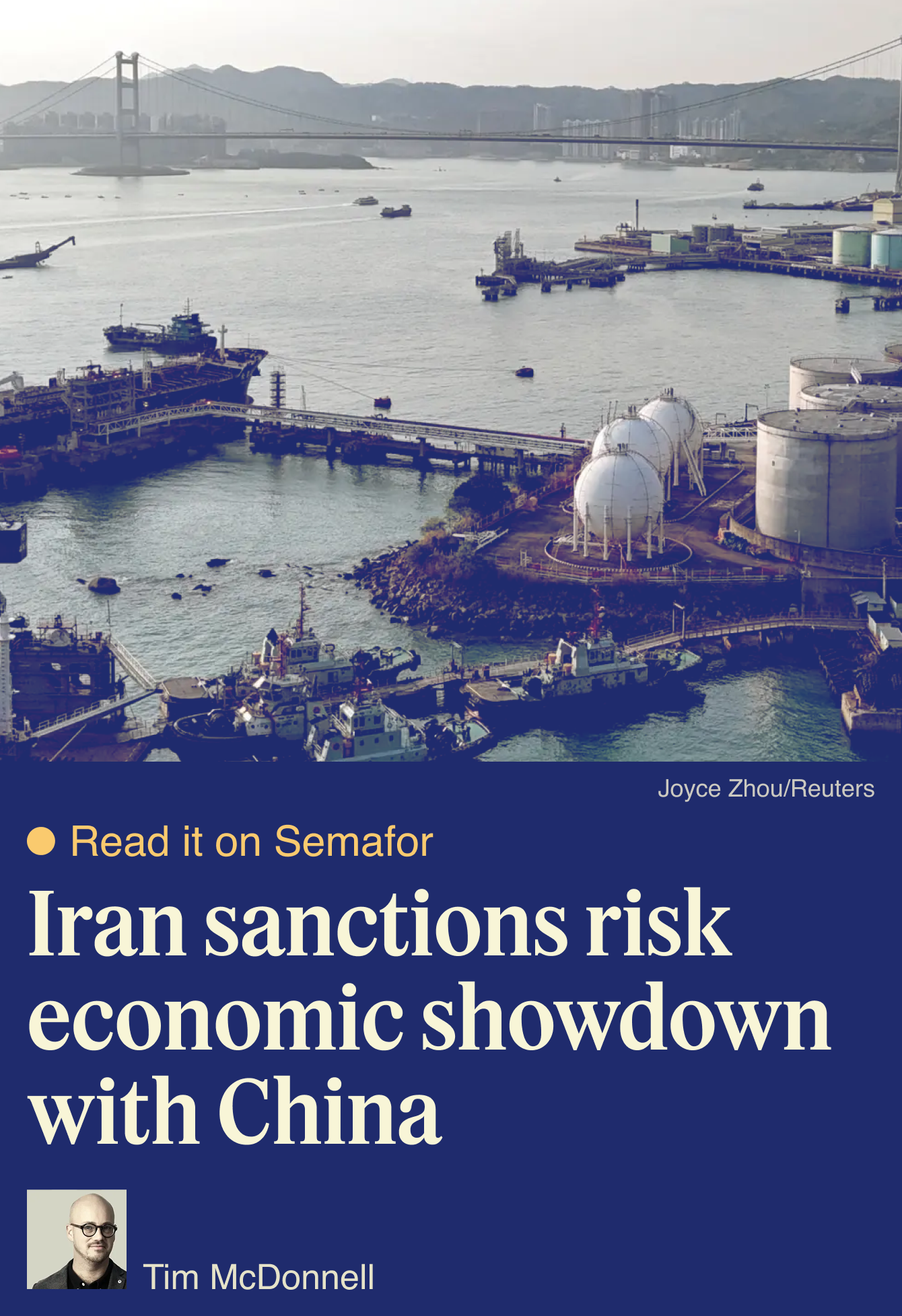 View: With Chinese leader Xi Jinping due to meet with Trump next month, the US administration wants to avoid a full-on economic war with Beijing. That puts its Iran strategy at risk. → |
|
|
|


