Partner Updates
 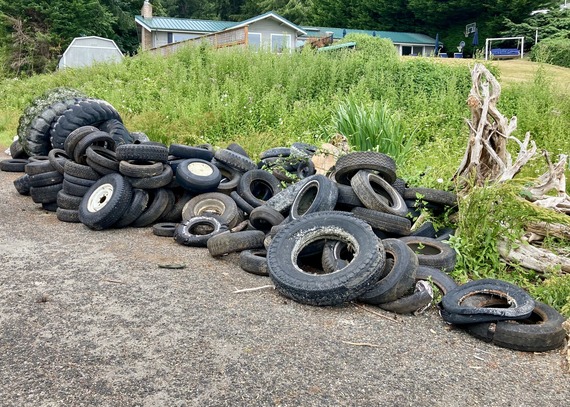 This year’s pile of over 191 Vashon-Maury Island Beach tires at Jensen Point Park. Thanks to Vashon Parks District and Vashon Rowing Club for hosting the tire staging area for the last two years (Photo Credit: Steve Bergman).
Two Year Program Removes 318 Tires
From Vashon Island Beaches
From March through July, a team of volunteers from Zero Waste Vashon, Vashon Rotary Club, and partners* shared their expertise, tools, muscles, sweat, boats, trucks, tow trucks, keen eyes, and more than 245 hours of time to help locate, dig up, and remove over 191 washed-ashore or intertidal half-buried beach tires—beating last year’s haul of 127 tires. These beach tires are recognized toxic pollutants to fragile Puget Sound ecosystems, and included a huge tractor tire weighing 2,500 pounds that needed a tow truck to move it off the beach!
*Partners include King County Solid Waste (transport to Liberty Recycling), Vashon Parks District, Vashon Rowing Club, King County Parks, the Harbor School, Vashon Land Trust, Vashon Nature Center, Vashon Adventures, Washington State Department of Natural Resources, Engel’s Towing, neighborhood groups, and over 50 individuals.
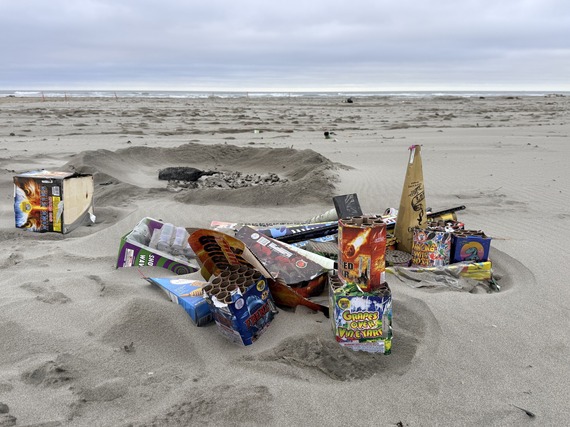 Debris on the beach the morning of July 5 (Photo Credit: Wendy Murry).
GrassRoots Garbage Gang July 5 Beach Cleanup
The GrassRoots Garbage Gang's 2026 July 5 Beach Cleanup brought together 601 volunteers who removed 45,780 pounds (22.89 tons) of debris from Washington's Long Beach Peninsula, compared to 522 volunteers removing 53,440 pounds (26.72 tons) in 2025. While holiday debris remains substantial, the increase in volunteers coupled with a 14,300-pound reduction in collected debris is encouraging. The reasons for this reduction are not yet clear but may reflect the combined impact of public education, local fireworks restrictions, community partnerships, and years of volunteer stewardship. Although the July 5 cleanup is the GrassRoots Garbage Gang’s most visible event, it represents just one day of year-round efforts to address marine debris. The GrassRoots Garbage Gang is encouraged by this year's results and hopeful that continued progress may allow them to devote more time and resources to other marine debris prevention and cleanup initiatives along the coast.
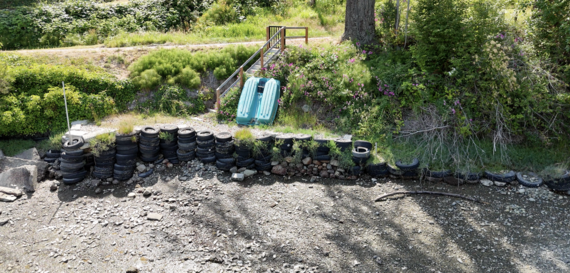 A crumbling bulkhead releasing numerous tires and other fill material into a cove in Puget Sound. Oceans Blue Corp captured this via drone while Bulkhead Spotting (Photo Credit: Kristopher Clark).
Bulkhead Spotting With Oceans Blue Corp
Oceans Blue Corp (OBC) is kicking off a new project, Bulkhead Spotting, to better understand the conditions of bulkheads in Puget Sound. The project uses drone technology to efficiently document, assess, and grade bulkhead conditions while avoiding habitat damage. As bulkheads age across the Sound, they can break down and release toxic fill material into the environment. Understanding where these bulkheads are will lead to increased resilience and quicker action on problematic areas. Through field surveys, mapping, and community engagement OBC aims to provide partners with the info needed to protect water quality, strengthen shoreline resilience, and preserve vital habitat. Reach out to OBC if you are interested in Bulkhead Spotting.
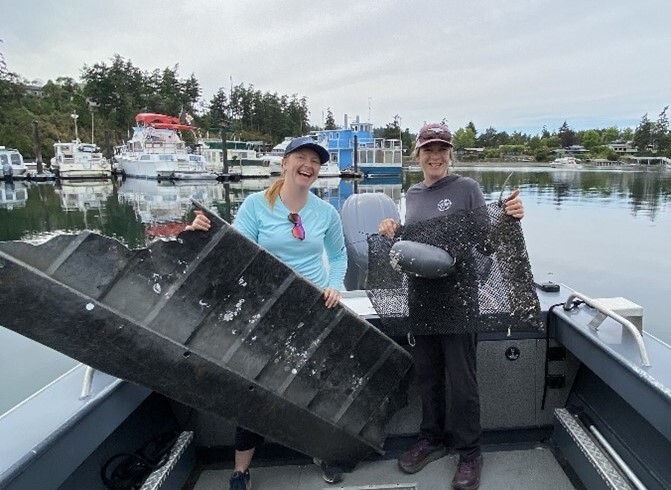 San Juan County Environmental Stewardship team members remove small marine debris while on vessel patrol in the county (Photo Credit: Kari Koski).
It Takes Teamwork To Remove Marine Debris
in the San Juan Islands
San Juan County’s Marine Program staff and Marine Resources Committees volunteers conduct on-the-water monitoring of derelict vessels and marine debris, inventory mooring buoys, count vessels, and record field observations within the county waters. The data collected provides local and regional partners with information needed to guide stewardship actions, prioritize resources, and support the long-term health and resilience of the San Juan County Marine Stewardship Area. Important partners are the Washington Conservation Corps and EarthCorps summer vessel crews with the Washington Department of Natural Resources Marine Debris Removal Program and the Samish Indian Nation’s Department of Natural Resources. These collaborative teams remove treated wood and large marine debris from San Juan County’s many miles of shoreline. The county helps them locate debris, promotes the MyCoast reporting tool and facilitates removals on private shorelines. So far this summer, crews have removed over 20,000 pounds of debris from the county!
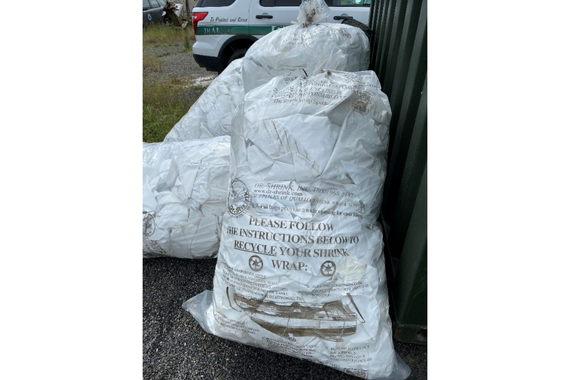 Plastic bags full of boat shrink wrap await pick up for the Plastic Free Salish Sea recycling pilot project (Photo Credit: Kari Koski).
Plastic Free Salish Sea Shrink Wrap
Pilot Project Results
San Juan County Department of Environmental Stewardship and Plastic Free Salish Sea recently piloted a recycling program for people to recycle the plastic film on their shrink-wrapped boats. The program offered free recycling bags to residents, and businesses that offer shrink-wrapping. Participants recycled wrapping from 36 small vessels which is roughly the equivalent of saving 74,000 plastic film bags from the landfill or escaping into the ocean! A full container of recovered shrink wrap will be picked up by Lautenbach Recycling and delivered to Merlin Plastics in Delta, British Columbia, Canada, where it can be processed and remade into products like plant pots and carpet. This successful pilot program incentivized island businesses to include recycling costs into their shrink wrap service fees. Think Before You Shrink!
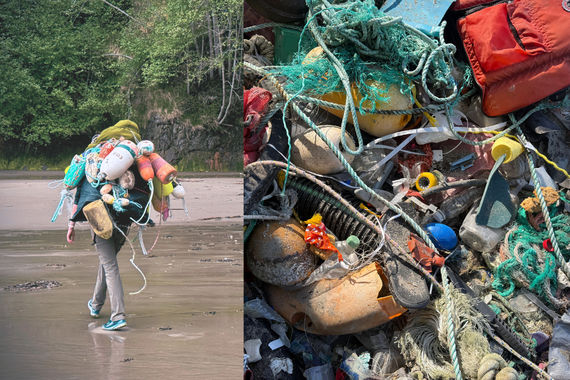 Left: A person hauling marine debris on frame packs from Yellow Bank. Right: Marine debris collected from a remote cache (Photo Credit: Megan Juran).
Remote Cache Cleanup, Ozette Triangle
Cleanup Blitz, and Fireworks Cleanups
In May, Washington CoastSavers led the Washington Department of Natural Resources (WA DNR) Conservation Corps Marine Debris removal crew in hauling out 500 pounds of marine debris from the coastal wilderness of Olympic National Park.
Washington CoastSavers also worked in partnership with the Port Townsend Marine Science Center, with the support of the WA DNR Conservation Corps, to remove 1,500 pounds of marine debris from the Ozette Triangle and Yellow Banks beach along the coast of Olympic National Park. This effort was made possible by a generous donation from the Martin-Fabert Foundation.
Over 150,000 pounds of debris in total was also removed this summer from Washington coast beaches from Seaview to Pacific Beach during July 5 cleanups led by Washington CoastSavers, Washington State Parks, the GrassRoots Garbage Gang, Long Beach Rotary District 5100, Long Beach Peninsula 4x4 Rescue, City of Long Beach, Washington Surfrider Olympia & Grays Harbor Chapters, Jeeps for Clean Shores, and the Cities of Ocean Shores and Seabrook.
 NOAA Marine Debris Program Updates
 |
|
Celebrating 20 Years of the NOAA Marine Debris Program
This year, the NOAA Marine Debris Program is celebrating its 20th anniversary of cleaning our coasts. As we mark this milestone, we are reflecting on two decades of collaboration, progress, and shared commitment to addressing marine debris across the United States and U.S. Territories. This anniversary also offers an opportunity to recognize our partners, including the entire marine debris community, educators, students, families, and volunteers, whose contributions have helped shape the program’s impact over the past 20 years. We invite you to follow along by subscribing to our blog as we highlight stories from the program over the years, showcase current ongoing efforts, and look ahead to a future where our global ocean and its coasts are free from the impacts of marine debris.
To learn more, please visit the NOAA Marine Debris Program website.
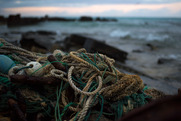
Photo caption: Derelict fishing nets litter the shoreline (Photo Credit: NOAA).
|
 |
|
Registration Now Open for 2026 Turning the Tide Summit to Examine Removal of Abandoned and Derelict Vessels and Boating-Related Waste
Registration is now open for BoatUS Foundation’s 2026 Turning the Tide Summit, scheduled for December 6–9, 2026, in New Orleans, Louisiana. The in-person event will focus on exploring existing and emerging technologies and best practices for responsible and sustainable disposal of abandoned and derelict vessels, fiberglass and composite recycling, shrinkwrap, and other boating-related waste.
The Turning the Tide summit is open to everyone including environmental experts, boating and waste industry leaders, policymakers, and anyone interested in deepening the conversation on responsible and sustainable management of end-of-life vessels and other boating-related waste.
Visit the Turning the Tide website to register for the summit.
|
|