Plus: The legality of Trump's ballroom |

US Edition - Today's top story: More protein in your breakfast or snacks won't give you more muscle without more work – a biologist separates the science from the marketing

August 21, 2026

US Edition

The Conversation
 

Top headlines

Lead story

High-protein this, protein-enriched that – it seems like everything the grocery store’s fluorescent lights touch is now fortified with protein. I’ll confess that even I find myself tempted by those brownie-adjacent protein bars and sweet, fizzy protein drinks as I do my shopping.

Quick and easy, delicious and chic, with the potential to swell my biceps? Could I not eat my high-protein cake and retain my physique, too?

There actually is some science to support the hype around added protein – but there are some significant caveats.

“There is little scientific debate that dietary protein is critical to good health,” writes Linda M. Boland, a University of Richmond researcher who studies proteins essential to the function of nerve and muscle cells. “A harder calculation is how much protein you need.” Moreover, she adds, just because something has added protein doesn’t make it automatically better.

Boland explains what proteins are and how your body uses them – as well as how you can best use protein to build muscle.

[ Sign up for our newsletter on how AI is impacting society. Every Friday. ]

 

Vivian Lam

Associate Health and Biomedicine Editor

 
Do you really need all those protein supplements in your diet? Djavan Rodriguez/Moment via Getty Images

More protein in your breakfast or snacks won’t give you more muscle without more work – a biologist separates the science from the marketing

Linda M. Boland, University of Richmond

Protein powders and protein-fortified versions of all manner of foods line grocery store shelves. But just because something has added protein doesn’t necessarily make it better.

Politics + Society

Darline Graham’s inherited Senate seat revives the ‘widow’s mandate’ with a sibling twist

Gibbs Knotts, Coastal Carolina University; Christopher A. Cooper, Western Carolina University

Though Graham’s appointment may seem unusual, political inheritance has never been fully absent from American democracy.

Is it illegal for the president to spend ‘patriotic’ donations on a White House ballroom or anything else?

Ellen P. Aprill, University of California, Los Angeles

Uncle Sam may receive charitable gifts, but that doesn’t give presidents free rein on how to spend those funds.

Arts + Culture

Jason Arday and the new politics of plagiarism

Roger J. Kreuz, University of Memphis

The resignation and death of the Cambridge professor is the latest chapter in a centuries-old struggle over originality and intellectual ownership – one intensified by the rise of generative AI.

The importance of teaching students what AI can’t do

Billy J. Stratton, University of Denver

Educators can confront AI head on by distinguishing its pattern-recognition skills from its inability to daydream, embody other people and authentically express itself.

Environment + Energy

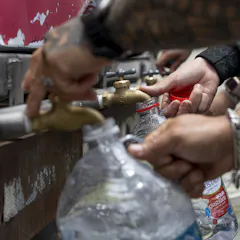
Puerto Rico is rationing water, but many residents stopped trusting the tap long before the drought

Ivis García, Texas A&M University

Drought and a ruptured pipeline have forced Puerto Rico into revolving water shut-offs. For many people, the disruption started years earlier, as did loss of faith in the utility.

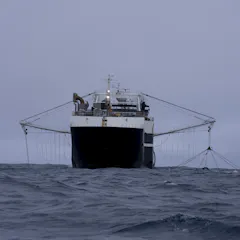
Antarctic krill fishing is now concentrated in the exact pattern conservation rules were designed to prevent

Kim S. Bernard, Oregon State University

With location regulations no longer in force, fishing boats are harvesting thousands of tons of krill from very few areas, increasing competition with penguins, seals, whales and other marine life.

Education

A seemingly technical change to international student visas could disrupt teaching and research at US universities

Abigail Boggs, Wesleyan University

US colleges and universities hosted nearly 1.2 million international students in the 2024-25 school year, an all-time high.

Health + Medicine

Why millions of people around the world will contract measles in 2026

Kathryn H. Jacobsen, University of Richmond

Measles is making a comeback around the world. In places with low vaccination rates, a few cases can quickly become an epidemic.

16% of Pennsylvania teens have considered suicide – but everyday connection may help

Xue Zhang, Penn State; Jonathan Wright, Penn State

New Penn State research on nearly 200,000 Pennsylvania teens finds everyday bonds with family, school and community may help prevent youth suicide.

Trending on site