
|
 |
Traffic to ten biggest US news websites down a fifth in three years
Plus Cloudflare’s chief strategy officer says bot blocking is leading to deals, and subscriber retention masterclass from The Economist
|

| |||||||||||||||


Welcome to the Press Gazette Future of Media US newsletter on Friday, 21 August.
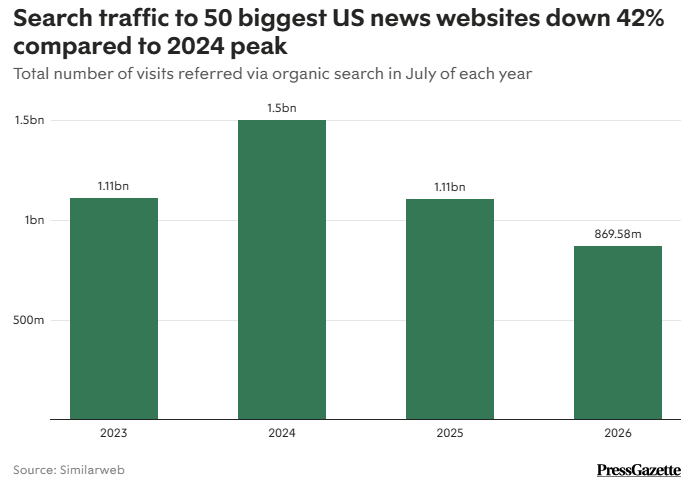
📉 Our monthly traffic ranking for the 50 biggest news websites in the US is a really useful tool for tracking month-on-month and year-on-year changes. But it’s harder to see long-term trends.
I’ve dug into data from July 2023 to 2026 from Similarweb to find how the picture has really changed for the household names of news.
That’s matched across a wider sample of the sites, with the top 50 together down 37% compared to July 2024.
Search traffic is similarly down. But interestingly it hasn’t changed as much as I thought it might have as a percentage of overall traffic. That presumably indicates the other platform changes that have been going on at the same time.
Read on for my full data bonanza. And let me know if I’ve missed an angle on the traffic that you’d like to see, I’d be happy to go back into the spreadsheet trenches.
 |
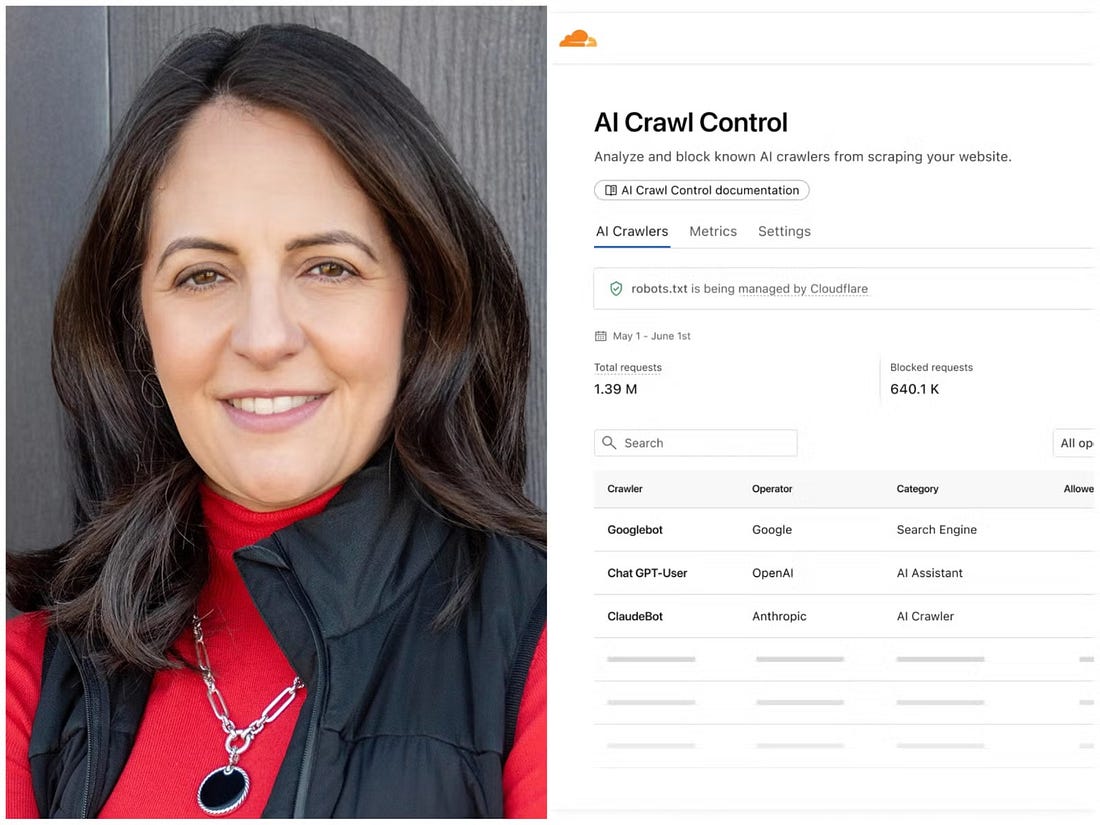
❌ Cloudflare is one of the big beasts of the internet world and is on a mission to crack some heads together in the AI scraping world.
I spoke to chief strategy officer Stephanie Cohen about the thinking behind its pay-per-crawl and now pay-per-use plans and why its efforts to block AI bots are following through on helping publishers make licensing deals (with outcomes vouched for by People Inc CEO Neil Vogel).
At Press Gazette’s AI Summit in London in June, we heard concerns that blocking the bots doesn’t always functionally mean blocking the bots - as there are so many ways for them to get through without you explicitly letting them.
I put that to Stephanie and she was insistent that Cloudflare’s blocks are clever and effective, and if publishers are getting scraped they may have leaky buckets elsewhere (for example by syndicating content to other websites that allow the bots).
 |
🫂And the latest expert to join our Masterclass series was The Economist’s EVP of marketing Nada Arnot speaking about how the newsbrand has made gains in subscriber retention.
There are useful takeaways around free trials, communicating with subscribers after they have cancelled but before their contract runs out, and what’s worked with several new habit-building products launched by The Economist in the past year.
Even though a US court struck down the ‘click-to-cancel’ rule for subscription journeys last year, it’s still useful for publishers to be proactive. Ultimately, if a subscriber doesn’t feel trapped or resentful about handing over money for your product, that’s a better starting point for goodwill and encouraging them to stick around.
 |