| | In this edition: The US steps in to fund rare earths production, Nigeria election campaigning offici͏ ͏ ͏ ͏ ͏ ͏ |
| |  | Africa |  |
| |
|
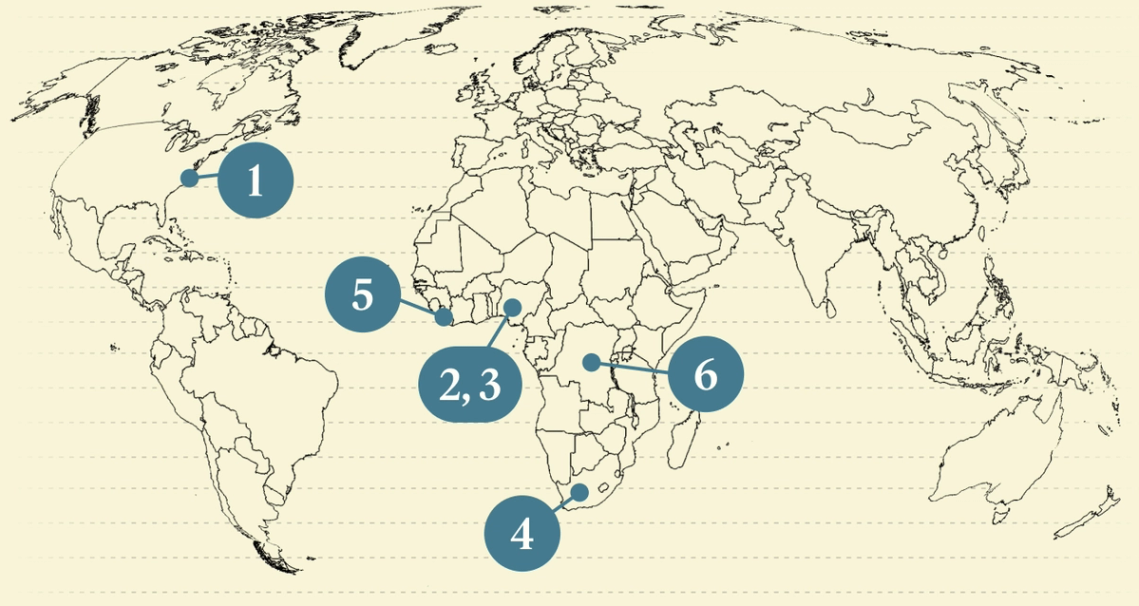 - US backs rare earths bets
- Nigeria offers mining grants
- Election campaign starts
- Absa seeks fintech tie-ups
- Liberia deal questions
- ‘Challenging’ Ebola response
 Weekend Reads and a new book traces the rise of Yoruba-language print culture. |
|
US DFC funds rare earth projects |
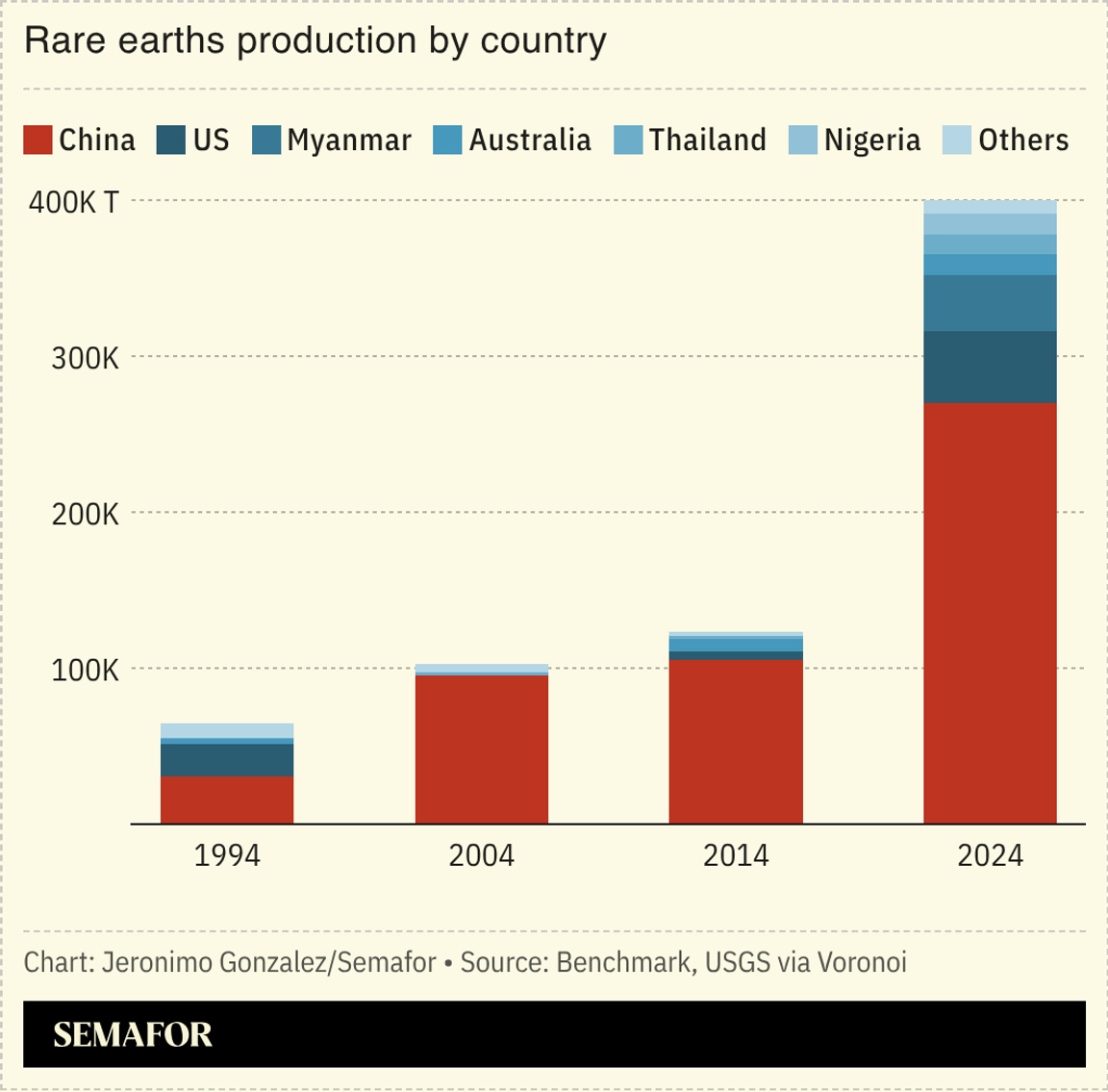 The US International Development Finance Corporation is stepping in to fund rare earths production in Africa as private investors remain reluctant to finance the sector, a key battleground in Washington’s competition with China. The US has been scrambling to diversify its sources of rare earth imports— vital for tech and defense — the majority of which are produced in China. Beijing threatened to impose an export ban last year, sending a shudder across US industry. While Africa holds some of the largest deposits, many are in countries that lack adequate infrastructure, compounding investors’ worries on top of fears that Chinese intervention could subvert project economics, Reuters reported. “We’re trying to help projects reach a more de-risked stage,” a DFC official said. |
|
Nigeria bets on grants for mining discovery |
| |  | Alexander Onukwue |
| |
 Afolabi Sotunde/Reuters Afolabi Sotunde/ReutersNigeria is betting on a grant program to spur the discovery of new commercial mining and processing opportunities. The Solid Minerals Development Fund will cover up to 70% of the cost of exploration projects by mining license holders in Nigeria. “We’re looking for junior mining companies at this stage,” the agency’s CEO, Fatima Umaru Shinkafi, said in an interview. The government hopes to identify untapped reserves of more than 44 minerals — especially those used for batteries and digital infrastructure — and fund research into processing technologies. The latter goal is in line with the growing African movement to reduce raw minerals exports in favor of local value addition. Despite doubling mining revenues last year, President Bola Tinubu’s administration is still short of meeting a 3% target for minerals’ contribution to GDP that was set six years ago. Africa’s top crude oil producer is also trying to diversify government revenues away from export receipts. Unlike oil, which accounts for 95% of foreign exchange earnings, solid minerals have long contributed barely 1% of Nigeria’s economy.
|
|
Nigeria election campaigning begins |
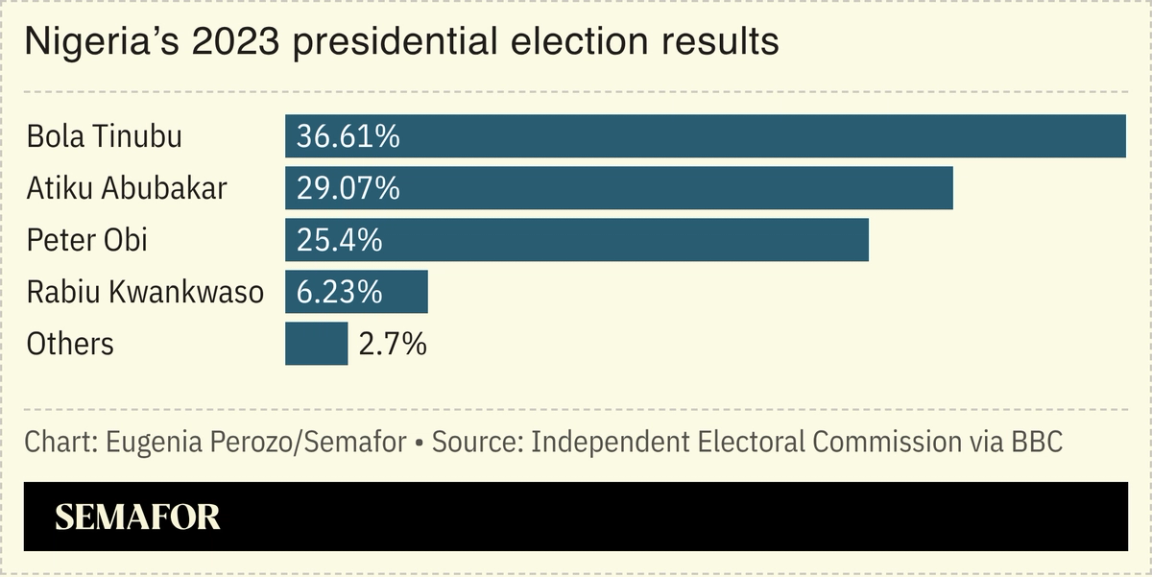 The leading candidates in Nigeria’s January presidential election — campaigning for which officially opened this week — have vowed to prioritize economic growth and security if they win. In a repeat of the 2023 election, President Bola Tinubu’s main opponents will be Atiku Abubakar, a former vice president, and former state governor Peter Obi. Atiku promised on Wednesday to restore subsidized fuel, while Obi vowed to tackle security challenges such as mass abductions for ransom that threaten the country’s stability. Tinubu, meanwhile defended his signature policies — the removal of a fuel subsidy, a tax overhaul, and a market-driven exchange-rate system — as having prevented “greater costs and harms.” Nigerian petrol prices soared after the fuel subsidy was removed in 2023. The 40% rise in fuel prices after the start of the Iran war was the highest in Africa. — Alexander Onukwue |
|
Absa eyes fintech partnerships |
| |  | Tiisetso Motsoeneng |
| |
 Siphiwe Sibeko/Reuters Siphiwe Sibeko/ReutersSouth Africa’s Absa Group is seeking partnerships with fintechs in order to reach new customers by embedding its services in apps they already use, a senior executive told Semafor. The strategy marks a pivot under group CEO Kenny Fihla. He hired Sitoyo Lopokoiyit, the former chief executive of M-Pesa, to drive a shift in South Africa’s third-largest bank, which, alongside rivals, is racing to secure the loyalty of young adults raised on mobile money and instant transfers. “We need to meet them where they are,” Lopokoiyit, Absa’s chief executive for personal and private banking, said in an interview. “Gen Zs are digital natives, and Gen Alphas are AI natives. A billboard won’t work for them. Banking has become invisible.” The payments strategy dovetails with policy changes by the South African Reserve Bank, which allows non-bank companies to plug into the national payment system. The policy changes erode the old fees that banks used to collect when they were the only ones plugged in, but it also creates opportunities for incumbents, Sitoyo said. |
|
‘Long’ road ahead in Ebola response |
| |  | Adrian Elimian |
| |
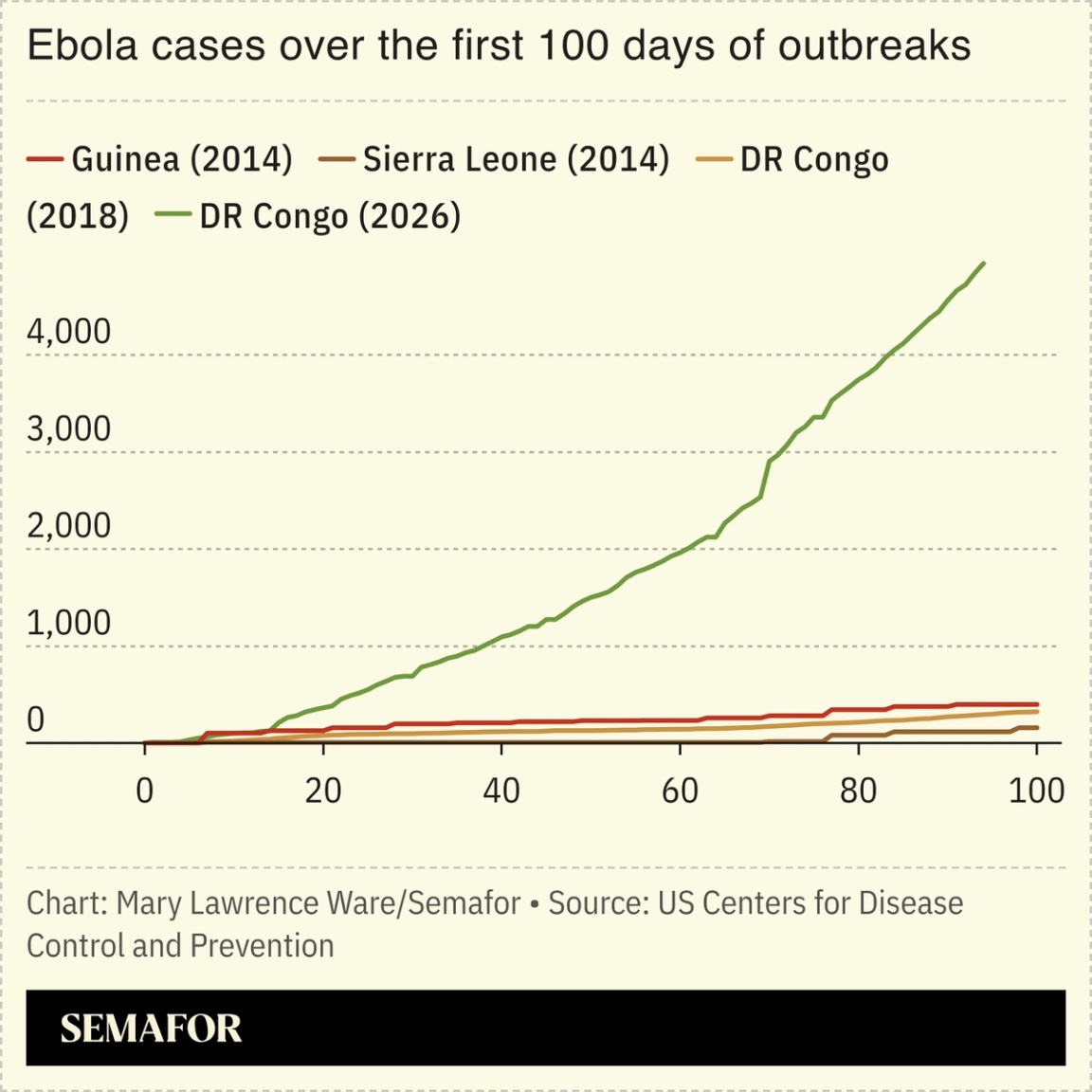 The US State Department warned of the “long and challenging” road ahead in addressing the Ebola outbreak, which this week became the deadliest in DR Congo’s history with more than 2,500 deaths. The grim milestone has renewed scrutiny of the US response to the virus, which critics say has been hampered by the Trump administration’s cuts to global health aid. A State Department spokesperson told Semafor the US has contributed more than $500 million, including funds for border screening, contact tracing, and specialized treatment facilities. DR Congo has been allocated 70,000 doses of an Ebola vaccine effective in prior epidemics as part of efforts by global health authorities to contain the outbreak. Merck’s Ervebo inoculation has been approved for the Zaire Ebola strain, but the World Health Organization acknowledged that “it is not known” whether it can combat the new Bundibugyo variant. Multiple vaccines are being developed to tackle the current outbreak, but are likely still months away. Officials in Uganda, which also reported cases, have already declared an end to the outbreak. However, transmission has moved toward South Sudan, where humanitarian group Mercy Corps warned “the risk of cross-border spread is growing.” |
|
Mystery shrouds US deportations to Liberia |
| | | Adrian Elimian |
| |
 Carielle Doe/Reuters Carielle Doe/ReutersLiberia’s agreement to accept up to 1,200 deportees from the US remains shrouded in mystery a day after the first arrivals landed, leaving many wondering what Monrovia was getting in return. The Liberian government has insisted the deal is “not a transaction with a quid pro quo,” but “it’s very hard to imagine that [claim] is true,” said Robert Blair, a Brown University professor who studies Liberian politics. He added that Monrovia likely expects “some sort of favorable treatment” from Washington down the line, even absent explicit terms. Liberian officials have framed the arrangement as consistent with the country’s history of welcoming refugees. Reuters reported that Liberia received $5 million from the US for “migration management activities” this year, which could ostensibly be used for taking in the deportees. A State Department spokesperson called implementing Trump’s immigration policies a “top priority,” but declined to offer details of the arrangement with Liberia. |
|
 - The rising cost of running for office in Malawi reveals how the economic crisis deepens electoral clientelism, argue researchers Michael Wahman and Nicholas Kerr in The Conversation. Comparing 2019 and 2025 parliamentary campaigns, the authors find average candidate spending jumped from $20,000 to $51,000, driven by intensified competition and voters’ demand for handouts amid food insecurity. They recommend a set of changes including spending caps, stronger enforcement, and electoral reform to keep Malawi’s democracy accessible beyond its wealthiest candidates.
- Living through Sudan’s civil war in Omdurman, Magdi El-Gizouli chronicles life under Rapid Support Forces shelling. In moments of respite from the near-constant bombing, neighbors share stories of escape from RSF captivity over shared meals. For Equator magazine, El-Gizouli traces the journey of youths known as Ghadiboon from their engagement in the 2019 street protests against former President Omar al-Bashir through to their radicalization and eventual deaths in fighting.
- Examining Gabon’s budget revision, recent IMF talks, credit reviews, and debt audit, Daniel Cash, a senior fellow at Centre for Policy Research, unpacks how sovereign creditworthiness is judged. He traces Moody’s and Fitch’s near-bottom scores for Gabon — driven by weak corruption control and fragile institutions — through to the mechanics behind a downgrade, to explain why Western agencies wield such outsized influence in African finance.
- Armed groups in the Sahel are exploiting the expanding trade in lithium to further entrench themselves in the region’s mining sector, argues Bradley A. Mortin, an academic at King’s College London. Tracking examples in Burkina Faso, Chad, Mali, Niger, and Nigeria, Mortin finds jihadist and criminal networks taxing miners, controlling access, and adapting existing gold and weapons smuggling routes to lithium. He warns that without stronger governance and formalized mining, the mineral risks becoming the region’s next major conflict resource.
|
|
|


