| | Israel faces a barrage of criticism from once strong Western allies, Walmart posts its slowest sales͏ ͏ ͏ ͏ ͏ ͏ |
| |  Beijing Beijing |  Mexico City Mexico City | Berlin |
 | Flagship |  |
| |
|
The World Today |  - Oil prices could surge
- Ukraine’s Patriot plea
- Israel clashes with allies
- Walmart sales weaken
- Carlyle’s homecoming
- China narrows AI gap
- Rate impact blunted
- Pension system reform
- Mexico media proposal
- Win for handcrafted slop
 A vivid account of community and collaboration in nature. |
|
Hormuz is ‘not really the problem’ |
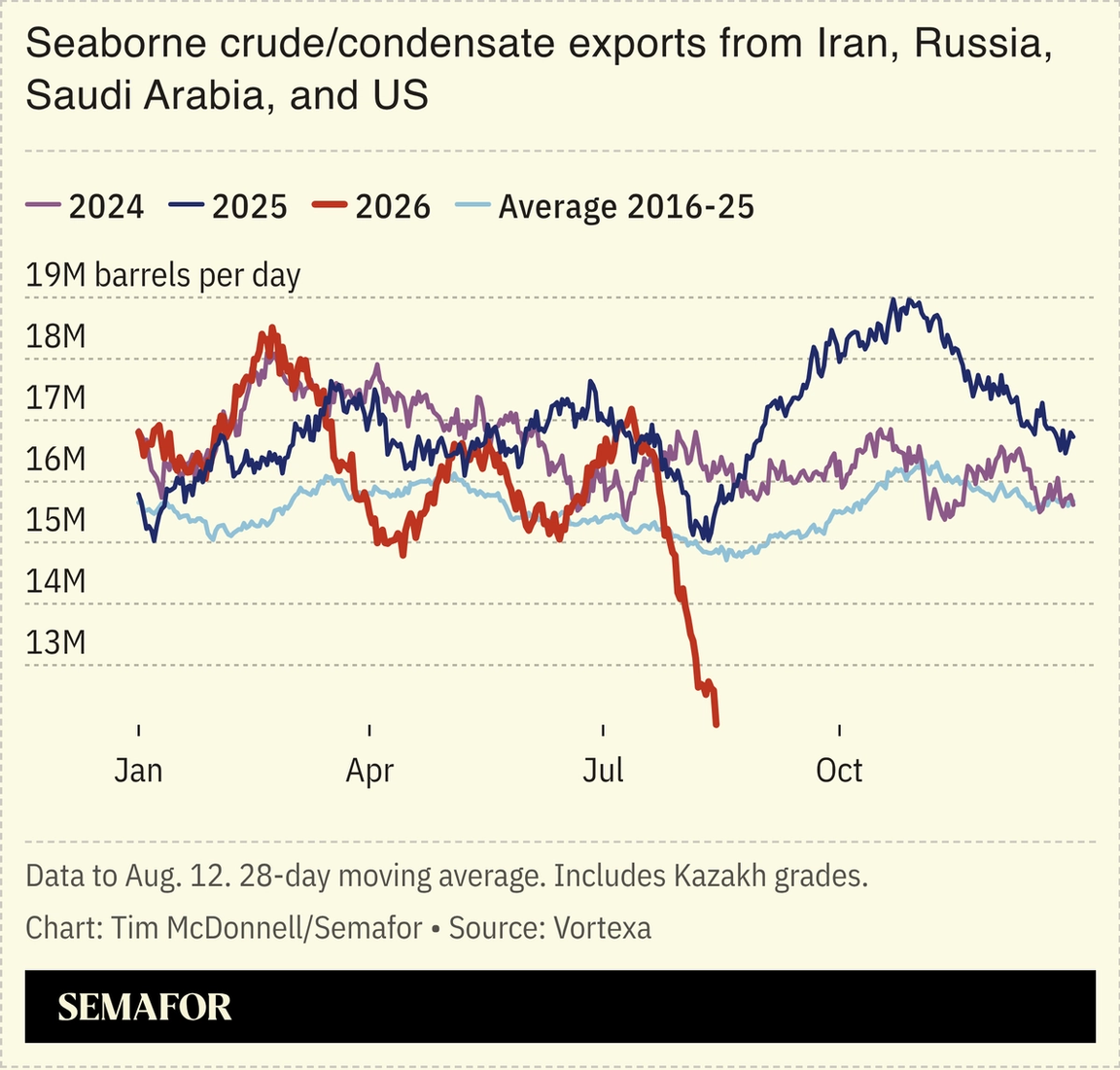 Oil prices are likely to surge over the next few weeks, especially in Asia, as the volume of crude “on water” — sitting in tankers — is collapsing, according to new data. Exports from other countries have helped offset constricted Gulf traffic for six months and kept prices stable, aided by a burst of shipments during June’s short-lived ceasefire. Those tankers are now reaching Asian ports, and exports from key suppliers including Russia, Iran, and Saudi Arabia have plummeted, while political and economic constraints are compelling the US to hold crude at home. So despite the US military’s efforts to push oil out along the Omani coast, “Hormuz is currently not really the problem,” Vortexa’s chief economist told Semafor’s Tim McDonnell. |
|
Ukraine renews pleas for Patriots |
 Anatolii Stepanov/Reuters Anatolii Stepanov/ReutersUkraine’s leader said the country’s lack of Patriot missiles was costing lives after Russian airstrikes targeting Kyiv killed 17 and injured more than 40 on Thursday. President Volodymyr Zelenskyy has long urged allies to replenish Kyiv’s stock of Patriots — one of the only weapons capable of downing ballistic missiles — but “the world’s response… is not always adequate,” he said. Ukraine has “pretty much run out of interceptors,” CNN reported, underscoring a global supply crunch of the sought-after air defense system. While the White House agreed in July to grant Ukraine a license to build Patriots, manufacturers Lockheed Martin and Raytheon are stalling a joint-production deal as executives weigh feasibility and licensing hits red tape, DefenseNews reported. |
|
Israel faces criticism from allies |
 Mohammed Torokman/Reuters Mohammed Torokman/ReutersIsrael sharply criticized the UK after London voiced opposition to the Jewish state’s support for settlements in the occupied West Bank, the latest in a series of rows with once strong Western allies. The UK’s top diplomat called Israeli settlement expansion plans “unacceptable and destructive,” adding to a barrage of criticism this week: London alongside Berlin, Paris, and Rome issued a joint statement condemning the settlements, while Germany and France labeled as “inhumane” remarks by an Israeli minister who called for killing “30 to 40” Gazans daily. Meanwhile, Australia acknowledged “difficult” relations with Israel over its decision not to probe an aid worker’s killing. Even the US’ staunchly pro-Israel envoy defended his earlier description of West Bank settlers as “terrorists.” |
|
Walmart posts weakest sales growth in years |
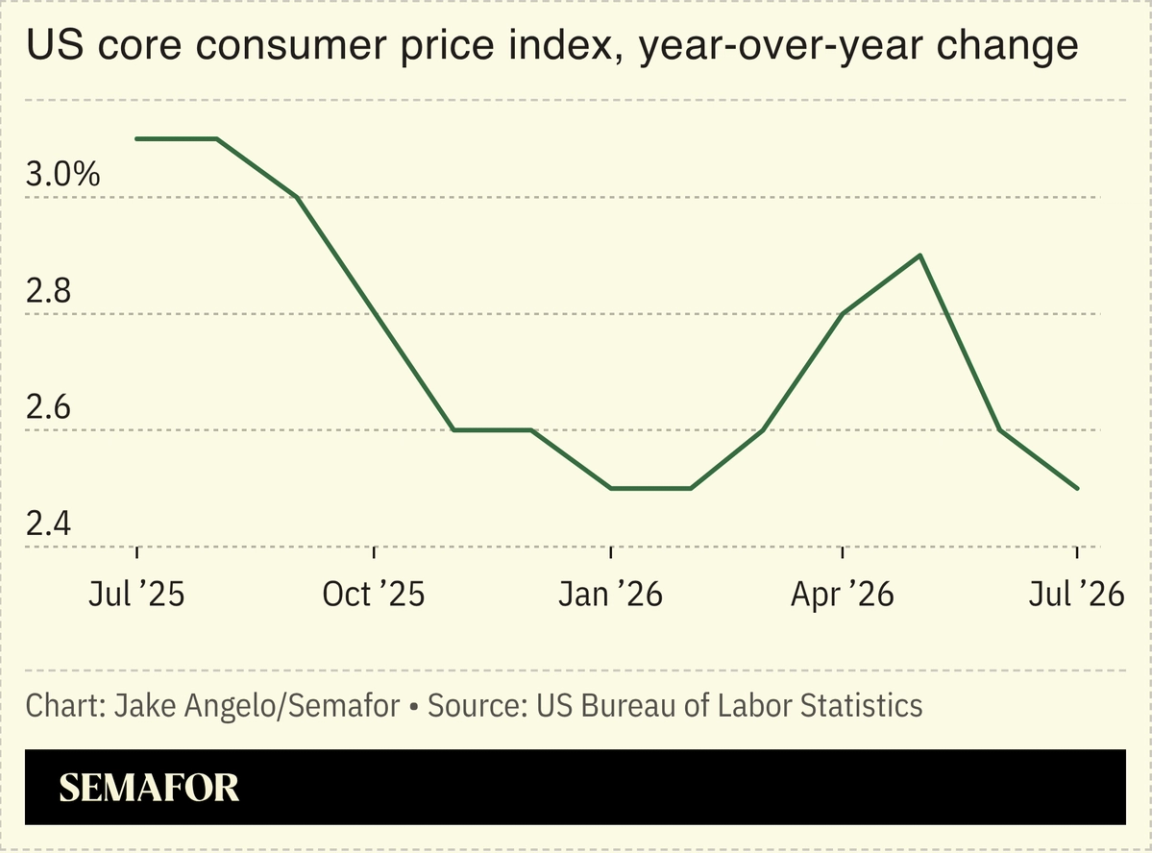 Walmart posted the slowest US sales growth in six years on Thursday, the latest sign that consumers are feeling strapped. The company’s CFO told CNBC that “consumers have been more pressured” than earlier this year. As America’s biggest retailer, Walmart is a bellwether for economic health, and its results mirror what other retail giants have indicated in recent weeks. Higher fuel costs caused by the Iran war have driven up prices across the board, and retail sales in July saw the steepest monthly drop in more than a year. Walmart is sensitive to the Trump administration’s affordability push, and plans to put a band-aid on the price pain: It’s steering its $2.9 billion tariff refunds into cutting prices. |
|
Carlyle embraces its DC roots |
 ©Gibson Kochanek ©Gibson KochanekCarlyle, the private equity firm that made its name in Washington before turning away to chase Wall Street rivals, is pivoting back to its DC roots under CEO Harvey Schwartz, Semafor’s Business Editor Liz Hoffman wrote. The company is nurturing relationships with policymakers and courting defense deals: This week, it joined a $1 billion investment round in a missile startup, and is working with the US Army to develop data centers. The shift, which predates President Donald Trump’s 2024 reelection, underscores the US capital’s growing centrality to the private sector. “Washington is at the center of all of it, and we’re here by an accident of entrepreneurial birth,” Schwartz said in an interview. “Why wouldn’t we lean in?” |
|
Momentum builds for Chinese AI models |
 Go Nakamura/Reuters Go Nakamura/ReutersA new Bloomberg analysis quantified the US’ narrowing lead over China in the AI race, showing how Chinese companies are deploying advanced models at a faster pace. The top American AI systems still exceed the capabilities of their Chinese counterparts, according to benchmark testing, but Chinese labs are increasingly winning out globally thanks to their lower price point. “The cost aspect alone demands attention,” a US sports merchandising executive said this week. Chinese startups and tech giants are spending billions to keep up. But Baidu’s AI bet is sputtering, and Alibaba’s earnings fell last quarter, the company said Thursday, as it invested heavily in AI in a bid to retain its lead. |
|
AI boom blunts rate hikes’ impact |
 Elizabeth Frantz/File Photo Elizabeth Frantz/File PhotoMonetary policy is having less of an impact on the US economy than in prior decades, in large part because of the AI investment boom and American households’ growing participation in the stock market, according to experts. Data center construction has been “largely indifferent to higher interest rates,” Apollo’s chief economist noted, with investors and hyperscalers forecasting “that AI-driven returns would exceed the higher cost of capital.” Separately, as the proportion of people holding stocks has increased from less than 30% in the 1980s to more than half by the early 2000s, the impact of rate rises has been blunted, a New York Fed economist argued in a blog post, because market fluctuations are more broadly distributed. |
|
 Some positivity for your news diet. There’s good news out there, but sometimes it’s hard to find. Nice News does the digging for you, delivering uplifting stories to your inbox every morning. And it’s free: Join 1 million readers and subscribe to Nice News today. |
|
Ripple effects of pension reforms |
 Lisi Niesner/Reuters Lisi Niesner/ReutersImminent changes to Germany’s pension system could — like reforms to retiree accounts in the Netherlands — have huge implications for financial markets in the months to come. The €2 trillion Dutch pensions system is part of the way through a years-long shift from guaranteed payouts to one that is more dependent on market performance, driving a pivot from dependable but low-return bonds to riskier stocks. Germany’s private retirement pot is smaller, potentially worth about €500 billion in a decade, but Berlin is loosening its regulations to allow pension fund managers to deploy cash into assets including private credit and index trackers. Ultimately, one executive told Bloomberg, “the pension reform will change the world of retirement savings in Germany.” |
|
Mexico’s media censorship fears |
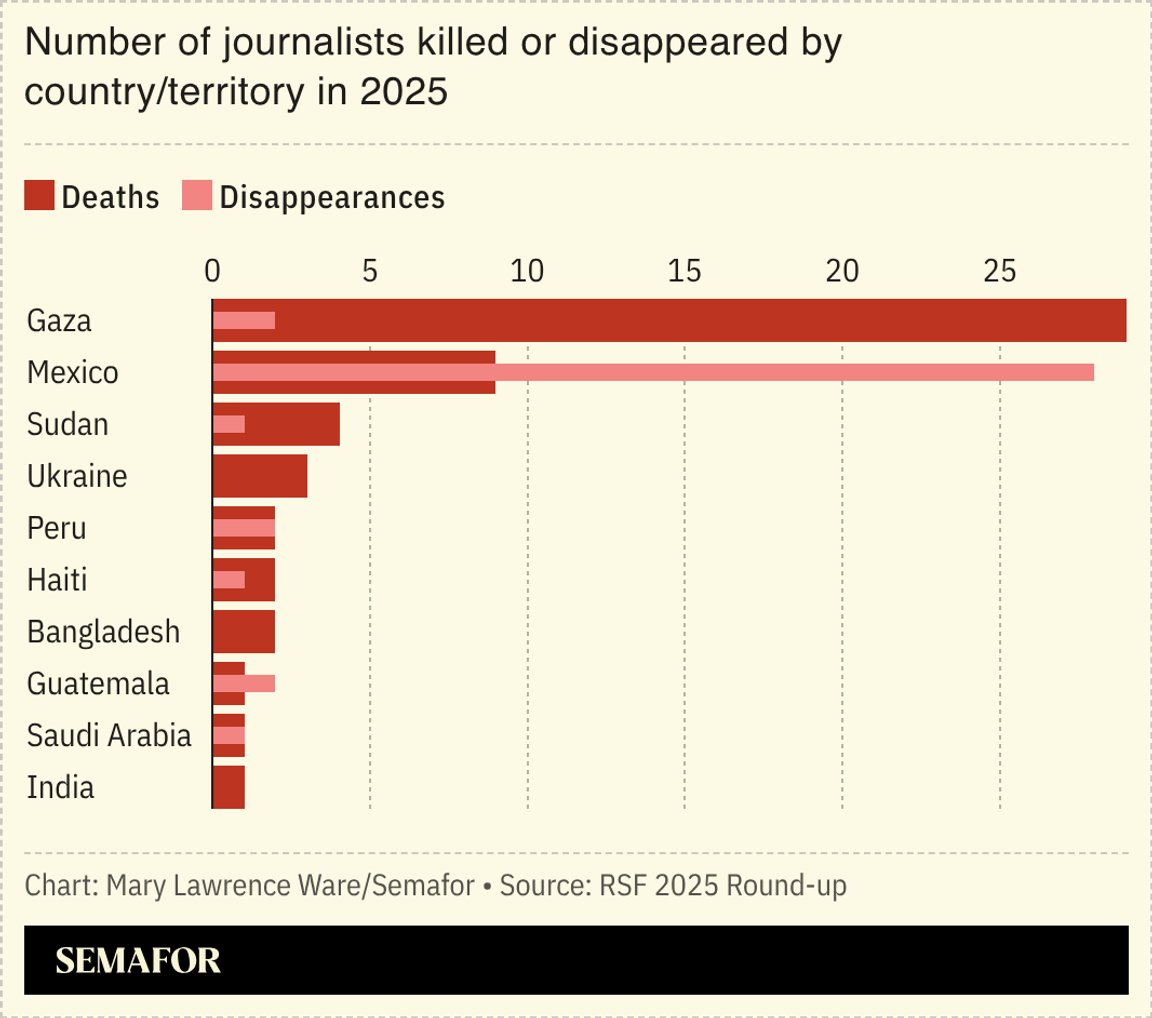 A media regulation proposal put forward by Mexico’s government has sparked fears of censorship in a country already grappling with bleak freedom of expression scores. Under the plan, officials would be able to determine whether news coverage was sufficiently true or balanced, with breaches potentially costing companies as much as 1% of their annual revenue. Critics of the proposal pointed to the fact that Mexico is already one of the world’s most dangerous countries for journalists; nine were killed last year. “The threat of sanctions alone …will have a chilling effect,” one opponent said. Mexico’s foreign minister countered t |
|
|


