|
Dear all,
Please find below your weekly update from the UK Health Security Agency (UKHSA).
If you have any questions please get in touch by emailing externalaffairs@ukhsa.gov.uk
As always, you can also follow UKHSA on X, on Instagram, on BlueSky, and on LinkedIn for all the latest updates. You can also find the latest news from UKHSA on our news page on GOV.UK.
Best wishes,
UKHSA External Affairs Team
New stories
- Newborn ICU admissions drop 50% in first full year of RSV maternal vaccine programme
- Flu vaccine booking open for pregnant women and children
- UKHSA blog post: What is HPV and how effective is the vaccine that protects against it?
- World Mosquito Day - 20 August
- Book your place at the UKHSA Conference 2026 - five weeks to go!
- MHRA reaffirms the safety of childhood vaccination
Ongoing issues
- University vaccine communications toolkit
- MenB vaccination communications toolkit - leaflet translations now available
- NHS figures show England is on track to eliminate hepatitis C
- Addressing health inequalities in infection and antimicrobial resistant infections: a UK-wide collaborative toolkit
- Measles continues to circulate
- Updated communicable disease outbreak management guidance
- Next phase of Government childhood immunisations campaign launched
- Staying well during the 2026 festival season
- FSA urges people to avoid common food safety mistakes
- 'Be tick aware' this summer
UKHSA communications toolkits
- Information on how to access UKHSA communications toolkits
UKHSA data, analytics and surveillance
- Statistics at UKHSA
- UKHSA data dashboard
- Notification of Infectious Diseases report
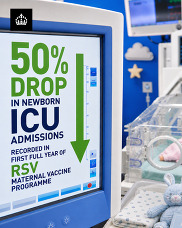
Last week, UKHSA published the respiratory syncytial virus (RSV) annual report which shows around 50% fewer infants under 6 months being admitted to intensive care with RSV disease in England, with vaccine coverage slightly above 60%. Analyses of the older adult programme indicates a cut in hospitalisation rates by more than 40% among eligible adults aged 75 to 80, with vaccine coverage around 65%. Other key findings include:
- overall RSV cases start early November and peaked over late December period and then steadily declined and reached low levels in March 2026
- RSV infection including peak activity appeared to occur later than in previous seasons
- lower RSV cases were seen as the vaccination programmes took fuller effect
Since September 2024, the RSV vaccine has been offered to pregnant women (in order to protect infants) and older adults aged 75 to 79 years old. The programme was expanded on 1 April 2026 to also include all adults aged 80 years and over and all residents in care homes for older adults, who had not already received a dose through the initial programme.
On 1 September 2026, the programme will be expanded again to include adults aged 65 to 74 years in clinical at-risk groups as advised by the Joint Committee on Vaccination and Immunisation (JCVI). Those eligible include those with certain long-term chronic lung disease and those with immunosuppression due to disease or treatment.
We will be updating our RSV communications toolkit ahead of the new programme starting on 1 September for stakeholders and will share with colleagues when published.
|
On Monday, the national booking system opened so eligible people, including pregnant women and children, can pre-book their flu vaccinations when vaccinations start on 1 September. Flu season usually peaks in December and January, so the NHS is starting vaccinations in autumn, to ensure those at risk are protected and fewer people are hospitalised.
Other cohorts will begin receiving the jab from 1 October. These include those aged 65 years and over, all adults in a clinical risk group, and adults in care homes, carers and people in close contact with the immunocompromised and frontline healthcare workers.
This year’s cohort includes adults aged 75 years and over, residents in a care home for older adults, and individuals aged 6 months and over who are immunosuppressed.
To support stakeholders with winter vaccine communications, UKHSA & NHS England will be publishing the the annual communications toolkit in due course. We will share the toolkit via this bulletin once published.
|

We have published a new blog post explaining what is HPV and the effectiveness of the HPV vaccine.
Research published in the Lancet found that there were no deaths from cervical cancer between 2020 and 2024 among women aged 20 to 24 who had received the HPV vaccine at school. Vaccine coverage in this cohort was around 88% to 90%. However, in recent years uptake rates for HPV vaccination among girls and boys have fallen compared to rates seen before the pandemic, and we know that there are variations in the proportion of young people taking up the vaccine depending on where they are and the circumstances in which they live. There is a risk of growing numbers of young people missing out on the vital protection that the HPV vaccine provides.
Stakeholders might wish to use the messaging in this blog post to encourage local awareness of catch-up eligibility (free until age 24, or 45 for higher-risk groups), and to remind communities that vaccinated individuals should still attend cervical screening, as the vaccine doesn't protect against every HPV type.
|
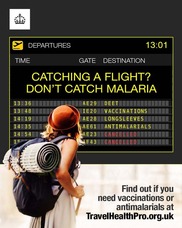
Tomorrow (Thursday 20 August) is World Mosquito Day. It is an opportunity to raise awareness about the dangers of mosquito-borne diseases such as malaria, dengue, Zika, yellow fever and chikungunya.
When travelling to areas where mosquitos may carry disease, the public can take steps to protect themselves from mosquito bites by:
- using insect repellent on your skin – make sure it's 50% DEET-based,
- sleep under mosquito nets treated with insecticide
- wear long-sleeved clothing and trousers to cover your arms and legs
- If you're travelling to an area where malaria is found take any antimalarial medicine you're prescribed
To support your travel health communications, including how the public can best protect themselves from mosquito bites, UKHSA has a travel health communications toolkit. This contains messaging and assets for both those visiting friends and relatives and those holidaying abroad. You can also encourage your audience to visit the TravelHealthPro website for country-specific health information.
|

Join us for the UKHSA Conference 2026 at Manchester Central on Tuesday 22 and Wednesday 23 September. In partnership with the Faculty of Public Health (FPH), this year's conference theme is Securing health together: Partnership, prevention, preparedness.
Alongside leading voices from UKHSA, our plenary programme so far welcomes an impressive line-up of guest speakers and topics, with further announcements still to come -
- Charlotte Refsum (Tony Blair Institute for Global Change) and Saeed Alavi (Vice President for Vaccines and General Medicine, UK, GSK) on how the UK can become a global leader in health security innovation
- The BBC's Disinformation and Social Media Correspondent Marianna Spring and Cambridge University's Professor Sander van der Linden on prebunking misinformation
- Adam Kucharski (London School of Hygiene & Tropical Medicine) and Henrietta Hughes (Patient Safety Commissioner for England) on how AI could shape health security
Our featured abstracts track will also take centre stage for the first time, running alongside the main programme within the exhibition hall.
Visit the conference website for the latest information and to book your place. If you have any questions, please contact the conference team at conference@ukhsa.gov.uk.
|
The Medicines and Healthcare products Regulatory Agency (MHRA) has published a statement reaffirming that vaccines are one of the most effective and saftest ways to protect against many serious infectious disease. Dr Alison Cave, Chief Safety Officer at the MHRA, said:
“Multiple large, well-conducted studies involving millions of children worldwide have consistently demonstrated that there is no evidence that vaccines cause autism in children.
“Vaccination remains one of the most effective and safest ways to protect against serious and potentially life-threatening diseases, supported by decades of scientific evidence in the UK and internationally.
“The benefits of vaccination are endorsed by the NHS and all major UK public health and paediatric bodies as part of the recommended routine childhood vaccination schedule.
“All vaccines approved for use in the UK undergo a rigorous assessment of their safety, quality and efficacy and once approved for use, we continuously monitor their safety through robust surveillance systems, real-world data, and international evidence.
“We encourage parents to follow NHS guidance on vaccination and speak to a healthcare professional if they have any questions.
“Patient safety is our top priority. We encourage anyone to report any suspected side effects to us via the MHRA Yellow Card scheme.”
|

Our vaccine communications toolkit has now been updated, and is available to download from the Find Public Health Resources website.
Infectious diseases can be a particular risk for new student students as they start mixing with other students from lots of different locations, and they can spread quickly.
The vaccine communications toolkit provides information to help protect students from vaccine preventable infectious diseases. It includes a range of resources on vaccines including MenACWY, MenB, HPV and MMR and the diseases they protect against.
It is essential for all university and further education settings with residential student populations. It has been produced in collaboration with the devolved administrations, NHS England and meningitis charities.
|
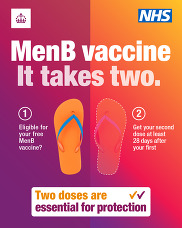
Our all-partner MenB vaccination communications toolkit has recently been updated to include a series of assets for social media (1x1s and 4x5s) explaining eligibility for the MenB vaccine to use on your own channels. We also have posters and email signatures available to download. All of these resources are available on the Campaign Resource Centre.
Ourguide for teenagers and young people being offered the Meningococcal B (MenB) vaccine has also now been translated into various community languages, and accessible formats have been added.
A reminder that the one-off vaccination programme is being offered to:
- Everyone born between 01/09/2007 and 31/08/2008
- Young people under 25 (born on or after 21/07/2001) who will be starting higher education for the first time, or who will be starting further education for the first time as a residential student, in autumn 2026
- International students under 25 entering their first year of university. They should receive their first dose in their home country where possible to give the best chance of protection ahead of the start of the autumn term
Two doses of the vaccine are needed for protection at least 28 days apart.
Those born between between 01/09/2007 and 31/08/2008 can book via the NHS National Booking Service for appointments at community pharmacies. Other eligible people can contact a participating pharmacy to book an appointment.
|

New figures from NHS England show we are making significant progress towards eliminating hepatitis C as a public health threat, with over 100,000 people in England have accessed potentially life-saving treatment for hepatitis C in the last decade.
This demonstrates the impact of expanded testing and sustained access to modern curative treatments, and the commitment of health services and community partners across England. It brings England closer than ever to becoming one of the first countries in the world to eliminate this disease as a public health threat.
While the number of people living with the virus continues to decline, it remains vital that those most at risk are offered testing, can access life-saving treatments, and receive the support needed, such as harm reduction for people who inject drugs, to prevent new infections.
Partners working to reduce the harmful impact to health of hepatitis C may be interested in our hepatitis toolkit, which also provides information and resources on hepatitis B.
|
The UK’s National Action Plan (NAP) for Antimicrobial Resistance (AMR) 2024 to2029 sets out a coordinated strategy to reduce infections, optimise antimicrobial use, drive innovation, and strengthen the UK’s global leadership in tackling AMR
To support this strategy, | |