| | While some data center investors finance giant “behind the meter” power plants, others are looking f͏ ͏ ͏ ͏ ͏ ͏ |
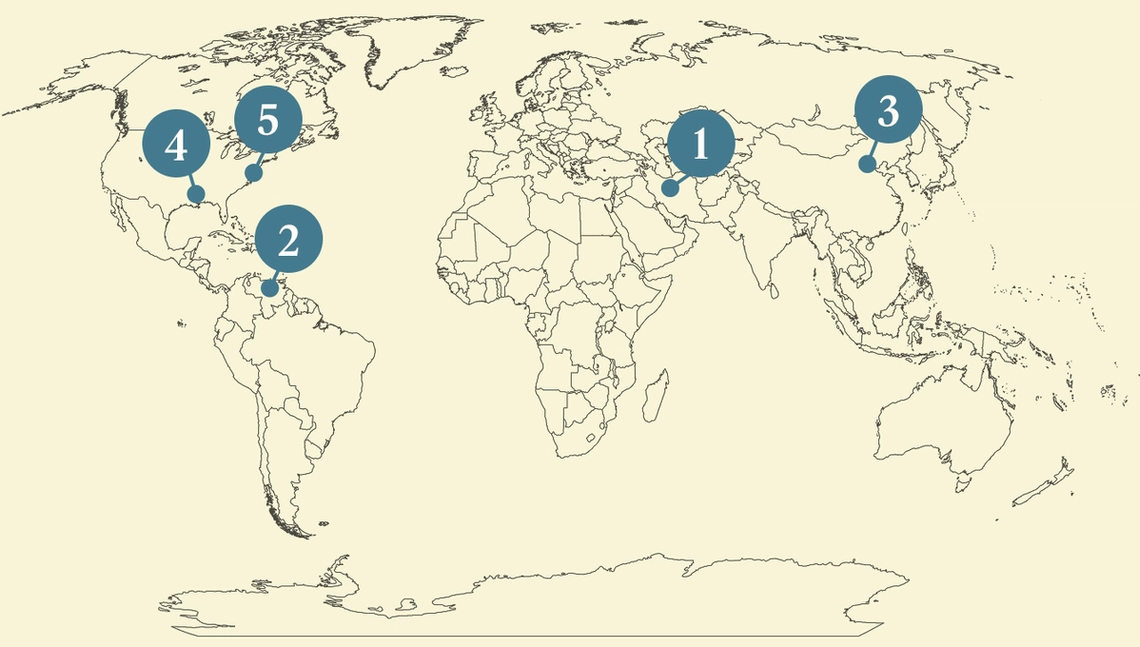
| |  Baton Rouge Baton Rouge |  Caracas Caracas | Dalian |
 | Energy |  |
| |
|
 - Waiting game
- XRG’s global gas push
- ‘Teapots’ under pressure
- Refiners spike tie-up
- Biden’s green cash
 One Greek company keeps Russia’s LNG business alive, and Lula greenlights Amazon drilling. |
|
 OpenAI’s announcement yesterday that it will help build what could be the largest fossil-fired power plant in the US shows the scale that Big Tech and its financiers are chasing in the AI energy race. But the risk that such projects could turn into multibillion-dollar boondoggles has some Wall Street shops looking for safer corners of the power market in which to park their money. The OpenAI project, which also involves Japan’s SoftBank, the US government, and Nvidia, is the most extreme manifestation yet of the “bring your own power,” off-grid approach to data centers that the Trump administration has been pushing as the solution to satiating AI’s appetite without raising everyone else’s bills. But to Jeff Jenkins, co-founder of the Louisiana-based private equity firm Bernhard Capital Partners, it sounds a little too much like the early 2000s. Back then, Jenkins (and many of his peers) lost a lot of money building power plants when the rush of electricity demand that was supposed to be unleashed by deregulation never really materialized. The AI boom appears to be on more solid footing (or, at least every Wall Street guru from Larry Fink down thinks so). But Jenkins is still more comfortable when his investment is guaranteed by the government. In a state with a deregulated electricity market like Ohio, where the OpenAI project will be located, power plant operators compete on prices, which move according to supply and demand. In regulated states like Louisiana or Florida, utilities operate as monopolies and power prices are fixed through a regimented legal process. In the regulated market, returns for investors are never jaw-dropping, but they’re reliable. The trouble for a firm like Bernhard was that the big utilities rarely put anything up for sale, so there were few chances to break in. But that’s changing, Jenkins told me. Utilities like Duke and AEP need to raise billions of dollars for their AI buildouts. Increasingly, they are scrambling to sell off non-core chunks of their regulated businesses to raise that cash, and willing to cut good deals with buyers. Bernhard has completed half a dozen acquisitions of regulated gas and power utilities around the country in the past two years, Jenkins said, including a Louisiana power company that has a deal with Meta to build a new gas-fired power plant for the sprawling Delta Forge 1 data center. “This is totally unique from an investor standpoint, because people haven’t seen these assets [for sale] in 20 years,” Jenkins said. “When you can buy a regulated monopoly at a discount, you do it.” |
|
 Amirhosein Khorgooi/ISNA/ via West Asia News Agency Amirhosein Khorgooi/ISNA/ via West Asia News AgencyOil prices hit their highest point in weeks as US President Donald Trump’s bellicose berating of ostensible ally Oman dimmed hopes for a breakthrough in the Strait of Hormuz. As a small but steady stream of oil continues to flow out of the Gulf, the conflict has turned into a waiting game. And although prices are elevated, especially for diesel and other refined products, “the global economy’s apparent success in adapting to the [strait’s] closure suggests the US can afford to wait,” Eurasia Group analysts wrote on Monday. Taking a broader view, the fact that crude prices aren’t through the roof is an argument against the Iran war as an accelerator of the clean energy transition, Jason Bordoff and Meghan O’Sullivan wrote in Foreign Affairs, and “could reinforce confidence in the adaptability of the global oil and gas system rather than exacerbate fears about it.” But for now, global consumers can’t afford for oil traders to get too comfortable with tenuous security in the strait, Amena Bakr writes in Semafor: “The bigger risk is that uncertainty becomes the new reality.” |
|
 PDVSA Handout/Reuters PDVSA Handout/ReutersXRG is making a debut acquisition in Venezuela as the international investment arm of ADNOC builds momentum in creating a global gas platform. The stake in the natural gas concession, alongside BP and UCC, adds to its portfolio of projects in Argentina, Azerbaijan, Mozambique, Turkmenistan, and the US. XRG aims to become a top-five player in global gas and LNG as demand for the fuel is projected to skyrocket thanks to the energy transition and growing power needs for artificial intelligence. XRG’s map of acquisitions has been strategic: Earlier this year it picked up a piece of the Southern Gas Corridor from Azerbaijan, a key supply link from the Caspian Sea to Southern Europe. A deal still to watch: Santos, the Australian gas supplier it attempted to acquire for $18.7 billion before walking away nearly one year ago, could make a comeback. —Kelsey Warner |
|
| |  | Rohan Goswami |
| |
 Semafor SemaforPhillips 66 and Marathon Petroleum held merger talks this year in a deal that would have created a $180 billion oil-and-gas giant, according to people familiar with the matter. The talks ultimately fizzled out and are unlikely to be resurrected anytime soon, the people said. Spokespeople for Phillips and Marathon declined to comment. A combined business, which would account for roughly a quarter of US refining capacity, would be able to maintain a wider profit margin when fuel prices dip, in part by negotiating stronger discounts from crude traders — even at a time when the Iran war has already pushed refining margins to record highs. The deal would have faced antitrust scrutiny given there are only a handful of standalone refiners in the US. But the fact the talks took place at all is a sign of the exuberance fueling M&A under the Trump administration, as administration officials wave through a number of big mergers in other industries, including a $110 billion deal for Warner Bros. Discovery and a $14 billion deal for Juniper Networks. |
|
Biden’s leftover green cash |
 More than one-third of the US federal clean energy funding authorized during the Biden administration is still available despite the Trump administration’s efforts to claw it all back. Of the $1.6 trillion set aside by the Inflation Reduction Act and Bipartisan Infrastructure Law, US President Donald Trump and Congress have scrapped nearly $600 billion in tax cuts and other funding, and about $275 billion has already been spent, according to a Politico analysis. That still leaves a significant pile of cash available that federal agencies have been reluctant to walk away from. |
|
 New Energy- While India remains one of the world’s top coal consumers, its installed renewables capacity is now greater than that of fossil fuels, suggesting a structural shift in the country’s energy mix.
Fossil Fuels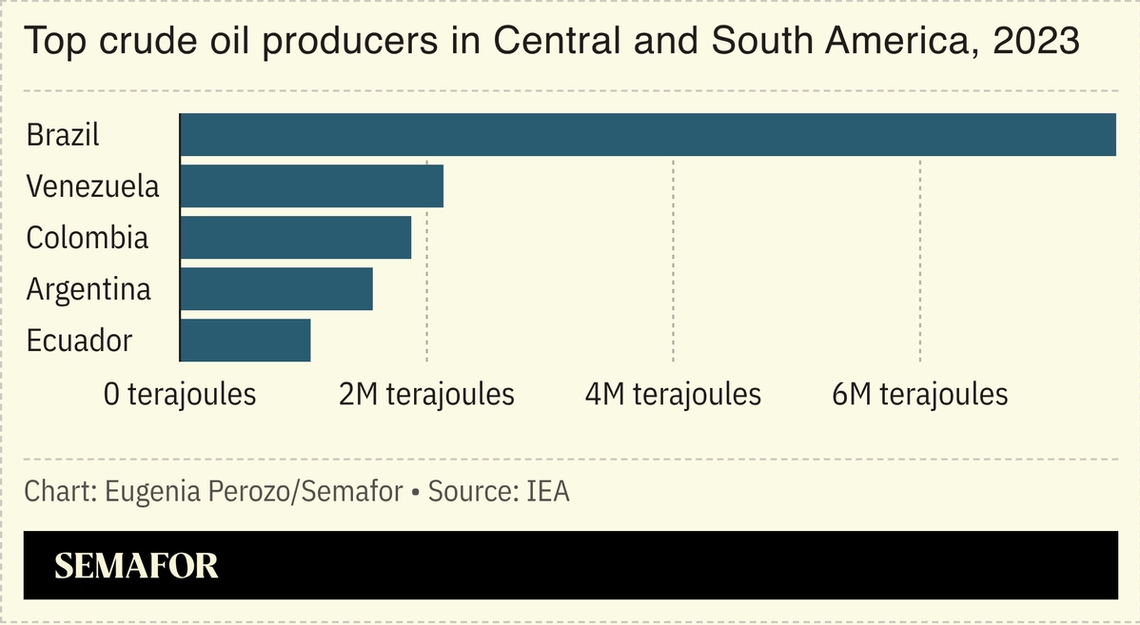 FinanceTechPolitics & Policy |
|
|


