| | In today’s edition: The collapse of the American order in the Gulf, PIF suffers a down year, and oil͏ ͏ ͏ ͏ ͏ ͏ |
| |  Tehran Tehran | Riyadh | Washington, DC |
 | Gulf |  |
| |
|
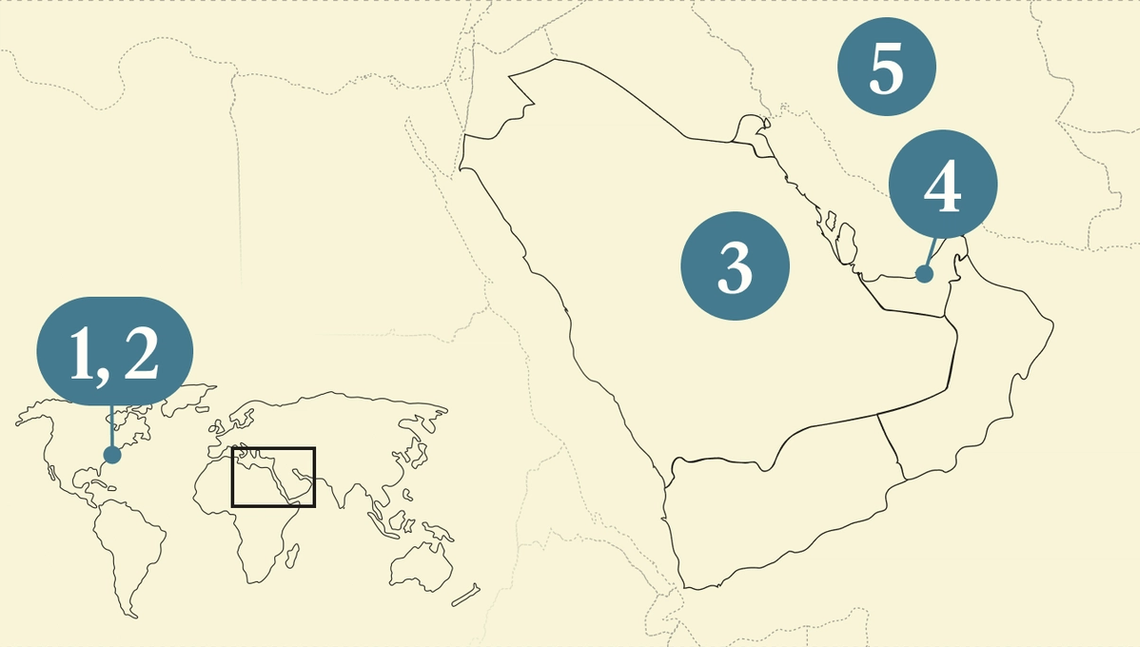 - Bellicose talk is back
- America’s Suez moment
- PIF portfolio shrinks
- XRG’s global gas platform
- Hormuz limbo is oil’s top risk
 PIF’s birthplace, cocooned within the finance ministry. |
|
Oil spikes as Trump threatens Oman |
 Benoit Tessier/Reuters Benoit Tessier/ReutersUS President Donald Trump threatened to bomb Oman if it struck a deal with Iran to reopen the Strait of Hormuz that didn’t take account of Washington’s preferences. The remarks, which echoed similar threats Trump made in May, sent oil prices to their highest point in weeks. A small but steady stream of oil continues to flow out of the Gulf and fuel prices remain at manageable levels, reducing the pressure to find a deal: “The global economy’s apparent success in adapting to the closure [of Hormuz] suggests the US can afford to wait,” Eurasia Group analysts wrote on Monday. A 60-day US-Iran truce expired Monday and the rhetoric from both sides has been hardening. Trump told Fox News he was “not in a hurry” for a peace deal, while an Iranian official told Reuters that Tehran was prepared to go “fully offensive” unless there was a diplomatic breakthrough. Iran-allied Houthis, meanwhile, said they hit a Saudi Aramco oil refinery on Tuesday, which Riyadh has yet to confirm. |
|
The end of the US order in the Gulf |
 Courtesy of Foreign Affairs Courtesy of Foreign AffairsThe regional order built by the US after 1991 has collapsed, academic Marc Lynch argued in Foreign Affairs, undone by the Iran war and Israel’s destruction of Gaza. That order rested on US military bases, security guarantees to regional leaders, containment of threats from Iran and Iraq, and a peace process meant to bind Israel to Arab states. Instead, Washington and Israel have exposed Gulf states to Iranian retaliation, and stood by as Tehran closed the Strait of Hormuz. Lynch compared the current moment to the 1956 Suez Crisis that effectively ended the era of British imperial power: The collapse was not immediate, but it became inevitable. Gulf states will hedge their bets rather than immediately break away from Washington, but the future looks likely to be increasingly fractured, he wrote. “The fundamental bargain the United States offered has crumbled, and it will not be easily rebuilt.” |
|
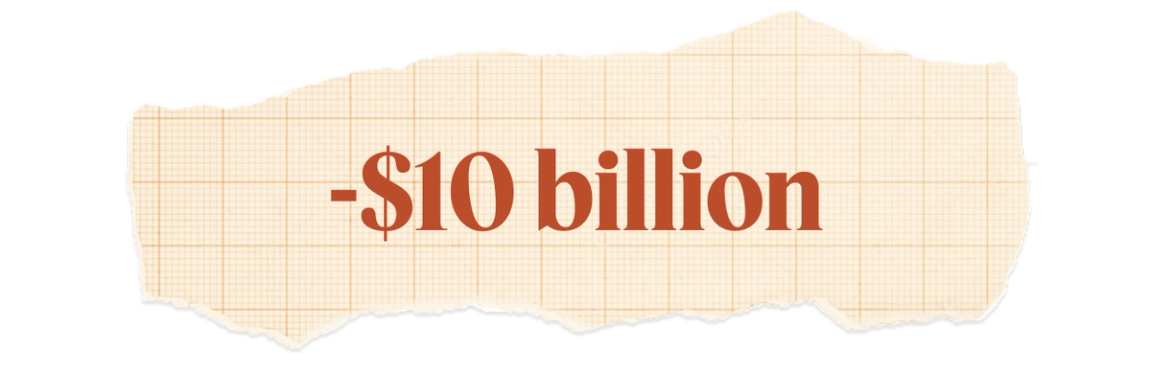 The value of the Public Investment Fund’s assets under management shrank $10 billion last year to around $900 billion, according to its 2025 annual report. While little more than a rounding error in the big-spending world of sovereign wealth, it marked the first such drop this decade. PIF portfolio companies’ performances are central to the government’s aim to chart a future beyond oil, and the sovereign wealth fund said they accounted for 11% of the kingdom’s non-oil GDP last year. However, the value of the fund’s domestic equity investments fell in 2025 and PIF has retreated from projects like The Line and PGA challenger LIV Golf. PIF attributed its performance to “wider market conditions” and said it continued to make “long-term local investments to drive economic transformation.” PIF expects to return to international debt markets at the start of next year — following a blockbuster issuance in May — and prepare more portfolio companies for Tadawul listings, its head of finance Yasir bin Abdullah Al-Salman told Asharq Bloomberg. |
|
XRG makes Venezuela debut |
 Amir Cohen/Reuters Amir Cohen/ReutersXRG is making its first move in Venezuela as the international investment arm of ADNOC looks to create a global gas platform. The stake in the concession adds to its portfolio of projects in Argentina, Azerbaijan, Mozambique, Turkmenistan, and the US. XRG aims to become a top-five player in global gas and LNG at a time when demand for the fuel is skyrocketing because of the energy transition and the growing needs of artificial intelligence. XRG has been strategic in its acquisitions: This year it picked up a piece of the Southern Gas Corridor from Azerbaijan, a key supply link from the Caspian Sea to Europe. The company could also make another swoop for Santos, the Australian gas supplier. XRG attempted to acquire it for $18.7 billion before walking away nearly a year ago. |
|
The new abnormal for Hormuz |
 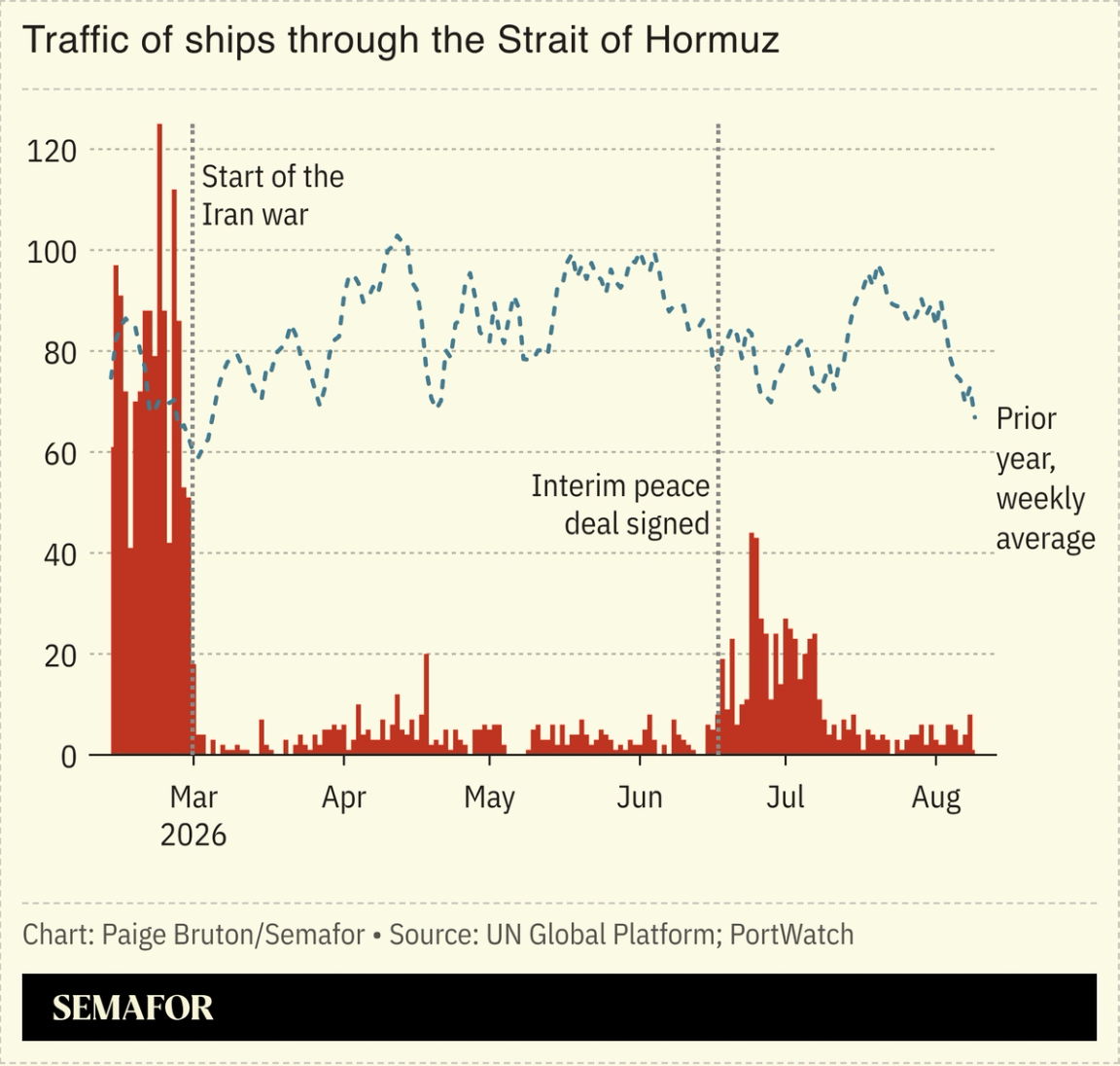 More than 170 days into the war between the US and Iran, one thing has become clear: Tehran is not prepared to let go of its leverage in the Strait of Hormuz. President Donald Trump may say the US controls the waterway, but oil flows remain volatile and far below prewar levels. While the lack of clarity about the status of the strait is a concern, “the bigger risk is that uncertainty becomes the new reality,” Amena Bakr, head of Middle East Energy & OPEC+ research at global commodities data firm Kpler, writes in a Semafor column. A pattern has emerged since the war began, with bursts of supply when there is a brief period of calm, followed by sharp contractions as tensions return. “Much like the conflict itself, the strait is stuck in limbo, neither fully open nor fully closed,” Bakr writes. |
|
 Aviation- UAE low-cost carrier flydubai has resumed flying over Iran for the first time since the war began, cutting a detour over Iraq that had added 40 minutes to its Dubai-Baku flight. Emirates, the UAE’s largest airline, continues to avoid Iranian airspace and European regulators still advise their carriers to avoid Iranian skies altogether. — AGBI
Bonds- Bahrain issued a 200 million dinar ($530 million) two-year bond at 7% interest. It was only just covered by investors, who bid 208 million dinars. The kingdom is paying some of the highest rates in the Gulf to borrow during the war. Moody’s cut the outlook on the country’s credit rating to negative in April. — Zawya
Energy- Saudi Aramco is offering oil to Chinese refiners using ship-to-ship transfers off Oman’s coast, outside the Strait of Hormuz. The grades on offer almost certainly came from inside the Gulf, where vessels able to carry at least 9 million barrels loaded at Saudi terminals in the region over the past week. — Bloomberg
|
|
 MI News/NurPhoto/Reuters MI News/NurPhoto/ReutersOne of the most watched piles of money on earth started to be built up 55 years ago this week: A decree issued by Saudi Arabia’s King Faisal on Aug. 17, 1971 gave birth to the Public Investment Fund. PIF was set up to bankroll projects that Saudi Arabia’s private sector would not touch, while redistributing the kingdom’s growing oil wealth to the people. For four decades it did exactly that, embedded within the finance ministry with a staff of about 40. It took founding stakes in companies such as Bahri, Ma’aden, and SABIC, which are now all at the heart of the kingdom’s industrial base. Oversight passed in 2015 to a council chaired by then 29-year-old Mohammed bin Salman, and the fund turned outward. As part of the country’s economic reforms, it bought into Uber and Newcastle United, committed $45 billion to SoftBank’s Vision Fund, and funded a futuristic city in the desert. Not all its bets paid off. Nonetheless, its assets have grown sixfold since the handover to the young prince, and the fund that began with 40 employees now aims to manage $2 trillion by 2030. |
|
|


