| | The Ebola outbreak becomes the deadliest in DR Congo’s history, US President Donald Trump threatens ͏ ͏ ͏ ͏ ͏ ͏ |
| |  | Flagship |  |
| |
|
The World Today | 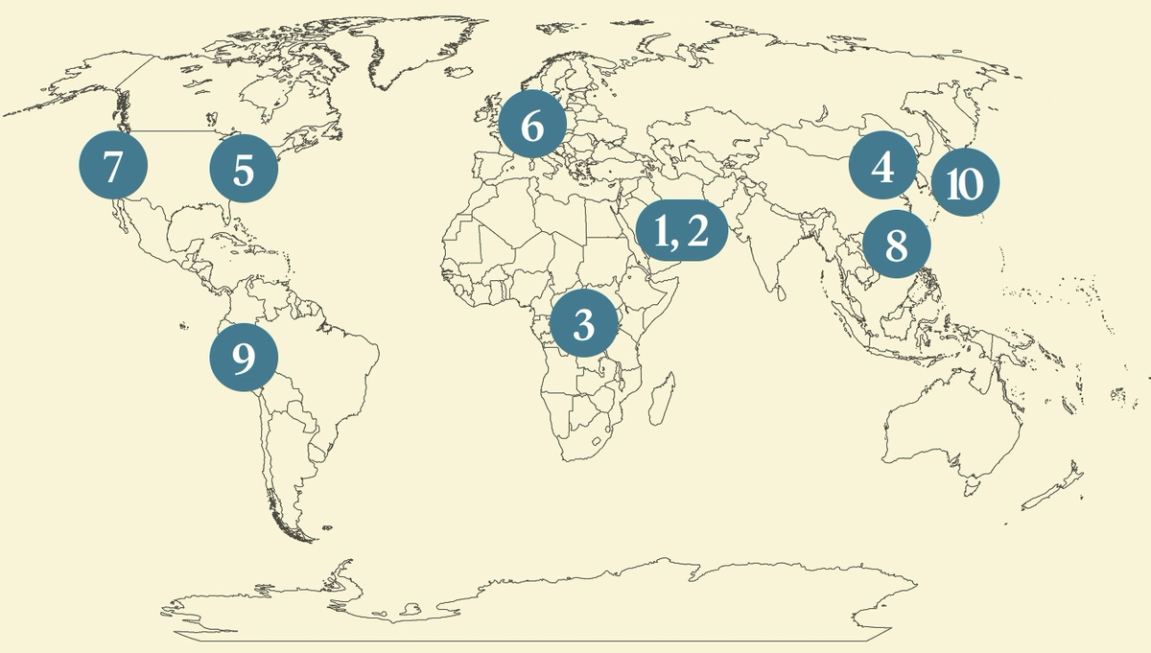 - Trump threatens Oman
- Flexible energy exporters
- Deadliest Ebola outbreak
- China’s economic woes
- US consumer caution
- German firms pull back
- Nvidia ups AI spending
- AI soft power plays
- Peru’s economy hit
- Uniqlo’s hijab collection
 A novel for those who ponder the Roman Empire. |
|
Trump threatens to bomb Oman |
 Ken Cedeno/Reuters Ken Cedeno/ReutersUS President Donald Trump threatened to bomb Oman over its negotiations with Iran to reopen the Strait of Hormuz, reflecting his growing frustration over stalled peace talks. As the 60-day US-Iran truce expired Monday, both Tehran and Washington signaled little faith in breaking the diplomatic deadlock to end the six-month conflict: Trump told Fox News he was “not in a hurry” to get a peace deal, while an Iranian official told Reuters that Tehran was prepared to go “fully offensive” if there was no breakthrough. Trump’s broader efforts to broker peace in the Middle East are also faltering. His son-in-law Jared Kushner left Jerusalem Monday without gaining concessions from either Israeli or Hamas leaders on salvaging the US’ Gaza peace plan. |
|
UAE emerges as flexible oil exporter |
 Kim Soo-hyeon/Reuters Kim Soo-hyeon/ReutersAbu Dhabi’s state oil company has matched and sometimes exceeded its pre-war energy flows during the Iran conflict, emerging as one of the Gulf’s most flexible exporters, as the region finds new ways to cope in the absence of a durable peace deal. UAE tankers have helped limit a more significant energy shock by transiting Hormuz with their transponders off, hugging the coast of Oman. The UAE was the first to gamble on the route; though more than 20 of its ships have been struck, other nations have followed suit. Saudi Arabia is now offering to sell oil from the waters off Oman as the kingdom’s port activity picks up, Bloomberg reported, suggesting Riyadh is eyeing more dark transits through the strait. |
|
Ebola outbreak is DR Congo’s deadliest |
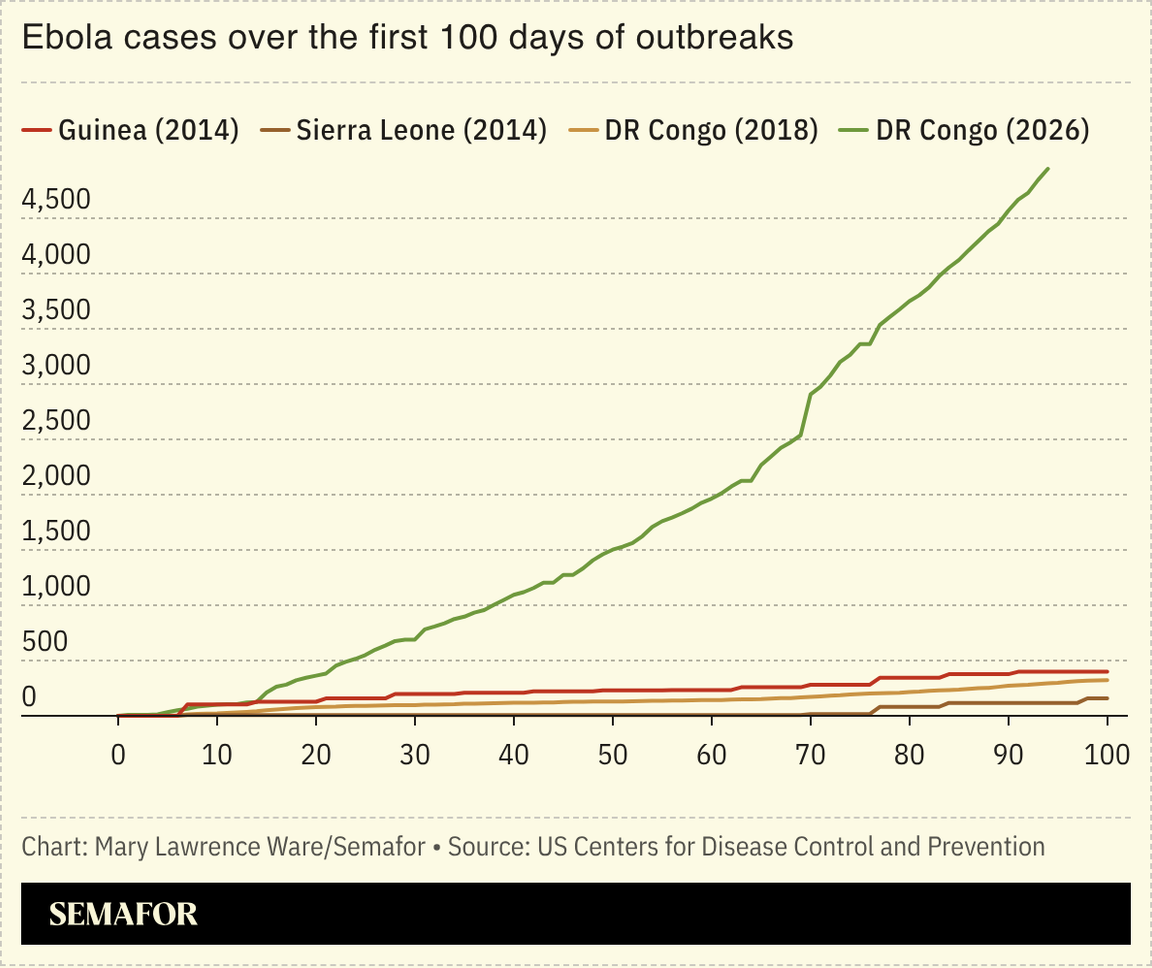 The Ebola outbreak in the DR Congo became the deadliest in its history, with the virus “killing someone every 30 minutes,” a UN official said. The current outbreak is spreading five times faster than previous ones: It took only three months for fatalities to hit 2,000, compared to the five months it took to reach 1,000 deaths during the 2014-16 West Africa outbreak. Researchers believe the virus may have been spreading undetected since February, and an expert said cases were still being detected very late, thwarting chances of successful treatment. Violence in the conflict-affected region likely hampered detection efforts; research suggests countries “may be least able to spot outbreaks in precisely the places where the danger is greatest.” |
|
China’s economy slows further |
 Go Nakamura/Reuters Go Nakamura/ReutersChina faced deepening economic headwinds in July, state data showed, as consumer spending and investment slumped further. China’s consistently weak domestic demand has long been outmatched by the country’s vast manufacturing capacity, leading firms to expand aggressively in — and grow increasingly dependent on — overseas markets to drive growth. That gap could widen, as Beijing directs more investment into AI to keep pace with the US, “turbocharging an already production-heavy economic model,” Axios wrote. Greater shipments of semiconductors and other components have boosted export growth, but escalation in the Middle East and weaker domestic spending “mean that the balance of risks to the Chinese economy is shifting into a negative direction again,” an ABN Amro economist wrote in a client note. |
|
US consumption shows signs of strain |
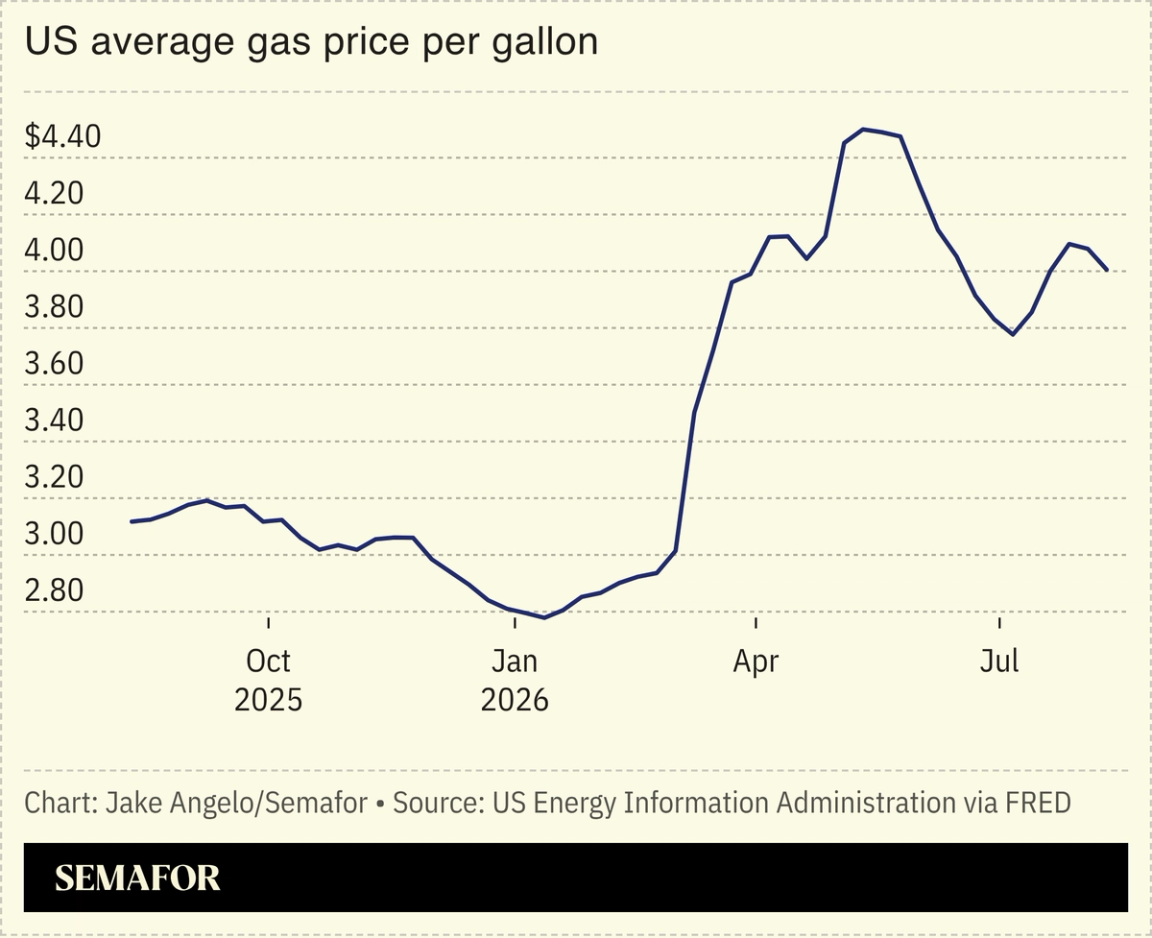 US consumption has remained remarkably strong despite higher fuel prices sparked by the war in the Middle East, though signs of strain have started to emerge. Beef sales fell in the 13 weeks leading up to mid-July, with consumers cutting back on eating out or opting for cheaper proteins, Bloomberg reported. Goldman Sachs analysts expect consumer spending to grow just 1-1.5% in the second half of the year. Consumer sentiment fell in August for the first time in months, data showed, as the intensifying US-Iran conflict stoked cost-of-living concerns for Americans, spelling trouble for the Trump administration ahead of November’s midterms. “The reality is that inflation is just the most regressive tax that exists,” an expert told the Financial Times. |
|
German companies slash US investments |
 Staff/Reuters Staff/ReutersGerman companies cut their US investments to a three-year low in the first half of 2026, Reuters reported, as firms limited their exposure to Washington’s uncertain trade policies. US President Donald Trump has often sought to weaponize trade flows as a source of leverage, leading partners to seek alternate arrangements. Spain, for instance, canceled an order for Lockheed Martin F-35 jets last year amid disagreements with the US over defense spending. US firms don’t account for a large overall share of European investment but are clustered in critical sectors, The Economist found: As much as two-fifths of the business that American companies generate from foreign governments is in IT and defense, sectors in which switching to new suppliers is costly and complicated. |
|
Nvidia backs $100 billion data center |
 Manami Yamada/Reuters Manami Yamada/ReutersNvidia reached a deal on Monday to provide up to $105 billion to backstop a new OpenAI data center in Ohio, as Big Tech ramped up its debt-fueled AI splurge. Much of that growing debt is held off hyperscalers’ balance sheets, and those credit arrangements themselves are growing more convoluted, Morgan Stanley analysts noted, making it “increasingly difficult for investors to assess companies’ total potential leverage.” The spending spree is raising the specter of a “reverse-crowding-out effect,” Bloomberg wrote, whereby private borrowing is making government debt more expensive, sending US bond yields higher. A correction in US tech stocks appears likely even if AI eventually satisfies investor hopes, the European Central Bank warned, and the ensuing bust could threaten Eurozone stability. |
|
 On Wednesday, September 16, Rep. Kevin Kiley (I-Calif.) will join us for the Youth Wellbeing Forum: Building Resilient Generations. As young people are challenged by rising rates of loneliness, anxiety, and depression, we are bringing together experts across technology, healthcare, and policy to examine solutions that can build lasting resilience. Semafor editors will sit down with Rep. Suzanne Bonamici (D-Ore.); Jaymes Black, CEO, The Trevor Project; Nicole Hockley, Co-Founder & CEO, Sandy Hook Promise; and Dr. Jon Kole, Medical Director and Senior Director of Psychiatry, Headspace, to explore how to build lasting resilience for the next generation. Washington, DC | September 16 | Request Invite |
|
China aims to be data powerhouse |
 Go Nakamura/Reuters Go Nakamura/ReutersChina is intensifying its AI soft power push, striving not only to build more sophisticated models but to influence their outputs, analysts said. Beijing believes the US’ technological edge partly stems from its ability to tap large amounts of high-quality data used by companies around the world to train their models, producing AI with a Western-inflected worldview. To counter that, Beijing is disseminating government-approved datasets, the largest of which, called WanJuan (or “ten thousand scrolls”) presents official narratives on history, sports, law, medicine, and literature, The New York Times reported. Meanwhile, in the US, OpenAI is funding think tank projects in Europe, Brazil, Singapore, and South Korea to “democratize the benefits of the Intelligence Age,” the firm told Semafor. |
|
El Niño hits Peru’s economic growth |
 Sebastian Castaneda/Reuters Sebastian Castaneda/ReutersPeru’s economy slowed in June as El Niño hit output of the country’s farms and fisheries, new data showed, underscoring the threat the warm weather system poses to global food supplies. The nation is one of the world’s leading producers of a small anchovy used in fish farms across the world, raising fears of higher international prices. While swaths of Latin America — the world’s biggest food exporting region — |
|
|


