Hello Power Up readers,
Ron here again, back from a week in sunny Cornwall. A big thanks to Gavin Maguire for handling Power Up last week.
It is not uncommon for the oil market to enter a lull during peak summer holiday weeks. This year is no exception, despite the biggest energy shock in decades, as traders take a breather after six months of relentless volatility.
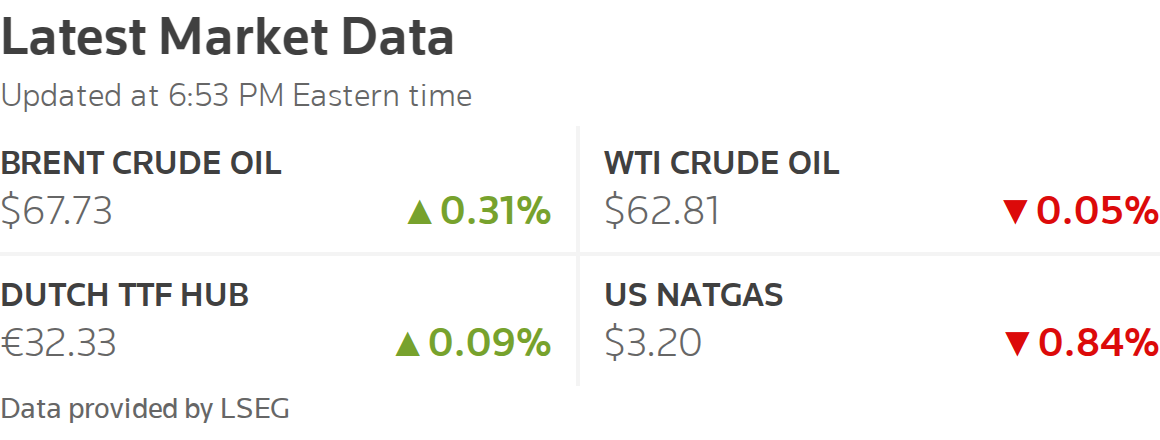
Brent crude is hovering just below $90 a barrel as uncertainty over the Middle East keeps risk premiums elevated. Stalled U.S.-Iran talks have dimmed hopes for a quick end to the conflict and for a full re-opening of the Strait of Hormuz. Over the weekend, Iranian Foreign Minister Abbas Araqchi said Iran had not decided to resume talks with the U.S. while U.S. President Donald Trump urged Americans to accept slightly higher gasoline prices while the conflict continues.
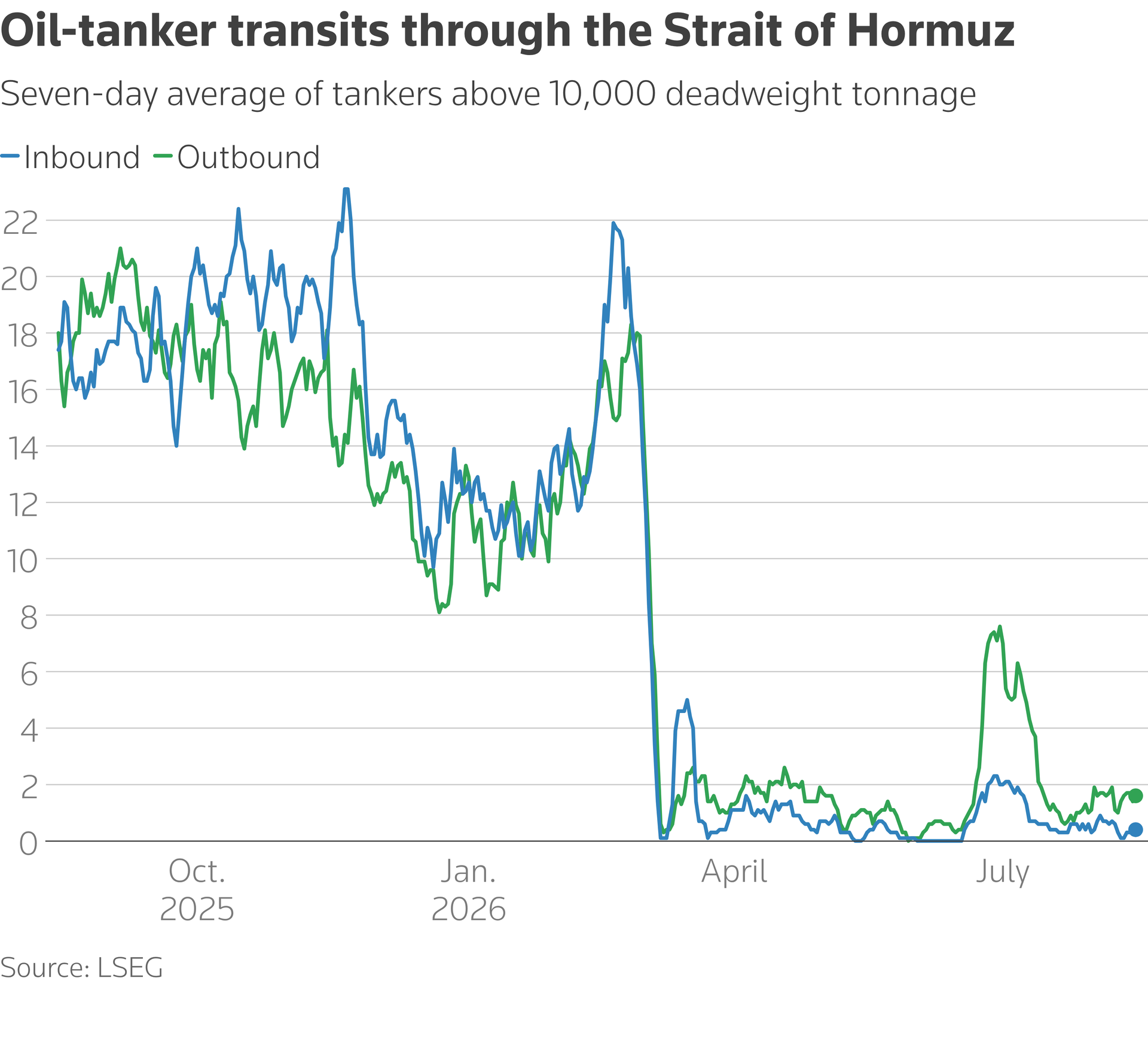
Shipping through the Strait of Hormuz slowed over the weekend, data showed on Monday, following attacks on tankers. Five commodity vessels transited the strait on Saturday, with none registered for Sunday, ship-tracking data from Kpler showed, versus 31 for the prior weekend.
The United Arab Emirates accused Iran of attacking a third vessel operated by its national oil company ADNOC that was transiting the strait on Friday, after blaming Tehran for two other incidents involving ADNOC vessels on Thursday evening.
The oil market may be pausing to catch its breath, but the broader picture remains dire. The International Energy Agency last week forecast global oil demand will decline by 1.6 million barrels per day in 2026, 510,000 bpd more than in the previous month's report, as the ongoing conflict and elevated fuel prices weigh on demand. Global oil supply is projected to decline by an average 4.3 million bpd this year.
Here are a few more headlines: